
Prelude
Many people become enamoured with safari-ing, often returning frequently to haunts old and new to see wildlife, especially in Africa. We do not fall into that category and we tend to encompass wildlife when it falls as part of trips to see the society and culture of a place. Also, having ‘done’ the Big Five (https://www.worldwildlife.org/blogs/good-nature-travel/posts/ten-wild-facts-about-the-big-five) and a wealth of other fascinating wildlife on a trip to Botswana twenty years ago and supplemented that with other engaging wildlife experiences elsewhere, we only had one remaining safari hankering – to see elements of the herd migrations. Hence this trip to southern Kenya.
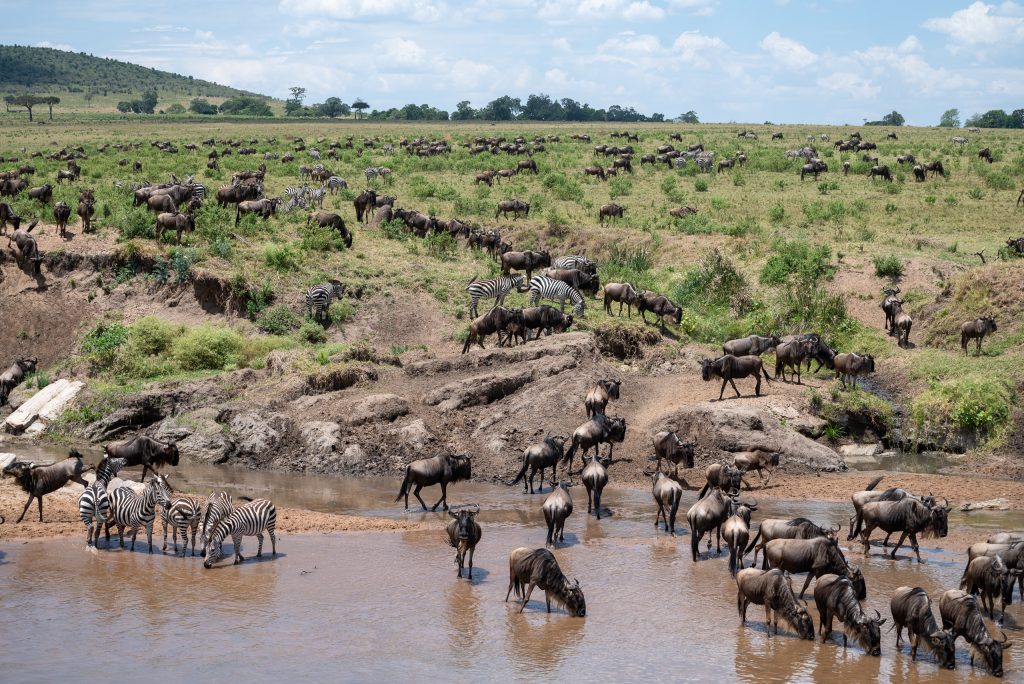
Despite the warnings of travel advisers and guides that seeing the herds crossing the river, with crocodiles snapping at wildebeest forced into the water by the weight of beasts behind them, was a relatively rare occurrence, we did see the herds in all their splendour. We also saw the crossing of the river, but in an altogether more sedate way than the stereotype documentary image I describe above. And we saw a wealth of other wildlife and the glory of the African landscapes, most potent around dawn and dusk. Another unexpected bonus was the people of Kenya that we interacted with. It is all too easy to draw lazy conclusions from a limited amount of engagement with the individuals who people the service industry, but it still bears saying that we found most of the people of Kenya that we dealt with to be friendly, helpful, kind and often with a low-key, almost shy, charm. This made for a mentally relaxing atmosphere which is all too necessary after you have spent up to twelve hours on some days being bounced across the savannah in a Land Rover.
Structure of the Trip
Eight nights in two camps, five of them in the Maasai Mara National Reserve (home to the herds and the attendant big cats) and then three in Amboseli National Park taking in the elephant herds and the flat wide-open spaces of the rift valleys against the backdrop of Mount Kilimanjaro. Flight timings into and out of Nairobi necessitated a first night there. The myriad of options by way of camps and parks meant that it was easier for us to leave the suggestions of where to stay to Audley. Taking a bespoke package meant that we could discuss with them the time to be spent in each camp, and which camps or game reserves to go for, before settling the itinerary. Once again their personal knowledge of all those elements paid dividends, although, as you will read, we could have been a little more questioning about the nature of the camp in the Maasai Mara.
When and Weather (Time Zone)
If you are in the right place, you can see the herds at almost any time of year but the time to see the cross-river migration movements in East Africa seems to run for several months from July to October. The timing of this trip was dictated by external constraints on our time but, once you know your timing, a good travel adviser will point you at either Kenya or Tanzania as the favoured location. This article from Audley’s website is a useful starting point: https://www.audleytravel.com/inspiration/safari-holidays/the-great-migration. So for us and for September, the answer was Kenya.
The daytime temperatures ranged from 23° to 27°C (73° to 81°F) but dipped much lower at night such that early mornings were distinctly chilly. Even with the blankets provided on the open safari vehicles you need to be wearing peel-off layers that can be removed as the day warms up. Beanies, gloves and a neck gaiter are useful clothing tools in this context when the wind is curling around the safari vehicle as it clatters along the track roads before sunrise.
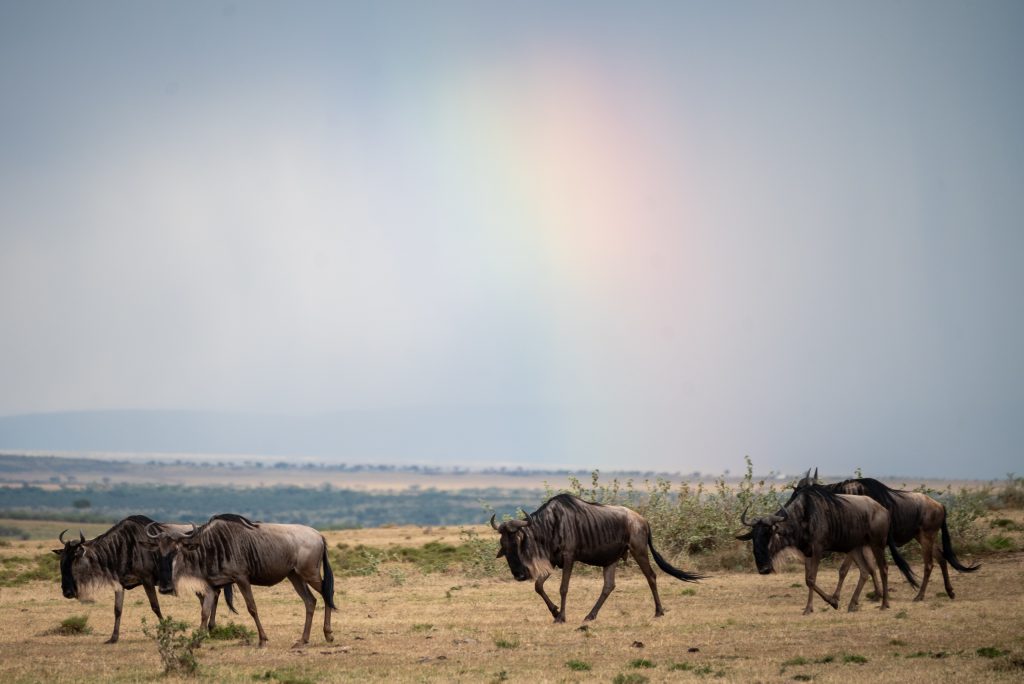
In the Maasai Mara we saw rain, occasionally heavy, in the late afternoons and evenings. Sometimes the rain fell on us but, more often, the rain-clouds build up and dump their loads on other parts of the broad, rolling landscape. In Amboseli the skies were often clearer. Here the clouds gather around the solitary looming shape of Mount Kilimanjaro (more often than not rendering the peak unseeable) and the daytime skies here were clearer, the clouds whiter than in the Maasai Mara. You can see that it is hot, but not insanely so, nor is the humidity that bad. I expected I might have to change shirts twice in a day but, so long as a hot shower awaited at the day’s end, I found I was sweating much less than I expected. As many game drives are half day affairs, that leaves the visitor to rest and relax through the hottest part of the day.
A word on time zones. For Europeans, Kenya is a civilised two hours ahead of the UK and only one ahead of other parts of western Europe, making for a jet-lag free travelling experience. For North American visitors it is a more awkward eight hours ahead of Eastern Standard Time but, judging by the many visitors from that part of the world, it does little to put off those wanting to enjoy another bucket list destination.
Flights
International
Getting there was by BA from Heathrow Terminal 5 (see Air Travel from London). Business class – a necessary for us on a near nine-hour flight. I was pleased to find that, out of any airline I have travelled with recently, BA’s pods are the most usable for tall people trying to sleep in comfort. They were not perfect but less restricted around the lower limbs than Singapore Airlines, Emirates and Air New Zealand. Service was fine, bluntly all that is needed albeit without the slick quality of Emirates. Oddly, and for the first time in my memory, there were longish queues at both at BA’s business class departure check-in and for Fast Track security at Terminal 5. Normally both are a breeze. They were not having a good day because the departure jetway was out of commission and we had to walk down to the tarmac and then climb the airstair steps (in that charming London drizzle) to reach the plane.
Mobility Access
Only the non-functioning jetway interrupted the usual very usable wheelchair facility at Heathrow. There was a lift down to the tarmac but the airstair steps still had to be negotiated. Bizarrely on arrival at Nairobi we exited through a jetway only to be directed down a set of stairs to a waiting bus. Thankfully immigration was pretty speedy once we had realised everyone used the queues marked ‘Kenyan Citizens Only’. On this occasion we did not use the wheelchair facility at Nairobi, but it is clearly available if needed.
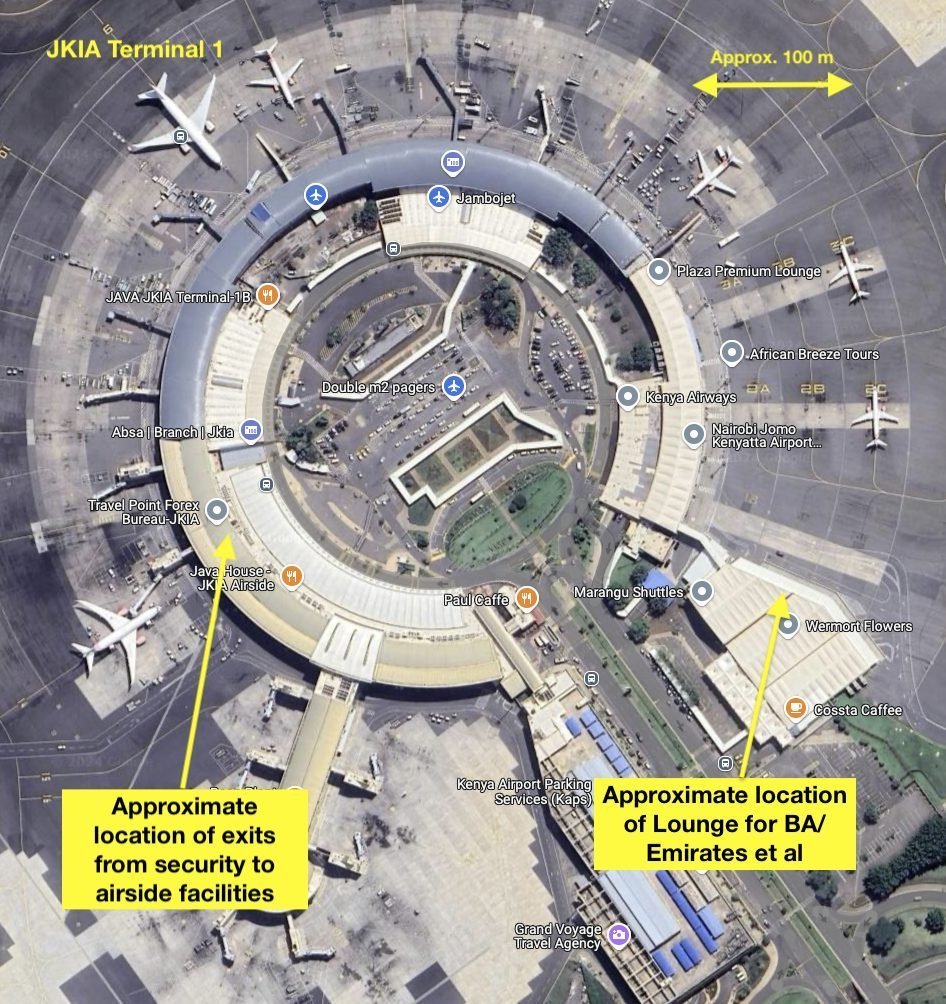
A transit through Nairobi nearly two decades ago was not a happy memory. Nowadays JKIA (Jomo Kenyatta International Airport) is a vast 1970s edifice that still retains some slightly chaotic elements. On departure there was a lack of clear signage, poorly-organised queues at check-in and security and, in the lounges, a lack of communication about departures. JKIA has the accoutrements of its counterparts elsewhere, including the departure halls disguised as shopping malls. The BA lounge (shared with Emirates and others) was so crowded that some passengers were left standing without seats. It is also at the very far end of the terminal building. That building is designed as a circular structure that curls round at least 270°. The security access is only 90° from the lounge but, unfortunately, they are at opposite ends of the circle and it is a 20 minute walk between the two – and in our case a near 20 minute walk back to our departure gate. Coupled with the mystifying inconsistency of signage this means you should allow plenty of time to move from check-in to departure.
Domestic
The Kenyan tourist destinations, principally the game reserves and national parks, are connected by a spider’s web of small plane flights centred on Wilson Aerodrome in Nairobi (and to a much lesser extent on Mombasa). The workhorse of the services is the 12-seat, single engine Cessna Caravan and it was this plane that, in the hands of either Safarilink or Mombasa Air Safari, ferried us around within Kenya (https://www.flysafarilink.com/about-us/fleet). There are many things that could be said about flying within Kenya aboard these planes but, as most people will use travel companies who give them pretty comprehensive guidance, I am will just mention a couple of points to be aware of. The planes are small. For someone nearly 2 metres in height the very limited headroom (about 1.5 metres or 5 feet) means cramped seats and shuffling along, nearly bent double to reach them. If you are tall you should sit in the rear two or three rows of seats as there is a difference of about 15 centimetres (6 inches) in headroom between those seats and those further forward; for me the difference between being able to sit upright or not. The flights often stop at a few different airstrips to drop off passengers and, given the lack of communication from some pilots, I recommend that you check at departure how many stops there will be before you get off. The requirement for soft bags (to ease squeezing luggage into small holds) is, like its counterpart hand luggage on international flights, more honoured in the breach than not. The same cannot be said about the 20 kilogram (44 pound) weight limit. Both hold and hand luggage are carefully weighed at Wilson – they assume you will not have a whole lot more on your return flight.
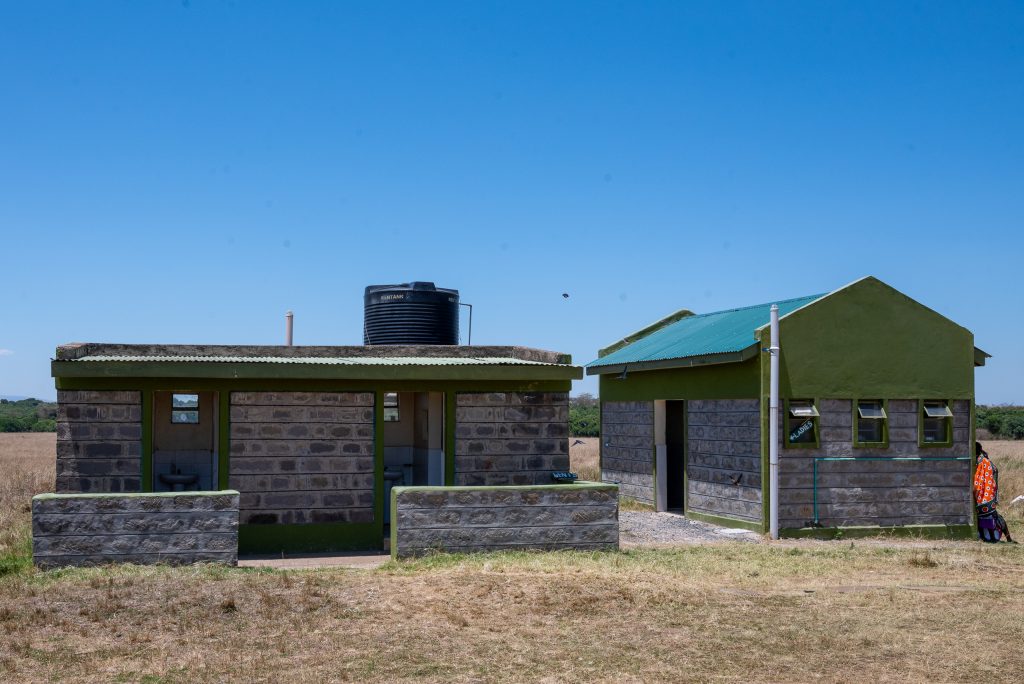
The airstrips are gravel for the most part and facilities rarely run to much more than a single shelter-type structure with a few benches where you can wait for your flight arrival out of the direct sun, a basic but perfectly functional toilet block and several Maasai women selling artwork and other souvenirs from small tables or blankets laid on the ground. Bottled water on the planes is often the only sustenance available between Wilson Aerodrome and your camp.
I hope our experience in transiting from the Maasai Mara to Amboseli was unusual. At our first stop (still in the Maasai Mara) we were asked to disembark to allow refuelling. Next we saw several other tourists appear and start boarding the plane and were told that we would have to wait whilst the plane flew them to another camp then returned to collect us. Cue much jostling in a cramped interior as we re-boarded to rescue hand luggage left on the seats. The plane disappeared with our hold luggage still aboard with us under the airstrip’s sun shelter hoping it would return to join us. So, communication to passengers by the crew can sometimes leave a little to be desired. That said, there is no other realistic way to reach these locations and distances are such that flights from Nairobi to the Maasai Mara and Amboseli are usually less than an hour long.
Mobility Access
Distances from departure hall to plane at Wilson and from plane to safari vehicle at the airstrips are a short walk over flat ground. The planes have a three-step airstairs for passenger access and the most difficult aspect is manoeuvring around the cramped interior of the planes. I am assuming your ground transport from JKIA to Wilson, and to any intervening hotel, will have been pre-arranged. I cannot comment on taxi or other transport services in Nairobi.
Safari: The Nature of the Beast
People going on safari range from first time bucket listers or honeymooners, who may never return, to regulars who come back to the same place time and again. It is difficult, therefore, to write a sensible advice piece that caters for all. Guidebooks and websites cover the essentials of the structure of safaris in considerable depth and this, from Audley, is a straightforward introduction – https://www.audleytravel.com/africa/region-guides/typical-day-on-safari. I will cover some aspects of safaris when talking about the two places that we visited and confine myself to a few other, perhaps rather simplistic, comments.
The first thing that always strikes me is that safaris are essentially sedentary holidays, unless you are doing walking safaris. You spend all day sitting in vehicles or relaxing in camps and are fed three substantive meals a day. The time you are in camp is often the hottest part of the day and, for me, the last thing I would want to do in that time is any strenuous activity. Throw in drinks that are often part of the camp package and you have a recipe for putting on some weight.
Another point for me is that, if you are a first timer or an irregular like us, the camps have a slight tendency to make assumptions about what it is you are there to see. I feel that they should take more time on a guest’s first evening to explain how the stay will be structured and what you can expect to see and where, allowing you to explain a little more what it is you would like to see and do. You are asked what you want to see but often just as you are about to set out on a drive, giving little space for reflecting on what the options are. Yes, I should have been a bit more assertive, but that is not my nature and I occasionally felt our time suffered because of this. So, if you can, try and get a proper sense of what is on offer at a particular camp when you arrive, perhaps even asking if you can sit down with your guide (you usually have the same one throughout your stay) on your first evening.
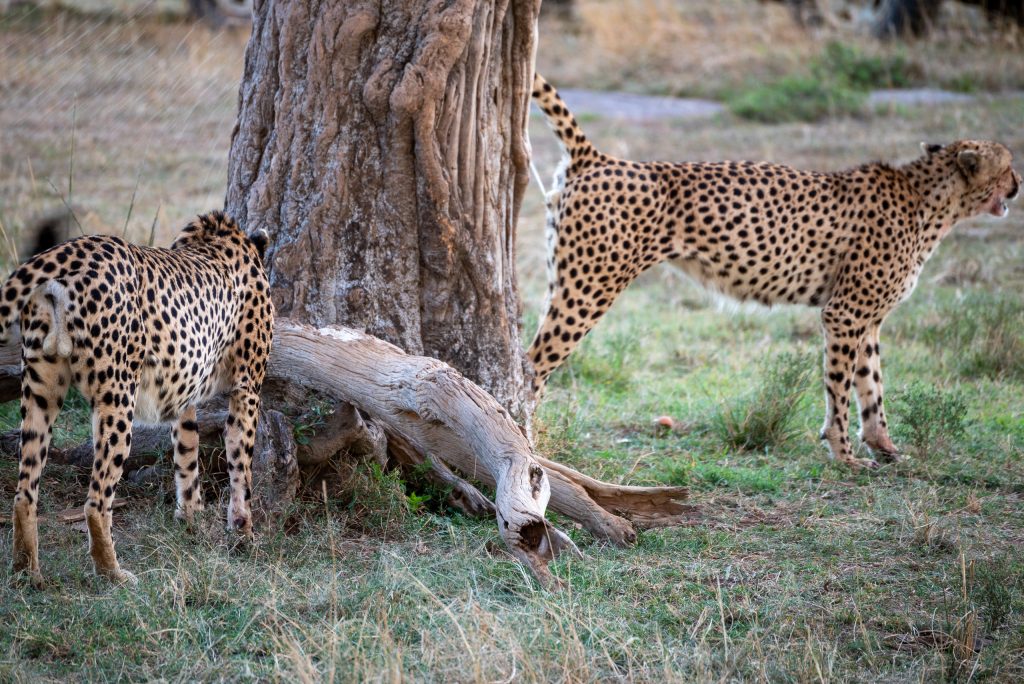
My last point is that, unless you take it upon yourself not to do a drive, safaris can be pretty full on with long drives, early starts and late finishes. This gives rise to a couple of issues. First you need to be aware of your need to ‘water the trees’ or, if there be no trees in sight, ‘water the grass’. Toilet facilities being somewhat thin on the ground, you have to be prepared to commune with nature, the more so on day-long drives. Vehicles often carry basic supplies (toilet paper and hand sanitiser) and there are occasional facilities, like those basic toilet blocks at the airstrips, although we were never near one at the appropriate moment on our days of meandering drives. The constant round of drives means that the sort of reflection time we like to take on holiday is not built into your time. The assumption is you always want more. A simplistic observation is that most people rarely stay in any one place for more than three nights and this encourages rushing about chasing the elusive game sighting. For the slow traveller you have to be strong and build in your own reflective time.
Maasai Mara (Speke’s Camp)
The home of the herd migration in Kenya and the key to our trip, hence a stay of five nights. The nature of the experience that you have in any particular game reserve is wrapped in with the nature of the camp you are staying at and the way it offers the safari service. So I start with Speke’s Camp (https://www.spekescamp.com). This is a small, independent camp. The ten tents are linked by cinder gravel paths to a central public space, largely open-sided, with dining, bar and lounge areas and the obligatory fire pit set in the small lawn to the front, beyond which the land slopes gently upward to a nearby tree-lined ridge. This is not a public space with spectacular view over wandering wildlife, but it had a special charm appropriate to the scale of the place: the stately heron prowling the adjacent swamp for frogs in the morning, the families of field mice venturing out on to the lawn for seeds and crumbs as the day warmed (and scuttling back to their hideaways in the long grass at any signs of human movement), the vervet monkey scooting along the tent ridges hoping for a lack of staff watchfulness and the genet that padded across the concrete of the public space as we sat chatting by the fire. There is a separate library-cum-lounge space by the vehicle drop-off and pick-up area which is the only place in camp where Wi-Fi is accessible. The camp is unfenced so, after dark, you have to be escorted around by a guard with stick and flashlight.
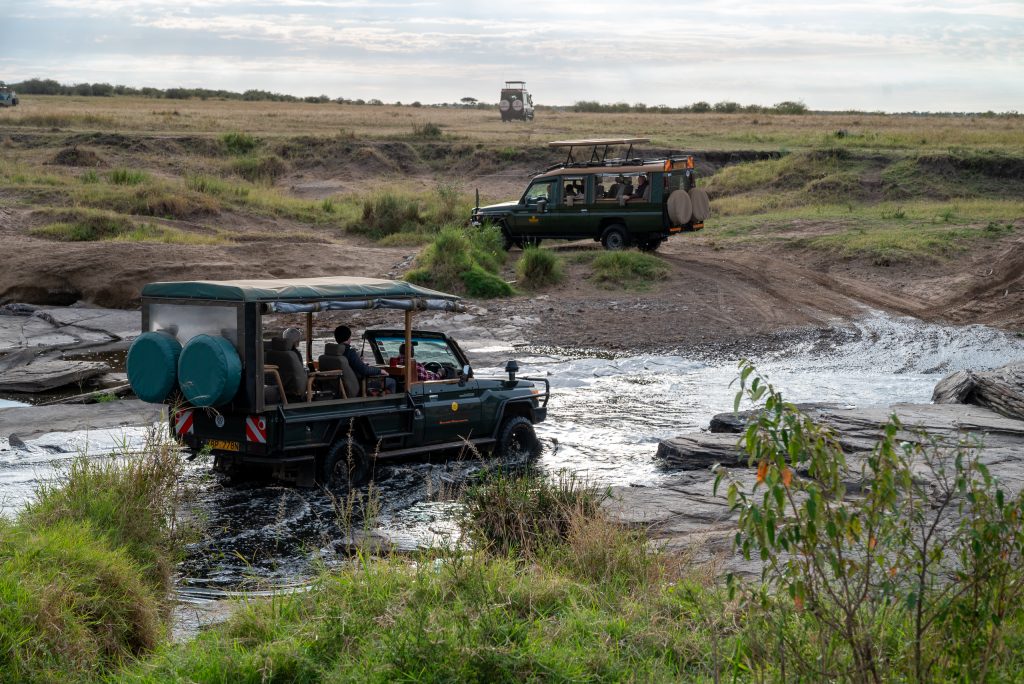
The real strength of Speke’s Camp is that each group, be they alone, in a couple or a foursome, has their own safari vehicle with a guide and a spotter. This means that you can make the game viewing tailored to your needs. A feature we eventually took advantage of when, the guide having proposed a day-long drive seeking the fairly elusive rhinoceros, we indicated that we wanted to see if we could see the herds crossing the river. The camp is just outside the northern boundary of the Maasai Mara National Reserve, but with incredible access to the big cats that abound in this part of Kenya. However, it does mean that it is a little further from the main river crossing areas which can only be visited in day-long drives. This means, from a pre-dawn 06.00 start, you are not back in camp for another twelve-plus hours. It is worth it, but it is tiring and you are longing for that hot shower and that ibuprofen (for your aching back).
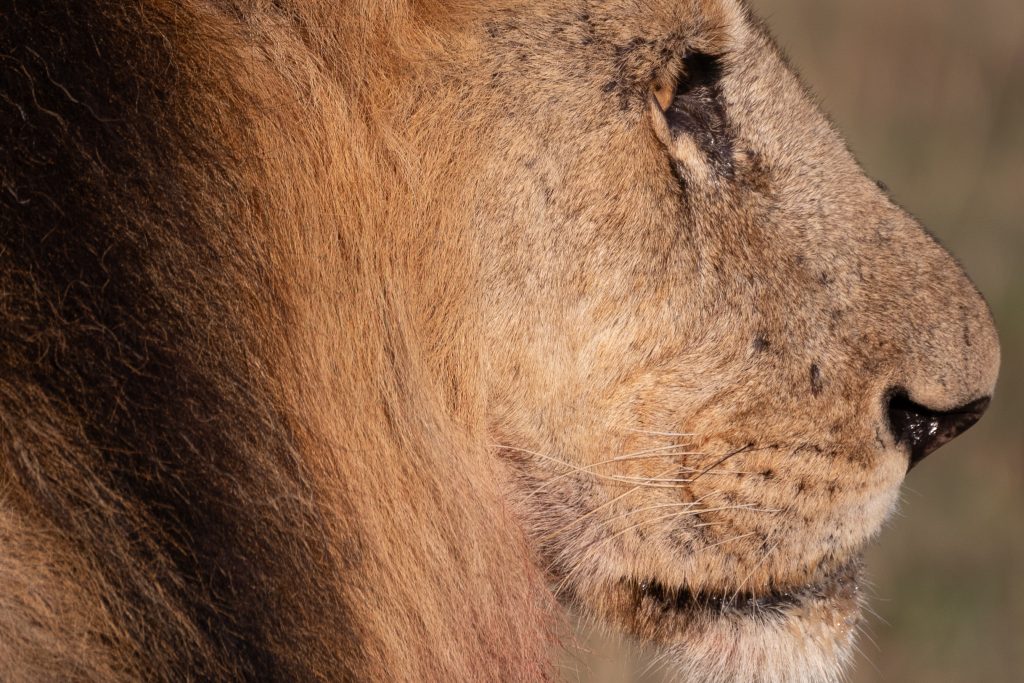
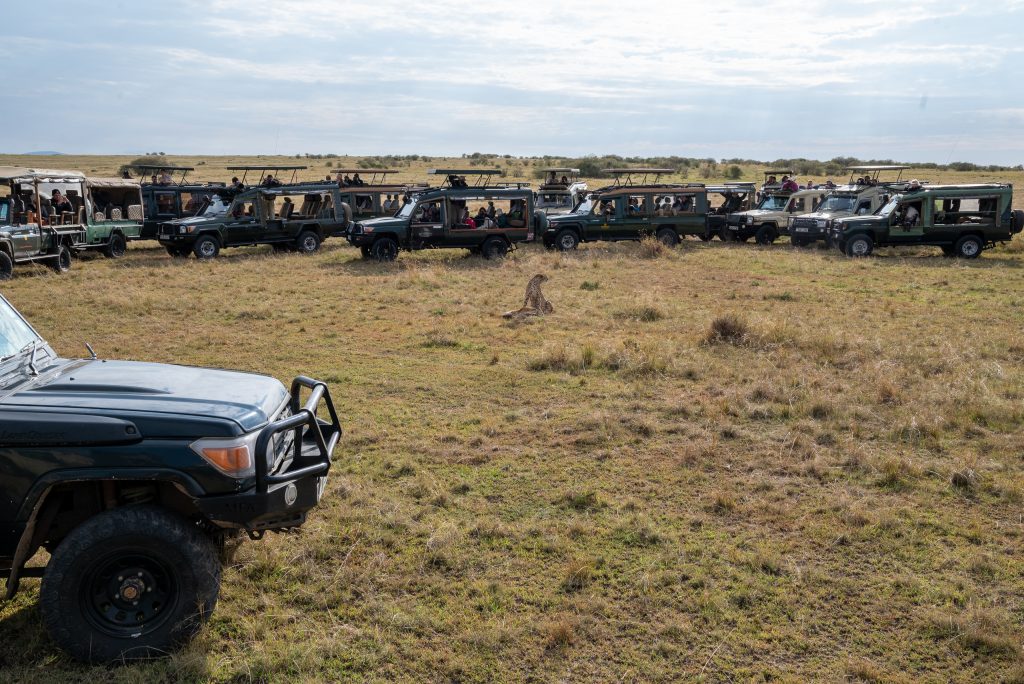
Watching, indeed being amongst, the immense herds of wildebeest and zebra is a magical experience, as is seeing them crossing the river (sedately in our case, for the Sand River where the crossing was taking place has no predatory crocodiles) with seemingly no end to the slow march of herds from Tanzania on the far bank. Parked in the midst of a herd, the only vehicle for miles around, was what we had come to revel in. Of course the Maasai Mara is known for its abundance of all sorts of wildlife and that means plenty of predators. The guides seemed, to me, slightly over-focused on the big cats. Yes, there is magnificence in the male lion basking on a rock amidst the grassland. Yes, the lion cubs gambolling around their recumbent (and long suffering) mother are the epitome of cute. Yes, the leopard, returning at dusk to claw its way up the trunk of the acacia tree to feed on the kill it has hanging across the branches well out of reach of scavengers, is a spellbinding sight. Yes, watching the blink-and-you-miss-it speed of a cheetah kill after the watchful stalk across the grass is so special. But such is the draw of these events that they can often turn into a mêlée of vehicles swirling around the beasts (who are utterly indifferent to their presence) to put their guests in position to get the ‘best shot’. One evening we stood in our Land Rover watching a pride of lions stalking a distant group of zebra in the company of a deep semi-circle of fifty other safari vehicles (sad to say I counted them). I found myself rebelling against this circus performance and longing for an experience like the wonder I felt watching the birth of a topi (https://www.youtube.com/watch?v=fHFFXtKUlpw), from the breaking of the mother’s waters to the sight of the new born finally acquiring the balance and strength to follow its mother away across the grassland; the whole enhanced by the fact there were no other vehicles that seemed interested in something as dull as an antelope.
Food at Speke’s is a no choice, three-course option at lunch and dinner. Breakfasts and, on all day drives, lunch were taken in the open. The shade of a suitable acacia tree is found then a table is laid out with camp chairs and a selection of cold foods. We found the food in camp of good quality with sensible portions (i.e. not too much) including a quality selection of fruit and vegetables. Given the links Kenya has with the Indian diaspora, curries and accompaniments feature but by no means exclusively. Tents were what seems to be a standard sort of size for such places (those at Tortilis were the same size). A tented ‘room’, of about 4 x 7 metres (about 30 square metres or just 300 square feet) with a ridge around 3.5 metres (11 feet) high has a large bed (or beds), a small desk and chair, some basic hanging space and a small patio-type area out front, overhung by an awning with a low table and chairs for sitting. Added on the back end of the ‘tent’ is the bathroom section of a good size with shower, basins and toilet. At Speke’s the rusticity came from the fact that hot water comes but twice a day (morning and evening at times of your choosing) delivered by your valet (their designation) filling a large canvas ’bucket’ which is then raised outside, to provide water for a shower and shaving. Also the eco-friendly power systems are switched off at certain times of night and day when you are out or asleep.
Mobility Access
I am in two minds about this. Should I go full-on red or a very cautious amber? On any safari you are going to be subjected to the rigours of travel in safari vehicles moving over rough, sometimes very rough, terrain. Seated you may be, but you need to be able to manage being jostled around across periods of several hours. There are stops to stretch limbs, but the bumping and jarring may be difficult for those with poor stability or weaker backs. Within Speke’s Camp the distances between the various parts are not great, but you may still be having to walk around 200 metres between the public space and your tent and the cinder paths, whilst essentially flat, are not the best surfaces for those with joint and stability concerns. Some of the tents are not on flat ground; ours having a noticeable slope from one corner to another that was not always easy to negotiate, even for those with reasonable stability of limb. Also the floors are a species of coir matting, which can be quite uncomfortable to walk on for urban wimps with soft feet. There was also a step up, as well as a slope upwards, to get to the bathroom. Not always easy to negotiate in the middle of the night.
However, the camp staff are so helpful that you can rely on them to try and find ways to make life easier for you, but still careful discussion with your travel adviser before you go or with your guides when you are there is needed to make the most of a safari without having too many difficulties.
Amboseli National Park (Tortilis Camp)
Moving camps allows you to experience different landscapes as well as different varieties of animals. Amboseli National Park certainly offers that. Unlike the rolling landscape of the Maasai Mara, here the flat grasslands and seasonal lake seem to stretch endlessly to a horizon that contains a grey line of hills. Occasional small ridges, kopjes, rise like biceps above this flat landscape. Swamps, fed by glacial meltwater from Mount Kilimanjaro, create shallow lakes where wading birds abound. And, as well as the game (the elephant herds in particular), some people come for the views of Mount Kilimanjaro south across the adjacent border in Tanzania. Recommended by our travel adviser as a second base, it provided a nice contrast both to Speke’s Camp and to the game and landscape of the Maasai Mara.
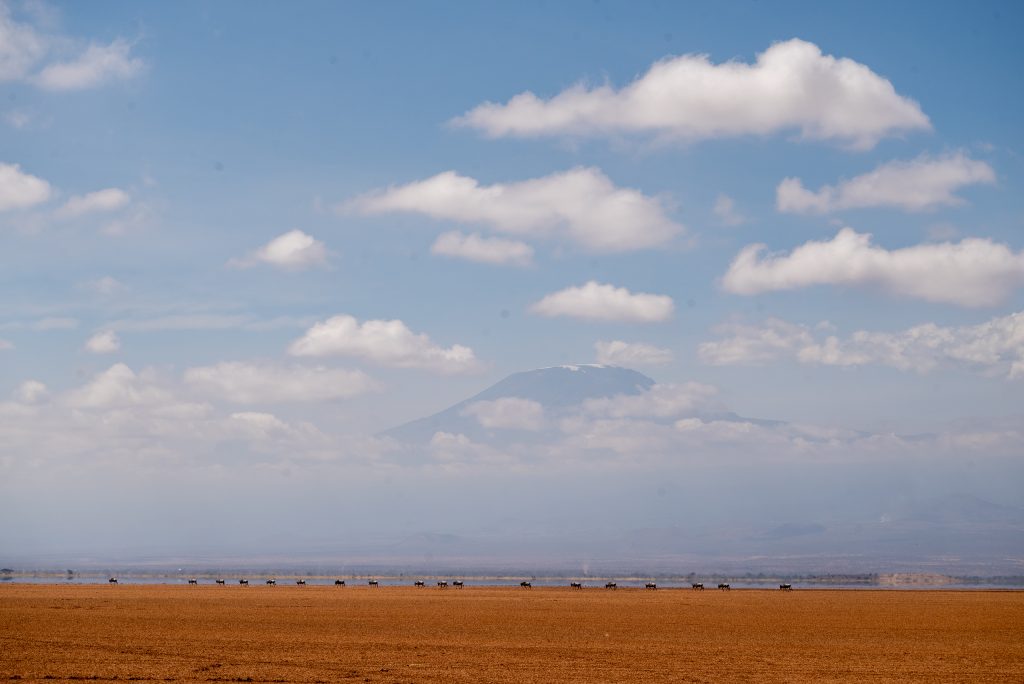
For three nights we were at Tortilis Camp (https://www.elewanacollection.com/tortilis-camp-amboseli/at-a-glance). This is part of a chain of camps in both Kenya and Tanzania and, although larger than Speke’s Camp, we did not find it at all corporate or resorty. Far from it, as the staff here were excellent, from the guides through all the front-of-house and catering people to the wonderful person looking after our tent. In fact there are only sixteen tents here and, although the overall ambience is less rustic than Speke’s Camp (a more permanent feel to the tents with solid, flat wooden floors and a slightly more luxurious feeling to the furnishings and the public areas), we found it a peaceful and enjoyable place to be. Its location is a winner of course. The public areas sit up the slope of a kopje and look across the valley floor to Mount Kilimanjaro’s grey, snow-capped pyramidic shadow. The public areas are, effectively three linked spaces – reception, bar/lounge and restaurant. All open-sided and with the latter two looking out, not only at the mountain but also a waterhole on the valley floor that attracts a range of daily visitors from elephants to baboons. The guests’ tents, the outdoor swimming pool and the spa rooms sit on the valley floor, down the hill from these public spaces. Stone paving and concrete paths that are pretty smooth link all these areas. However the public spaces do sit about 40-50 metres (about 130-165 feet) above the valley floor which means that, as Amboseli is 1,150 metres (about 3,800 feet) above sea level, quite a puff-inducing walk along the linking path that zig-zags up, or down, for around 200 metres.
Food here is buffet-style with a good selection of main dishes, including vegetarian ones, along with plentiful vegetable and salad options and a daily pasta bar. To say the food at Speke’s Camp was, to my taste, marginally better, is only to denote a personal preference. Wine and beer (other than premium ones) were included in the package, although the bar had a good cocktail selection (judging by the way other guests indulged) and a wide choice of other wines and spirits. Staff were unfailingly helpful; available and friendly in that low-key Kenyan way I found so engaging.
The camp is fenced so larger game cannot gain access. The light-fingered baboons can however, and tents have to be properly secured to prevent them gaining access to get at anything from stray food to those shiny metallic wrappers containing your prescription medicines. Thankfully the more frequent visitors when you are sitting at your tent patio are the birds and the tiny dik-dik who seem remarkably unafraid of your presence as they munch on bush and grass. Drives are twice daily with the usual break for lunch and relaxation between about 11.30 and 16.00. Here drives are shared with other guests, albeit there is usually no more than one other couple in the six-seater vehicles. The flatter landscape means there is less dynamic lurching than in the Maasai Mara (no streams with steep banks to negotiate here) but no-one could call the ground smooth, except when you are crossing the wide expanse of Lake Amboseli in the dry season. Dust is also a thing to be wary of here, at least in the dry season, as it kicks up and blows around making a face mask or covering a useful addition to your luggage. The dry heat and the dust means that small dust-devils are a constant feature of the wide open spaces, rising up to a 100 metres or more in the few minutes of their existence.
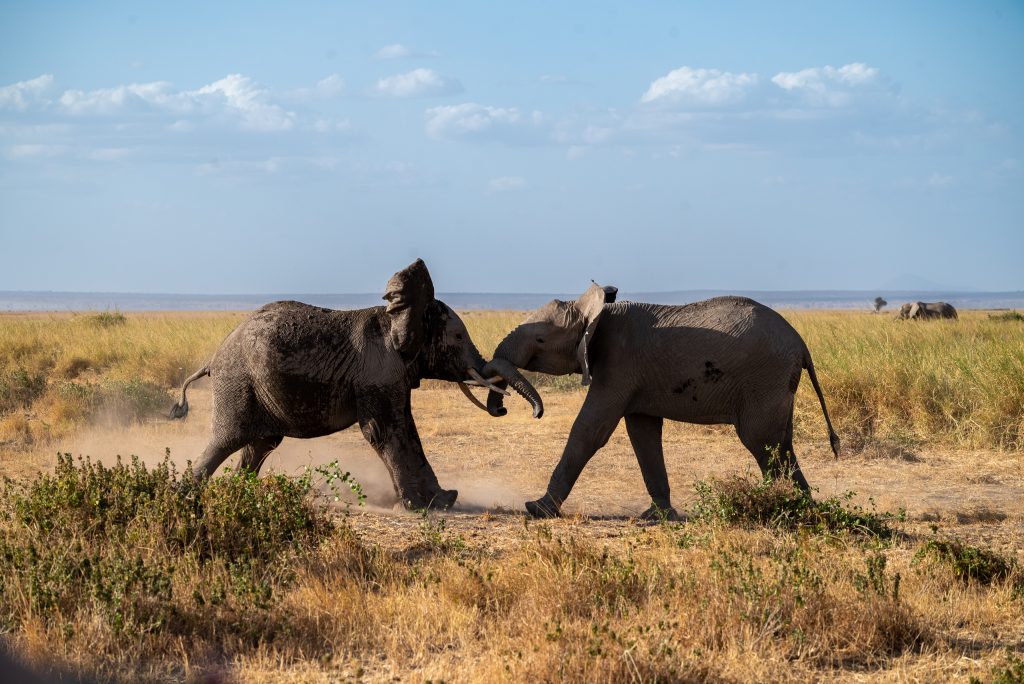
Amboseli does not have the wealth of game that can found in the Maasai Mara, but your interactions with the wildlife here retain their capacity to fascinate. The two male juvenile elephants tussling for dominance in a fight that seemed to have the same mix of bravado and lack of physical intensity that characterises two boys vying for status in front of their mates in the school yard. Zebra in the wide open grassland kicking up dust backlit by the setting sun. Two African Golden Wolf cubs tumbling around each other in the chill of a morning, their parents seemingly happy to leave them to play, for they were nowhere in sight. The white flamingos stepping along in line through the centimetres-deep shallows like dainty wildebeest crossing the plain. The matriarch of an elephant herd who takes deep exception to our disturbing her offspring trying to drink at a waterhole and will not quiet down until we are out of sight.
And I cannot let comment on Tortilis Camp pass without singing the praises of the staff who ministered to me on the day I fell prey to some bug that meant I spent the day in camp, much of it without the energy for more than podcast listening and rest. From dawn to dusk and beyond, whether I was in our tent or the public spaces, they were kindly and solicitous, offering to take me to a doctor, making suitable off-menu food, offering advice and, at the right times, just leaving me to rest.
Mobility Access
Because the paths are smooth and the public areas only have a few steps up or down to accommodate changes in level, the real concern here is the hill between the public areas and the guest tents in the valley floor below (see above). If you have a tent that is on the furthest south fringe of the camp you have an additional 200 metres or more to walk, even before the climb up the hill. Having said that a guest with a twisted ankle arranged to be met in a delivery yard at the lower level to be taken out on drives or ferried up to the public areas for dinner, again showing that, if needed, the staff have a helpful approach to solving potential difficulties. Drives were less impactful on the body than they were in the Maasai Mara and all are only four hours or less in length. You do not get all-day marathons.
Nairobi and the Ole Sereni Hotel
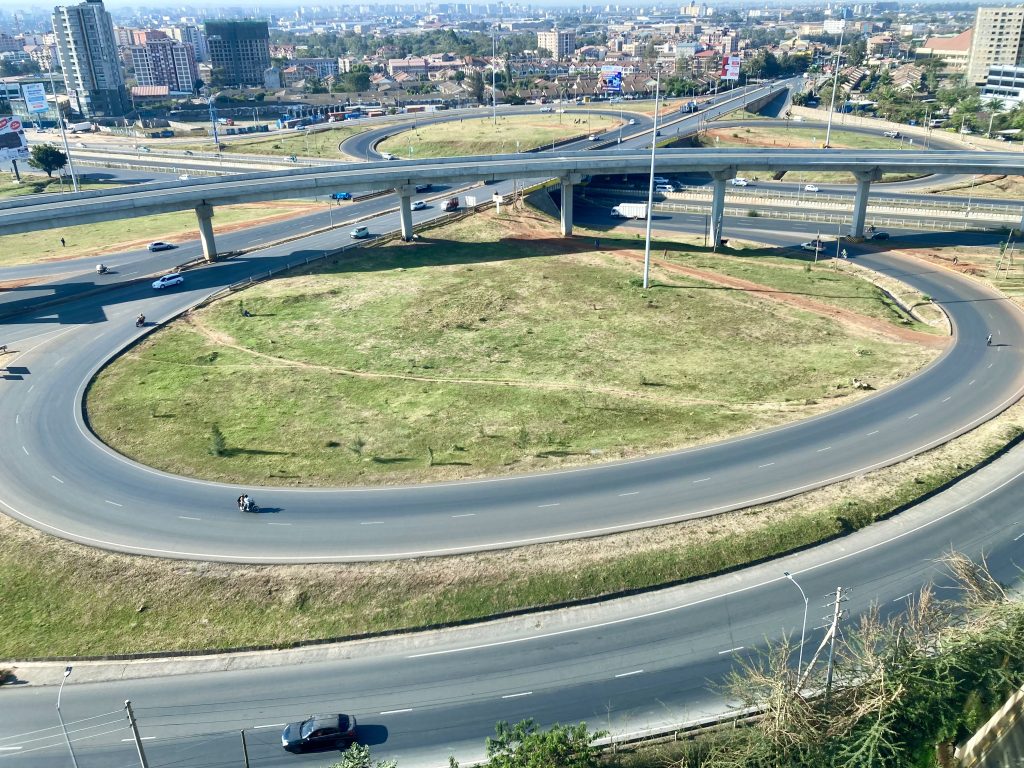
On our last day and with a morning game drive done at Amboseli (a fabulous bush breakfast complete with omelette station), an afternoon flight to Wilson Aerodrome left us with a few hours to kill before a near midnight departure from JKIA. Audley had made a number of very sensible suggestions (elephant sanctuary, Giraffe Manor, a market visit) to fill that time but, as slow travellers, we just wanted some time to sit quietly and read or write, hence the Ole Sereni hotel (https://ole-sereni.com). Conveniently situated for both Wilson Aerodrome and JKIA the pride and joy of this place is the rooftop Sky Lounge (bar, restaurant, deck, pool) that looks out over the adjacent Nairobi National Park. However it is also clearly a ‘go-to’ location for Nairobi-ites and ex-pats looking to meet, chat and drink. Thus the bar gets noisier as the evening approaches and the deck is bombarded with clubbable music from a series of large speakers. A place for a peaceful write or read it is not. We retreated to the near-empty coffee bar space in the lobby.
Mobility Access
Assuming that, like us, you have arrived by driven vehicle then there are no issues for those with mobility constraints with flat smooth floors and lifts within the hotel.
Practicalities
Bugs
The totality of Kenya was, according to our usual sources, a high risk area for malaria (https://www.fitfortravel.nhs.uk/destinations/africa/kenya/). The prophylactic, malarone, and keeping judiciously covered up are our means of seeking to deal with this. That said we were surprised how few bugs of any sort appeared throughout our stay. We were entirely comfortable eating or sitting in the open air and saw (and felt) fewer bugs and flies than you would on a warm summer evening if you sat or picnicked in the London parks. The only real insect presence we were ever aware of was that of the wasps seeking out the meats and jams at our bush breakfast.
Money and Credit Cards
Cash is needed for tips for guides and staff at the camps and for drivers doing transfers to and from hotels and airports. For that we used dollars. A safari trip like this is, in one sense, cocooned from real Kenya and we carried no local currency because, like so much of the world, the credit card does duty for most of those shops and services that a tourist interacts with.
Mobile Phones/Internet
For UK residents using a mobile signal outside North America and mainland Europe is expensive. I am sure there are those who get round this but, for us, it means we just don’t use phones, iPads etc. unless we have Wi-Fi available. If you can find some way to take advantage of the local networks, in the Maasai Mara at least there is clearly extensive mobile coverage. Our guides there seemed to use mobile devices in preference to the older-style radios (although they had both available) to communicate with camp and other guides. Camps for the most part seem to have internet available although, as at Speke’s, the range may be limited to a particular part of the camp. Ask about this during your booking research if this is a particular concern. We found the situation at Speke’s sufficient for our needs. After all, the game is the thing.