Prelude
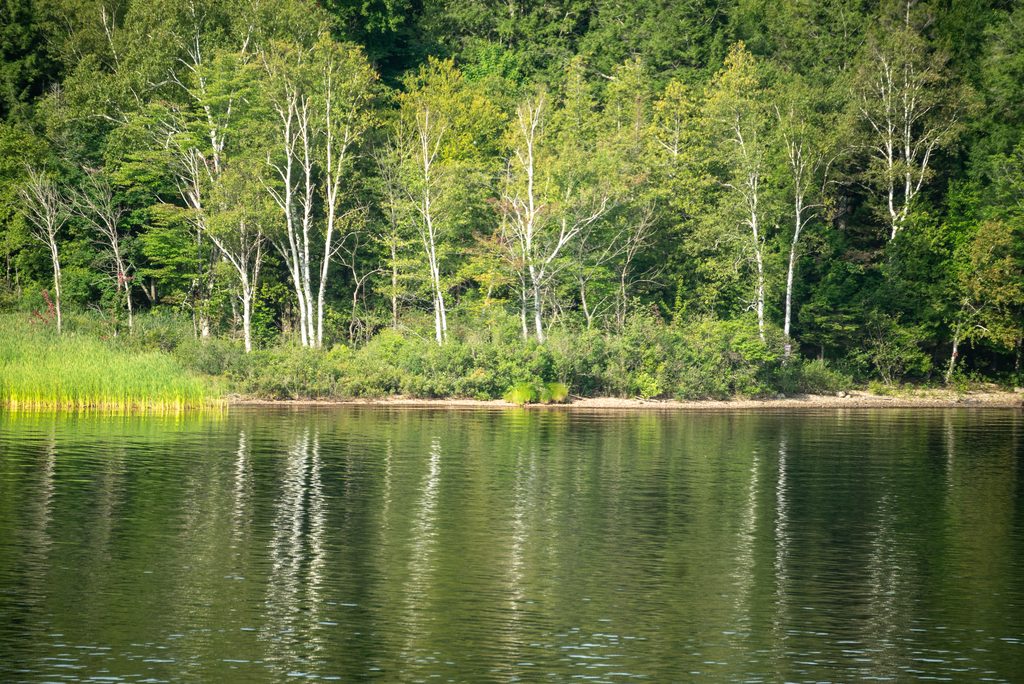
Unashamedly this was a trip built around tennis. In this case the Canadian Open tennis tournaments which are unique in the tennis world in that the men’s and women’s tournaments take place concurrently in the eastern Canadian cities of Montréal and Toronto, thus providing us with the ideal excuse to visit two cities we had not been to before. I will address the tennis complexes and the issues you face visiting them but, for those uninterested in the sport, there is plenty more to enjoy in both cities. There is a sort of rivalry between the two – Montreal is the older, but now very slightly smaller, city. It is elegant, slightly haughty, French Canadien to Toronto’s Johnny-cum-lately, more commercial, brashness. This is over-simplistic. We enjoyed both very much. Needing a bit of straightforward rest and relaxation we finished the trip with several nights in Mont Tremblant, a purpose-built resort in the wooded lakeland of the Laurentian Mountains north of Montréal.
Structure of the Trip
To give ourselves time to see both the city and the tennis in both urban locations, we gave ourselves eight nights in Montréal, six nights in Toronto and five in Mont Tremblant. The slightly longer stay in Montréal was simply a recognition that, as age increases, we now like to have just a little time to adjust to time changes. Although the itinerary was quite straightforward, we decided to use our travel advisers, Audley, both to suggest accommodation options and do all the necessary bookings (flights, trains, car rental). This means, as well has relieving us of the booking faff, we had a transfer organised for our arrival at Montréal airport, always helpful when you first arrive, faintly frazzled, after a long flight. We managed the booking of the tennis tickets ourselves, this not being part of Audley’s service offer and because care is needed to select seats that suit our particular needs. Circumstances also dictated that our choice of hotel in Montréal was not one of Audley’s preferred options.
We flew into and out of Montréal Airport. We moved from that city to Toronto by train and then, to get to Mont Tremblant, we took the train to Ottawa where we picked up a rental car to drive into the Laurentian Mountains. We then drove back to Montréal Airport to drop the car off for our return flight.
When and Weather
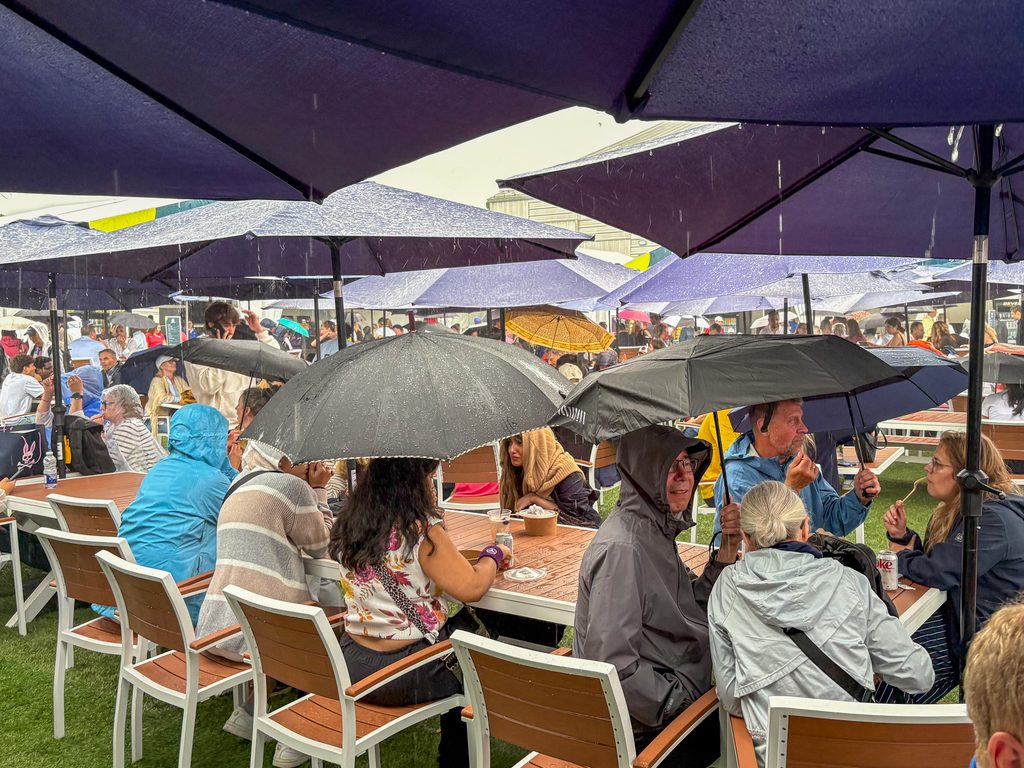
The timing, in the first three weeks of August, was dictated wholly by the timing of the tennis tournaments. August is not our usual time to travel. In this case the school holidays also coincide with the hottest and most humid time of year on the eastern side of North America. Even within cities set up for such weather (air-conditioning being an expectation) moving around the cities on foot is just a little more unpleasant for us, and somewhat busier, especially at weekends. In the cities we are talking about daytime temperatures up to 28°C (82°F) with an attendant soupy warmth to the air. However given that our home city (which is not set up with the expectation of air-conditioning) was sweltering in a muggy summer heatwave where the temperatures were many degrees higher, some part of us was thankful it was no worse. It may have been the Lake Ontario location, but the humidity seemed slightly less in Toronto. Amongst the woods and lakes of the Laurentian Mountains it was warm still but several degrees cooler. We had times of rain, occasionally enough to disrupt both our plans for outdoor activities and the tennis we were watching, but for the most part the memory is of plentiful scope to enjoy the two vibrant cities.
Flights/Airports
Air Canada provided the needful in and out of Montréal (the rather wordily named Pierre Elliott Trudeau International Airport, whose airport code is the slightly unexpected YUL). In London travel was from Terminal 2 at London Heathrow Airport. We flew business class, that being our favoured option in order to allow tall frames (in my case) and ageing limbs space to feel comfortable. As I have said before, in real world terms there is not a great deal to choose between the business class service and offer of most of the major carriers these days. Air Canada was no exception with perfectly good lounges (more substantial in their hub at Montréal as you would expect) and at-seat service and food offer. A plus mark for having a touch more space in the end of their pods than other rivals, at least in our recent experience, which made trying to sleep in their lie-flat seat somewhat easier for me.
Mobility Access
For Heathrow commentary see the piece on Travel from London. Montréal is a large, modern international airport so walking distances between the various working parts are inevitably lengthy, which means using the mobility assistance is needed to avoid unnecessary discomfort and severe restrictions on mobility over the subsequent days. At the Montréal end the service, like at so many modern airports, is now very good, with self-push wheelchairs available to speed matters at departure, and a wheelchair service on arrival that took us all the way through baggage claim to the arrivals hall. The concerns associated with the temporary construction works around the airport were specific to the car rental return and I have dealt with these in a separate section at the end of Part 2.
For information on getting to and from Montréal Airport you will have to rely on other sources such as the YUL’s own website (https://www.admtl.com/en-CA/parking-and-transport/transport-services) because we had the advantage of our pre-arranged pick up and had the rental car to return on our departure.
Practicalities
Language
This is no more than a reminder that the first language of the province of Québec (location of both Montréal and Mont Tremblant) is French. This has no practical consequences (every sign, website, menu, and display board you encounter as a tourist is dual language – French and English), other than to mention the fact that you must get used to the first language anyone addresses you in being French. As everyone you are likely to encounter speaks both official languages this does not really matter but, as there are many people whose English is quite strongly accented, as an English speaker you may find it takes a moment or two to attune yourself to full understanding.
Smoking
This is actually a word about marijuana, which is legal in both Ontario (the province in which Toronto is located) and Québec. Use is allowed for recreational and medicinal purposes. I only mention this because, like its tobacco counterpart the cigar, if you find yourself outdoors in the vicinity of a smoker (as I did one day in our Mont Tremblant hotel), the pungent aroma is actually overwhelming and, to me, annoying. So no more than a minor point to be aware of.
Time Zone
We are in the same time zone as the eastern seaboard of the USA, so five hours behind UTC for us Europeans at this time of year.
Cash/Tipping
The advice on whether to take cash is now near universal wherever you go. As the card machine rules the roost, take some cash but not too much, to use for tipping in restaurants, hotels and bars and for the occasional taxi whose card machine mysteriously fails to connect. Try and get some $1CAD coins to use for tipping bar staff and hotel porters.
Car Rental/Driving
For car rental, rinse and repeat previous pieces on this subject both in terms of the company used, here National/Alamo confirming that all major car rental companies have a broadly similar service, and on our needs by way of vehicle: an SUV automatic for ease of access, comfort and luggage access.
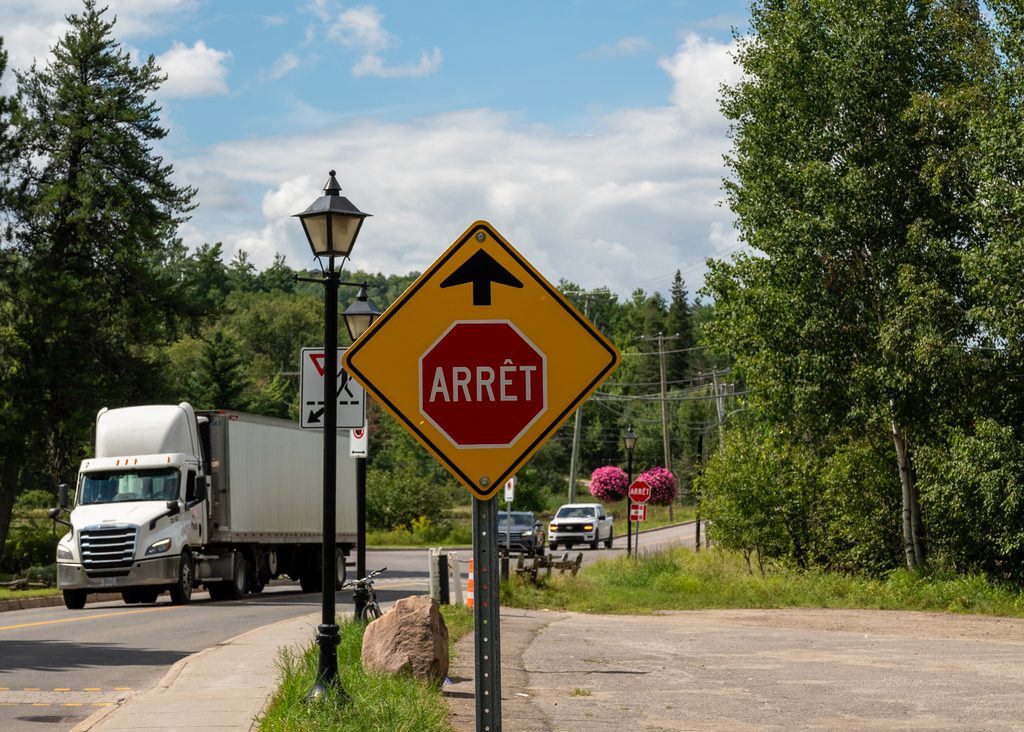
We actually did surprisingly little driving. It was a means of getting to and from Mont Tremblant, pottering around the resort area when limbs found slopes or distances a little too great to manage and for our one excursion into Mont Tremblant National Park. As is our practice in our travelling to and fro, we avoided the freeways/autoroutes, sticking to the lesser roads that offer us greater engagement with the landscape and towns and villages we pass through. Quite possibly for the first time on our driving travels, I did not take a paper atlas because we were doing so little driving. I missed having it but, as I have said before, in this I am a near extinct oddity.
Trains
We have always preferred to take the train for travels where it is realistic to do so. Canada’s state network, VIA Rail, offers up an almost airline style service in its business class seats on trips between the major cities of Eastern Canada, with a stewarded at-seat service that comes with good meal choice and drinks, both with and without alcohol. With trains taking 5½ hours between Montreal and Toronto it was a much more relaxed way for us to travel from city centre to city centre. The route took us through the low-lying landscape alongside Lake Ontario. The train to Ottawa from Toronto took around 4½ hours and gave us a different insight into the changing shield landscape.
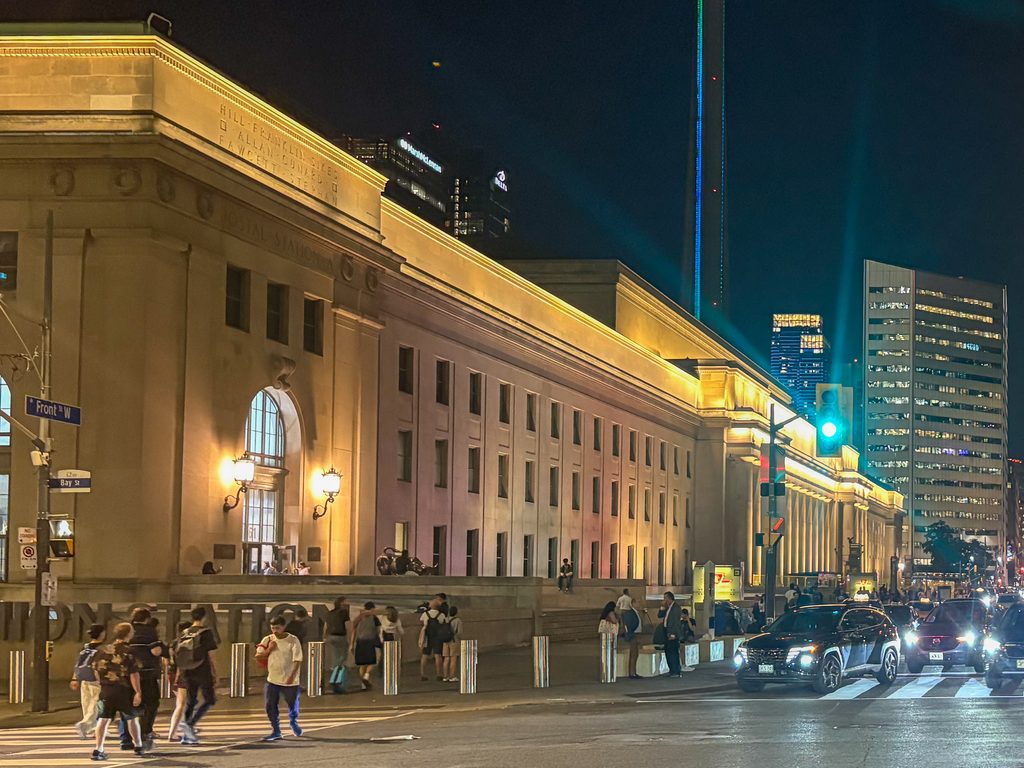
With business class trains there is a further similarity to airline travel. You have to check in ahead of your departure because they weigh your luggage (https://www.viarail.ca/en/plan/baggages). Woe betide you if it is overweight! One couple we saw had their cases open on the floor of the station concourse, transferring some items to carrying bags to reduce the weight of their cases. However there are comfortable lounges for use on the main station concourses, although they lack the food and drink offer and some of the additional facilities of their airline cousins. You are given priority access to the trains (for economy seats, large queues form at the entry point to the relevant platform). Luggage capacity can be at a premium on busy trains. On our full Montréal to Toronto run we had to place our cases in luggage space two cars down as that in our car was full. Staff to help you sort this out are plentiful and helpful.
As an aside I confess to being entertained in Montréal’s Gare Centrale by seeing on the departure board a train to London via Aldershot.
Mobility Access
Movement between levels at the main stations is usually by escalator which can take some care if you are dealing with large cases. Within station concourses there are walks to be taken between drop off points and lounges/check in areas and the platforms. We did not find these unduly consequential but if you may find it too much, VIA Rail does offer an assistance service. Just be aware that some Canadian platforms follow the North American model in that they are lower than the standard European platform. In some cases access to the cars can require several steps up or down and this can be awkward when you have cumbersome cases. This was not the case at Montréal’s Gare Centrale but is more the norm at Toronto’s Union Station.
Reading
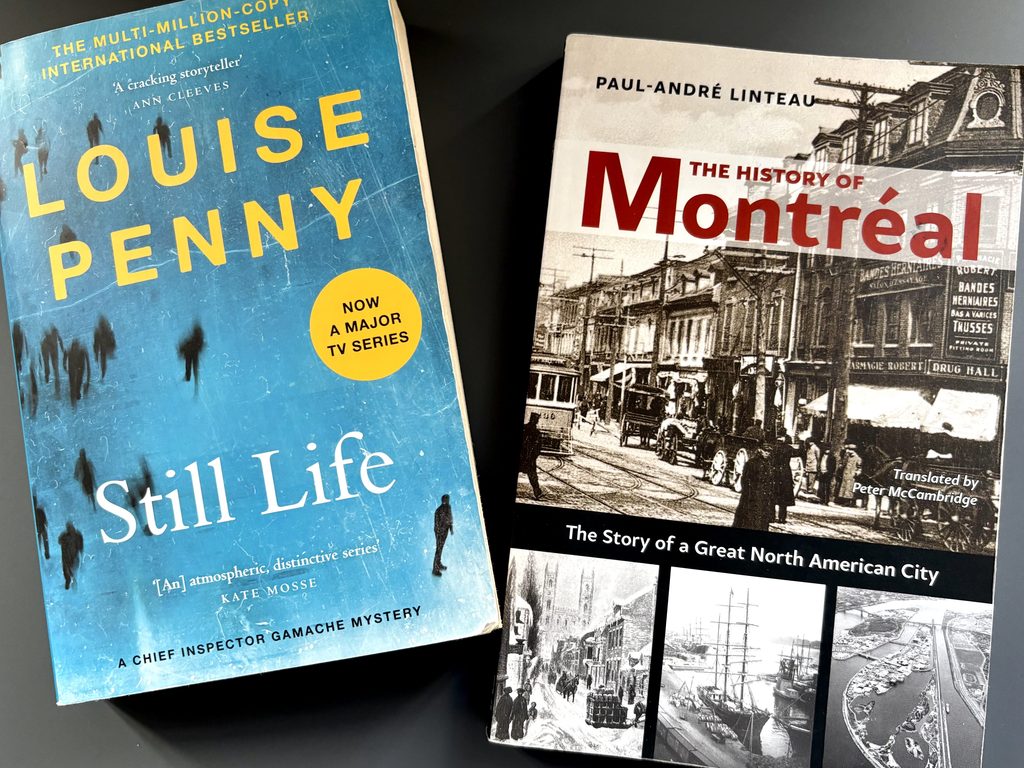
Our enjoyment of reading about the history and place of the regions we are visiting found two very different sources on our travels. Still Life by Louise Penney is the first of a series of garlanded crime novels set in the Eastern Townships, the wooded and open land that lies south of Montréal down to the US border. Her protagonist is Inspector Gamache, a French-Canadian detective in the Montréal police. The books are very much in the classic ‘whodunit’ mode. To us, the thoroughly enjoyable first book evoked a sense of place that is the hallmark of those series that work best in the crime genre.
The History of Montréal by Paul-André Linteau (https://www.barakabooks.com/catalogue/the-history-of-montreal/) was purchased in the eponymous city and was prompted by our visit to the museum of the city’s history, Pointe-à-Caillière. Wanting to know more about the city’s development we purchased this short book in the museum shop and it provided a straightforward, lucid history that was ideal for the traveller. It seems only to be readily available outside Canada as an e-book.
MONTRÉAL
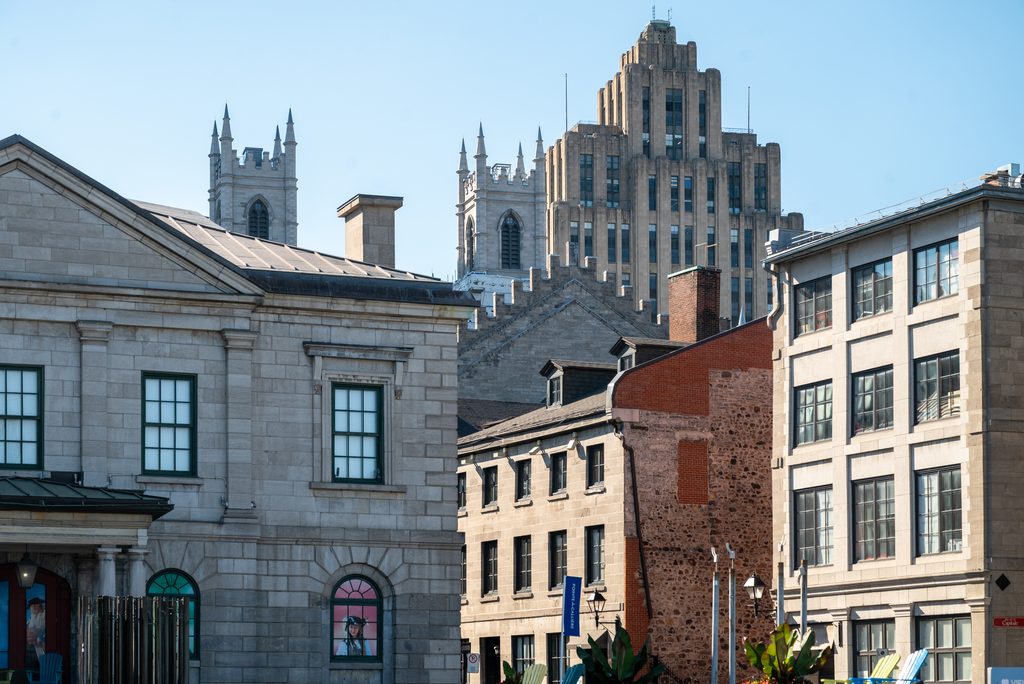
Like many a great city engagement with Montréal comes from the many facets that the visitor can enjoy. Aside from the tennis, for us it was the museums, the ambling around on foot, testing out the cuisine and the time spent just watching the diverse world of the city pass by. The three full days and evenings of tennis watching meant that I had the sense that we did not give the city the time we normally would do to allow us to appreciate its many elements.
Four Seasons Hotel
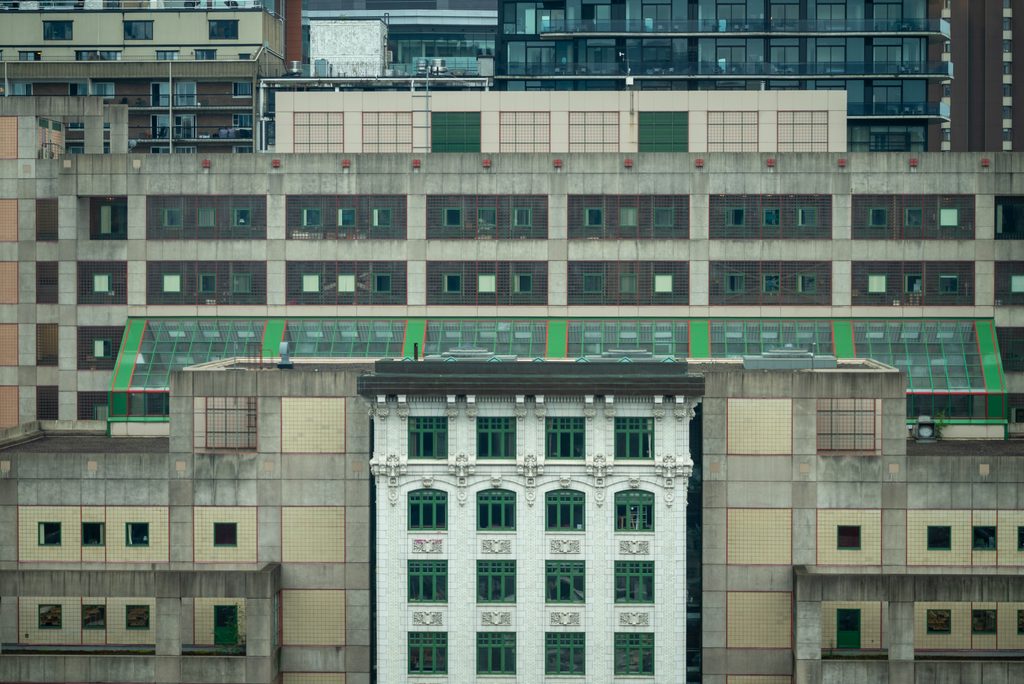
The Four Seasons is a tower hotel set in amongst the eclectic architecture of Montréal’s Centre-Ville not far from the city’s main shopping street (Rue Sainte-Catherine Ouest) and the excellent Musée des Beaux-Artes. For this pricing you expect luxury and in terms of room facilities, relative size of room and en-suite, service and facilities (including an excellent pool) you do get it – for the most part. The fact that the touch screen panels to operate lights, curtains, air-conditioning and contact with staff services used symbols whose relevance was not obvious and that I could not read, even with my glasses, was only a minor irritation. As was the relative, and I mean relative, quality of service in the busy main restaurant (on occasions we were kept waiting too long, without explanation, to be seated or for orders to be taken). The other staff, especially the reception staff, were very helpful and attentive. What would put me off staying again (and at any other hotel in the group) is the sense of bling that hovers over the décor, the guests and the ambience. The over-loud dance music playing in both the entrance lobby and reception was quite off-putting, especially when they are places you may have to sit whilst taxis arrive or queries are dealt with.
Mobility Access
Street-level, step-free access to the entrance lobby and direct lift access to the reception level, supplemented by a bank of lifts to all guest floors, meant there were no issues here. It was just a step further from the bus stops than we would have liked. We found we were using Uber for more journeys than we might in some modern cities.
Sights and Activities
Pointe-À-Callière (Museum of Archaeology and History)
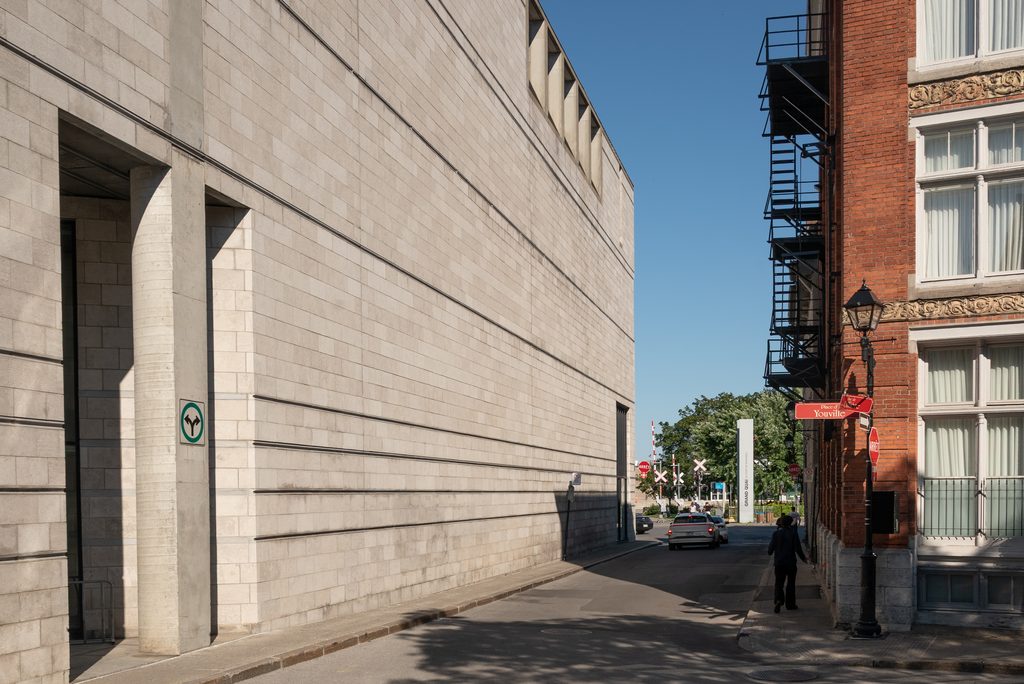
Pointe-Á-Callière, focusing on the history of the city, seemed a good place to start our exploration of Montréal. With its entrance in a modern building that reminded me of James Stirling’s 1 Poultry building at the Bank junction in London, this museum opened in 1992 to offer a permanent exhibition about the city’s history. It is combined with the display of the structural remains of the earliest French colonial city unearthed during construction, which have been left in situ in the basement spaces. There are also changing temporary exhibitions across the sprawling site which reaches across the street, below ground, to the rather more mundane (architecturally) modern building that contains the museum shop. We focused on the permanent exhibitions which we did find lacked a certain narrative coherence. There were fascinating elements, such as the focus on the 1701 ‘Great Peace’ brokered between the French and the squabbling indigenous peoples, but odd-seeming omissions; at one point it was the heart of a French colony, the next it is part of British Canada with no sense of what had led to the change. It was this seeming lack of coherence that led to us buying The History of Montreal (see the Reading section above) in the museum shop to fill the gaps.
Mobility Access
Another very good page of accessibility information is provided by the museum website. We made use of one of their available wheelchairs. If you find spending some time on your feet tiring you may find this facility helps if you want to visit the meandering permanent exhibition. Access to the ticket office area from the street is straightforward with either four steps up to ground floor level or a wheelchair slope if needed. Within there are carefully constructed walkways over most of the underground ruins with chair lifts linking sections at differing levels. However the main hall below ground that starts the exhibition has retained the higgledy-piggeldy, humped and bumped paving stones of the 17th century city. These are a real effort to negotiate in a wheelchair and could be a concern for those who have difficulty with balance.
Musée des Beaux Artes
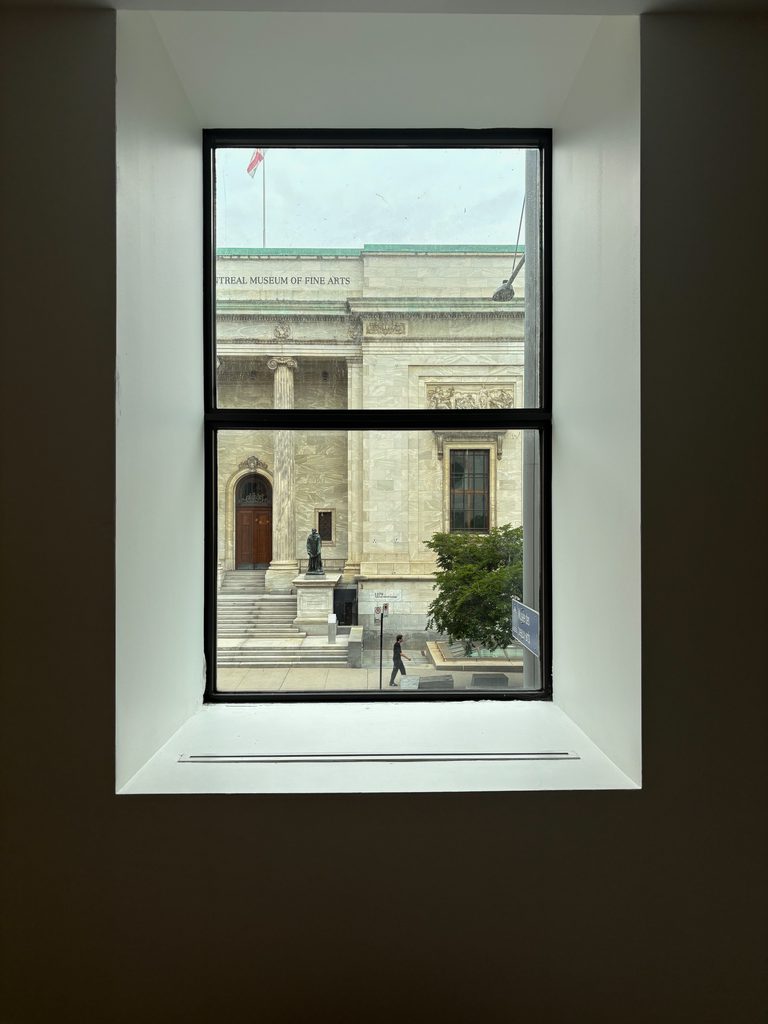
Montrealers do like their sprawling museums. This one (of Fine Arts) is even more so than Pointe-À-Callière. Set 350 metres up the slope from our hotel, this eclectic mix of buildings spreads either side of wide Sherbrooke Street West. It houses an almost bewildering mix of fine art across the ages and continents, most in permanent exhibitions and some in temporary ones. Many European ‘names’ are there, sharing space with their North American counterparts. We spent several enjoyable hours before we started suffering from visual overload and had to head out to find a suitable café.
Mobility Access
Wheelchairs or folding stools if needed. Many benches dotted through the galleries. Lifts where needed; the same for slopes. Easy access from the street at least from the south side into the main entrance hall. We did not venture into the galleries across the street, which can be accessed below ground from the main entrance hall. There are bus stops a-plenty on Sherbrooke Street West.
Walking the City
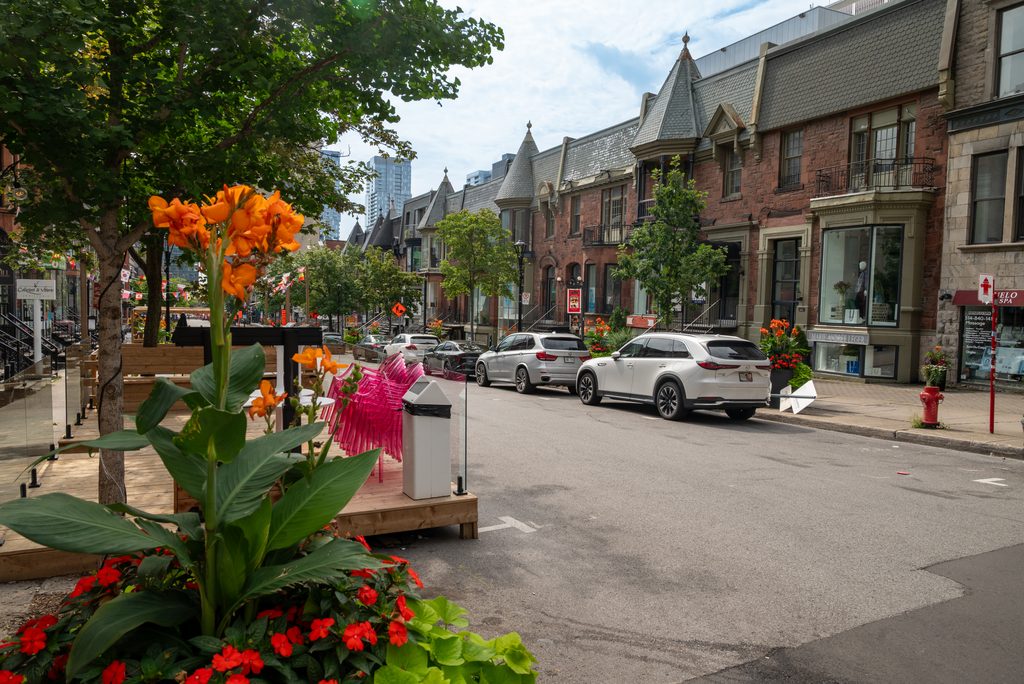
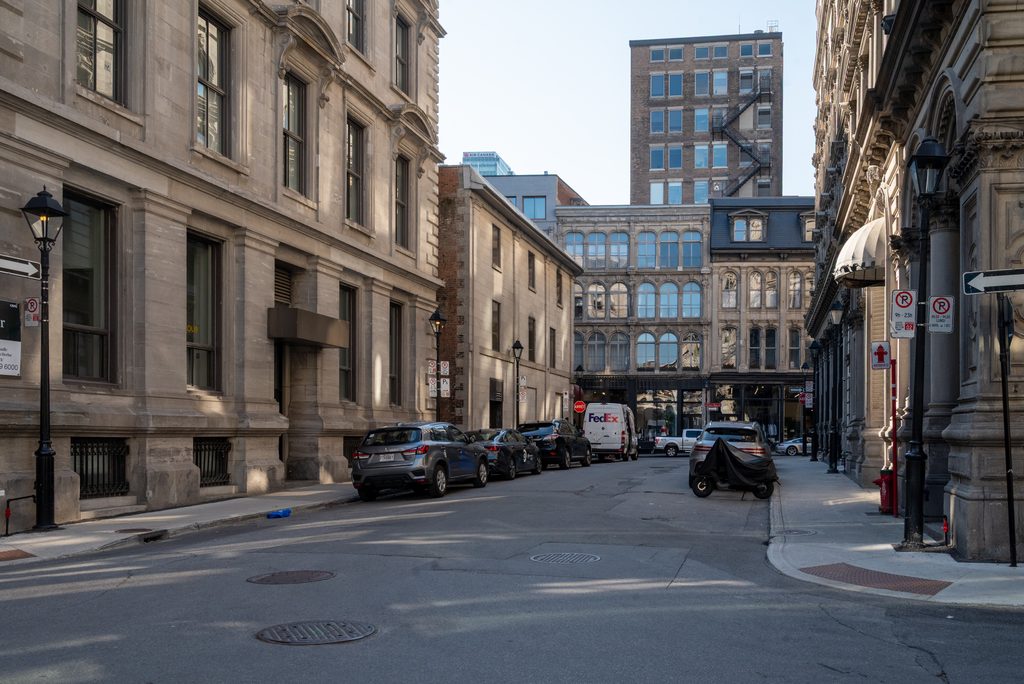
Tennis and other factors meant only one walk was taken in the city. It was a slow amble from the hotel across the Centre-Ville area and down the city’s slopes and terraces to Vieux-Montréal’s waterfront area. Perhaps because I had not had the time to feel my way into or around the city, I found my overall impression was that the individual areas of the city are somehow detached from one another. Perhaps this is emphasised by the stepped nature of the terracing. Each slope down from one terrace to the next seemed to move you from one environment to another. The Centre-Ville area around the main shopping street of Rue Sainte Catherine Ouest is a real mix of 19th century terraced houses, now repurposed as retail and food outlets, with larger office buildings from late that century and the early twentieth similarly re-purposed. In amongst these are dotted the glass and steel office or hotel blocks of the modern era. There are grand buildings (The Ritz-Carlton, the Musée des Beaux Artes) but they are spread around so the streetscape lacks coherence. The same critique could be levelled at London, for example, but for me that is saved by its medieval street pattern that, even today, imposes itself on the layout of the modern tower blocks. Here the grid pattern seems to lack something I find difficult to pinpoint.
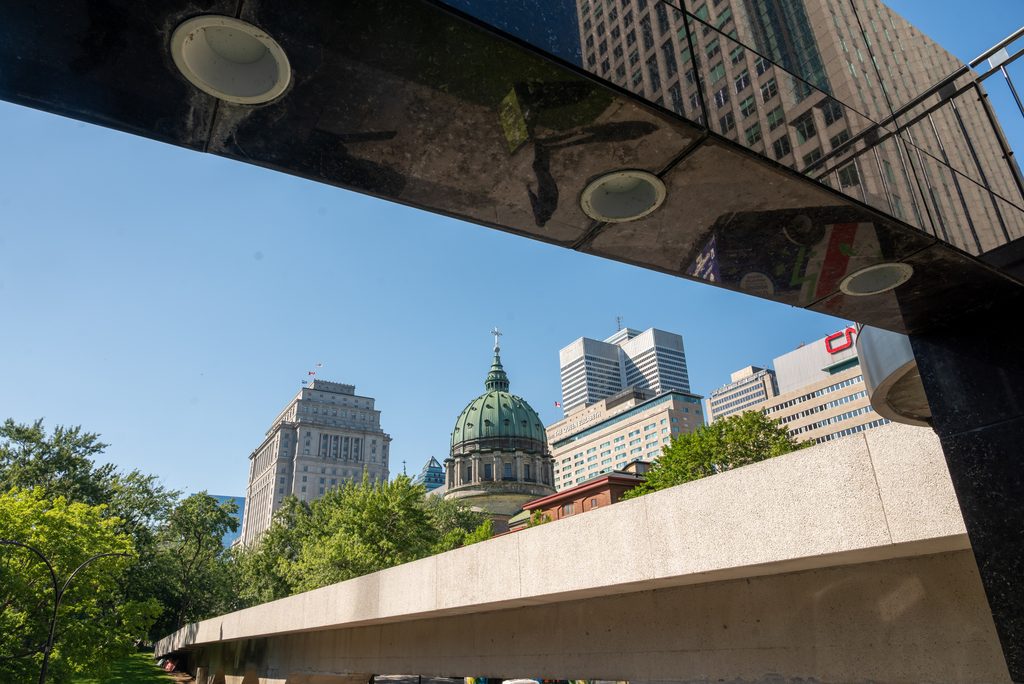
From here you move south across the next terrace and the green spaces of Dorchester Square adjacent to the Basilique-Cathédrale de Marie-Reine du Monde, a 19th century cathedral modelled on St Peter’s in Rome. From there a modern high level walkway cuts across the green space but seems to lead nowhere, except to the base of yet another tower block. There are steps down that bring you onto the slope down onto the next terrace level. Here the dictates of transport (autoroute and rail lines) overwhelm the cityscape leaving a patchwork of dead spaces alongside the roads. Across the terrace to the north of this rather drab area lies Vieux-Montréal centred on the Basilique Notre Dame de Montreal in the Place des Armes. Here the grid layout of the streets is smaller, the buildings become a delightful mix of styles, some dating back to the 17th century, but with a harmony of height (around five or so storeys) that has faint echoes of New York’s SoHo area. This is where the tourists cluster and eating places and stores tend to be catering for that clientele.
After a final slope down from the Place des Armes you reach the historical dock front area. The main street of the old port, Rue Commune, is separated from the waterfront by what was once the rail yards that serviced the port facilities on the river. This area is now a perfectly pleasant green space beyond which the wharves and buildings of the docks, a modern pleasure park, waterborne tours, the science museum and other facilities now occupy space once used by ships and warehouses. To me this separation from the river frontage gives an air to Vieux-Montréal of being distanced from the river that was once its main transport highway.
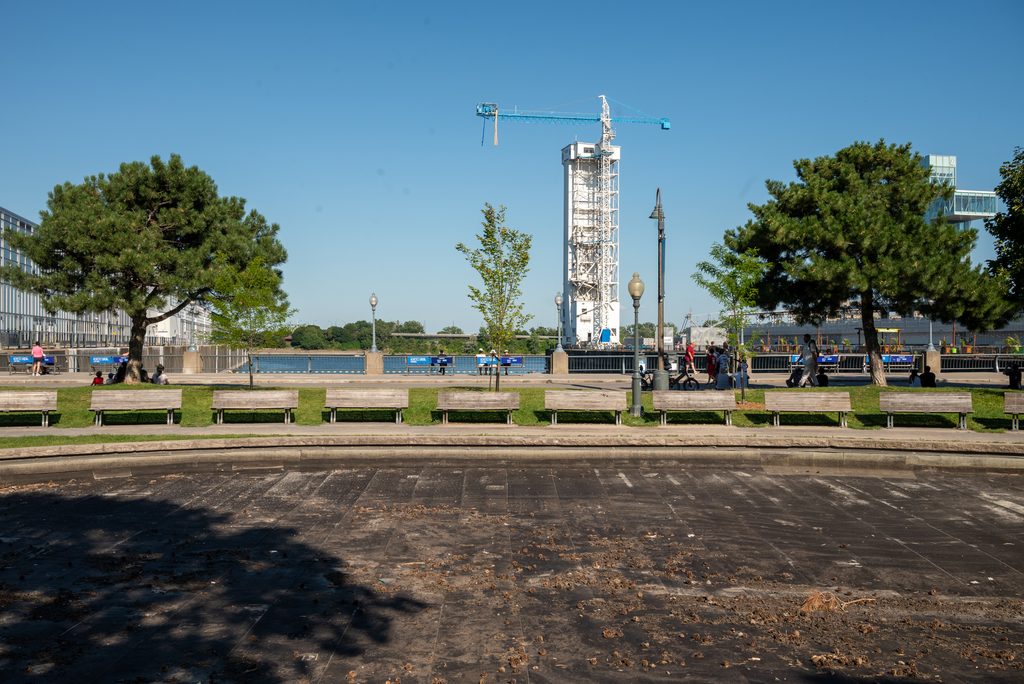
Like in any city, just walking to take in the everyday alongside the history and the architecture is enjoyment in itself.
Mobility Access
The terracing of the city means it can often be a challenge to the range-limited walker. It would, I think, have to be taken bit at a time in areas where there are plentiful stopping points to refuel and rehydrate. Centre-Ville then Vieux-Montréal separately for example. Even then be aware of the steepness of the streets that rise from the dock front area to Place des Armes in Vieux-Montreal or from Dorchester Square up to the Musée des Beaux Artes in Centre Ville. Thankfully, streets are generally well paved and smooth.
Laundromat
Buanderie Amherst is in a part of Montréal called The Village, north of the main city areas. I only read later that it is, or was, alleged to be one of the less safe areas of the city with many unhoused in the area. It may now be upscaling because we had no problems at all – indeed we found some very entertaining characters staffing the laundromat and, as the area is the core of the LGBTQ+ community in Montreal, I found a delightful coffee bar (sadly name forgotten) just a few steps along Rue Atateken that was not backward with its LGBTQ+ affinities given the posters and artwork. It was peaceful at that time of the morning providing good coffee, a streetside view and a place to write.
The Buanderie Amherst has a faintly chaotic, dishevelled atmosphere with a mass of laundry being dealt with for commercial contracts. We got really friendly, helpful assistance – basically we told the person in charge what we wanted and he did everything for us. We just paid him – in cash – for what we had used ($11CAD for two washes and a double hit with the dryer); a tad less than doing our laundry at the Four Seasons and all in less than an hour. Once again an experience of another side to the city we would never otherwise have seen.
Eating Out
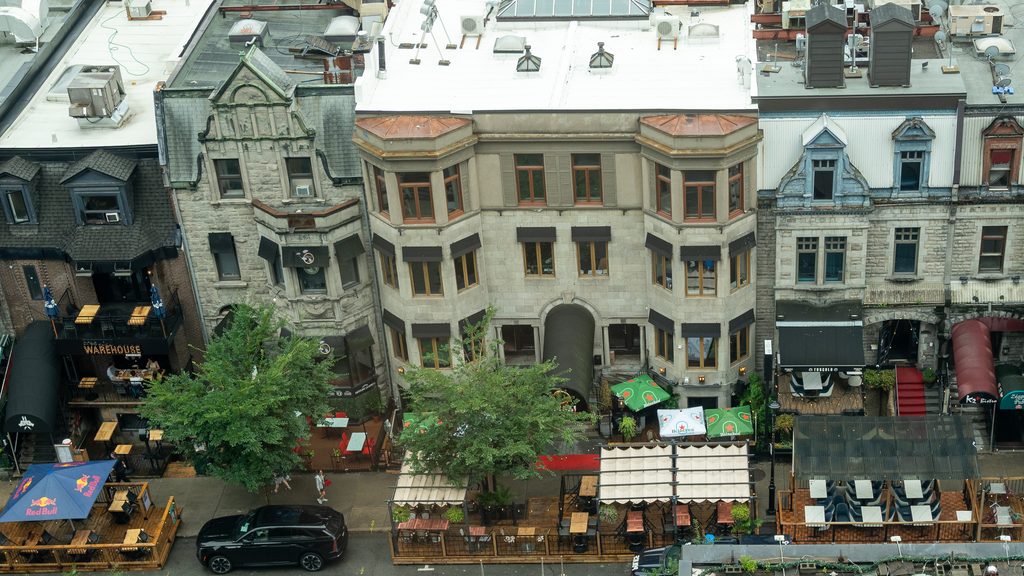
The food offer in Montréal is as wide-ranging as you would expect with cuisines from across the globe. Given its French heritage, there is a stronger emphasis in many menus on French-style food but with a North American overlay of portion size. Café culture is strong, as is the case in almost any modern city. We arrived on the cusp of a weekend and had taken care to book some places for dinner before our arrival. Given the throngs that fill the city into the evening and the mild weather that ensured crammed outdoor seating spaces, it saved us having to hunt out tables.
Graziella
Graziella is quite a peaceful, upmarket Italian restaurant is on Rue McGill in Vieux-Montréal. The street is boulevard-wide and houses many of that area’s better eating places. The street is lined with those late 19th century townhouse style buildings that, as here, have steps up from the street to reach the inside. Within the décor had that understated modern style. The dining room reached back, long and narrow, into the interior with the semi-open kitchen along one side. Service started off a little slow but picked up and the food and the wine are very good indeed. There are some options for vegetarians.
Mobility Access
The only issue, as it is in so many Vieux-Montréal establishments, is the four to eight steps up into the restaurant from the street. Otherwise smooth wooden floors throughout but with the toilets down a flight of stairs.
Eggspectation-Maisonneuve
From dinner elegance to full-on American diner-style breakfast. Looking for an alternative to the hotel breakfast, this place (part of a chain) was just 50 metres from the hotel. As the Eggspectation name suggests eggs come in almost any breakfast or brunch manner. The choice plucks from cuisines that range from traditional American through Mexican and French to the classics like Eggs Benedict, with a host of other dishes as well. We came a couple of times. It has an outdoor terrace alongside the interior booths and tables. Staff are all bustle, always seemingly hectic but always on top of things, from refillable coffee to taking orders. Fun diner-style breakfast if that is what you are after – as we often are in North America.
Mobility Access
One step up from street level to the interior but otherwise all is plain sailing except that the toilets are up a longish flight of iron stairs (and have very low ceilings).
Palm Court/Maison Boulud, Ritz-Carlton Hotel
Looking for a straightforward meal in a calm location on a Sunday evening, we did what we often do and head to the food offer in the lounge-style bar/restaurants of the signature hotels. The Ritz-Carlton in Montréal is in a splendid purpose-built 1912 building and the Palm Court seemed fit for that very purpose, especially as it was only a 300 metre walk from the Four Seasons. And it probably would have been had it not been for the fact that the adjacent ballroom was hosting a wedding that had just reached the raucous DJ/disco point in proceedings. Every time the door opened a wall of sound poured out. Having sat briefly we rose and left, with the staff pointing us at the bar section of the hotel’s signature restaurant, Maison Boulud, as an alternative. And although the large restaurant was weekend busy, the bar section was smaller and gave us what we had gone for – a traditional up-market hotel all-purpose menu (Caesar salad, breaded chicken pieces and burger). The main restaurant menu has rather greater aspirations.
Mobility Access
Both Palm Court and Maison Boulud are accessed straight off the hotel lobby with no steps involved. Similarly street access to that lobby is step-free.
LOV Mcgill
Wanting a vegetarian break from the carnivore-heavy offer elsewhere we found this warmly recommended vegetarian restaurant online. Set in the same sort of building on Rue McGill as Graziella, LOV Mcgill is, like that, on the raised ground floor in a long narrow room. Inside the décor is summery light with a mix of tables and banquettes. Unfortunately the food was disappointing. Our coconut curry was not very coconutty and was lukewarm. Service was up and down. I gave up on trying to get a second glass of wine and we eventually just paid and left.
Mobility Access
As for Graziella above, no issues except for the steps up to the interior and the toilets being on a mezzanine level up a flight of stairs.
Marcus
The Four Seasons sprawling restaurant space, Marcus, is a different place in the evenings from its sedate breakfast persona. It was heaving and there was a short queue to be seated. Not having booked I was given a seat at the otherwise full bar. The vibe is very much Montreal’s younger, well-to-do but with a tinge of the affected and bling both in costume and sensibility. The food was well executed but, for me, it was not a place to linger.
Mobility Access
Whether from the street or your room, lifts and step-free floors mean there are no accessibility issues.
The Pigeon Café (Royale)
There are a several locations for this local chain of coffee bars and brasserie-style restaurants in the city. Sitting opposite Pointe-À-Callière in Old Montréal, we found one of the latter, the Royale branch, which had just opened on the day of our first visit. It had a very serviceable French-Canadien menu suitable for all purposes – coffee or food at any time. The staff were enthusiastic but clearly ironing out a few teething issues. Its décor was fresh and the largish restaurant space is light. We used it as a coffee stop and a place to sit and write. Its location on a corner of Place Royale meant it was at the heart of the waterfront area which for much of the time bustles with tourists. As is the case with the many bars and restaurants that line the Rue Commune, it has an outside space facing the boulevard, beyond which lies the shallow park and the restored wharves and warehouses of Montréal’s old port.
Mobility Access
The interior is just one step up from street level and the terrace opens onto the street without any steps. The toilets are on the same flat, step-free level as the restaurant.
Getting Around
Service people in Montréal in hotels and restaurants seemed rather wary of their local taxi services, recommending Uber instead. So we went with that for nearly all our travels around the city. Oddly, for us, we did not use public transport at all. Unhelpfully I can tell you nothing useful about the service. I think the particular circumstance of where we wanted to be at any time dictated against using it. Having only a limited bus service from a stop 250 metres up the terrace slope from the hotel also constrained us.
Tennis Spectating
For those uninterested in tennis watching – pass on to Toronto. For those who might go to a sports event or concert at IGA Stadium, a few thoughts that might be helpful. Set in the south-east corner of Parc Jarry about a half-hour drive from the city centre, IGA Stadium is a purpose-built tennis facility that hosts Canada’s premier tennis tournament, the Canadian Open, each year. This is a Masters 1000 event, a rung down from the Grand Slam tournaments. Each year it alternates between the men’s and women’s tournament (with Toronto hosting the other) and currently the two tournaments last about twelve days. This gave us the opportunity to sample both – in our case the earlier rounds of the men in Montréal with the later rounds of the women in Toronto.
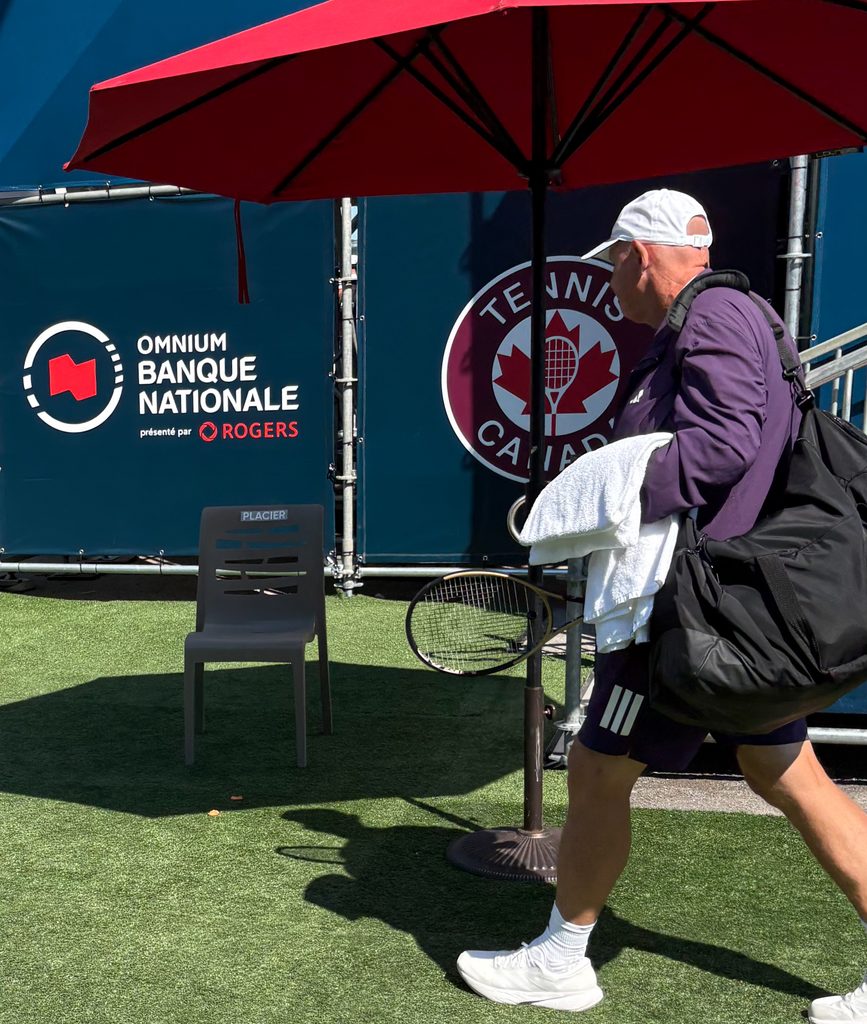
We had tickets for three separate days on the main court, bought online before we went. A day’s play is divided into two sessions; one in the daytime and the other in the evening, each one separately ticketed, thus we went to six separate sessions. In fact we also managed to buy one session’s tickets (for the next day) at the ticket office, so tickets can be obtained for the early rounds at very short notice. The double session made for a long day, the more so because the stadium is fully open to the hot summer sun well into the early evening. It is not a stadium nor a fan complex with that much shade to give relief. Seating is no worse than in many other modern sports stadia with partly cushioned seats in some parts and slightly limited legroom for taller persons.
The food offer is dominated by fast foods, from burgers to pizzas with fries everywhere. Thankfully there was one van in the food court complex selling salads. There are plentiful water fountains, so hydrating in the heat should not be an issue. Regular sports attendees will be aware of the fact of queues at all the food and drink outlets at the obvious breaks in play, so the simple advice is to buy your own and bring it in or to buy early in the day (easier with salads than hot food, obviously).
Getting there and away is covered in some depth on the tournament website but some pointers may help. We used Uber and taxis to reach the vehicle drop off point (a good bit closer than Metro and bus stops). There were no obvious delays in reaching the Parc Jarry in the mornings beyond those inherent in the volume of city traffic. We often left just before the last match had finished to avoid the inevitable end of play rush.
Even so we faced some delays to get an Uber when leaving one evening, so we gravitated to the taxi rank beside the vehicle pick-up point and dared to try our first taxi. Despite the prognostications of our hotel staff, we found them fine with the journey properly metered. Urban taxis seem to be saloon cars that are simply too low-roofed in the back for me to sit comfortably, even with the front seat right forward. If this may be an issue, see if you can sit in the front.
Mobility Access
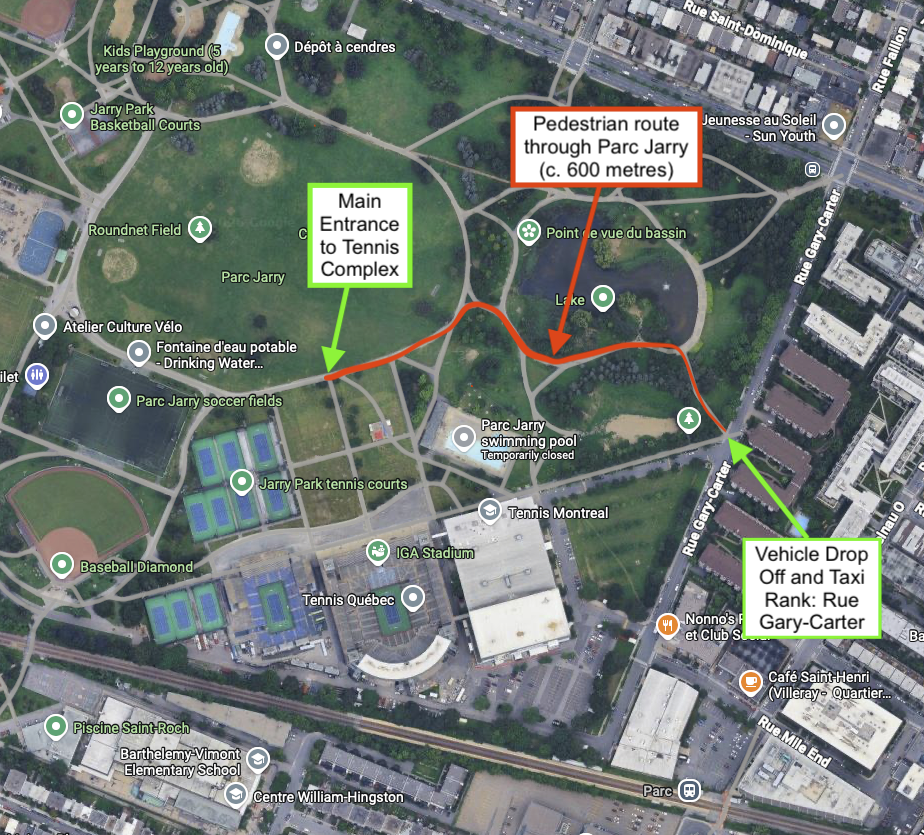
Our question to the volunteer marshal at the vehicle drop-off point on Rue Gary-Carter was ‘Is it far to the entrance?’. Pointing along a smooth tarmac path the answer was ‘Not far at all’. Hmm! We have different definitions of how far a distance of around 600 metres is when you have mobility constraints. You have to walk through the park for that distance in order to reach the main entrance to the complex. Not good when you then have another 200 metres to reach your seat and need to keep enough strength in limbs to negotiate the additional walking through the day around the various facilities within the complex. Help is at hand. They have wheelchairs available which they will either allow you to self-push or else they send another of the army of ever-helpful volunteers to fetch you from the drop-off point. The assistance is found at the main Information desk, which is deep within the complex, but once we were alive to the possibilities, it proved straightforward to ask for assistance at the entrance kiosk on arrival and at the information desk on departure.
The stadium itself is, in part, sunk below ground level which means smooth ground level access brings you out to where it is a walk up or down to most seats. It suited us to select seats close to that level, so we only had a few steps up to our end-of-row seats. The upper level does require climbing a few flights of stairs to reach the accesses.
The advice is to plan your visit to cater for all these elements and it should be fine.