Prelude
India again and a return to a country I have described elsewhere as endlessly fascinating and exasperating. For this entry an advance apology is needed, as India is a familiar destination to us. I worked out that I have visited the country as a tourist eight times before and my partner, in addition to her period of four years working in Delhi (many moons ago), has probably been at least as many times as a tourist. In that context it is difficult to write about India as a destination for the touristic newcomer. Adopting my practice elsewhere I will focus on this trip and leave the many other online and hard copy sources to cover the gaps I leave.
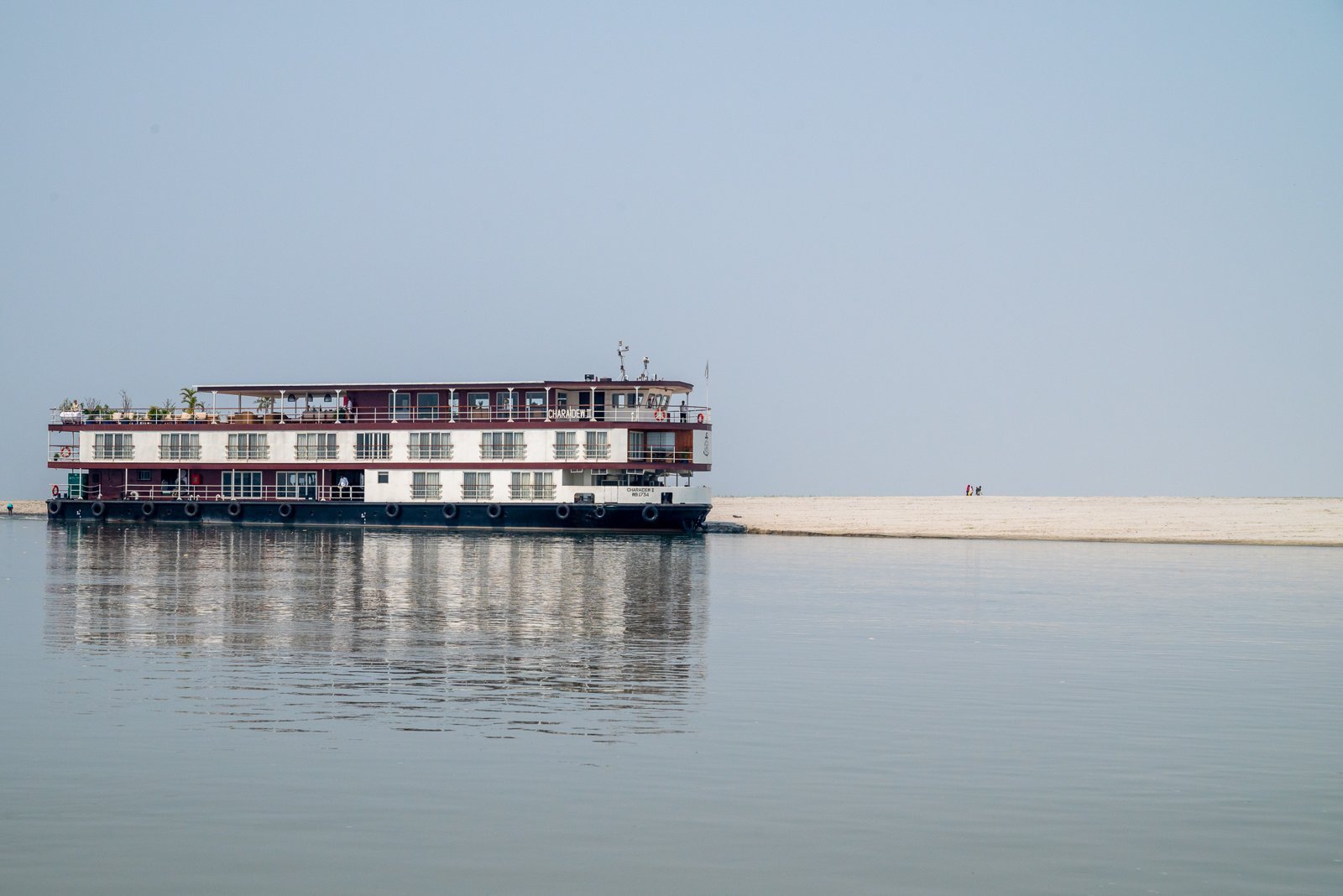
Our travels this time were to the north east segment of the sub-continent, which was not an area we had been before except for several visits and stops in the clamorous melee that is Kolkata and a stay in the cloud-shrouded hilliness of Darjeeling. This time we wanted to venture into less-travelled parts and, in particular, into Assam. Audley, our regular travel advisers, unearthed a duet of river cruises down the Brahmaputra and Hugli (or Hooghly or Hoogli or, to many locals, the Ganga). At the end of our trip we took a few days in Delhi. This has become a regular part of our ventures into India, not only to enable my partner to reacquaint herself with the familiar but also to enable us to get a sense how both city and country has changed over the years, and changed it has in so many ways.
Structure of the Trip
As with nearly all our long-haul travels we used our long-time travel advisers, Audley (https://www.audleytravel.com/india/places-to-go/assam) to help us work up a bespoke timetable for our visit to this region. Cast over 21 nights we gave ourselves three nights in Kolkata before being ferried north by train (about four or so hours) to meet our first cruise boat at Farakka. The downriver cruise on the Hugli covers seven nights and ends back at Kolkata. Timings then dictated overnight stops near Kolkata airport and in Assam’s principal city of Guwahati before we picked up our seven night cruise upriver on the Brahmaputra. At journey’s end a car picked us up for a drive back to Guwahati (covering the reverse journey in about five hours) for a flight to Delhi and a three night epilogue before our return to London.
When and Weather
The sensible time to visit North India is between November and March after which the pre-monsoon heat and humidity really kicks in (36°C (100°F) and upwards with 100% humidity) followed by those unimaginable downpours that are the tropical monsoon. We edged towards the end of this period in March, a timing partially dictated by the availability of berths on the cruises. In Kolkata and on the Hugli the daytime temperatures were in the early 30s centigrade (85-91° Fahrenheit) with a humid feel to the air. We saw no rain in that part of the trip. The sun had haze and high cloud as regular companions, giving an interesting pastel depth to the light. In Assam the haze and high cloud persisted but the temperatures were cooler, dropping into the low to mid 20s centigrade (70-78° Fahrenheit). On a couple of days we were treated to a very London-like drizzle. In Delhi it was blue skies and higher temperatures, back up into the low to mid 30s centigrade (90-95° Fahrenheit).
Flights
International
Emirates provided the long haul flights, which meant a change of planes in Dubai both outward to Kolkata and inbound from Delhi. I had not travelled on an Emirates flight for many years and, despite what I have said elsewhere about the similarity of offer on business class flights, Emirates is a step up in quality and service from most others we have used in recent times. The complimentary vehicle transfer from home to Heathrow was very welcome and the all-business class upper deck on their A380 is relaxing and spacious, with a small bar area at the rear. The layout of the seats is such that there is one seat on the window sides and only every second row in the centre has two seats side-by-side, so finding a combination that allows couples to be within touching distance isn’t obvious when looking at their seating allocation online. But food and service are nigh on impeccable both on the A380 (to and from London) and the single-deck Airbus (from Dubai to Kolkata and back from Delhi). The one downside is that we do prefer direct flights. The disruption of a change of flights in the middle of the journey (here in the middle of the night however you calculate your body clock) is something that is more draining with the increase in age.
The major Indian airports bear comparison with their modern counterparts across the globe in architecture and functionality. Arriving and departing from Kolkata and Delhi, our travel advisers had arranged a pick-up by our local agents, easing the process for us, particularly that first arrival in India when you want to avoid the clamour of men (yes, men only) just outside the arrivals hall suggesting you need their taxi.
Mobility Access
Emirates made sure we had wheelchairs instantly available at all the airports, speeding us between interconnecting flights in Dubai and seeing us through security, immigration and baggage halls to our waiting transport. It worked well all the way from London to Kolkata and back from Delhi. This support is necessary as most modern airports cover vast areas and expect their passengers to walk some distances to or from gates. Kolkata and Delhi (and Dubai at the stopovers) are no exception.
Domestic
These were Air India to Guwahati and Vistara returning from Guwahati to New Delhi at the end of the cruise. That from Kolkata to Guwahati was an hour and a quarter (economy only); that back from Guwahati to Delhi 2 hours 40 minutes. Air India have upped their game since the late twentieth century, pushed by competition from private competitors. Service and flight were fine, although I have not seen condensed air pouring between the bulkheads (a completely innocuous occurrence) since a flight in a dilapidated ex-Soviet Yakovlev taken in Cuba more than thirty years ago. Vistara were just a tiny bit slicker.
Departing from Kolkata is describable as a bit of a palaver and we were glad of the assistance of our guide, as negotiating the process is not very clearly explained. On arrival outside the domestic terminal you have to acquire a ticket (with a bar code) from a machine standing beside the access doors by inserting your name and flight number – and having your picture taken! Only then do you approach the man in military fatigues on the door giving access to the departure hall. He inputs some information into a keypad before waving you through. Next step is a biometric reader that scans your barcode. Only then are you able to join a lengthy queue for security which we discover is being switched from men only to women only, seemingly at random, with resultant confusion amongst us queuers. Beyond security there is more queueing for check in, in our case obviated by being diverted to a separate check-in desk for those requiring assistance. Check-in is a straightforward process, repeated the world over, and the wheelchair arrives promptly with pusher. You just have to relax and look upon the whole process as an example of that stereotyped ‘love of bureaucracy’ of the Indian state updated for the digital age.
Mobility Access
In practice, once you have negotiated the faff of access to the departure hall in Kolkata, this is first rate. With wheelchairs available throughout the process from check-in to plane and vice versa. The airports rely on buses to transfer from plane to arrivals hall (and vice versa) and, in Guwahati, we are offered the food lift as an alternative to the passenger steps as a way of getting off the aircraft.
Some Concerns about India
People react in many ways to India and it is easy to categorise visitors by the tropes of loving it or hating it. The reality is that India is a country with only a very slightly smaller area than the United States and has a similar diversity of climates, regions and landscapes, yet it has a far greater sense of difference between individual states and the separateness created by the variety of language (41 recognised by the constitution). Thus you cannot really answer the question what is India like. The nature of life in India also seems to deter some potential first-timers. I have heard people say many things that are variants on the thought of overt poverty being too much, of the lack of hygiene being off-putting, of the food being problematic, of the deterrent impact of being pestered by beggars or of the heat and humidity just being too uncomfortable. All depends on your attitude to these things. Whilst I cannot say they do not exist as potential issues, as India has gradually developed into a nation that is now a serious player on the global scene, the issues should be of far less concern than they might have been when we first travelled here in the 1980s.
Should that be your preference, it is now possible to visit India in an almost hermetic cocoon. You can be met at the airport by an air-conditioned car vehicle, be whisked along modern motorways to an ultra-modern hotel staffed by enthusiastic, helpful and plentiful staff, eat in air-conditioned spaces on cuisines that span the globe, be whisked around by guides who speak your language in air-conditioned minibuses and enter well-kept, fascinating religious and historical sites where beggars and botherers are kept out. At these sights the only bother you are likely to face are the friendly Indian tourists who want to have a selfie with you and, probably, with the rest of their family, including the reluctant youngster who is forced by their parents to stand beside this huge (in my case), scary, white-skinned apparition.
To me the concerns are overstated and, to the extent they are a worry, they can be managed with just a little thought and preparation. The reputable online and hard copy guides are full of sensible advice on all these topics. I add just a couple of my own thoughts. There are beggars but, in my experience, far fewer than there used to be. It is easy to walk the streets of Kolkata, Delhi or any other city unmolested for the most part. To those who are approached just try and avoid any engagement or eye-contact. There will be the occasional tugging on the sleeve but just try to ignore it. As the information on our cruise boats said, repeating what is often said elsewhere, giving simply encourages more pestering. Far better to give to a local charity that engages the issues related to poverty such as clean water, proper drainage and education or to give gifts (such as biros, writing pads etc.) to a local school teacher who can distribute them equitably.
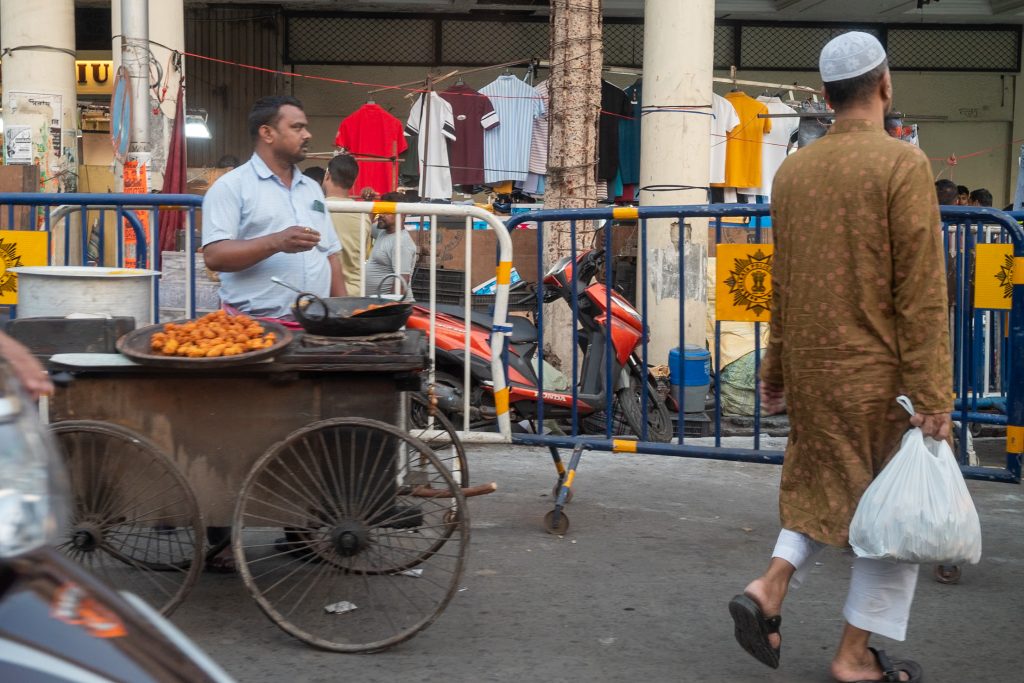
On eating, the mantra given to a friend who was a first-timer consisted of five ‘rules’: drink bottled water, avoid salads, eat cooked vegetarian foods, wash your hands regularly and don’t eat street food. This is advice for the cautious and many who have gone to India have broken all those rules and been fine but, as a sufferer from some upset stomach bouts in India in the past, I find them a useful guide. I cheat on the vegetarian food but the vegetarian selection within Indian cuisine is so extensive and so good that you would not feel any lack if you stuck to this ‘rule’. Many quality hotels (and our cruise boats) now use filtered water for drinking which is fine. And on our cruise boats one of the staff stood at the door of the dining saloon with a bottle of hand sanitiser that was offered to every guest as they came in.
To those who have been before these issues will be old hat and they just revel in a country that is now vibrantly self-assured and has a thousand different faces and places to present to the tourist.
Kolkata (3 Nights)
To us Kolkata presents a real contrast to Delhi, particularly New Delhi. Where New Delhi is all neatness, Kolkata is chaotic India at its best. The gated entrance to our hotel in Kolkata, an extravagant neo-classical design dating from the 1910s, sits as part of a classical colonnade which is now chock full of street stalls selling clothes, sugar cane juice, ironmongery, cooking utensils, smartphone accessories alongside the occasional shoe-shine person and street barbers whose clients sit facing mirrors propped on the wall. In Chowringhee Street beyond the colonnade, the infamously anarchic Kolkata traffic moves to its own rhythm as the crammed, battered buses lord it over the other denizens of the streets: the bicycles, the motorbikes, the tuk-tuks and the taxis. To this throng, recent decades have added the private car, largely an absentee in our early years travelling in India. The trusty Ambassador taxi still rattles around the streets, its age showing in both the 1950s design and the encrusted but colourful yellow paintwork. Beyond Chowringhee Street lies the immense urban space of the Maidan, home to a park that is about half the size of Central Park in New York and whose other urban space elements (such as the iconic Eden Park cricket stadium) triple that area.
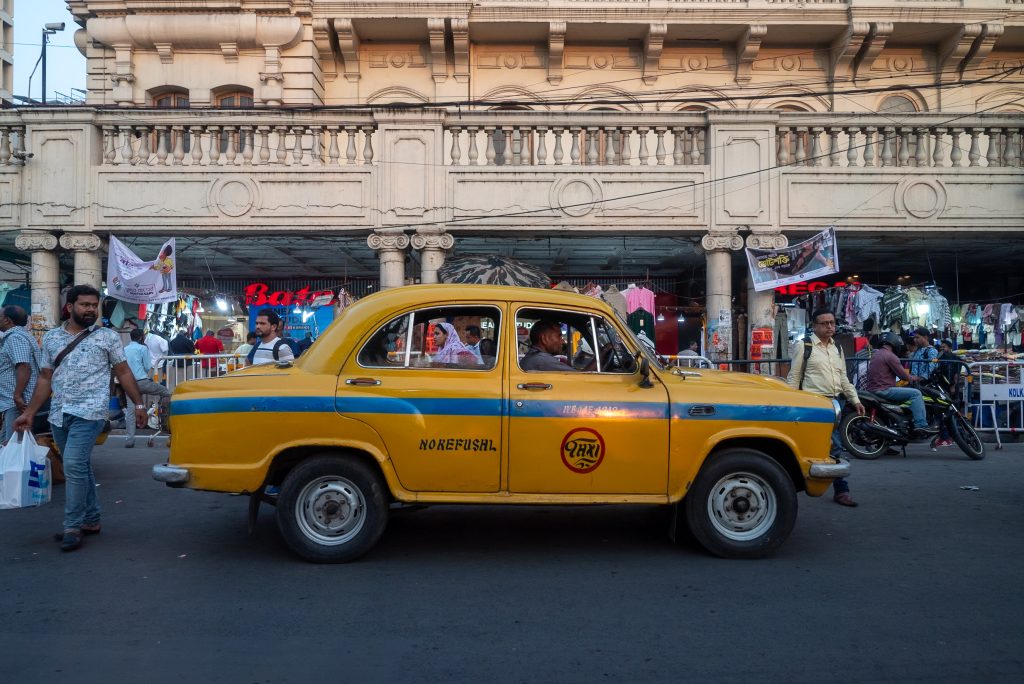
We spent three nights in the city, effectively three days, combining jet-lag recovery and relaxation with a couple of self-created ‘tours’. We have visited the city before and ‘done’ some of the principal sights, so our tours were about visiting some different destinations and visiting areas that a friend, who hails from the city, recommended.
Activities and Tours
1. Walking the Streets
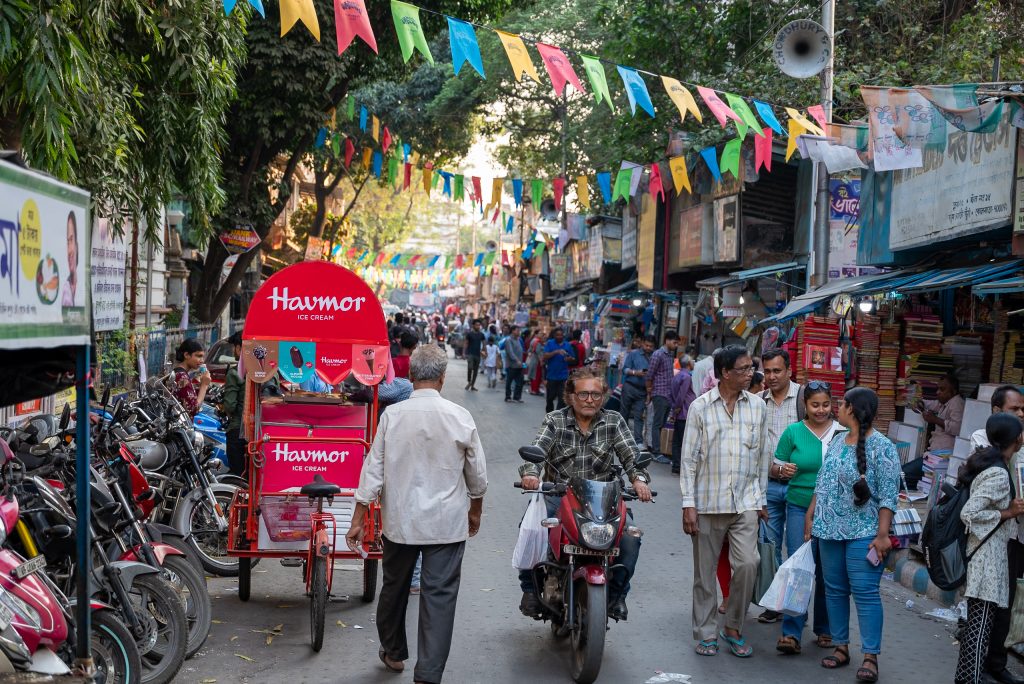
The streets of the city offer an experience like no other – and a joy for the camera-toting flâneur. If, like us, your hotel is in the heart of the older part of the city you can step out for a walk on the streets that is as long, or as short, as you want. Bear in mind that the city barely registered as a village until the middle of the nineteenth century and that the ‘older’ buildings usually date from the height of the British colonial period. Just wander and use a maps app to find your way back to your base. Street names are a signage afterthought for the most part and reading names on map apps is fraught with difficulty since all the British names were replaced by those more appropriate to a nation with a deep history of its own. However, for many Kolkatans, the old names have acquired an embedded familiarity, thus one of the cities longest central boulevards, Mother Teresa Sarani, is known far better to local taxi drivers as Park Street. This website gives many of the names, old and new, although, oddly, not Park Street –
http://www.sensonmedia.net/information/re_name_road_kolkata.htm.
Mobility Access
Keeping the walk short is easy and still gives a heady impression of the city. The principal concern is taking care on the pavements (sidewalks). Although railings guard those pavements from the traffic-filled roads beyond, the parlous state of the paving (even its non-existence in places) means you must tread warily along spaces already festooned with stalls and busy with people (there are nearly fifteen million of them in this thriving megacity). The Kolkatans are no less busy with their own lives than the folk of New York, Paris or London and, similarly, have no time to waste giving way to dithering tourists.
2. College Street and the Indian Coffee House
College Street is both the name given to a street (still named as such) and an area centred on the University of Calcutta (and, yes, it is still Calcutta not Kolkata –https://www.caluniv.ac.in). The area is the home of books. Principally books for the students but also books on every subject in the key languages of education in India, often English. But this is not the structured ordering of books that you find in Waterstones in London or Barnes & Noble in New York. This is piles and piles of books at stall after stall, cave-like shop after cave-like shop. It is another place just to wander round to get the full sense of the importance of education in Indian society and to get a sense of Kolkata’s place as a cultural centre.
Once you have satiated your wanderlust head for College Street’s institution, the Indian Coffee House, to rest and absorb the atmosphere in this extraordinary place that played its part in India’s independence movement and still acts as a gathering place for Kolkatans across the age spectrum. It sits on the north side of the university’s College Street campus, just off College Street on Bankim Chatterjee Street. The entrance is an unprepossessing doorway hemmed in by book stalls with a red signboard above announcing its presence. Don’t be put off by the decrepit stairwell. Climb the stairs to the first floor into the large hall that is the coffee house with its air of a college canteen, find a table amongst the throng and wait for one of the waiters dressed in old-fashioned uniforms to arrive with a menu (https://indianexpress.com/photos/picture-gallery-others/forgotten-chapter-of-independence-hidden-in-the-corners-of-this-kolkata-coffee-house-7453518/). The contents of that menu do not tempt and the special coffees that we ordered were actually undrinkable (the taste was far from any coffee I knew). I am afraid we stuck to bottled water but we sat there for an hour or so just watching the ebb and flow of people: earnest men discussing academic politics, young smartphone users chatting and meeting, groups of middle-aged women nattering after an afternoon’s book buying, teenage schoolboys surreptitiously smoking cigarettes over their bottles of Thums Up despite the ’No Smoking’ signs on the wall, older men channelling their inner Chandra Bose or Amartya Sen in lengthy discourses and the occasional tourist group looking oddly uncomfortable in the throngs around.
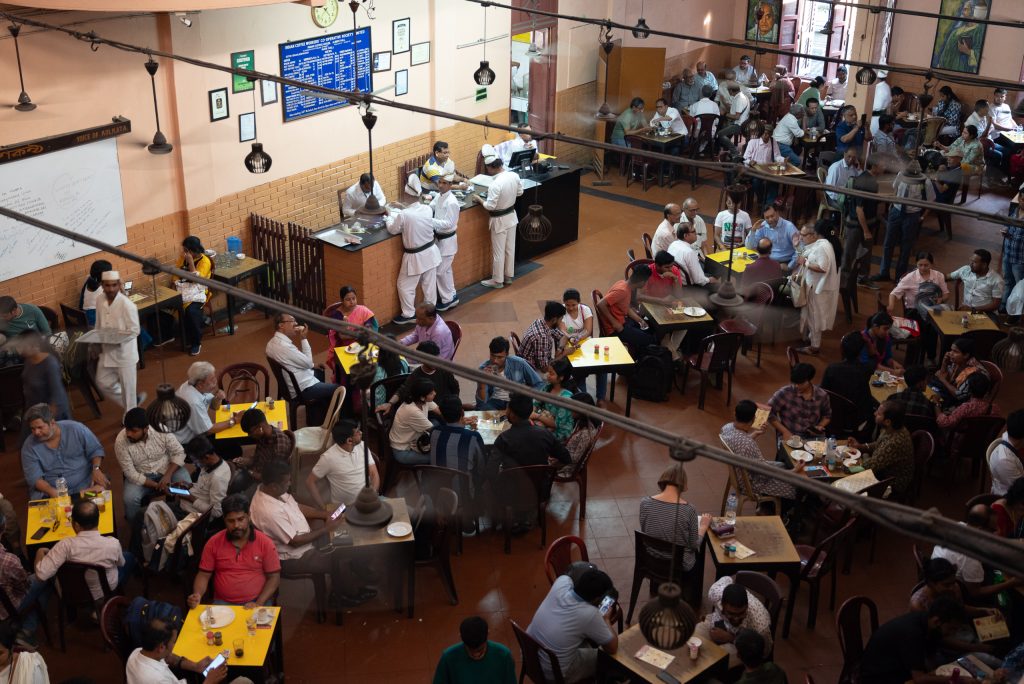
We had been persuaded to retain the taxi driver for an out-and-back trip from our hotel. For 500 rupees (then about £4.75 or $6) he took us to College Street and arranged to collect us a couple of hours later. For us, a bargain although I assume we were charged ‘tourist’ rates.
Mobility Access
Walking in the College Street area is straightforward and, again, you can stroll as much or as little as you want. It is flat and the streets are so busy with people that vehicles move at a walking pace and are relatively infrequent on some streets.
The walk up to the Indian Coffee House does require a climb up a single flight of stairs (about 15 steps). There is another similar flight if you want to reach gallery level that looks down on the main hall.
3. A Library and a Cathedral
The taxi driver we had used for our sojourn to College Street had, like all good Indian taxi drivers, asked about our plans for other days simply to see if there was any other business on offer. We had enjoyed his approach and his English was more than good enough to accept his services for a second day and a morning tour to a place we had chosen (The National Library of India) and one he suggested (St Paul’s Cathedral).
National Library
We are into books. Libraries are inherently interesting for that reason and this one (https://www.nationallibrary.gov.in) came complete with historically interesting exhibitions and an elegant eighteenth century building. The reality is one of those oases of calm you find in Indian cities (the Nehru Library in New Delhi is another) which are shielded from the thronging masses by a surrounding wall and well-kept gardens. The original building dates back to the era when the Indian elite (here the former Nawab of Bengal) interacted with the East India Company. The Nawab had the property built in the 1760s and gifted it to Warren Hastings. Following Independence, the National Library was transferred here and a modern library building constructed. This renders the original building off-limits to tourists, but its architecture and gardens make for a pleasant amble around the exterior. The library itself is housed in a modern building half-hidden by trees at the side of the grounds. We wandered in and, having subjected our bags to the sole security guard, were directed to a place where we were required to leave them. We had no idea what to expect but what we got was the company of another severe security guard who showed us the ground floor area of the library where a wonderful, old-style catalogue grabbed our interest. Row upon row of wooden card index drawers were set up in long, chest-high cabinets. Fascinated I experimented by seeing if I could find any by Sunil Janah, a highly regarded Indian photographer, who took photographs that, along with detailed articles, were published in wartime newspapers in order to expose the realities of the Bengal famine of 1943 – https://www.architecturaldigest.in/story/sunil-janah-photos-on-view-at-experimenter-gallery-kolkata/. Sure enough, there were typed index cards for three of his photobooks. That was really all we could be allowed to access without a reader’s card, but the totality of the visit was an enjoyable dip into colonial and Indian history and culture.
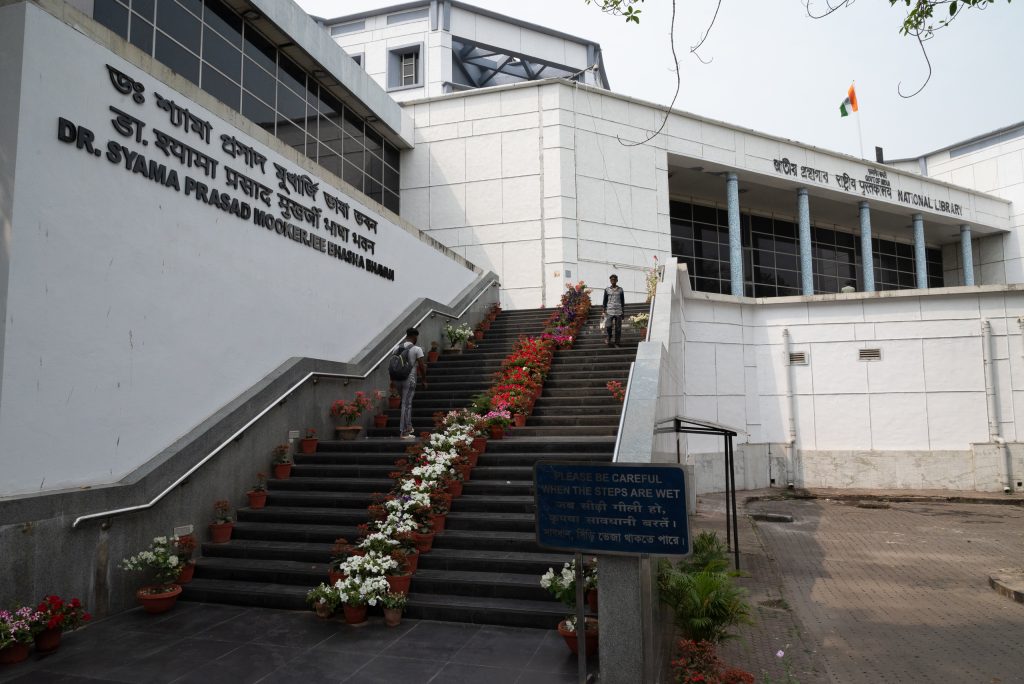
Mobility Access
I am assuming that taxi will be the chosen mode to reach the Library, but once here the broad, flat and quiet park where the Library complex sits is a straightforward surface to manage. There are benches dotted around for rest stops. The entry into the modern Library building requires negotiating a broad flight of some thirty steps (handrails are there, if needed). Once on the upper terrace, the only parts they allowed us to access were all on a single level.
St Paul’s Cathedral
Like the National Library, the Anglican-origin cathedral sits at the south side of the Maidan in a tidy park-cum-compound, walled off from the flurries of traffic outside. Of course the cathedral stands out as an archaic quirk in a country where other religious affiliations dominate, almost isolated as an island in its surrounding lawns. It feels a conventionally grand Victorian Gothic revival structure, except for the Indian tinge added by the white stucco exterior. I am not really an aficionado of churches and their design nuances and I get lost in the descriptive terminology (chancels, architraves, etc.) but there is often something striking or something that catches my eye in such places. Here it was the many memorials to colonial soldiers and administrators and seeing the list of bishops of the diocese whose names gradually shifted from Anglicised ones to Indian ones during the course of the twentieth century. There is a minuscule charge for entry (10 rupees when we were there, which is just under 10p or just over 10 cents).
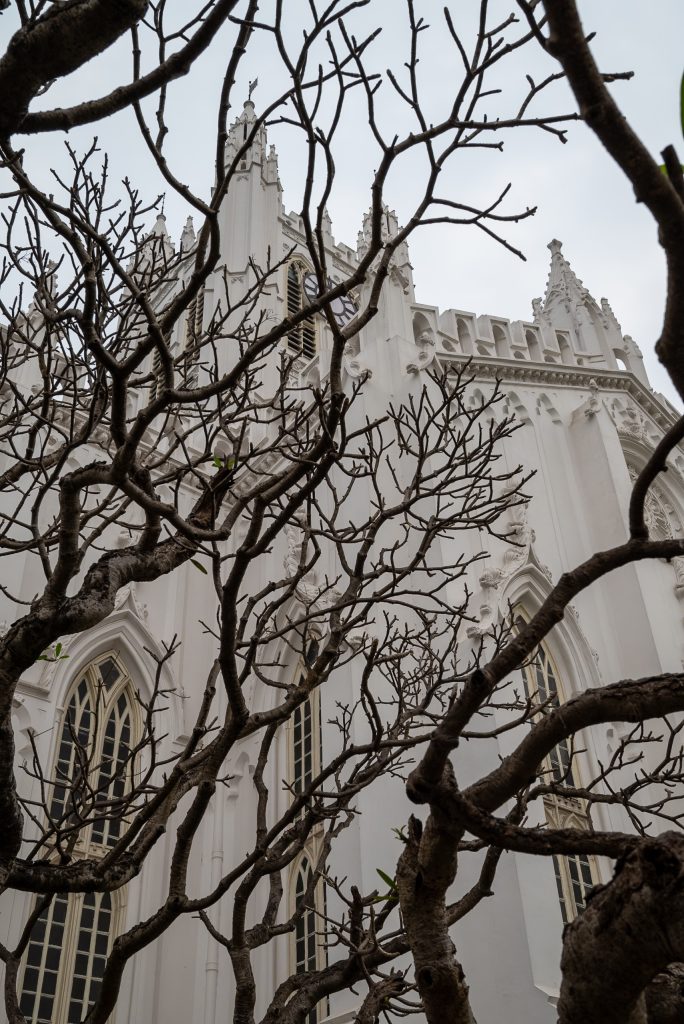
Mobility Access
The grounds here are very similar to those at the National Library. Surfaces are flat and smooth with the odd bench here and there. There are about ten steps up to the main body of the cathedral but, once inside it is a flat stone floor and, of course, the pews can be used for sitting, allowing time to take in the soaring interior.
For the whole morning our taxi-driver charged us 1,500 rupees (£14 or $18). Again we were probably paying up-market tourist prices but I have always been useless when it comes to bargaining and, when costs seem so low, quibbling feels offensive to my nature.
Hotel: The Oberoi Grand
https://www.oberoihotels.com/hotels-in-kolkata
We had stayed before, many years back. I am a bit of a sucker for grand Indian hotels created from historical buildings. The Grand does not quite have that ancient history. It was originally developed as a hotel back in the 1910s and 1920s and has a name as the grande dame of Kolkata hotels. Run by the Oberoi Group, it is right in the centre of the city but somehow shielded from its bustle. It has been suitably updated over the years without quite acquiring the bling feel that, to me, has disfigured some of the other grand hotels of India. It has good quality service with all the accoutrements of an urban 5-star hotel and an outdoor pool of sufficient size for lap swimming. Because it is very centrally located, it is a spot from whence you can just wander out and engage with street Kolkata or easily get a taxi.
Mobility Access:
There are a couple of steps up from the drop-off road (and there is also a ramp) but otherwise the lifts (elevators) provide access between the levels that are all flat and smooth. The pool is set in a central courtyard with a few steps up to poolside. The pool itself has both ladder steps and a full set at the shallow end that are equipped with a solid handrail for easy access.
Getting Around
In the past we would use tuk-tuks and taxis to get around Indian cities but on this trip we used just taxis. In the city there are two types: the iconic Ambassador taxis mentioned above and the more modern white-painted vehicles that utilise standard small sedans from the East Asian car manufacturers. The former are run by an older generation of drivers whose English is often very limited. Here seat belts are largely unknown and air-conditioning involves opening more windows. With the white-painted ones there is more chance of functioning seat belts and of a simple air-cooling system and, as we discovered, usually good enough English to offer guidance and suggestions – and to offer additional services. In the city the seeming mayhem on the streets is relatively safe in reality, if for no other reason than the fact the traffic is so clogged that it cannot move particularly quickly.
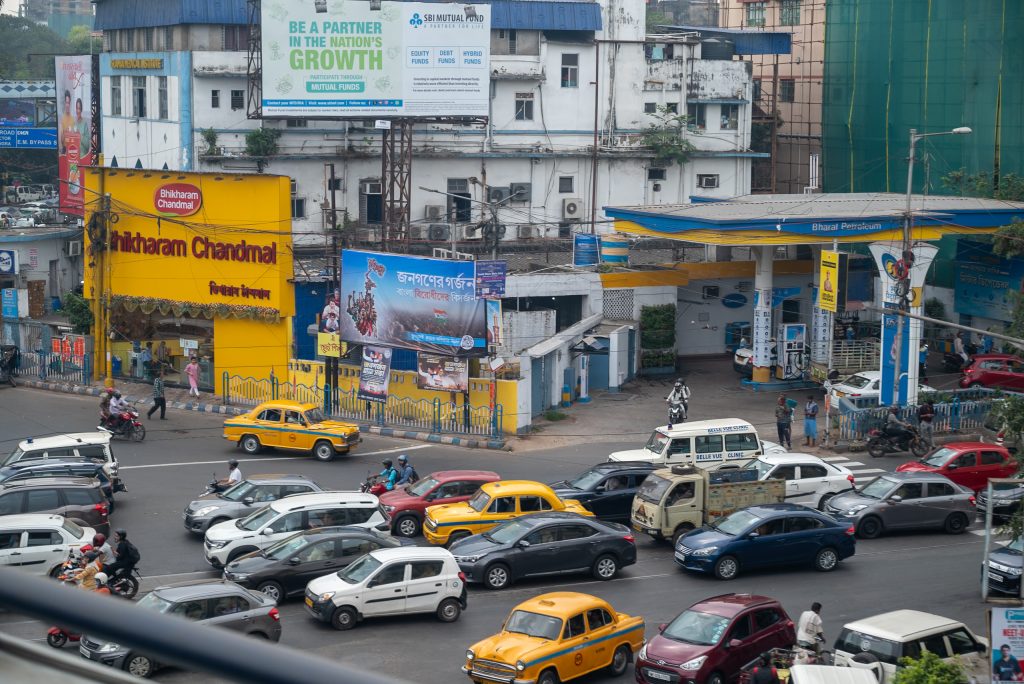
I have never plucked up the courage to use the buses and the perfectly serviceable metro system never seems to go close enough to where we want to be, so I can offer no guidance on either.
Hooghly River Cruise, West Bengal (7 nights)
The format of these river cruises is similar whether you are on the Nile, the Mekong, the Irrawaddy or other wide shallow riverine waterways. The boats either date from the first quarter of the twentieth century or are modern creations that deliberately mimic that style. As with both our vessels, there are usually three decks for tourist use. The bottom two containing the cabins and perhaps some facilities (on our cruises in north-east India a small spa room and dining saloon, on one even a small gym) and on top half the deck is given over to a large saloon containing the bar and the lounge that it is used for daily briefings, quiet times, relaxation and occasional talks and performances. All these elements are air conditioned. The remainder of the upper deck (other than the bridge) is an open deck, part covered by an awning-style roof, laid out with loungers, sofas, chairs and low tables. There is usually a judicious mix of downtime on board and trip-tours to see local sights and visit riverside attractions and towns. The décor seeks to give a sense of a nostalgic throwback to the river cruising of the period between the world wars which means wood is used extensively for decks and floors and panelling. The cabins (between 18 and 22 depending on the boat) all have large picture windows that face the river and, whilst inevitably a little snug compared to hotels, are spacious enough for a seven-night cruise. And the beds are more than large enough for a couple, one of whom is a tall person.
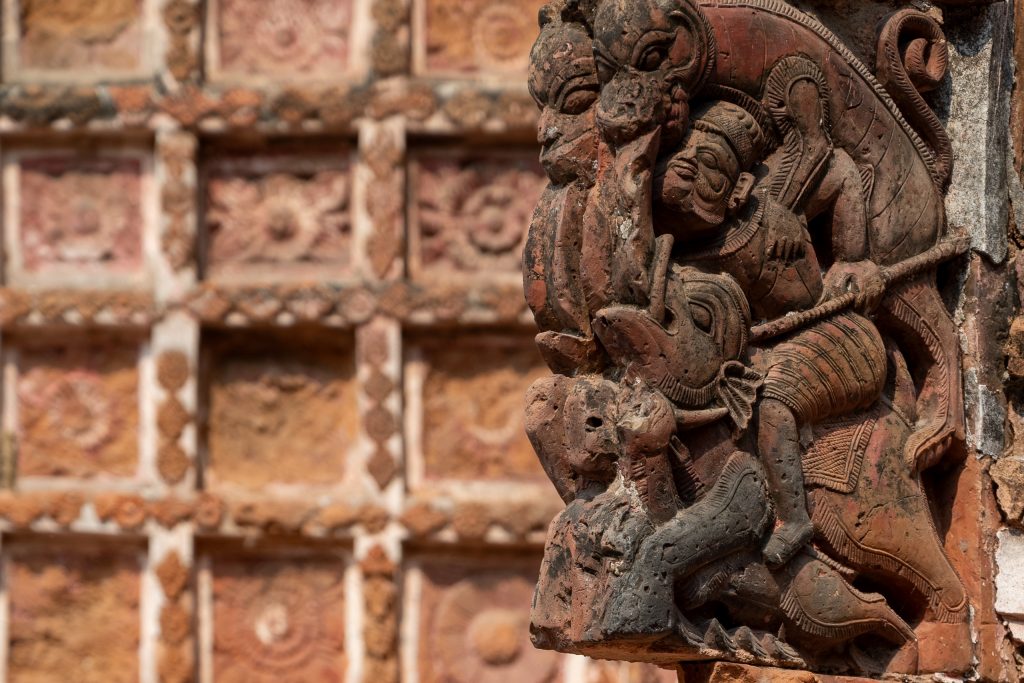
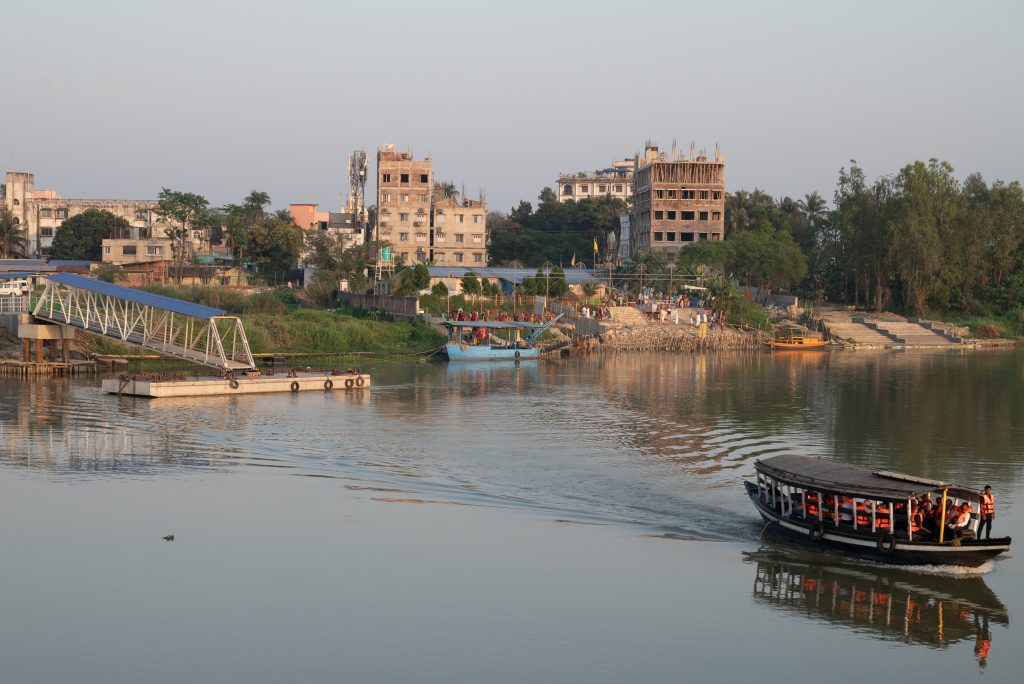
I do not plan to delve into the fine detail of either cruise that we took. Both boats are run by Assam Bengal Navigation (ABN), an Indo-British venture established to specialise in cruises in this region. Their website sets out details of the itinerary followed by both. Our first was ABN’s downriver cruise from Farraka back to Kolkata called The Historic Hooghly (https://www.assambengalnavigation.com/historic-hooghly) and it provided a fascinating set of insights into the history of this region. It moved through the ages from the ancient city of Gaur (or Gour or Gaudá), centre of a medieval Bengali Kingdom that was once one of the most populous cities in the world but later subsumed into the soil of the delta and abandoned like its more famous counterparts at Angkor Wat or Tikal, right up to modernity in Kolkata. On the way it takes in a range of other thoroughly engaging historical sites. There are Mughal Empire tombs at Khushbagh, the Imambara (congregation hall, schools and mosque) at Hooghly, a delicate 108 shrine Hindu temple dating from the early 19th century at Kalna, the Plassey battlefield and the British Empire army town of Barrackpore, the monumental temples (completed in 2024) that act as the world centre for the Hare Krishna movement at Mayapur and the French colonial centre at Chandernagore, that was not transferred to Indian control until 1951, a few years after Indian independence from the British. Other visits include to brass and cotton-weaving workshops and to a local market. There are a number of on-board events such as dance, cooking and music demonstrations. Throw in a daily briefing and some well-delivered historical talks by the excellent guide and you have what sounds like a hectic trip. It isn’t. You can opt out of as many events as you want and there are still lengthy stretches aboard when you can just watch life being lived out on the riverbanks or just relax and let the slow progress over the wide swathes of water that form the Ganges delta to lull you into a sense of peace. All the trips are guided, with microphones and earphones, which meant we did not need to trail around in a cluster at the various sights.
Food is buffet style meals with a wide selection of Indian dishes. This being India, vegetarian options are plentiful. There are some more Westernised dishes on offer at each meal. Breakfast, too, has a suitable selection including platters of colourful tropical fruit.
You are travelling through areas of the country that can be remote from signals for mobile devices and, although they have Wi-Fi on board, it relies on access to shore-bound signals. It means the Wi-Fi can be weak and intermittent at times.
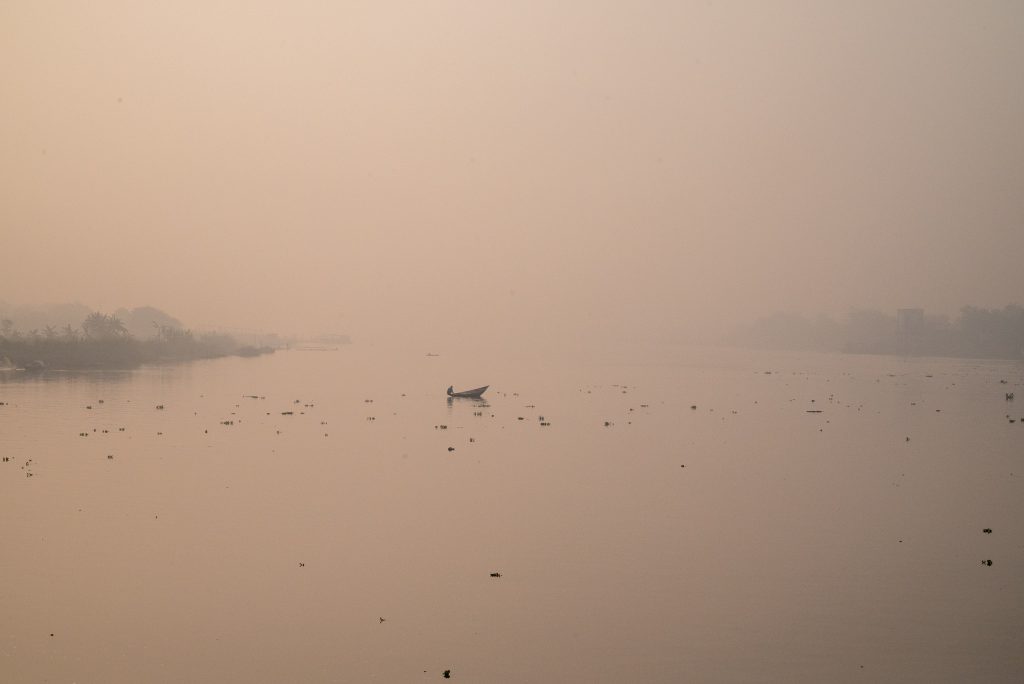
The river cruise is not an obvious one for first time visitors to take. They will be focused, as we had been in early visits to India, on the ‘big’ sights and locations. However, this is an amazing trip with insights into parts of India that are not on that central tourist round. Even if you do all the tours and events, there is something so relaxing about moving at the gentle rhythm of the river. ABN run a quality operation, with excellent staff and with some of the best guiding we have had anywhere.
Mobility Access
You reach the boat by taking the train from Kolkata’s renowned Howrah Station, a part of the trip organised by the cruise company. A quick note here that the process of moving from minibus transport to station at Howrah and then onto train and off it again at Farraka can involve having to walk distances over station forecourts and up and down platforms and over bridges across the rail lines. It can also involve quite lengthy waits at busy Howrah, where seats are at a premium.
You do, of course, need to walk up and down between decks to move around the boats. We found this manageable. The location of your cabin may help here. As ours was on the middle deck, we were able to use the upper two decks for the most part.
As to getting on and off the boat and the various trips, the staff were incredibly helpful in ensuring we could get about. We had contacted them beforehand to describe our situation and, every day, they explained how much walking would be involved and what seating was available, allowing us to assess how feasible a trip might be. Where longer walks were involved, they arranged a tuk-tuk to move us around whilst others enjoyed the walk. Transfers from the boat were direct onto the bank or the jetty or by tender to a small grounding point (the delta waters are very shallow and even the very shallow draught cruise boats cannot always approach the bank). The landing points are often at river level and a steepish bank has to be negotiated to reach ‘ground’ level. Either this was by way of a set of steps on a ghat or, in more rural locations, up the bank with impromptu handrails held by crew members, who were always ready with a guiding hand.
In practice there was very little on this trip that could not be managed with a little forethought, so I feel that the trip was one that is manageable by someone with mobility constraints, although someone who needed a wheelchair or had more constraining conditions that prevented use of steps might need to review the position carefully with the cruise company.
An incredibly useful tool that we took on this trip is a portable tripod stool. Just put ‘portable tripod stool’ into a search engine and you will see images of the sort of thing I mean. It is collapsible and lightweight and is ideal for tours around sights where you need to sit whilst the guide talks you through the details of an artefact or place or you just want to rest your limbs whilst others wander about. It can be carried using the shoulder strap and is easy to store in overhead lockers on planes as part of your carry-on luggage.
Kolkata and Guwahati (2 nights)
Ostensibly this was no more than a transit interlude as we switched from one cruise to the next allowing us to be subjected to the delights of international chain hotels. Timings of flights and cruise departures dictated first a near full day and night at a hotel out in the New Town district nearer Kolkata airport and, after our flight from Kolkata to Guwahati, an evening and night at a hotel on the south-western fringes of Assam’s largest city.
But this is an opportunity to compliment the partners whom our UK-based travel agency work with in India. Distant Frontiers and their sub-agents in Assam, Purvi Discovery, with minor stumbles over a car transfer to a restaurant and with our meet-and-greet individual in Delhi, provided individuals who were well-attuned to what we wanted (no pushiness nor any assumptions made) and provided a thoughtful and attentive service. For example, Somesh in Kolkata ensured we were greeted clearly and thoughtfully after our long flight (and arranged our money changing) and readily dealt with our requests with an almost old-fashioned politeness. Bipal in Guwahati made sure our need to exchange more money was factored into our departure timing. He also suggested that en route to our hotel we take in the Deepor Beel Bird Sanctuary and provided the binoculars to examine the birds more closely – https://rsis.ramsar.org/ris/1207. This was a very welcome diversion on a longish day that would otherwise have been spent within the sealed sanctuary of our hotel. A week later he was helpfully offering up his seat in the front to me during our five-hour drive back to Guwahati after the cruise had ended, having seen I was unable to fit comfortably in the rear seat of the car. This is a perennial problem for me, no matter what size of car is on offer. Modern car design leans towards roofs that slope slightly towards the rear and headroom is restricted. The front seat is where I can sit upright with my back fully supported.
A word for those unfamiliar with the processes in India. With the vast population offering so many potential workers you always have two people with you when you travel by car. One is your guide and liaison person. The other is your driver. The latter is likely to speak relatively little English. We were very glad to find that, between them, our guide/driver combinations ensured that, on the roads, thought was given to the sensibilities not used to the occasionally hair-raising behaviour of Indian traffic; bumps and holes in the road were approached with care and the madcap manoeuvres indulged in by many road users were eschewed.
Hotels
Westin Kolkata Rajarhat
https://www.marriott.com/en-us/hotels/ccuwi-the-westin-kolkata-rajarhat/overview
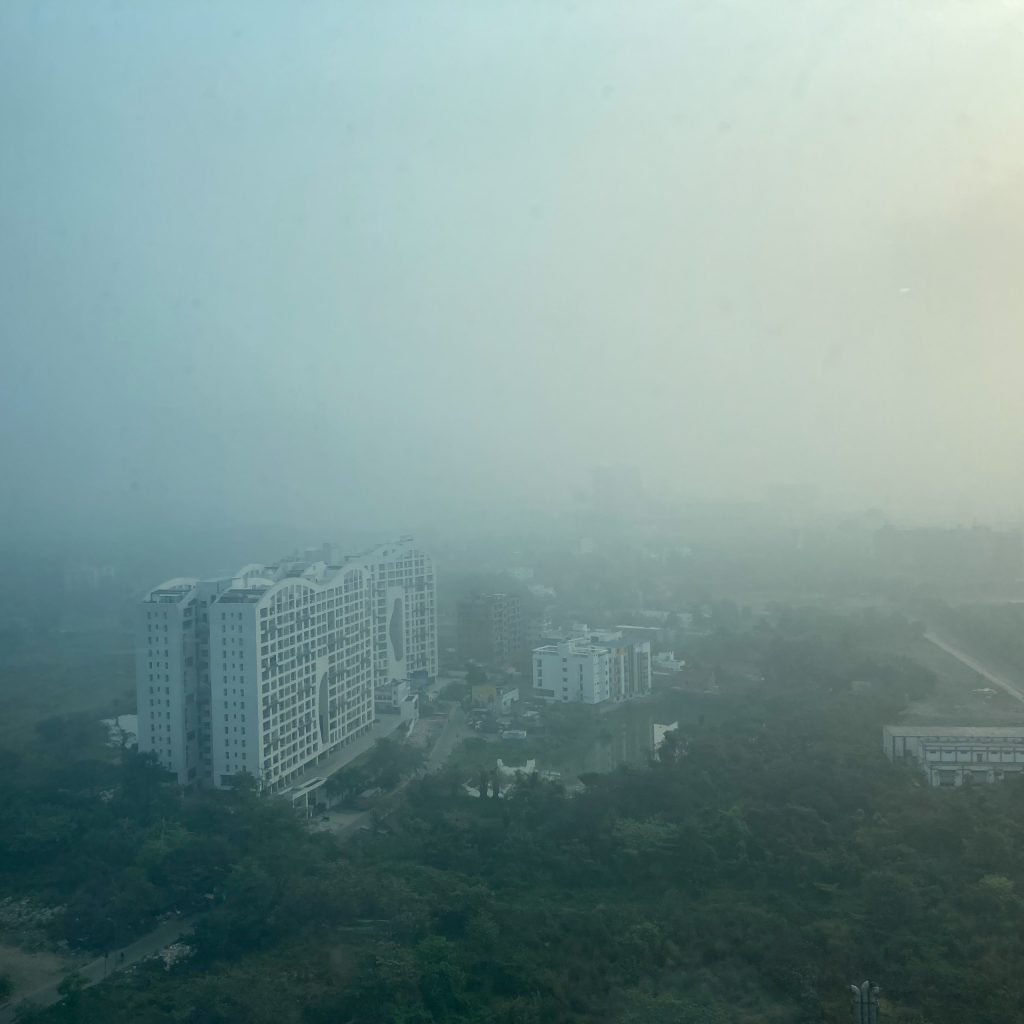
This 30-storey tower sits in an area of the city a twenty-minute drive south of the airport. New Town is an area whose name aptly describes it. From 20 or so storeys up, it looks like a modern office, residential, warehouse landscape in course of development with the hotel lodged in an area of building sites and verdant fields which seem to be waiting to be subsumed by those building sites. The air quality difficulties that Indian megacities face is evident in the haze that blurs more distant buildings.
The hotel itself features all the perceived necessities of a business/airport hotel of the modern era. This means fully-equipped, comfortable air-conditioned rooms with bars, restaurants, gyms, proper-sized swimming pool (i.e. allowing laps to be swum), anonymity and homogeneity. It is easy to find quibbles with this species of hotel, but for most more up-market travellers they are the only realistic option when seeking out convenience to airports and other facilities. With the Westin our quibbles were with some of the staffing issues and at the lack of any quiet space to read and write. Given the numbers of staff around we were disappointed at the mediocre service we had in the buffet-style restaurant and the almost total lack of any staff in the pool area. I always feel that a failing of this sort is primarily down to lack of training by management rather than the character of individual staff. As we arrived mid-morning, having left the cruise boat quite early, we had time to fill before our room was ready and the music blaring out of speakers or TV screens in every public space (even, to headache-inducing level, around the swimming pool) was just irritating.
Mobility Access
Not an issue in such a modern place with plenty of staff on hand to help, if needed. The pool only has ladder steps and distances between spaces in the hotel can sometimes seem a long way apart, but these are minor points that can be managed.
Radisson Blu, Guwahati
https://www.radissonhotels.com/en-us/hotels/radisson-blu-guwahati
I am not sure there are many other, if any, suitable alternatives for Audley to use in Guwahati. The hotel sits, almost unobtrusively, on the edge of what seems to be the main ring road circling round and through the city. If this implies noise, then you need not be concerned. It is well protected by its position being separated from the road by other buildings. It seems to be an area that is the equivalent of the strip-mall roads in the United Sates with an eclectic string of businesses along the road from eating places to car workshops. This is not the archetypal roadside of many an Indian town that is so different to its European equivalents but has a more modern feel. It is not an area that you would find interesting to wander around, unless, like me, you enjoy watching life unfolding and photographing it in even the most unprepossessing locations.
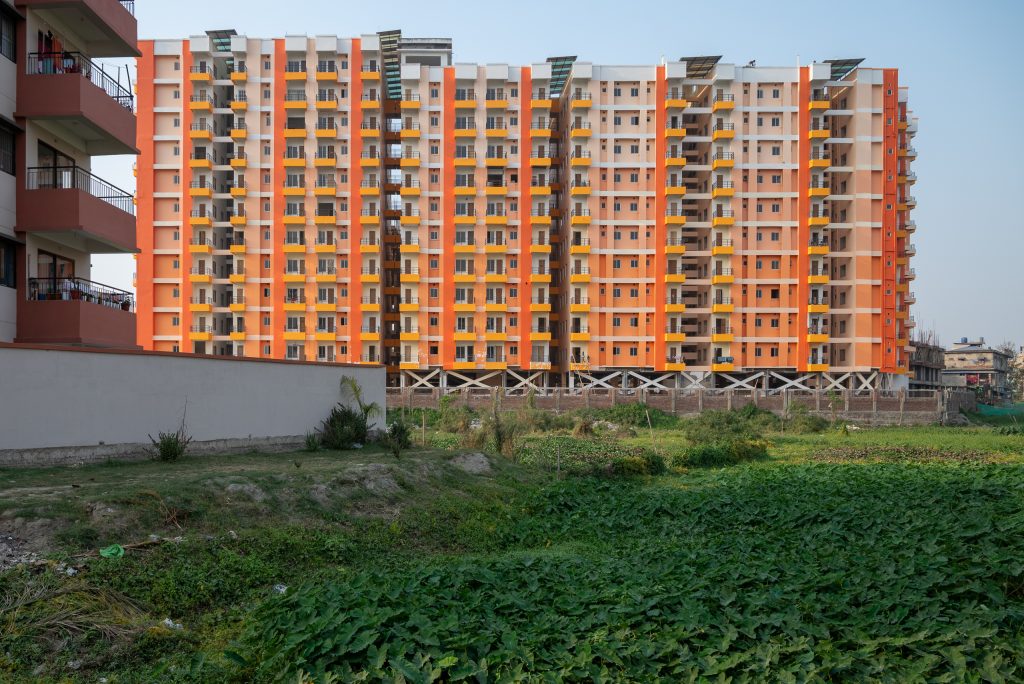
As with the Westin all the accoutrements of this style of hotel are there. Here we did not have the same quibbles as in Kolkata so we were more relaxed for our onward venturing.
Mobility Access
Again, there is no issue here as it is a fully-equipped, modern hotel. Size still means occasional long corridors. The pool had steps in this case, meaning it was slightly easier for those who have mobility constraints. However there was no handrail and the pool edging was slippery when wet, so getting in and out was not as easy as it could be.
Brahmaputra River Cruise, Assam (7 nights)
Once again we are in the hands of Assam Bengal Navigation but this time the cruise is called Rhinos & More (https://www.assambengalnavigation.com/rhinos-and-more). As before I am going to leave the detail of the cruise’s itinerary to their website. And for a description of the boat and the structure of the tour, the nature of the accommodation, the food, the quality of the staff and guiding just go back to the descriptions in the section on the Hooghly River Cruise. So here a few additional thoughts about this cruise.
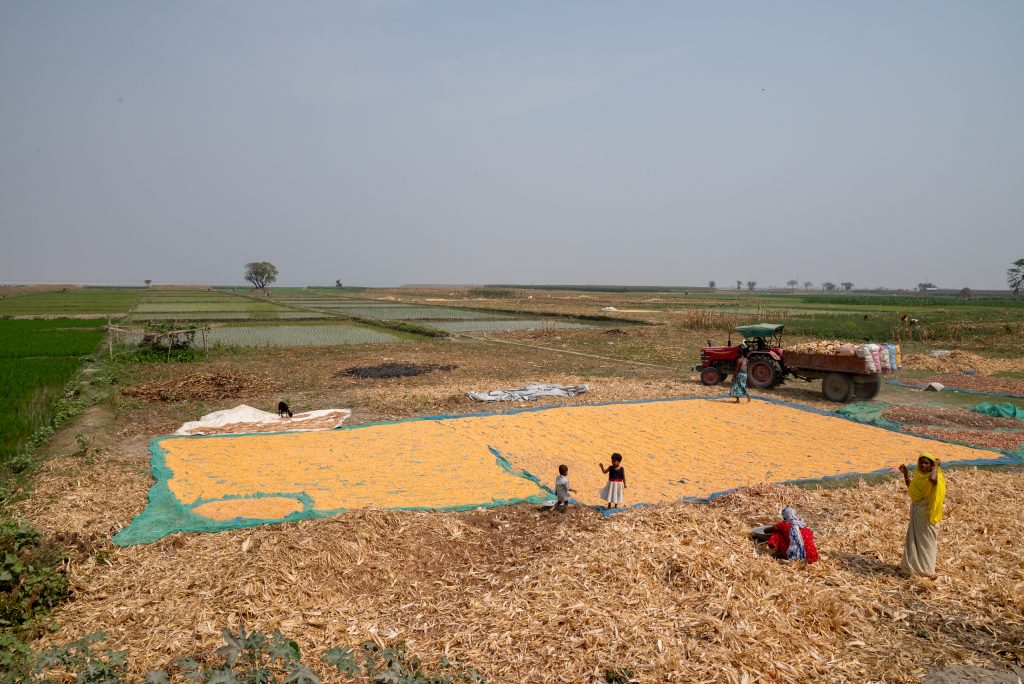
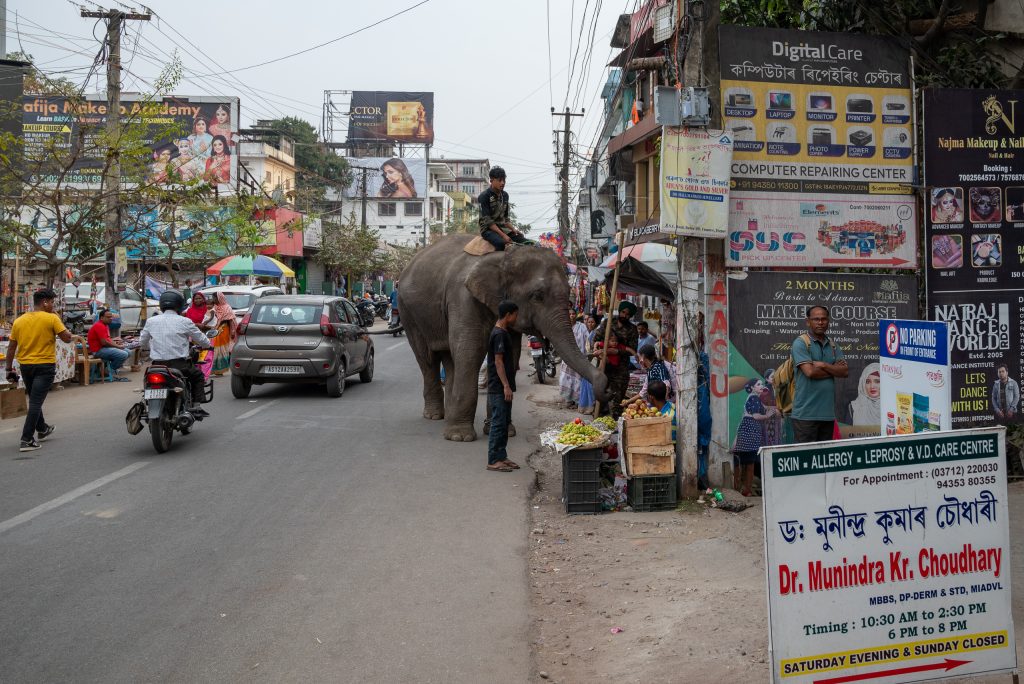
Take the quality as read. This cruise was less about engaging with the region’s history and much more about getting closer to everyday Assam and, as the name implies, taking safari drives within two of India’s key National Parks. The former covers visits to an important Hindu shrine, thronging with pilgrims across all the age groups, to a village established by migrants from nearby Bangladesh on riverine sandbanks that are under threat from the floodwater every year, to a medium sized Assam town just to take in the atmosphere of the quiet parks and bustling street life and to a village weekly market whose vibrance and variety I could have walked round (and photographed) for hours. And, of course, this being Assam there is a visit to a tea plantation and factory, complete with a tasting out in the midst of the tea bushes. The wildlife element covers a downriver paddle on the Jia-Bhoreli River through Nameri National Park, focused on avian wildlife, and three half-day drives through Kaziranga National Park, where you are guaranteed several close encounters with the Indian one-horned rhinoceros and, possibly, a glimpse of the Royal Bengal tiger amongst other wildlife. The nature of the tours here involves more driving on roads than on the other cruise and two spanking new, almost sparklingly clean, comfortable 15-seat minibuses track the tour for use on most trips.
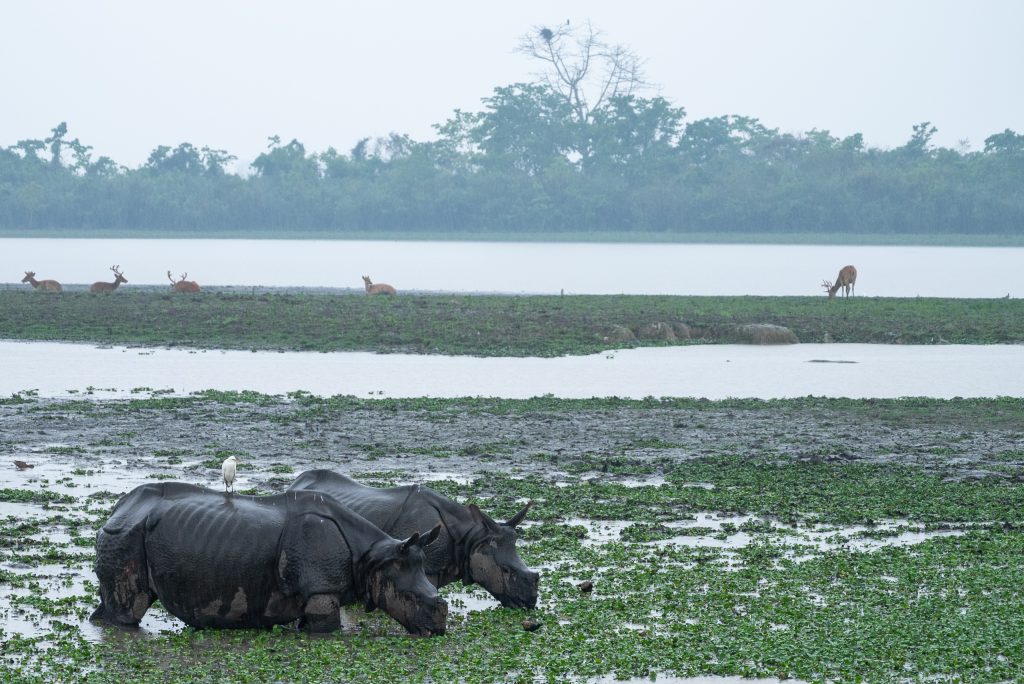
The river itself flows westwards into the vast Gangetic delta that spreads across West Bengal and Bangladesh but here it presents a different aspect to the Hooghly. The Hooghly landscape is flat, not boring flat but fascinating flat, but unbroken by hills. The Brahmaputra is a rambling river spread across a wide riverine plain but here the hills are a feature, sometimes looming closer to the riverbank, at others a distant grey-green line in the limpid, hazy light. And the river plain is broad, with the river spreading out to a lake-like width in many places, shallow with everchanging sandbanks. One of these was, at an overnight mooring, the location for a tandoori feast cooked and eaten on chairs set out on the sand, with only the lights of the boat and of the stars visible. Here life is much more rural than on the Hooghly and the riverbanks are more often home to crops and villages than was the case in West Bengal.
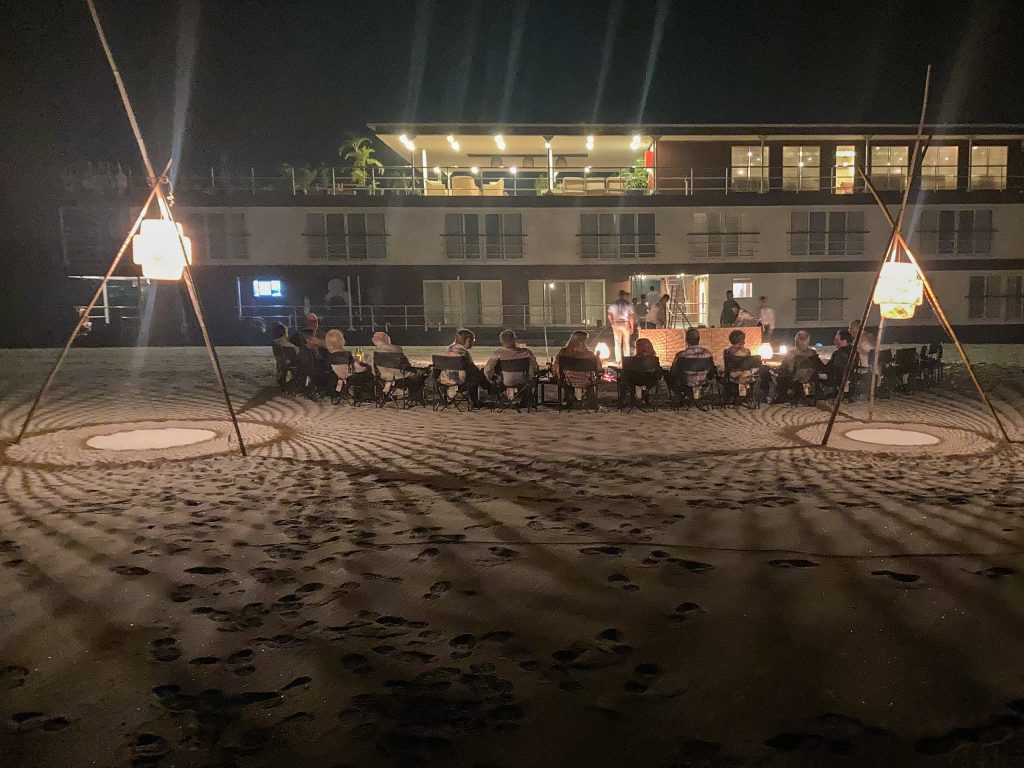
This was another stunning experience. It felt so different from our earlier tour, save for the same sense of peace that comes when the boat is moving gently along the river between the tours.
Mobility Access
The comments on this aspect of the Hooghly River cruise apply equally here with the following additional points to be taken into consideration. There are a few more places on this trip where the route up the bank to the level ground do not use a clear set of steps and, guided by staff all the way, you may be walking up open ground paths or the stepped sandbags that are a feature of the flood defences in many parts of this vast river system. There can be walks across flat areas of land adjacent to the river (sandbanks, fields, unsurfaced paths) to get to your transport, but the guides have all the requisite information you may need and will always try to find a practical solution to fit your needs.
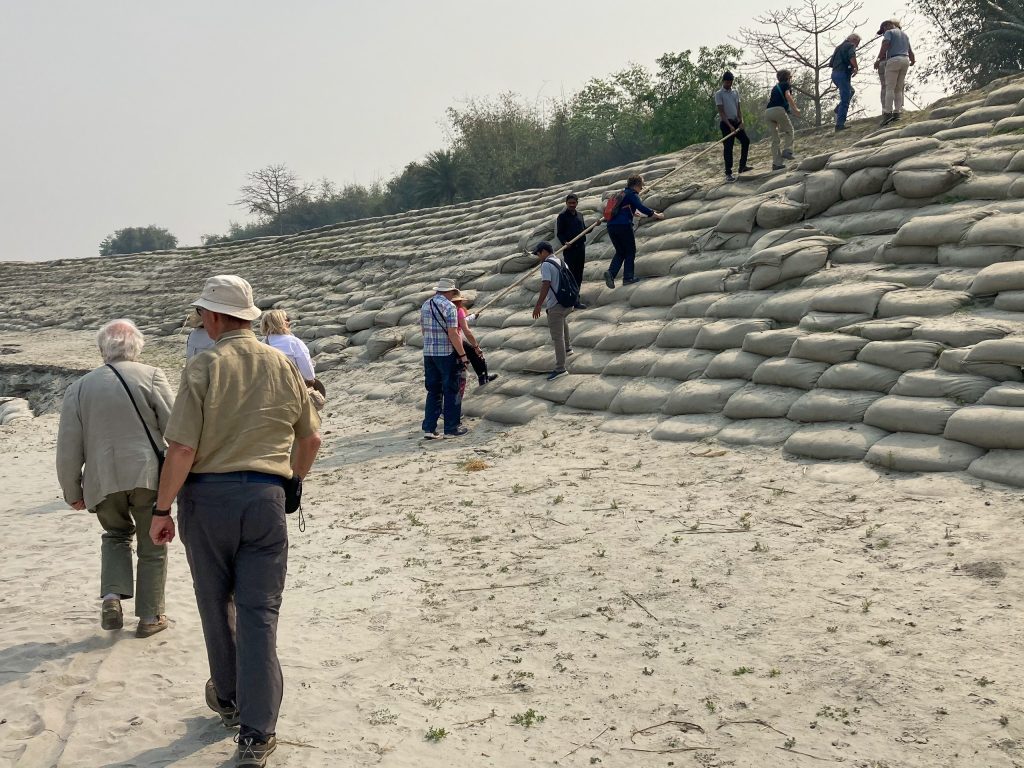
Old safari hands will know that, occasionally, the open safari jeep-like vehicles can hare off across a landscape at some speed to enable a good sighting, so be prepared for a bumpy ride if that happens. For the most part the tracks within Kaziranga National Park are well-used and mercifully free of unexpected unevenness. Another potential issue is with the Jia-Bhoreli River trip. ABN use small inflatables and you sit on wooden boards resting across the boat. The river itself is mostly flat but occasionally, as our guide charmingly described it, there are places where the river gets a bit ‘bubbly’. These small areas of rapids are hardly the stuff of the adrenaline-inducing whitewater river rides, but you do need to brace yourself, not least because the bottom of the inflatable flexes with the movement of the water so does not provide a fully stable ‘floor’. It does mean water is shipped into the boat, so you need to work on the basis your feet and legs will get splashed with water. The trip on the water lasts an unbroken two plus hours and certainly backs, lacking support, were beginning to grumble by the time we reached the landing point. Again, I would emphasise that the previous evening’s briefing in the salon covered all this in some detail along with other safety issues, giving plenty of opportunity to ask questions and to prepare.
New Delhi (3 nights)
We know Delhi and its ‘New’ part pretty well because a stay is an element of nearly every Indian visit we make. This means some of what follows is not necessarily helpful to first-timers as I will not cover any of the many sights and areas of interest and, this time, we did not venture into the maelstrom that resides in the older parts of the city. New Delhi is cheese to Old Delhi’s chalk. They could not be more different. In crude terms, whilst Delhi developed, higgledy-piggledy over the centuries, New Delhi was laid out as a new city by the British colonial powers in the nineteenth and early twentieth centuries and it still has aspects of a planned city where the central government of the country was, and is, based. It is a centre of calmness – wide boulevards, carefully maintained kerbs and roundabouts, tree-lined roads with smart low houses spaced along those roads behind enclosing walls, elegant libraries and museums set in well-maintained parks and gardens, much lighter traffic density with buses that look neat and are not crammed with people. All-in-all it makes many European cities and their infrastructure look poorly-maintained and unkempt. None of the street side businesses that characterise most other urban areas in India sully its broad pavements and walkways. Of course this is not the whole picture, for many problematic social issues lie beneath the surface.
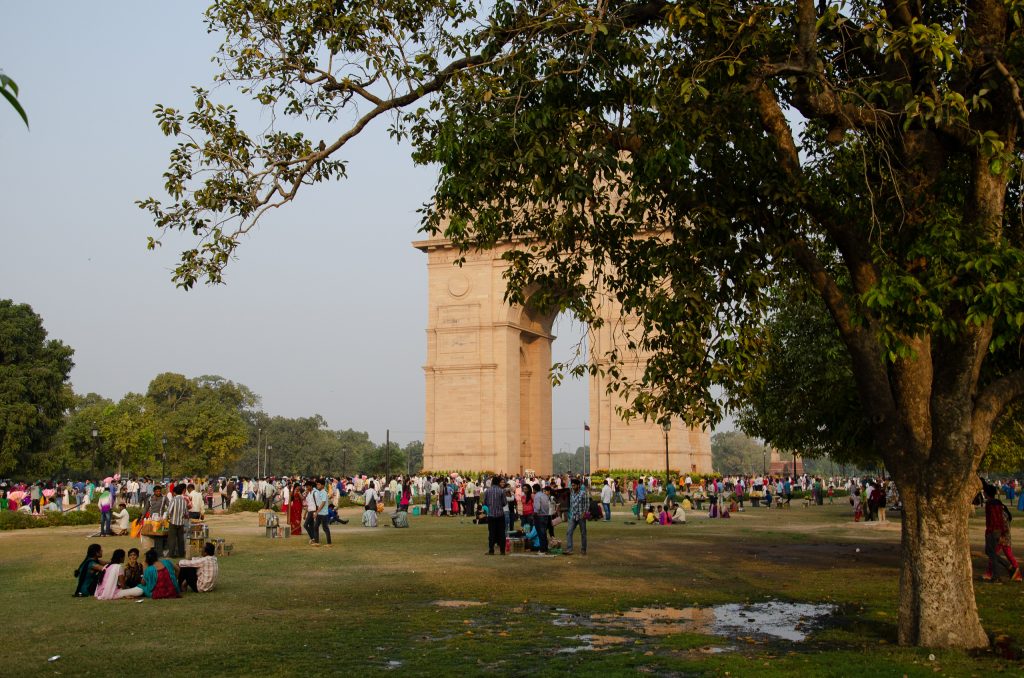
If this makes it sound dull then you would be wrong. The combination of visits to this part of the city and to the bustling historic old town and the areas where they intersect, such as Connaught Circus, make Delhi as fascinating as any other major megalopolis; one that has a deep and rich history. After a hectic day visiting Jama Masjid and the Red Fort and strolling along Chadni Chowk in old Delhi, the late afternoon in the Lodi Gardens in New Delhi, sitting with the local families and couples dotting the green spaces, is a wonderfully relaxing place to be. And at sunset along Rajpath and around India Gate, where the wide boulevard is closed to traffic, a couple of hours watching the Delhi-ites gather in groups of family and friends, picnicking on the grass, buying foods and drinks from the many mobile sellers and photographing themselves at sunset against the symbol that India Gate has become, is a quintessential Delhi experience.
Activities: Shopping and the Revamping of New Delhi
We had two full days here. One was spent in rest and relaxation, mostly within the confines of the hotel, the other we spent making full use of a car, guide and driver from our travel advisers’ Indian agents, Distant Frontiers. And our guide was excellent, showing a complete understanding that we were familiar with Delhi and wanted certain specific elements to our day: some shopping and an overview as to how Delhi had been developing in the time since our last visit, pre-COVID-19 lockdowns.
On the shopping we returned to some familiar haunts: Central Cottage Industries Emporium and Khan Market. The former, set over several floors of a building just south of Connaught Circus on Janpath, sells arts and crafts from across India and used to be one of the few places where you could amble round the store and not be bothered by importuning sales-people (https://www.cottageemporium.in/corporate-info/). The prices were fixed, thus those unused to the bargaining culture of India could buy in mental and physical peace. The bureaucracy associated with buying and paying involved several pieces of paper and separate visits to payment and collection desks before your purchases were handed over. That aspect has only changed in that electronics have replaced paper; the separate payment and collection desks still survive, as does the approach which leaves you to look and make your own choices about buying.
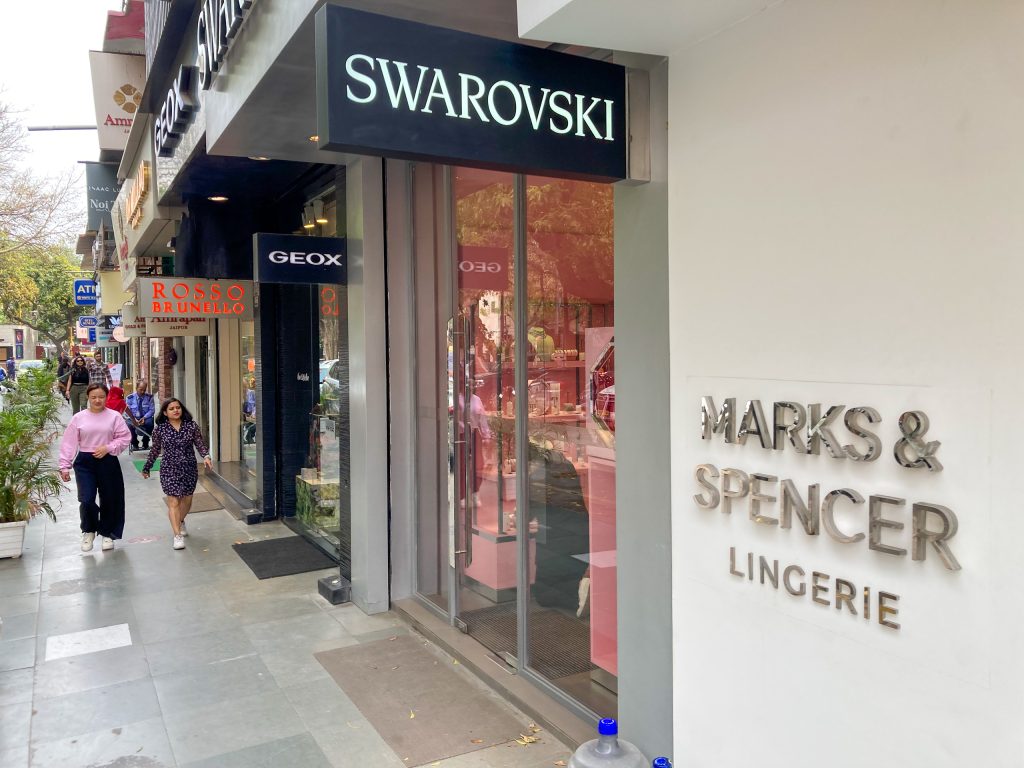
This approach now extends to many more western-style stores in Khan Market (https://delhitourism.gov.in/delhitourism/shopping/khan_market.jsp). Khan Market (which has its own stop on Delhi’s metro) is a small shopping district set up in 1951 and became a favoured place for ex-pats and economically better off locals to go. Those remain the main visitors, although the burgeoning wealth of the middle class in India over the decades has shifted the clientele mix towards the locals. Bookstores and jewellers, restaurants and cafés, electronics and homeware outlets rub shoulders here along with obvious services like hair salons and mobile phone outlets. Most are local businesses. Fashion stores that have lines for Indian and Western style clothes are interspersed with the occasional international brand. Go and browse and take a coffee at one of the many cafés.
Mobility Access
No lift in the Cottage Industries Emporium but there are only short flights between some floors as they use all the half-landings. Khan Market is a flat open precinct and the buildings are only two storeys high. Most of the stores are accessed from the pavement (sidewalk), with some having one or two steps up into the shop. Only some of the stores that use the upper floor have lifts. Khan Market is around 350 metres from the metro stop of the same name.
For the rest of our tour we circled around the boulevards of New Delhi whilst our guide explained the scope of the immense Central Vista Redevelopment Project (https://centralvista.gov.in). This scheme, currently being implemented, will see the repurposing of many of the buildings of Edward Lutyens and Herbert Baker’s original 1920s scheme and the construction of many new buildings, including a new Parliament building. The intention seems to be both to update or replace old-fashioned facilities for the Information Age. The sheer scale of the project speaks to the confidence Indians now have of their place in the world; a palpable change from the post-colonial semi-shadow that lay over the country we found in visits a couple of decades ago.
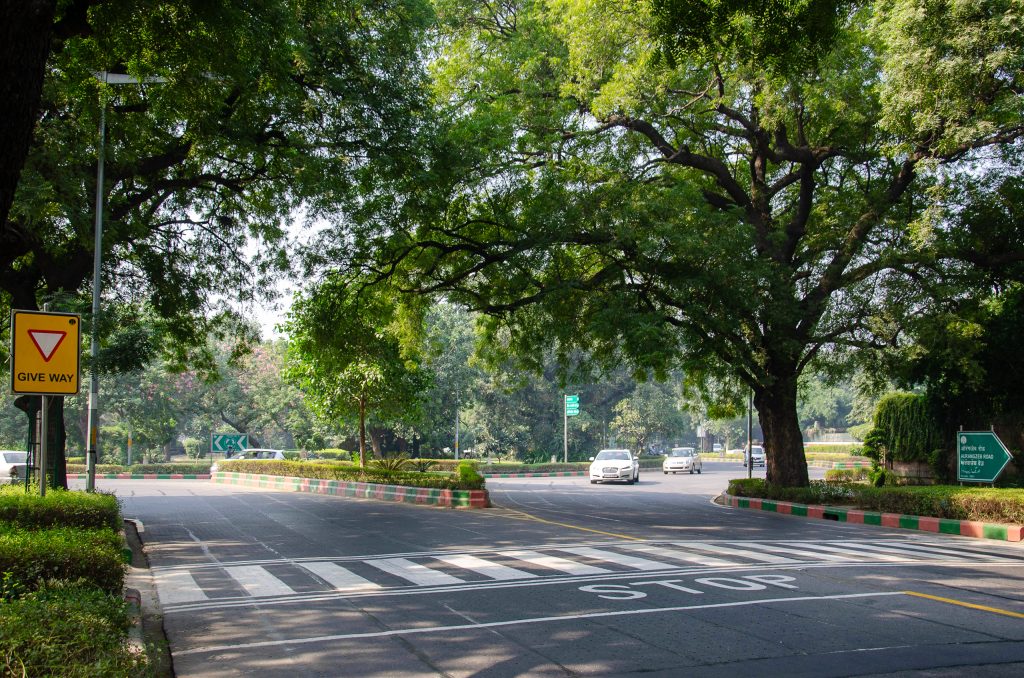
From the buildings already constructed, including the new Parliament building, there is a sense the new blends in well with the streetscape of the planned city. Due to finish in 2026, for those who enjoy the urban cityscape and the architecture of the last two centuries, it is a fascinating addition to a city that warrants plenty of time to allow its full character to emerge.
Hotel: The Claridges
https://www.claridges.com/new-delhi/
We have stayed here a few times before, most recently in 2017. What a difference some years can make. Originally opened in 1955, this hotel, set in the relative peace of its own gardens in the heart of New Delhi, has recently been undergoing a revamp with, when we were there, most of the public spaces and some rooms having been fully refurbished (including our room). The exterior of the whitewashed building has a subdued Art Deco appearance and used to be a slightly cosy, comfortable feeling place where people would sit on the front lawn taking afternoon teas. Now the updated décor has transformed it into a temple of what I, somewhat unkindly, call Gulf States bling – all white and black marbles, over-bright lighting from chandeliers, a nightclub-style cocktail bar from whence, after dusk, rampant pop noise floods the lobby area every time anyone opens the door. Certain of the better-off of Delhi now party, eat and socialise here. The outdoor pool remains in place and an indoor wave pool has been added, the spa upgraded and the international restaurant and breakfast buffet completely revamped – so that some seats are a triumph of style over practicality. It is a true up-market big city hotel with all the facilities and staffing that goes along with that. As you can probably tell, I wish it wasn’t! Yes, it needed upgrading but this is no longer the same place in which we felt so comfortable. I am sure it will be more successful in this format (it was certainly very busy with business people and tourists from both India and beyond) but I suspect we will be seeking out calmer pastures in future.
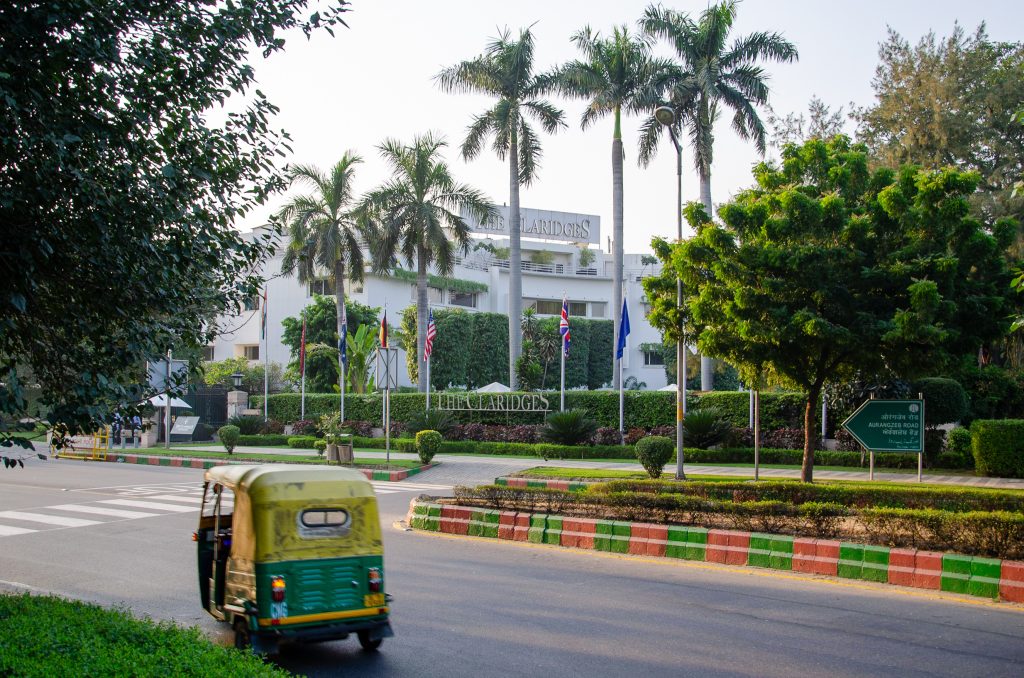
I am afraid they did not endear themselves to us on Holi, one of the most joyous celebrations in the Hindu calendar – https://www.britannica.com/story/holi-festival-of-colors. However it is also a celebration where, as the entry in Encyclopaedia Britannica would have it, ‘everyone is fair game’ and a certain frame of mind and youthful vigour is needed to enjoy it to the full. With a warning ‘informatory’ from the Delhi police also on our minds, we decided we would sit it out with a day of relaxation at the hotel: a day of swimming and reading and writing in the gardens. We had reckoned without the private party that was to take place around the pool rendering it unusable. The music emanating from the party was so loud as to disrupt any thoughts that peace and quiet could be found in the gardens at the other side of the hotel. We pointed out that the hotel was, effectively, rendered unusable for other hotel guests and whilst, as a consequence of our remonstrations, they offered us a free meal, it only confirmed our view that we may be looking elsewhere on our next visit to the city.
Mobility Access
Access within the hotel is all you would expect from a revamped hotel. Lifts, ramps and flat surfaces for the most part. The spa is at the back of the hotel along some quite long corridors. Arriving at the hotel probably means a taxi or tuk-tuk although there are bus stops within 400 metres of the hotel.
Eating Out
In Delhi we were treated to one of the best meals we had had for many a day at Indian Accent – https://www.indianaccent.com/newdelhi. The cool, contemporary architecture of the Lodhi Hotel signifies a seriously upmarket place. We are grateful to our travel advisers, Audley, for offering us this meal as a thank you for our business over the years. We had the 6-course tasting menu with a wine pairing. Normally we avoid tasting menus and wine pairings – too much food, often including a flavour or ingredient we do not like, and too much wine. Not here. The small but exquisite portions of the food were matched by suitably-sized wine tastings. The underlying flavours and ingredients are from the extensive cuisines of India. It was so delectable and subtle. And this excellence was wholly vegetarian. There is a non-vegetarian alternative on offer along with an a la carte menu. For us, the ambience matched the food. The ultra-modern décor was not too in-your-face, the light carefully subdued and the tables well-spaced. Noise levels were well controlled (if there was any piped music it did not impinge on my consciousness). Service was excellent. It is expensive but Indian Accent is highly recommended for a special occasion in Delhi.
Mobility Access
Not a concern given the modernity of the hotel, although there can be one or two steps up and down to accommodate designed changes in level within the public areas. There is a flight of steps up to the restaurant entrance but the main hotel entrance can be used by those who cannot manage the steps.
Dhaba is a very different experience – https://www.claridges.com/new-delhi/dining/dhaba.html. This is an almost venerable institution lodged in The Claridges. We have been going since our first visits to Delhi, which means it has been in existence for at least forty years. It has (so far) avoided any sort of revamp in the current updating of the hotel. Long may it remain as it is! The concept is that the food and décor is derived from the Punjabi roadside food stalls or dhabas. So what you get is hearty curries and dhals and tandoori dishes, including breads, most of which will be familiar from many a British Indian restaurant menu, except the food here is of real quality. The danger is that it is all too easy to order too much. The dishes are substantial and intended for sharing by social and family groups, many of whom are the restaurant’s customers, although we couples managed very well. This being India, there are plenty of vegetarian options. With the kitchen seemingly in an alcove in imitation of a street food wagon, it is a bustling affair and a little care is needed in selecting your table if you have back or posture concerns – a few of the seats are not easy to find support in.
Mobility Access
It is on the ground floor of the hotel so no issues here.
Getting Around
Because we used taxis, a guide for our tour and the travel company for airport transfers, I am not going to comment on Delhi’s other means of getting around the city. In the past we have readily used tuk-tuks, the metro and even a cycle rickshaw (to go up and down the bedlam of Chadni Chowk in Old Delhi) but circumstances may have changed in the years since then. The city also has a very usable hop-on, hop-off tourist bus – https://hohodelhi.com.
Practicalities
Bugs
And I mean of the insect sort. First the malarial mosquito. Parts of India are high risk when it comes to the presence of this global killer, but most of the country seems to be categorised as low to no risk. We use this website run by Public Health Scotland – https://www.fitfortravel.nhs.uk/destinations/asia-east/india for our base information but also discuss risk with our local health centre. All the areas we were visiting were in the low to no risk category, so we did not take anti-malarial tablets but did make sure we minimised exposure to insect bites and, for that, see the advice that every guidebook, travel website or competent travel adviser will give you on the subject.
As to other bugs, the combination of darkness and artificial lights naturally attracts bugs of every variety and so, on the cruises, cabin windows need to be closed and saloon doors shut to avoid the hand flapping that accompanies that fluttering and buzzing around you. I found that sitting on the sundeck in the evening was fine, although those to whom the biting insect world are more attractive should be warier of receiving the odd bite and cover up appropriately. Sitting out on the sandbank for our tandoori barbecue seemed to be mercifully bug free.
Money and Credit Cards
You cannot take Indian rupees into the country so you will need to exchange money when you get there. You do need some cash and, if you take the cruises, you do need quite a lot of cash because tips are realistically only payable in cash, and the tips for guides and staff for a seven-night cruise can be quite chunky. Street stalls and taxis may be cash only, although such is the extent of the adoption of relevant electronics that many street stalls and taxis and other improbable people have card readers. Most of the service providers we engaged with (cruise boats, restaurants, cafes, hotels) assumed card payments as a given.
We decided to use the almighty US dollar rather than our post-Truss pound for cash exchange. It is not always easy to decide where to change cash. Advisers and guides warn you off the exchange booths at the airports as you get such a poor rate, so we tended to rely on asking our guides on the basis that any funny business would, ultimately, be reflected back through our UK travel advisers. This led either to an exchange at the door of our car with a contact of the guide or being taken to an exchange office. In either case I am sure money is made by those involved but, cross-checking the exchange rate on our XE app, we always seemed to be getting a fair deal. It does feel faintly surreptitious to be handed wads of paper in the airport car collection area by someone who wields a fistful of rolled-up banknotes. And you will get a wad of paper if you want any notes that are vaguely usable on an everyday basis for, at around 83 INR to the USD during our stay, you get a lot of them.
Mobile Phones/Internet
I can only speak for UK mobile phone users where even the best mobile company deals make using mobile signals in India an expensive proposition. We had been pointed in the direction of an Indian mobile phone provider to get a SIM card for the duration of our visit but, after a couple of visits to their stores in Kolkata, we found that, in common with many other countries suffering from an excess of electronic crime, India now has certain requirements before you can get a contract. These include an Indian mobile phone number. So, a non-starter for us. We decided to get by with a minimal use of mobile data and using free Wi-Fi services where we could do so. Because India has now embraced modern Information Age technology in a big way (practically all but the most economically disadvantaged now have a smart, or mobile, phone), free internet is prevalent in all the hotels, restaurants, cafes, cruise boats and other facilities so it is only when you are out and about that you may need a mobile signal. Coverage is extensive, only tailing off in the more remote locations on our trip.
Driving in India
Or perhaps this should be headed ‘Being Driven in India’ as I envisage that all but the most adventurous would ever drive themselves around when holidaying in India. This is not because driving here is inherently difficult or dangerous but that the rhythm of driving can be quite alien to those of us used to driving in Europe or the USA. Also road signage away from modern highways can be sparse to non-existent meaning finding your way around, be it in cities or countryside, is best left to drivers in the know.
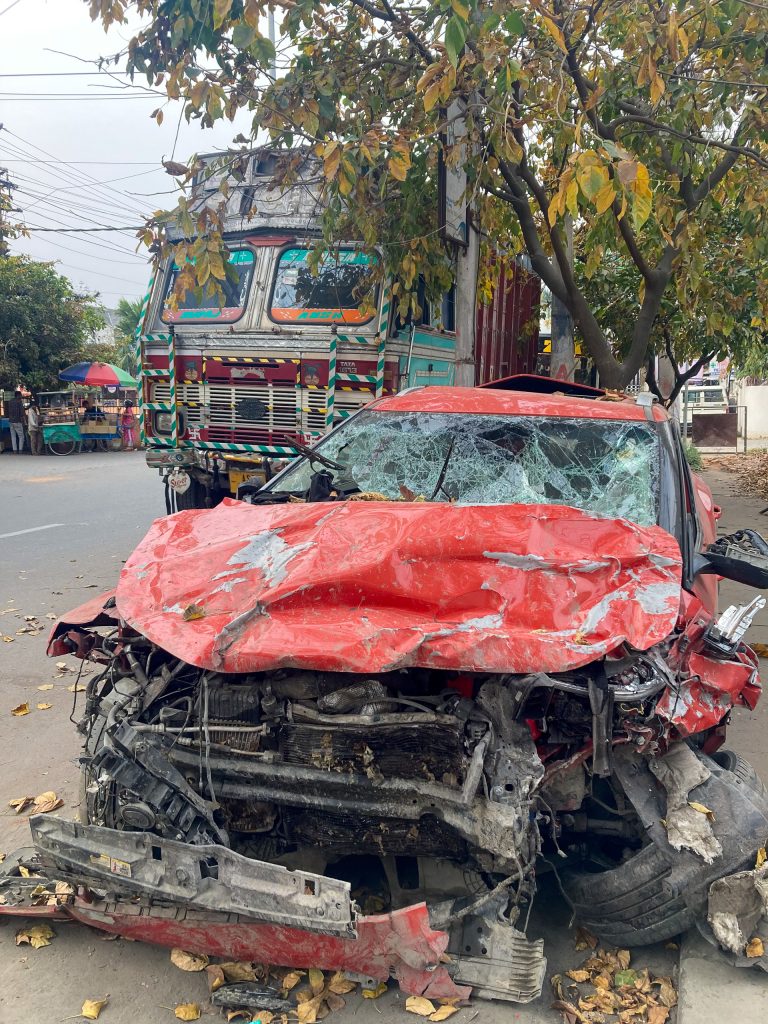
And some drivers are better, a lot better, than others. On this trip we were fortunate in having drivers who were, for the most part, very attuned to the concerns of their passengers but you can find those to whom the Indian notions of overtaking become a challenge. In the cities little traffic can move quickly because the volume of road users is too great to allow speed of passage. On the open road it can seem more hairy as these road users can be sharing the tarmac with pedestrians, carts and animals (although far fewer than stereotype might have it). Those users make full use of the width of the road and the verges meaning manoeuvring can be required in order to avoid the oncoming car that is overtaking that truck at the same time as the truck is overtaking a bullock cart loaded with materials. For the most part the standard of roads is fine. Indeed the roads of New Delhi are in a far better state than the London roads, pockmarked as the latter are by the hasty reinstatement works of the various utility companies. Yes, there can be places where unannounced potholes appear and there are places where the local police seem to have set up fence-like barriers across parts of the road for some random, unexplained purpose but, for the most part, road travel in India gives another opportunity to take in the kaleidoscope of life in this extraordinary country.
Reading
The Epic City (The World on the Streets of Calcutta) by Kushanava Choudhury was a brilliant companion to our stay in Kolkata – https://www.bloomsbury.com/uk/epic-city-9781408888902/. The author was born in the city but his family moved to the United States. He was educated there before returning to Kolkata, first as a journalist and then later to try and re-connect with the pull he felt to the city and its culture. The book is about how he seeks, indeed struggles, to regain some of the engagement with family and social existence. It is part memoir, part reportage.
Geoffrey Moorhouse’s Calcutta is somewhat dated now (it was written in 1971 and updated in 1998) but it is a classic piece of travel writing – https://www.faber.co.uk/product/9780571243563-calcutta/. There is an inevitable view that, in the current post-colonial climate, it is an outsider’s view of a complex culture and city but its portrait of what was seen as a city of poverty, famine, riot and disease provides a good counterpoint to Choudhury’s book. It is beautifully written and enables you to recognise how much India and Kolkata have developed in the intervening period into the global player and economic powerhouse of today.
Along the Ganges by Ilija Trojanow, a Bulgarian-German writer, is another travel book by an outsider, but this short tome is both reportage and full-on engagement with the country he was travelling through – https://www.hauspublishing.com/product/along-the-ganges/. He journeyed the length of the Ganges by small boat, on foot or by whatever other means allowed him to engage with those living alongside, taking pilgrimages to or just travelling on the holy river. Dating from 2011, it explores the deep history and culture still embedded in India alongside the problematic issues of pollution and climate change affecting the river. Ideal for those gentle afternoons when the river is slipping past in your sightline.