Introduction
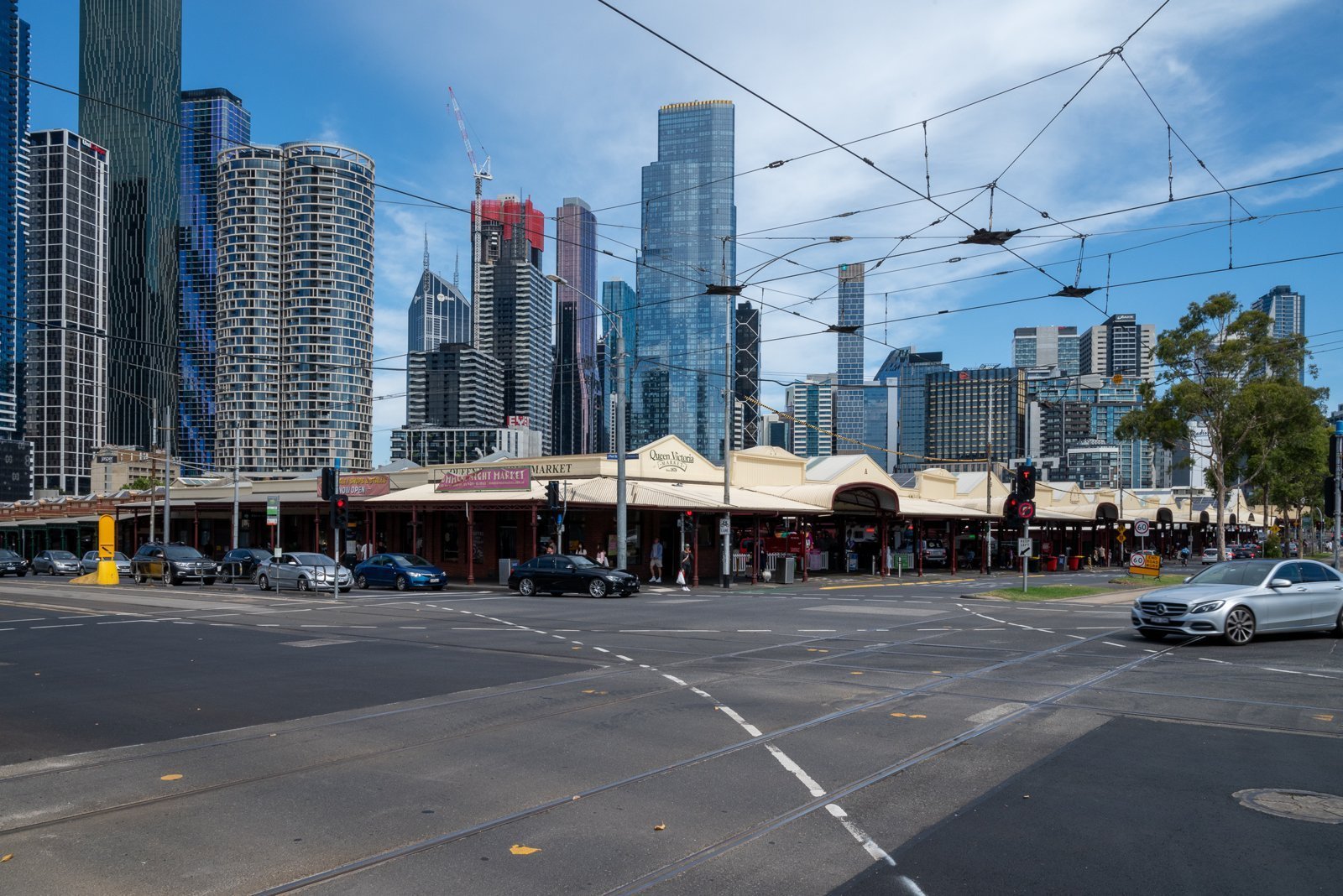
As part of our long (nearly eight week) trip around the globe, most of our time was spent in the South Island of New Zealand (for a slow travel driving tour). But the chance to complete our spectating Grand Slam of tennis tournaments by taking in some sessions at the Australian Open was irresistible. So our first week in Australasia was spent in Melbourne. Much of our time focused on the tennis, but we also found other ways to enjoy this engaging city. I have covered the tennis (buying tickets, getting to the stadia, the food offering, the facilities) in a separate section, which those uninterested can skip altogether. Our down-time between tennis visits offered us a chance to explore some of the many other sides Melbourne: the Victoria Market, the Central Business District or CBD, the Melbourne Museum, a visit to a laundrette and some of the tram meandering that we so enjoy.
Structure of the Trip
As this week was part of a long trip of nearly eight weeks, we had put the organisation in the hands of our regular travel advisers, Audley Travel, whom we used to create a bespoke itinerary for us – https://www.audleytravel.com/australia/places-to-go/victoria/melbourne. This included our flights from London, with a stopover in Singapore (covered in a separate entry) and the balance of our onward trip to New Zealand and then North America, as well as our hotel in Melbourne. We dealt with the tennis tickets ourselves.
Flights
Inward, direct from Singapore, was by Singapore Airways. I have mentioned their many qualities and my slight concern about their business class flatbed for tall people in the entry about Singapore. Onward to Christchurch, New Zealand was on Air New Zealand, for which see the South Island entry. At Melbourne Airport we encountered our first fix of Oz-style congeniality. The two women who shepherded us and our wheelchair through to the arrivals hall were open and friendly, not even balking at the delay in baggage delivery because of ‘lack of resources’.
Once we had cleared customs, they even offered to help when it became apparent that our expected transfer driver was not in the arrivals hall. We let them go and sorted that one relatively quickly ourselves.
Weather
It was the height of summer, but this is Melbourne and you only need to read chats about its weather to realise how divisive a subject it is. This one is a corker, with entries from people who would seem never to have experienced the weather in cities like London – https://www.homely.com.au/melbourne-greater-victoria/questions/weather-in-melbourne–is-it-as-bad-as-they-say-during-the-ye). We had a week of temperature varying between 17° – 24° C (63-75°F) with one day when it rocketed up to 36°C (98°F) of steamy heat. On occasion at night there could be a chilly edge with a drop to about 13°C (55°F) one evening. For the most part we had clear sunny days with clumps of fluffy cumulus cloud adding photogenically to the sky. Throw in the occasional rain shower and you see why ‘changeable’ is a word that gets used. We found it suited us for a city stay, as higher temperatures can militate against walking the streets and enjoying the outdoors.
Areas Visited
Central Business District
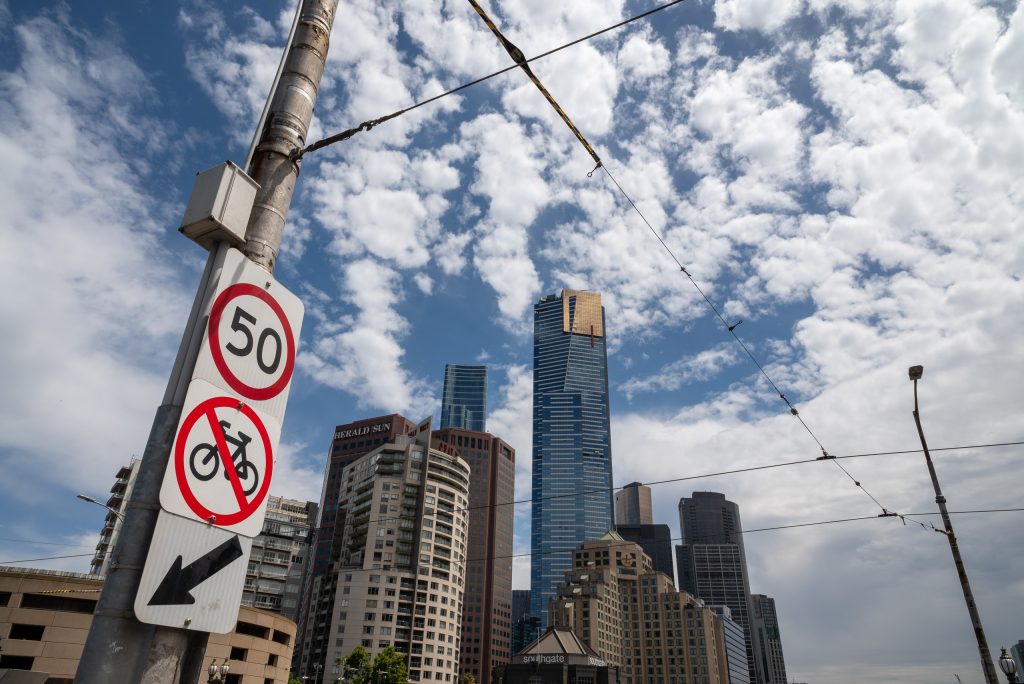
The rectangular grid of streets that form the CBD are the commercial and retail heart of Melbourne. To a city-phile like me, it is an area ideal for wandering and, even better, the whole area is a travel-for-free zone on the city’s trams, so the less mobile can get quite easily from place to place within the zone. It is now an architecturally eclectic area with buildings that encompass styles from the mid-nineteenth century onwards. Each street has a different character to enjoy, from Collins Street luxury brand stores to the historic Chinatown along and around Little Bourke Street. Being in a hotel in this area means you are at the centre of this urban array and also of the public transport network that feeds outward to other parts of the city.
In amongst the boulevards are linking service roads and passages. Some of these are called laneways, much-boosted in the guides as places of cool and not-so-cool bars and eateries and of wild street art. Personally, I found them a bit over-hyped but that’s just me. I preferred the wider boulevards where the people on the streets gave me a sense of the city and the ethnic diversity of its people. For some reason I have always enjoyed the statistic that Melbourne is (still) the city with the third largest Greek population after Athens and Thessaloniki, but nowadays modern Melbourne draws its diversity from across the globe.
There are traditional ‘sights’ in this area (Flinders Street Station, Government House, Old Melbourne Gaol) but this is a place just to wander around with no destination in mind. There is no shortage of stopping places – barista coffee shops, bars offering every global booze on offer and eating places to suit every taste – and shopping places.
Mobility Access:
The free, fully wheelchair accessible, trams make this an enjoyable area for those who need to minimise time on their feet. If slopes put extra pressure on joints, be aware that the ground within the CBD slopes down from the east and west to Swanston Street and from north down to the Yarra River, which can sometimes make walking slightly harder work.
Vic Market
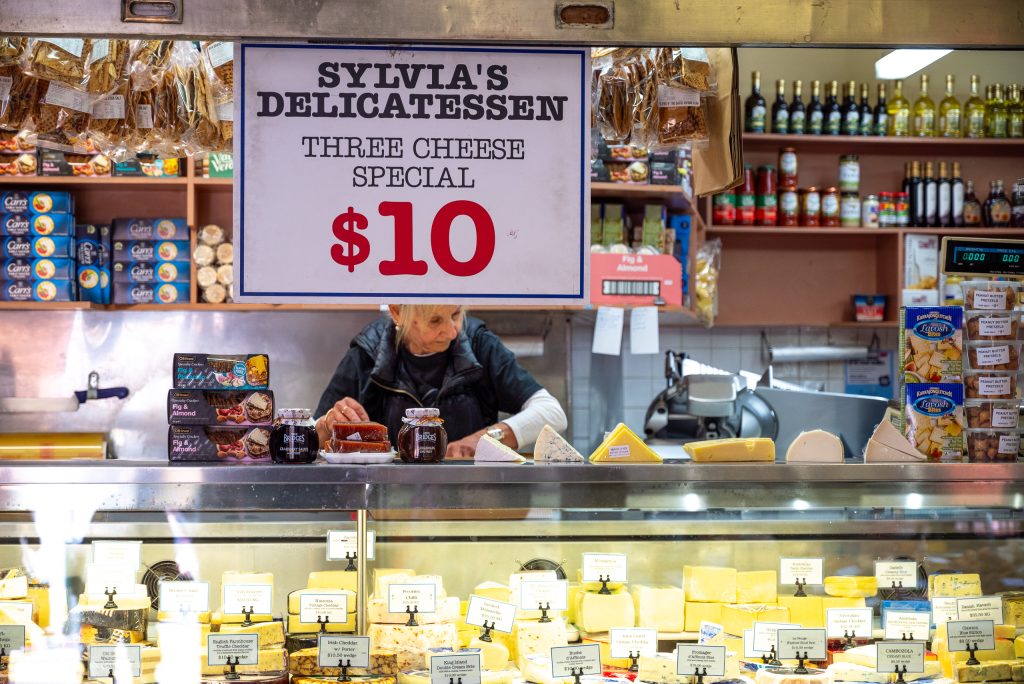
More properly Queen Victoria Market, but the Australian propensity for simplicity means that the shorter name is almost more familiar. Go. I love markets and this one is splendid – all human colour is here and my camera comes alive. Spread across swathes of land on the north edge of the CBD, it has several different areas each with its own character. The oldest indoor section, with its grand portico on the corner of Elizabeth and Victoria Streets, is awash with food outlets – butchers, delicatessens, fishmongers, cheesemongers and much more. The even larger sprawl of the Peel Street section (opened in the 1920s) harbours a plethora of goods’ stalls selling clothes, accessories, jewellery, art and artifacts, souvenirs, flowers, books, antiques – well, you name it and its probably there somewhere. And do not miss the vibrant fruit and vegetable area in the north-west section. Here stallholders, from Asian, European, African and doubtless other heritage, set up trestle tables to sell their wares. It can be a riot of shouts as, towards the end of the market day, stallholders seek to divest themselves of unsold fruit by the box load.
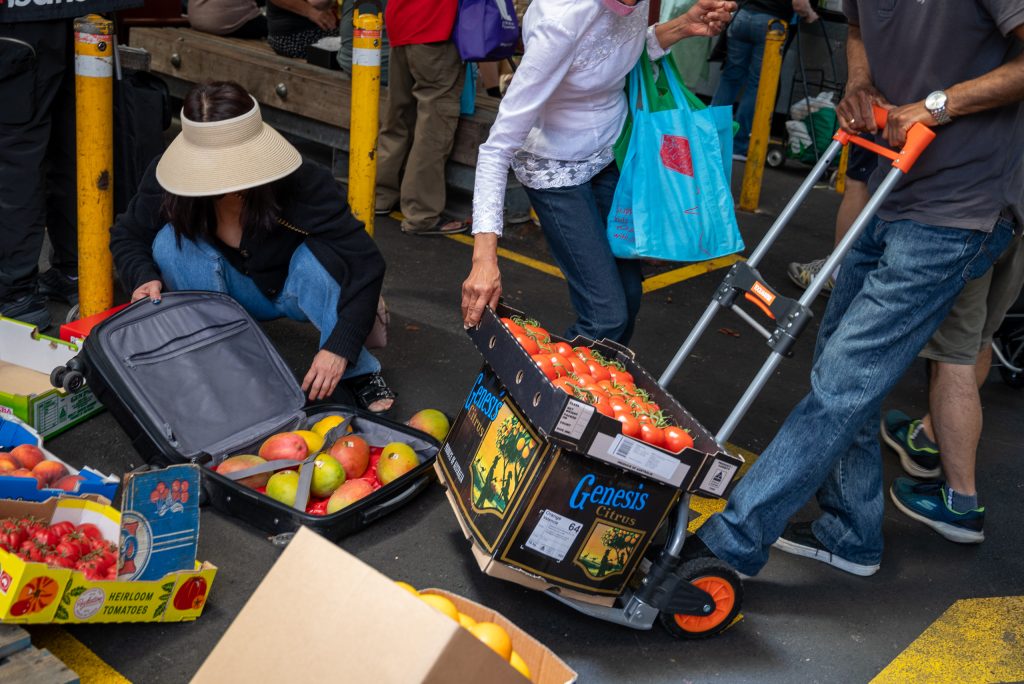
Don’t go on Monday or Wednesday. It’s closed. On any other day, if you get there before mid-afternoon closing, it’s a joy for the senses.
Mobility Access:
There are tram stops on Elizabeth, Peel and Victoria Streets where access is easy. The stops are in the CBD zone where the trams are free. The land is pretty flat, just a gentle rise south to north. Once in, you only get the full effect by walking around, so those with constraints should take it in bite-sized chunks. There are tables at many food stalls and a few perching points for rests to be taken but the market is big and seating intermittent.
A Tram Trek
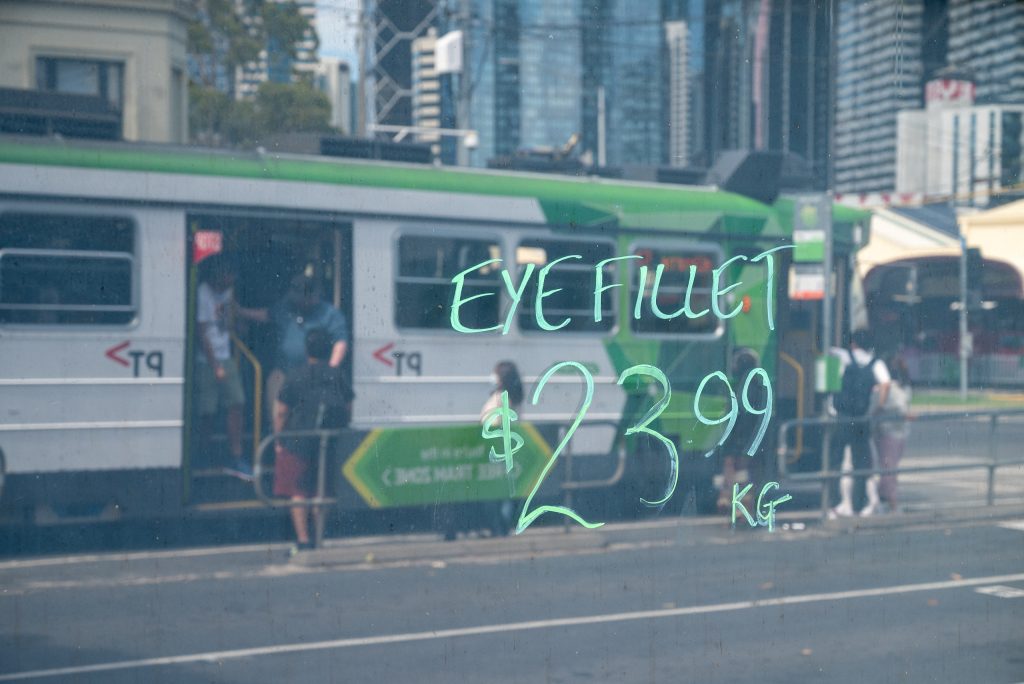
We happened upon trams in a big way in eastern Europe a few years ago. There, from Dresden to Sofia, they are a ubiquitous means of getting about cities. On that trip we also unearthed the delights of the unstructured tram trek. Just get on a tram and follow it to its end point or to an intersection with another tram route and see where it takes you and the areas it takes you through. You can’t get lost because, once you reach the end of the line, you can just turn round and come back. We think that If you enjoy slow travel then, for those with limited walking capacity, it is a perfect mode of seeing a city and its people; not as jerky as buses and a fraction of the cost of the car (and with better views). But, as the key to this sort of tram travel is that you get a seat and a view, you must plan that travel outside rush hours. Melbourne’s tram system is perfect for this sort of meandering, as it trundles out to into the suburbs and to the beachfront, offering a whole different window on the city.
So on one day off from the tennis, we got on a 48 tram and just let it take us east to its terminus in North Balwyn. Why the 48? No other reason than that its Collins Street stop was very close to the hotel and we had been intrigued by a brief view of the two-storey Victorian-era housing of East Melbourne earlier in the week. What we got was a journey through once-towns that have been subsumed by the modern city. First more glimpses of that housing with its wrought-iron and verandas, before moving on through Richmond along Bridge Road, with its Victorian-era high street buildings, now repurposed for modern retail and restaurants, that gives way to a modern service section of warehouse-style buildings housing discount outlets, tyre and exhaust repair shops and others of that ilk. Then across the Yarra River and its attendant green parks, on up the slope to Kew where the ironwork of the old street front arcading has given way to flat-roofed awnings that divide the old buildings in two: below retail anonymity, above colonial Victorian elegance. Onward past Kew cemetery off to our right and then the residential areas of neat, detached housing on tidy plots, mostly bungalows, with wooden framing, and those enticing verandas.
Journey’s end is a simple terminus in the middle of the road. We switch to the adjacent tram for the return trundle. During the wait for departure, we have a chat with a friendly driver and find she is a devotee of the tennis.
On the return we switch trams to the 78 in Richmond and head south through Prahran, switch to the 16 tram near the end of the line and carry on to beachfront St Kilda, before circling back up to the CBD along St Kilda Road with its up-market residential high rises and its avenues of trees. A thoroughly satisfying sojourn. Depending on your time on board it is only A$5 for two-hours across all zones, with a maximum daily fare of A$10 (less at weekends). See the section on Getting Around for more details about public transport.
Mobility Access:
Apart from short walks between stops at the interchanges, seats all the way. In the CBD and at some other stops there are no steps up because the stops have raised platforms reached from street level by slopes to the platforms. In other places there may be one or two steps up to get onto the tram.
Melbourne Museum and Carlton Gardens
I went for an advertised exhibition of First Nations art and photography from Pacific Rim nations and was a bit disappointed to find a small display tucked into a corner of the ground floor so, instead, I had a good old wander around, inside and out, taking in the architecture of this post-modernist edifice (completed 2000). After then taking in the adjacent, and contrasting, Royal Exhibition Building (completed 1880), I took a chance to sit in the peaceful greenery of Carlton Gardens and watch the locals relaxing amidst the trees before walking south to re-join the bustle of the CBD.
The museum houses a natural and cultural history collection, so there was a strong emphasis (given we were in summer holiday period) on events and activities for children. There is an entry charge (A$15 for adults at time of writing) but more information, including ticketing, is on the website – https://museumsvictoria.com.au/melbournemuseum/.
Mobility Access:
Once again I failed to do any research on this within the museum so here is their Access page – https://museumsvictoria.com.au/melbournemuseum/visiting/access/. Given it is a recent structure I cannot imagine it is a problem and I see wheelchairs are available. My hesitation is that the museum is in the middle of the gardens and it is a bit of a walk from the nearest tram stops on the east side. Buses may bring you closer on the west side.
My Beautiful Laundrette
And that, indeed, was its name. On longer trips we keep our luggage to a manageable amount by taking clothes for 8-10 days and then using laundrettes/laundromats rather than paying the much higher prices for hotel laundry. It has another unexpected benefit that, again, we unearthed on our trip round Eastern Europe. The act of finding and visiting laundrettes/laundromats shows yet another side to cities. They are often away from trendy or touristy areas and you see a more local slice of life. This one was a tram ride north out beyond the CBD onto Brunswick Street, Fitzroy. Here the laundrette/laundromat shares street space with quirky shops, a backpackers’ hostel, an artisan coffee shop (in the distressed modern style), a haven of some sort for the homeless and a community centre. The last of these demonstrates the multi-ethnicity of the city with signs in English, an aboriginal language, Arabic, Mandarin and Vietnamese. The people moving around the streets reflect these backgrounds and I happily wander around the area as we wait for our washing to be done.
The laundrette/laundromat itself reminds me more of the type of places I visited in student days: coin operated, top as well as front loading machines. None of the more up-to-date facilities we found in Poland, Slovakia and Hungary with their touch screens and credit card payments. It does the job quickly and efficiently and we have been able to see and sense a part of the conurbation we would not otherwise have visited.
Tennis: The Australian Open
If you are no tennis aficionado, move on. The Australian Open is, for us, the friendliest, most accessible of the four Grand Slam tennis tournaments. It is close to the city centre (contrast Wimbledon and Flushing Meadow), it lacks the overt corporate dominated feel of Roland Garros (all those empty seats close to the court reserved for social spectators), its spectators can be raucous but are respectful too (lacking the aggressive edge we found in their New York counterparts) and the main stadia are comfortable and with good sightlines from all parts. Finally tickets seem to be easier to come by than for Wimbledon or Roland Garros.
Having registered with the AO website (https://ausopen.com), we went online as soon as the tickets became available to the public in the preceding October – in the early hours of the morning. Despite being about 3,000th in the queue we found that we were able to choose and buy tickets within an hour of logging on. We were to be there during the first week and booked five separate day and night sessions on the two show courts, with a good choice of tickets available. I suppose tickets for the climactic matches the following week may be more difficult to come by. To her delight, only two days beforehand my partner was able to book online, and get a good seat, for a further session on a show court.
We only went to Rod Laver Arena (big plus as the seats are cushioned) and Margaret Court Arena (hard plastic seats, but we had AO cushions bought at the shop). Care is needed when selecting seats. On one session only we had seats in the sun and, even though the air temperature was only 25° centigrade, we baked. We were prepared (hats, sun block – which they hand out free in small tubes at the venue – and water) but, even so, my partner had to sit out one match for respite. Fortunately for us, if the temperature ratchets up into the mid-thirties centigrade, as it did on our first visit, they close the roof and the air is cooled. When temperatures reach those levels, play on the outside courts is suspended as a health protection measure for the players.
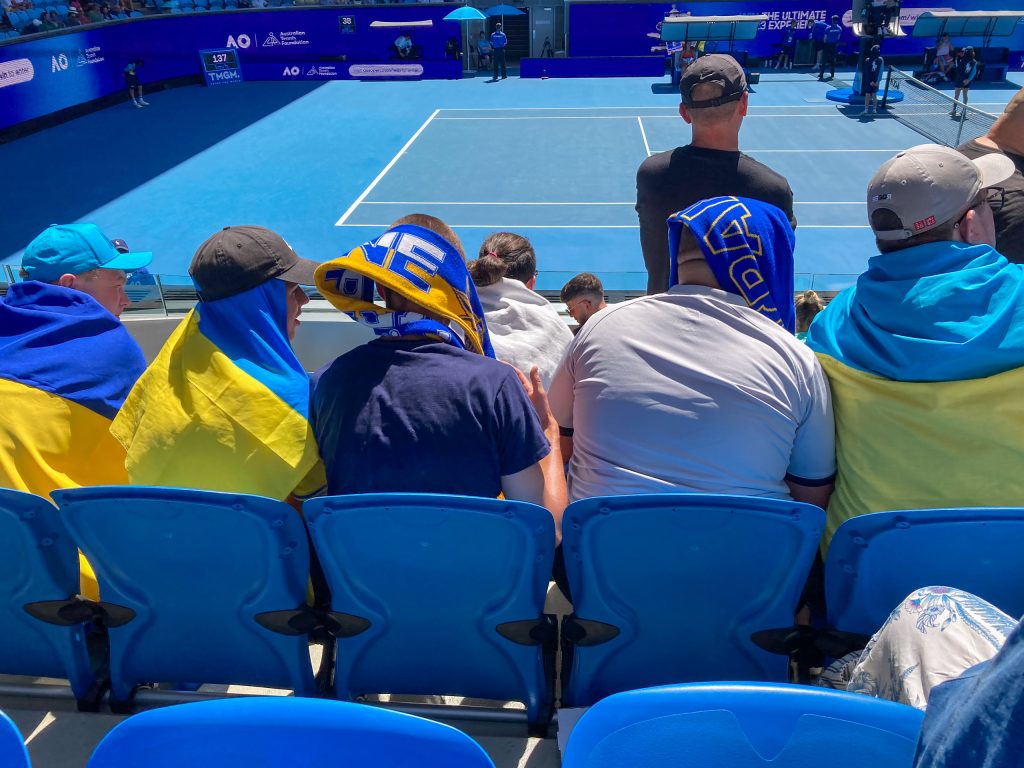
Another civilised feature of the show courts is the internal area around and between the two main courts (they are immediately adjacent) which is both carpeted and air-conditioned offering a blissful respite from the heat. I wish I could be more enthusiastic about the food offer at the many stalls in this area, but it is heavy on the meat and carb and light on salad and veggie options. When I eventually found a salad-selling stall they had sold out of salad. Drinks follow the pattern – lots of alcohol but for soft drinks apart from bottled water, only Pepsi variants were available. Thankfully there are some more options out in the grounds and plentiful drinking water fountains for refilling bottles, but we found it better to buy food from places in the CBD and bring it with us.
Downloading the official AO app is a good way to track results and the draw.
Mobility Access:
Whilst the tournament is on there is a free tram shuttle that runs from the west end of Flinders Street, past Flinders Street Station and down to the venues very own stops (only three stops from the Flinders Street Station stop to the Rod Laver Arena stop). The shuttle follows the route of the 70 tram which also continues to run during the tournament. Getting off at the Rod Laver Arena stop left a short walk to the entrance gates, a bit of queuing for security and ticket check, then you are in the grounds with the main courts just in front of you. The tram gets busy in the morning and when play is finished at night. For the former we found that we were more likely to get seats if we boarded at the Spencer St/Flinders St stop (before the tram gets to Flinders Street Station where everyone piles on). There are plenty of volunteers around to guide and direct you to the right tram.
For the better able, the grounds are a lovely 20-minute walk from Flinders Street Station along the banks of the Yarra River.
Inside the grounds it is reasonably compact, well surfaced and largely flat with slopes where needed. In the stadia, steps to get to your seat are unavoidable for the most part, although there are lifts to get to the higher levels of the show courts.
Hotel
The Next Hotel on Little Collins Street
https://nexthotelmelbourne.com
A late substitute for our travel advisers’ original choice, this modern, boutique hotel in the depths of the CBD served us very well. The more so because (1) the food offer in the restaurant and bar was good enough for us to eat there more than once and (2) they had some tennis players staying there, as the AO courtesy cars kept pulling up outside. In the case of the tennis players, we never did find out who they were because we never caught sight of them (despite occasionally lurking around the hotel entrance) and because the excellent and helpful concierges, all too ready with information about nearby food shops, restaurants and transport information, were, quite correctly, tight-lipped about who was staying. The room was well kitted out, views were largely of nearby office buildings and the only feature we did not have that we like to have, if we can, was a bathtub. The entrance on Little Collins is quite a small lobby with the main reception/bar/restaurant on an upper floor. The restaurant, La Madonna, was a sort of Italo-Pacific fusion menu with plenty of options (vegetarian included) if we wanted to graze rather than go full bore. There was a decent selection of wines by the glass and the cocktails were not all completely mad, modern concoctions that drive a classicist like me to despair.
The location could not be bettered. All around are new office developments and this meant the passage through to Collins Street (Benson Walk) was home to two coffee bars and an excellent takeaway lunch bar. The tram on Collins was a walk of 100 metres through Benson Walk and that on Bourke Street just over 200 metres. Steps away from the front door was Maverick, a casual café-cum-coffee shop where we breakfasted each morning. This is what I call a Scandi-modern design place with all-day food that stretched from granola to an avocado on toast special via good old eggs-any-style on toast. Good coffee too. It was busy on weekdays, filling up with young, smartly dressed, coffee-to-go getters and the meetings-and-laptops crowd.
Food and Drink
We ate at the hotel for convenience (see La Madonna information in that section) and tried out a couple of other places we tracked down through a bit of internet research.
Nick & Nora’s
https://nickandnoras.com.au/melbourne/
We wanted a cocktail place where we could get grazing-plate food and this was a well written up place that was in the office building next door to the hotel. Done up as a Twenties Art Deco bar it seemed ideal, except that it wasn’t. Nothing wrong with either food or drinks but, to ageing ears, the music was so intrusive that we escaped as soon as we could.
The Carringbush Hotel
An initial glance at the website would have you think that you were heading for another revamped old-style Aussie hotel/bar good for beers and burgers, but this brilliant place is actually a pub that only sells vegetarian and vegan food – and a great selection it is too. We found it online when searching out a vegetarian place not too distant from the CBD. It is in the small suburb of Abbotsford, just two kilometres east and, for us, an easy taxi ride. The bar was Aussie-informal with a huge spread of beers and wines on tap, open brick walls, wood floors and that semi-distressed furniture that is so prevalent these days, but it felt great and, on a Monday evening, not that busy nor was the music too intrusive. The staff were patient with a Pom who had to have the nuances of EPA, IPA, Hazy and other types of beer explained before he could make his choice from the 21 on offer. Outside are benches built into wooden pontoon platforms that edge into the road where we sat after our meal, enjoying the evening warmth.
Oh no! Having crafted this paean to a wonderful pub, it seems that the difficult economic times have now caught with yet another hospitality venue and The Carringbush Hotel closed in June 2024.
Willows and Wine
I had to include this place because, although I didn’t eat there, it provided me with such a peaceful place to have a cold beer and write my journal after a hot day’s walking (around Vic Market and the University area). I found it when, feeling the need for said cold beer and quiet place, I did some internet surfing. It is just over 5 minutes’ walk west of Vic Market along the broad boulevard of Victoria Street. Sitting in one of those rows of two-storey Victorian retail arcades that pepper the city outside the CBD, it is a storefront place no wider than a garage, but deep. It was quiet on a weekday afternoon, cool with unobtrusive music. Books line the walls, for it is also a library specialising in authors from gender minorities and First Nations people. There were only a few other customers and the helpful server guided me to a cold White Rabbit ale and some lentil crisps (in Oz, as in North America, these would be called chips) to quell my need. It is on the 57 tram route, which I used to get back to the CBD.
Practical Matters
Getting Around
We used the trams, which work well if you are based in the CBD, but we didn’t use the buses nor the suburban trains. Taxis seemed easily gettable through the hotel concierge and the usual apps in so far as we used them. For public transport we bought Myki cards which operate on a similar basis to Oyster cards in London (tap-in except if you are travelling in the CBD free-travel zone). We bought them at a 7-11 mini-mart and topped them up at machines at the tram stops when needed (some online purchase options are available). Information galore is available on the PTV (Public Transport Victoria) website – https://www.ptv.vic.gov.au/tickets/myki/buy-a-myki-and-top-up/.
Mobility Access:
Many tram stops all come with low platforms with easy slopes up to them which means no step access to trams. Other stops do require a couple of steps up to get aboard. As in any city, at certain times of the day the trams get crowded and seats are at a premium.
Time Zone
Generally 11 hours ahead of London, so full-on jet lag territory, obviated to an extent by our en route stopover in Singapore. I found that shortened my susceptibility time and only found myself overcome with sleepiness in the mid-evening for the first couple of days. My partner was even better and felt virtually no effect.
Money and Credit Cards
Except in the laundrette/laundromat, I am hard pushed to think when we needed any cash for transport, eating places or buying things. Credit cards ruled, by and large. But, as always, we had a stock of ‘emergency’ cash.
WiFi and Mobile
Mobile coverage was good nearly everywhere we went. WiFi in nearly every hotel and eating place we stopped at.