Introduction
On our long (nearly eight week) trip around the globe, our focus was on Melbourne for the tennis and the South Island of New Zealand for a slow travel driving tour. No longer seeing the attractions of a flight time of nearly 24 hours, including a short stopover, we were looking for somewhere to break the journey for a night a two. If you want to stick to the main carriers and to two reasonably manageable flights then your options are probably limited to Bangkok, possibly Kuala Lumpur, Hong Kong and, our choice, Singapore. The Gulf seemed too close to London and, for us, holds few attractions.
My previous visits to Singapore were for business, always a poor way to get a sense of a place, and another stopover too brief to allow us to venture beyond the confines of the Raffles Hotel. I confess that my stereotyping of Singapore saw it as a tad anodyne: somehow too neat, too organised, too controlled. Every big city has a reputation at the macro level, and this is Singapore’s. When you are in a city, walking the streets gives me a very different sense of place and people at the micro level. So it was with Singapore. It helped that it was less than two weeks before the Chinese New Year and that our hotel was on the northern fringe of Chinatown. A walk through the thronged streets of that area after dark, the air still warm and humid, was to be enveloped in what makes cities such a treasure trove of experiences and memories. We were not there for long, but I seemed to cram much into such a short stay.
Structure of the Trip
As part of a long trip of nearly eight weeks we had put the organisation in the hands of our regular travel advisers, Audley Travel (https://www.audleytravel.com/southeast-asia/region-guides/stopover-in-singapore) whom we used to create a bespoke itinerary for us. This included the suggested hotel and the flights in and out of Singapore. The timing of the flights meant an evening arrival at Changi Airport and a post-midnight departure 53 hours later giving us, in effect, two days to take in elements of this city state.
Flight
Inevitably we used Singapore Airlines. On long flights we travel business class as, for us at our age, comfort trumps cost. My confession is that I find it difficult to differentiate between many of the well-known national carriers, other than in minor details. For most, and Singapore Airlines was no exception, they receive a tick for service, care by staff, airport facilities, check in. My only niggle with Singapore Airlines was with their flat bed. The pod cavity narrows at the end and because of my nearly two-metres height, I could not get my feet comfortably spaced out. That made turning over quite awkward.
Mobility Access:
I have done a separate piece about the way we deal with mobility at London’s airports (Air Travel from London). At Changi we were met by our requested wheelchair and driver. As at Heathrow and Gatwick in London, the long distances between different elements in the airport make this a necessity for someone with constraints on walking and standing in queues. We were moved pretty efficiently through to the meeting with our transfer car. With English being the lingua franca of the city state, the process was very straightforward.
On departure and after check-in, if you have one person who can act as driver, you are allowed to take a wheelchair. As elsewhere, this gives more flexibility to move around the terminal. The wheelchair just gets left at the gate.
Weather
Our stopover was in mid-January. The weather was engagingly tropical: a pervasive steamy heat (27-28°C or 80-82° F) with periods of fierce sunshine bracketed by a weighty cloud cover that gave forth heavy rain and grumbling thunder. So I was soaked, either by rain or by sweat, after any length of time in the open.
Areas Visited
Having limited time I indulged in one of my favourite activities: slow strolling with my camera and a map for company. Lacking a guidebook, I turned to the web for some inspiration for self-guided walks through the city. I find the website GPSMYCITY is the most helpful for this. It offers a range of options in cities across the globe (10 in Singapore alone- https://www.gpsmycity.com/gps-tour-guides/singapore-417.html). Using them as a guide to a particular area, I plumped for three ambles over the two days.
Chinatown (After Dark)
Just to the south of our hotel lies the warren of streets of Singapore’s sizeable Chinatown (compared to the much smaller Chinatowns of London and Melbourne which are centred around a single street). It is a mish mash of buildings whose architecture filches from many styles from British colonial through to concrete-based modernism and the glitzy shopping mall. The New Year of the Rabbit is only days away and the small shops are piled high with vibrantly-coloured new year gifts and decorations, the open frontages of restaurants teem with customers spilling out onto pavement terraces and the streets are a bustle of locals and the odd tourist, like me, looking somewhat out of place. I take a directionless wander and just observe. My favourite moment? A group of elderly Chinese performing songs with a full set of microphones, amplifiers and laptops on the wide Garden Bridge that spans the highway of New Bridge Road.
And we are surrounded by rabbits. These are not the bucolic bunnies of Beatrix Potter or Richard Adams but, to me, bizarre cartoon creatures: white, rotund, childish. They make for a riot of neon and colour that is a magnet for the smartphone camera.

Mobility Access:
The ground here is flat and the roads and pavements in good shape. There are lifts and escalators feeding the Garden Bridge. However I cannot speak for public transport access. We were already here, as it were, so I did not have the need to explore it. Buses seemed plentiful on New Bridge Road and Chinatown has its very own stop on the North East metro line. The only issue, as with many of Singapore’s larger metro stations, is that you may find yourself walking some distance along corridors and across hallways below ground in order to find the right exit to reach the surface by lift or escalator. Hit the wrong exit and you may be faced with longish flights of stairs to negotiate.
Gardens by the Bay
Here be Kew Gardens re-imagined by Disney and the James Cameron of Avatar. Ironic then, that whilst I was there, the two enormous domes of the greenhouses on the bay waterfront were also home to an exhibition focused on the recently released Avatar: The Way of Water.
Built on reclaimed land, this park is part of the government’s efforts to enhance the ecology of the city. It sprawls across a large site that encompasses formal gardens, lakes, wetlands, the Flower Dome and Cloud Forest greenhouses, a children’s playpark, pavilions, cafés and restaurants and the much-photographed Supertrees with their aerial walkway (you need to buy a ticket for access, but there is a lift). There is no doubting it is an interesting place to wander around and parts are actually quite peaceful during the day. You can sit by the Kingfisher Lake or the Water Lily Pond and feel a world away from the hustle of the rest of the city. It may well be different in the evenings when the fairground-style attractions are open and the light shows begin.
Do not forget, as I did, to take water with you. In the morning many of the smaller food and drink facilities are closed and it was not easy to find bottled water to buy. I only realised my mistake when, having pottered around for an hour or more, I felt an incipient headache developing. Twenty minutes later, with the headache burgeoning, I found the only open places in the lee of the Flower Dome.
Mobility Access:
If you have limited walking capacity, I have a slight hesitation about suggesting this is a reasonably accessible site, simply because of the distances from public transport to the Supertree Grove or the dome greenhouses and the waterfront. From Bayfront metro stop it is over 15 minutes and from Marina Bay metro stop over 20 minutes and then there is the walk back. Once you are in the park, it is almost flat with broad pathways and slopes taking you to all parts and there are plenty of seats around – just make sure you check the many signs and maps on the site, so you know where things are. I didn’t use the buses and using them may bring you closer to elements of the park.
Colonial Singapore and the National Gallery
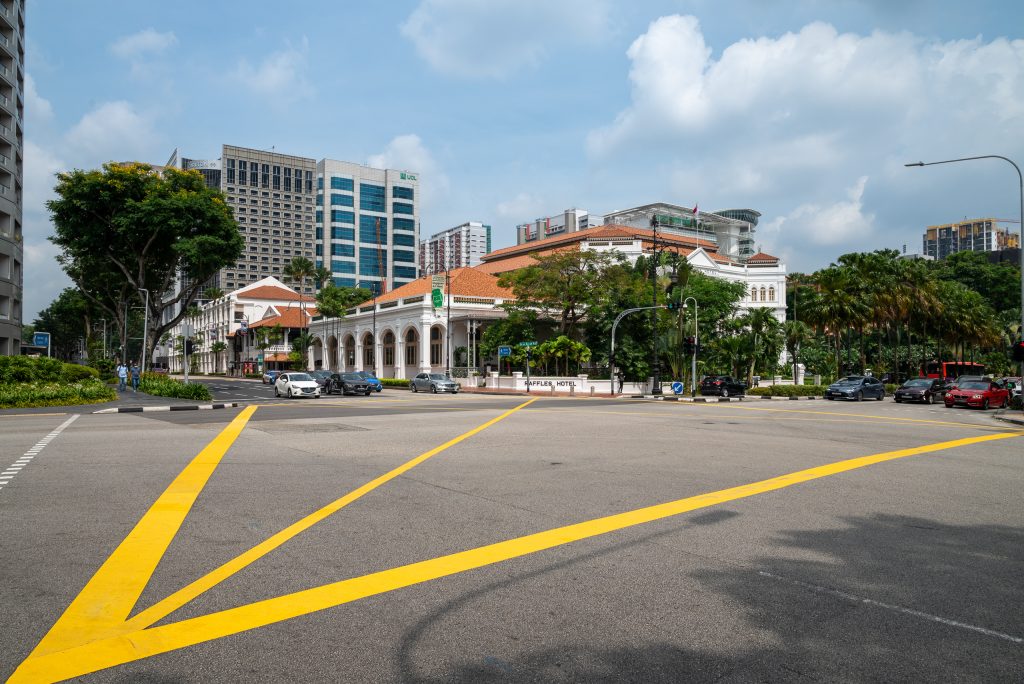
I started at Esplanade Metro beside the War Memorial Park and near Raffles Hotel. I wandered slowly southward taking in St Andrew’s Cathedral, the open sports park of the Padang and the almost caricature colonial Singapore Cricket Club (actually more tennis than cricket being played as I strolled past) before a long break from the heat in the National Gallery.
This enormous museum/gallery was cleverly stitched together in the 2010s from buildings dating from between the two world wars that once housed the Supreme Court and City Hall. It would be fascinating just to wander through taking in the treasures and art of the region and enjoy the way the architecture has been repurposed. The draw for me was a temporary exhibition of photography – Living Picture: Photography in South East Asia. This was an extensive exhibition taking photography from its birth in the 1850s (Beato and others) through the growth of indigenous studio photography and the documentation of events (the Vietnam, or American, War) to current art photography. For me it was thoroughly engaging.
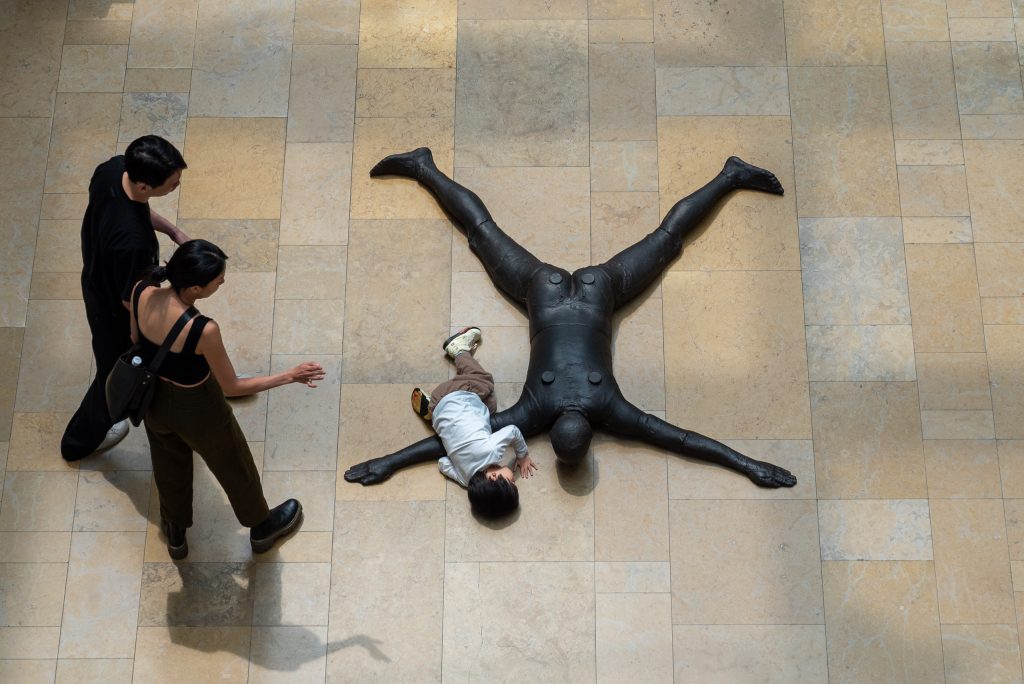
And I missed the worst of the tropical downpour whilst hermetically sealed in the buildings. And there was the fun of watching people interact with the Anthony Gormley sculptures set out in the main hallways. The adults treating them with a certain reverence as art and the children uninhibitedly playing on and around them. I do recommend a visit as here you find art, architecture and history in many forms.
Mobility Access (National Gallery):
I have not given this one a colour because I was so wrapped up in my own world (and able to move around freely by foot) that I failed to investigate both the availability of wheelchairs or stools for those less mobile and how difficult it would be to move around the gallery – it is big and spread over several floors. All I can offer is that being a modern refurbishment there are plenty of lifts between floors and gentle slopes between spaces where needed and also to direct you to the gallery’s own accessibility website page – https://www.nationalgallery.sg/accessibility.
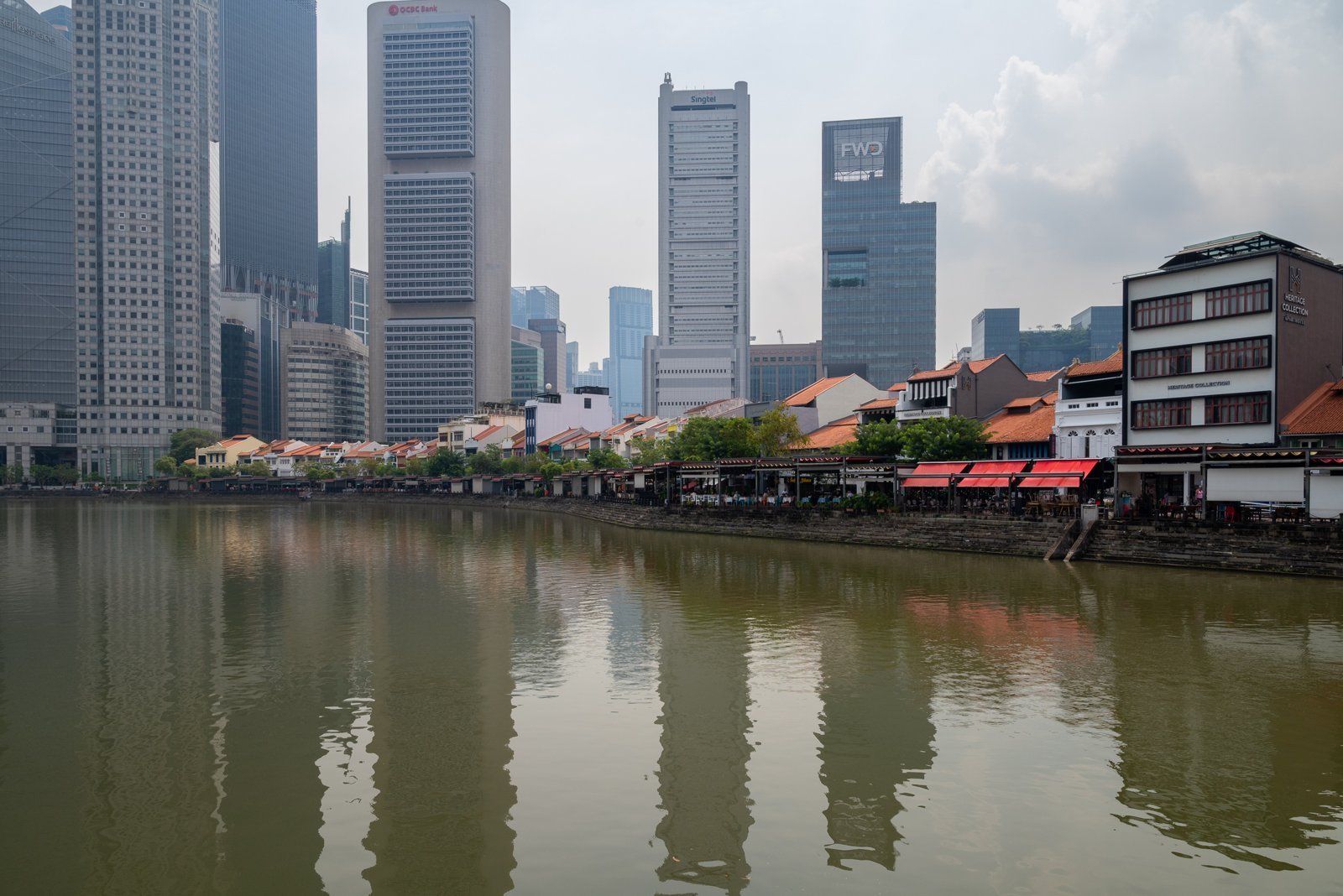
My walk continued southward into the colonial heart that takes in Parliament House, the Victoria Theatre and Concert Hall and other, now restored Victoriana on the north waterfront of the river. From there you can see a different world on the south side. The crammed three and four storey buildings of the Boat Quay quarter, built in the first half of the nineteenth century as merchants’ offices and warehouses, are encircled by the glass skyscrapers of modern Singapore. Crossing the river by the 1920s box-girder structure of Elgin Bridge takes you into the warren of Boat Quay, where every building seems to have been repurposed as a restaurant or bar. From my business trip way back when, I recall this area from an evening stroll along the waterfront. I was subjected to a fusillade of importuning to come and partake of their culinary offerings. Now the area is quieter in the early afternoon as preparations for the evening’s onslaught are in train.
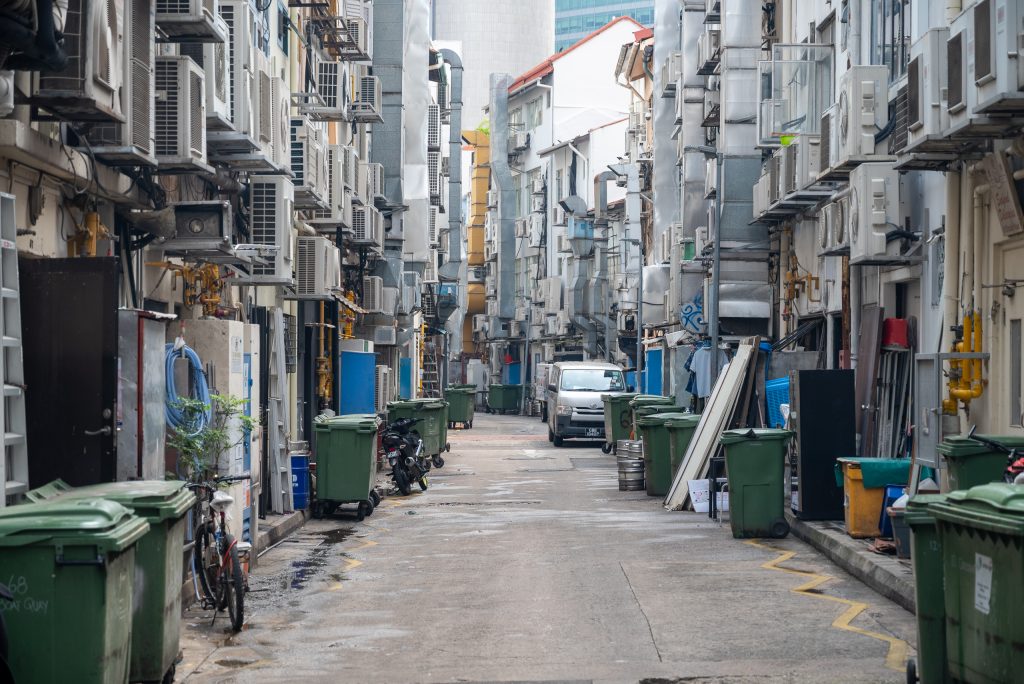
Here the bars and restaurants will cater for every drink or meal – Irish pub, American burgers, Japanese sushi, Mexican cocktails, Italian trattoria, Chinese seafood and many, many more. There is photographic interest for me on stumbling upon the back alley that runs parallel to the two public-facing streets of Boat Quay and Circular Quay. This is where the hostelries are serviced from. Here vans and bikes unload, cigarettes are smoked by resting staff, gas cylinders are stored, supplies are stuffed into little kitchens glimpsed through open doorways and, above street level, the walls are pockmarked with air-conditioning units. The road brings me out into the small green rectangle of Hong Lim Park with our hotel beyond. I dive into the air-conditioned space, hot and sweaty after a fascinating voyage through nineteenth century Singapore.
Mobility Access:
A long walk over nearly five hours so, no, not for those with limited walking capacity. I am sure, using public transport judiciously, bits could be visited individually with suitable stops en route. A visit just to the National Gallery would be a much easier proposition.
Hotel
ParkRoyal Collection Pickering
https://www.panpacific.com/en/hotels-and-resorts/pr-collection-pickering.html
Suggested by our travel advisers this was a full-on five star hotel, well-appointed for my partner’s purposes and well located for mine. Described as an eco-friendly garden concept hotel (and voted the World’s Leading Green City Hotel in the World Travel Awards – whatever they are) it certainly looks the part. The exterior architecture has an organic curviness made more so by the festoons of draped greenery from planting and gardens at many of its twenty or so levels. Within is more conventional in appearance with all the facilities of a modern hotel: the soaring atrium; the large, well-equipped rooms; plentiful services; a leisure terrace with pool, loungers, spa, gym and bar. With this come some of the pitfalls of most large, modern city hotels (homogeneity of internal décor and design, few peaceful corners, occasionally rushed and seemingly indifferent staff). It suited us well. It meant time could be taken to relax by (and in) the pool, use the spa, lie on loungers reading and recharge physical batteries.
Food
It was easiest for us to eat at the hotel after a late arrival on the first night. The vast lobby blends into the large multi-purpose restaurant area with a bar beyond and it was there that we ate with a very friendly and capable waiter on hand both nights. The food? That it is described as Asian/International tells you all you need to know about the ubiquity of the menu. Caesar salads and pasta dishes rub shoulders with more regional offerings like nasi goreng and lamb rendang. Good enough for our purposes.
The second night, drawn by an element of nostalgia for the colonial ambience we had sampled years before ahead of boarding the Eastern & Oriental Express, we returned to the Raffles Hotel. Since then the hotel has undergone extensive refurbishments. Seemingly spoilt for choice (there are nine restaurants and bars) we chose the outdoor space of the Raffles Courtyard. It is an undoubtedly elegant, peaceful courtyard garden location. The food offerings are relatively small, in keeping with its primary character as a bar. The experience was disappointing for us. The ‘delectable food bundles’, to quote their website, were unexceptional and expensive for what they were. The service was a bit offhand. It is, we felt, a place more suited for a drink pre- or post-dinner.
Practicalities
Time Zone
Being seven hours ahead of London meant we felt we were, at least, giving ourselves a chance of minimising the jet lag that has afflicted us in the past when travelling to Australasia without a break. To a large degree, it worked for us.
Money and Credit Cards
We did not trouble with cash. As you would expect in this modern, efficient city state for a stay of this length we had no need beyond our credit cards, even for taxis.
WiFi and Mobile
Coverage wherever we went. No more need be said.
Getting Around
We used taxis and the Metro. We did not try the buses. The Metro was easy to use. Credit cards can be used on the tap-in, tap-out readers which meant no worries about how and what sort of tickets to buy. For some people the other options, such as a 1,2 or 3 day tourist pass, may work better (see https://www.visitsingapore.com/travel-guide-tips/getting-around/). If you are unsure, watch others for a short while and you will see how the tap-in, tap-out works works. The system maps and station signage were plentiful and relatively easy to follow. The trains are clean and efficient and only get a little hectic in the rush hours.