Part 1: Prelude, Trip Information and Practicalities
Part 4: Southern Scenic Route and Doubtful Sound
Part 5: Wānaka
Part 6: The Ahuriri Valley and Lake Tekapo
Part 7: The Tranz Alpine Train and the West Coast
Part 8: Marlborough Sounds and Kaikoura (and Auckland Coda)
Prelude
On these longer trips we like to take time out in one place in order to give us a more extended break from touring, relax into that place and, to a certain degree, fend for ourselves. Wānaka, given its location, facilities and scope for doing a lot or doing nothing, seemed a good spot for this. As well as its own relaxed vibe, it is the leaping off point for other trips (such as flights over the glaciers to Milford Sound) and for drives to engaging towns and rural landscapes. It has great options for shopping and eating. Our ideal would have been a cottage set apart from other habitation, but it seems that the market for such places does not have the same scope as the holiday-letting market in the United Kingdom. After working through options with our travel adviser, we selected a holiday apartment on the lakeside in the town. It turned out to be an excellent choice.

Sitting in the rain shadow of the Southern Alps, Wānaka has a rainfall four times less than that at Milford Sound, which is to the west on the other side of those Alps. We do see some rain and a day of gusty breeze but most of our stay is in warm sun and high cloud, although the temperatures feel chill (about 11° C (52°F)) in the early mornings before the sun does its work.
The Road to Wānaka
This 230 kilometre (143 mile) drive took us east out of Manapouri to Mossburn then north, skirting Queenstown, before taking the Crown Ridge Road through Cardrona to our destination. I go on trying to find suitable adjectives to describe the scenery when driving through the South Island without forever repeating myself, but it becomes an exercise of Thesaurus-searching, which isn’t really the point. So take it as read from here on that the sort of scenery that induces stopping for gazing and photography is a constant companion on our drives. Here in central Otago we are in the lee of the Southern Alps, a dark line flickering on our western horizon. The hills are still lofty, but the land has a more plateau-like feel. And, in the rain-shadow of the mountains and at this time of year, the predominant shade is a light brown as if the grassland were eager for rain. It remains primarily a stock farming region, punctuated occasionally by the bright green squares of vineyards. For us the journey takes a relaxing four-and-a-half hours with lakesides, high ridges and the small historic settlement of Cardrona providing only a part of the variety.
The Apartment

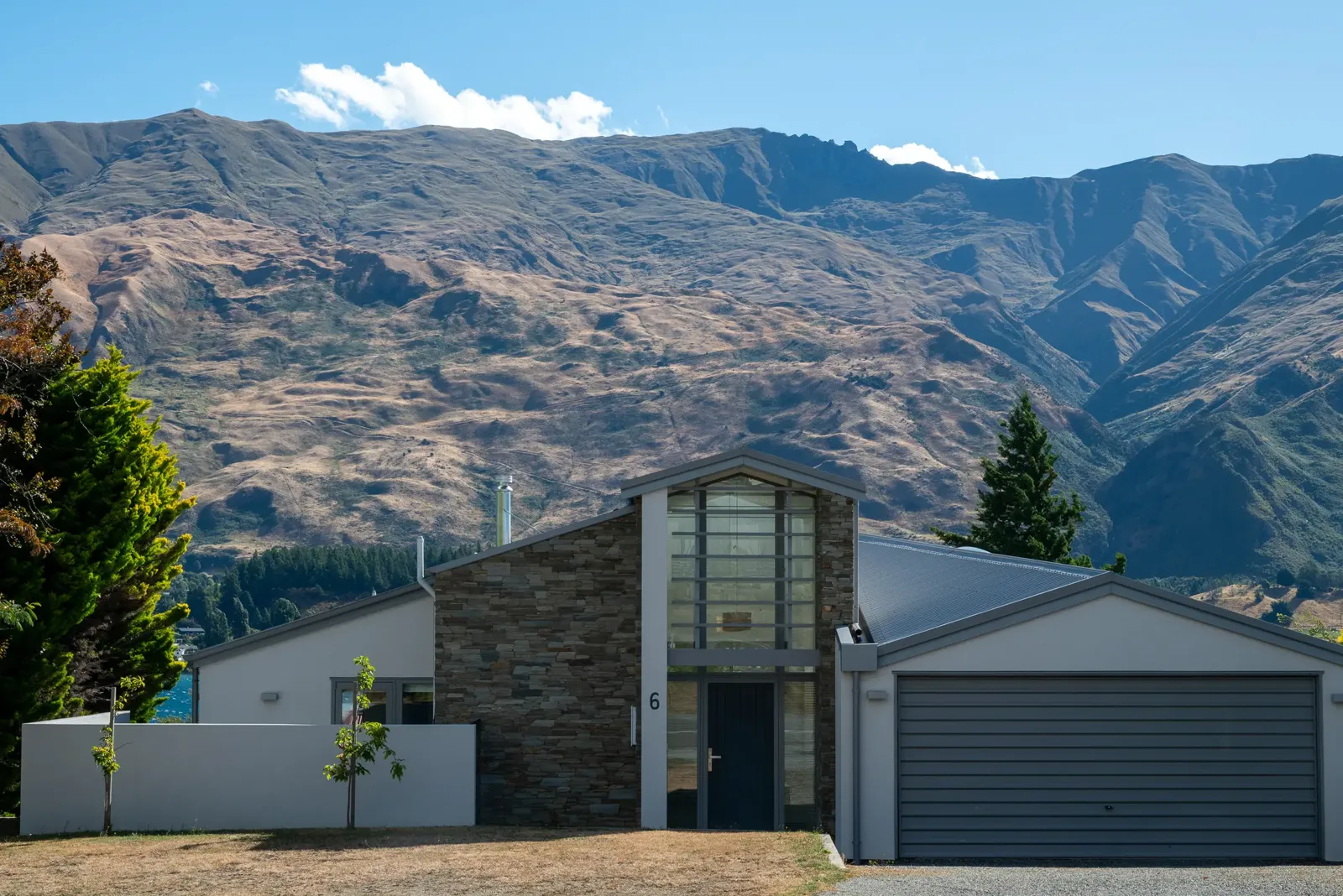
The Lakeside Apartments (https://www.lakesidewanaka.co.nz) are a purpose-built three-storey block of holiday apartments in prime position looking west over Lake Wānaka towards the mountains on the other shore. These are self-catering apartments, rather like an extensive suite in a hotel, with picture windows and terraces facing the lake. The décor is in a modern style that rises above the merely functional. In our apartment there were two bedrooms, one overlooking both the lake and terrace, and two bathrooms. The kitchen area in the apartment is well-equipped enough to allow most standard self-catering arrangements and we ate several meals there. The terrace is big enough to have a small dining table and two loungers. A reception desk is manned during the day and there are contact details for issues that arise outside those hours. There is a pool (just big enough to allow lap-swimming), children’s play pool and jacuzzi in the small garden/lounging area at the front of the building and there is covered car parking at the rear. There are on-site laundry facilities for guests’ use. The accommodation is within easy walking distance of the main part of town and the extensive lakeside walkways and park. All-in-all the apartment gave us what we were looking for over the six days. Sitting on the terrace, drink to hand, taking in the view across the lake and up towards the distant snow-capped mountains, was to enjoy yet another blissful moment.
Mobility Access:
The car drop off area is a level above the reception/pool level because the land rises quite steeply in this part of the town. However, there are lifts (elevators), chairlifts and walkways within the building which obviate the need to use steps and stairs, with the single exception of the four steps from the garden gate out onto the lakeside road. The main pool has proper steps and a handrail to access the pool (not just a set of ladder steps).
Around the Town

Wānaka is one of the fastest growing towns in the South Island, although its resident population is still under 15,000. It is a resort town, but this is no bucket-and-spade resort. It is the third town after Auckland and Wellington whose average property price exceeds 1 million NZ dollars. This is a well-heeled place, and it has a wide range of shops (we discover the joy of merino wool clothes) and eating places to match. The main part of town is a grid pattern of streets on the south shore facing the lake. There is a well-kept boardwalk and park that winds along the lakeshore and offers facilities galore: play areas, formal gardens, kayak and windsurf hire stalls, a marina and lake cruises. It also offers the spotting of the pūteketeke (great crested grebes) on their nesting platforms – another wildlife conservation project of the sort New Zealand does so much to favour (https://crux.org.nz/crux-news/wanaka-local-crowned-bird-of-the-century). Like so many New Zealand public spaces this lakeside gem is neat, well maintained and almost free of litter. On one side of this elegant area lies a slightly gravelly, sand beach to tempt bathers and water sports fiends and, on the other side, just to the west of the main part of town is the green expanse of Pembroke Park. Behind this flat area, the land and the town rise quite quickly to the level of the plateau where some shops and restaurants (and the golf course) are located.
Mobility Access:
Except for the last part, the whole area is pretty flat and, the beach apart, the surfaces are smooth and those who are mobility constrained can choose to stroll as far as they feel able and find plenty of benches and sitting areas for resting. Sustenance can be found in a number of places just behind the road that runs along the lakeside esplanade.
Food and Drink
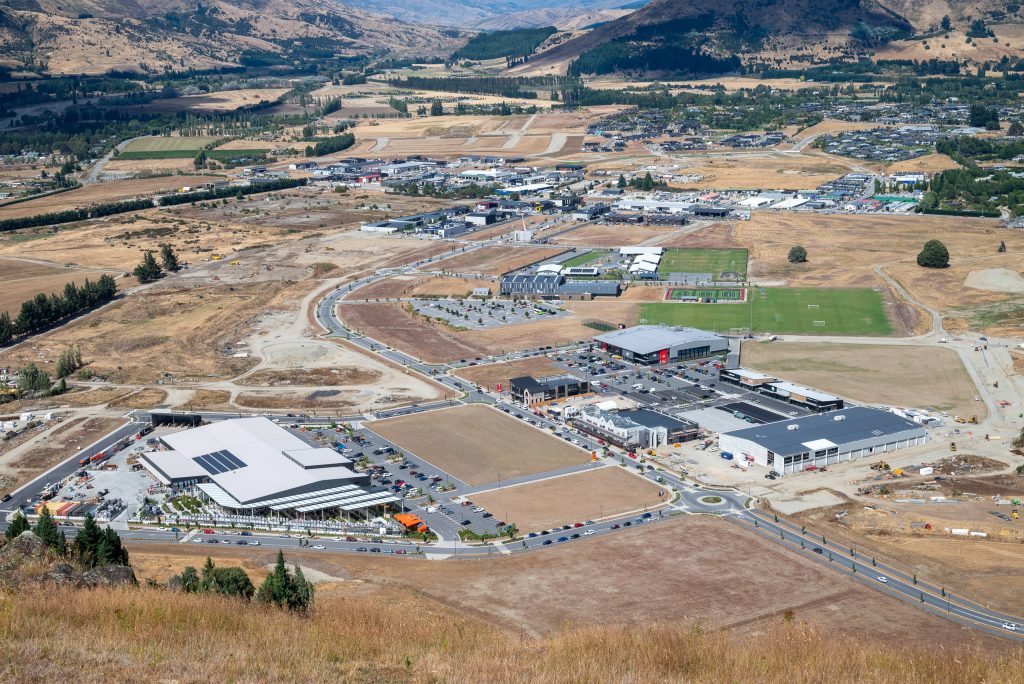
There are a wealth of restaurants catering for a myriad of cuisines and pockets, but we only ate out the once, so we made full use of local providers for food and drink. Just 350 metres up the hill from the apartment the Mediterranean Market is part small supermarket and part delicatessen and a thoroughly agreeable place for browsing as well as buying. It is also the first grocery store I have been to that keeps all the fruit and veg in a chill room where you can just wander round and select as much or as little as you need. For other and wider needs there are two New World supermarkets in the town. We preferred the mammoth newer one set in what will, once fully completed, become a massive retail and office park (called Three Parks) set beside the main SH 84 into the town.
Bistro Gentil
This up-market restaurant is located on the south side of town looking over the golf course towards the lakefront with indoor and conservatory rooms facing the sunset in the evenings. It shares the building with a tasting room for the Maude winery so the two can be combined. Self-described as French gastronomy, to my eyes the menu is more of a fusion of New World and French. It is very classy: food, ambience and the relaxed service.
Mobility Access:
Like many of the buildings in Wānaka the restaurant is in a single level building, so access is straightforward from the drive and car park. It is 1.5 kilometres (1 mile) from the town centre so, to ensure drinking is part of the enjoyment, a taxi is needed. These are easy to obtain using Uber or a local firm.
Food Truck Village
42 Brownston Street
Just 250 metres from the junction of Helwick and Dunmore Streets, which is the centre of the town’s shopping area, this little landscaped area alongside the stream of Bullock Creek is home to four or five street food stalls. With wooden tables and chairs set on a paved terrace, on a sunny day it is a very pleasant spot for a sit, for a bite to eat and a coffee. If it has a formal name it is not one I can unearth but it sits alongside the road bridge over the creek and opposite a used car lot.
Mobility Access:
The flat paved surface gives open access to the stalls and the tables are right next to the stalls.
Activities
Mount Iron Walk
This rocky knoll shoots up 250 metres (820 feet) above the east side of the town and, from the top, offers a 360° view of the landscape and a seriously impressive one it is, at least on the sunny day when I walked to the top. Tracks criss-cross the hill and, although there is a formal track known as the Mount Iron Track (https://www.doc.govt.nz/parks-and-recreation/places-to-go/otago/places/wanaka-area/things-to-do/mount-iron-track/), the land is open grass for the most part with a swathe of bushy growth on an upper section of the track. The time given for the Track is 1 hour 30 minutes but the climb up from the car park, which is on the north side of SH 84 just as you are coming out of town, is pretty steep. I doubled the length of my walk by starting on the lakefront so I could get a sense of the residential part of the town that lies on the plateau above Lismore Park. With suitable rests, it also took me a good bit longer to puff up the steep stretch from Allenby Park to where the top flattens out and then rises more slowly to the actual summit. There is the odd bench for rests and the views going up, with the lake and mountains a backdrop to the primly laid out suburb near Allenby Park, are enough of a distraction for sight and camera. The track is packed gravel for the most part and only gets a bit more of a scramble over rocky protrusions in some areas. The hill drops away even more steeply on the eastern side.
Mobility Access:
This is clearly not a walk for those with mobility constraints.
Drive to The Neck
For the mobility constrained who are using a car, I suggest this short drive as an alternative to the Mount Iron walk. Heading back out of town, a left turn onto SH 6 heading north brings you onto the road that eventually takes you over the Haast Pass to the west coast. Well before that and with an hour-and-a-half at your disposal you have time just to amble along stopping at the several lookout points on the lakes before reaching the saddle called The Neck. This narrow neck of land separates the two glacial lakes of Wānaka and Hawea. Here, the occasional tourist vehicle or two apart, you are suddenly remote, surrounded by high peaks and the deep blue lakes. Off to the south Wānaka is hidden behind these hills as is the small village of Lake Hāwea, a residential enclave, which mirrors Wānaka’s position on the south end of its eponymous lake.
Wānaka Lavender Farm
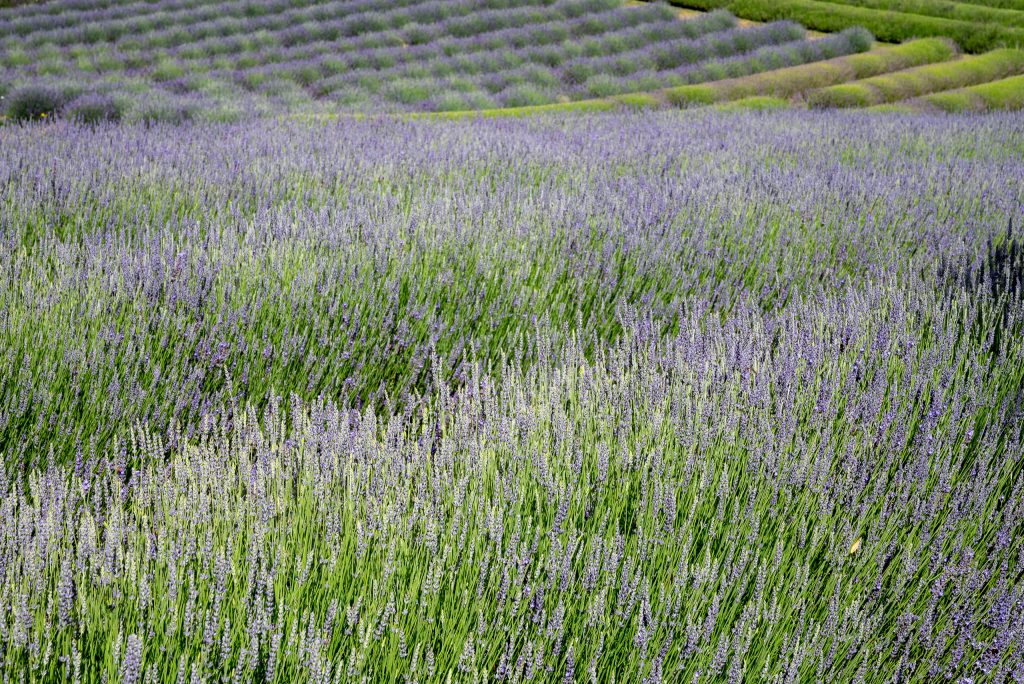
This is a gentle little gem just a ten minute drive east from the town out along the main road. It is what it says on the box and much of the pleasure of the place is wandering through the vibrant and photogenic lavender fields – and watching other tourists striking all sorts of ludicrous poses in amongst the purple profusion in order to get their social media worthy images. But there is also a lavender-centric shop, a café with lavender options (lavender ice cream, anyone?), a flower-laden garden area with tables near the café, bees and hives that produce the necessary for their honey tastings and a selection of farm animals from chickens to alpaca. We spent a happy morning just wandering slowly round in the sunshine.
Mobility Access:
Of course you need a car to get here. Once you have reached the packed gravel car park the shop and garden are all on a single level. However, only in the shop and café are you walking on smooth stone surfaces. After that you are strolling across the grass and the fields of lavender growth and the fenced animal fields are in a gently rolling fold of the land. Supremely photogenic, but with potential difficulties of slight unevenness underfoot and rising and falling ground. There are no places to sit and rest beyond the café garden.
Ruby’s Cinema and Bar
Wānaka has two small cinemas. Cinema Paradiso in the centre of town is one and the other is this eccentric place in the ground floor of a modern building shared with a climbing centre and a restaurant a little to the south-east of the centre. Perhaps speakeasy arthouse best describes the ambience of this small venue with two screens and, from recollection, around thirty seats in total. The bar is worth a visit in its own right; wackily decorated and with a reasonably good spread of eats and drinks.
We enjoy the cinema and were drawn here by a film made by indigenous Māori and Australian film makers focusing on the impact of European settlers on those communities: We Are Still Here. It is difficult to describe being both an anthology and a piece that relied heavily on the mood created by the individual sections, so I cheat and give you the Wikipedia entry – https://en.wikipedia.org/wiki/We_Are_Still_Here_(2022_film). It was both moving and a reminder of the continuing societal difficulties faced by those groups today.
Mobility Access:
The entrance is through a small garden from the car park all on one level. I cannot recall any issues within the venue.
Glacier Flight to Milford Sound
https://www.southernalpsair.co.nz
We had decided not to visit Milford Sound but when we were in Wānaka I had a hankering to try and see the glaciers from the air. With a little help from Audley’s local agents, Imagine Travel, to confirm the quality of the tour operator, I booked this tour online with Southern Alps Air the day before and got the last seat on the plane. The company flies small 7-seat planes out of Wānaka’s airstrip and has a selection of tour options. The one I chose is the most popular: a flight over the glaciers and then down Milford Sound from the sea end, flying below the level of the surrounding peaks, a transfer to Milford Sound’s boat dock, a cruise up Milford Sound to the open sea and back and then a return flight over a slightly different route. The tour takes a total time of around four hours. This flight is expensive but, in clear sunshine which I was lucky enough to have, an unbelievable joy. Screeds can be found elsewhere describing the scenery from air and water. There is no point in adding to it. It is wow-squared.
Instead of description I will reflect on how it differs from going to Doubtful Sound. In essence the latter is remote serenity whereas Milford Sound is a maelstrom of visitors. During the morning rush watching the flights come into the airstrip at the head of the Sound is like watching the flights coming down over central London into Heathrow. Those flights are augmented by the tours and private tourists who come up the highway from Te Anau 120 kilometres (80 miles) or about 1 hour 45 minutes south. To carry this influx on the water there are about five or six large tour boats that all leave the dock around the same time with at least a hundred or more passengers each. Thankfully the sheer scale of the landscape renders the seeming crowds insignificant. The planes can hardly be seen against the grey slabbed sides of the mountains and there is plenty of space and the boats are too few for cluttering, except when two or three crowd round a particularly active waterfall. Milford Sound is only half the length of Doubtful Sound and so the tour boats easily make the open sea in the timescales. And the scenery and waterfalls at Milford Sound are more obviously striking than at Doubtful Sound. Both are immense and I am glad to have experienced both in such different ways.

Mobility Access:
The only potential issue is heaving yourself into, and out of, a small plane. If you can manage that everything else involves limited walking and sitting down, or having the capability to do so.
Alternative Recycling: Wastebusters in Wanaka
https://www.wastebusters.co.nz
This place, ostensibly a recycling facility with a shop selling second-hand…well, seemingly everything that can’t be nailed down. We came to recycle our detritus of nearly a week in the apartment and to nose around the shop, but it is actually an entertainment to be enjoyed. This is full-on recycling. None of your chuck everything into huge skips as in many UK recycling centres. If you are recycling you are met by the staff/volunteers (the only staff uniform here is the wackier the better) who, armed with old supermarket trolleys, examine every item to assess its potential for repair, reuse and resale then carefully allocate anything left. You can then wander around the site past lines of restored or reusable furniture, electrical and mechanical items and into a cornucopia of recycled items. If I make it sound too alternative, I apologise for this is a very serious operation and, in many ways, inspiring.
Clyde, Cromwell and Bannockburn
We were looking to take in more of the landscape away from the Southern Alps. Clyde looked an interesting destination and drive, so we headed up the valley of the Clutha River, along Lake Dunstan and the Cromwell Gorge. At that time, the height of a dry summer, the land is dominated by rocky, scrubby land which feels almost desert-like in the strong sunlight; a parched-feeling light brown is the predominant colour. At Clyde the Clutha River was dammed in 1990. This is what has created the lake and means, in the gorge, the river is 500 metres across and the steep sides are marked with those lines across the rocks that bespeak the unnaturalness of a reservoir. In Clyde the dam seems to exert a looming presence as it holds back the huge weight of water. That said Clyde is a delightful small town for gentle walking or just sitting at one of several café/restaurants along the main street. A child of the 1860s gold rush, it became the region’s administrative centre then declined in the early part of the twentieth century. The result was disuse and a consequence was that the delightful nineteenth buildings in the small centre avoided the wrecking ball. The small town has now repurposed itself as a historical site (and a centre for cycling and hiking trails) as part of the modern tourist industry. We happily potter around, enjoying its quiet antiquity for a couple of hours.
Mobility Access:
Unless you head down the slopes to the river below the town (and the 1930s iron girder bridge across it), the town centre area is flat and easy for strolling. And there is no shortage of places to take a rest.
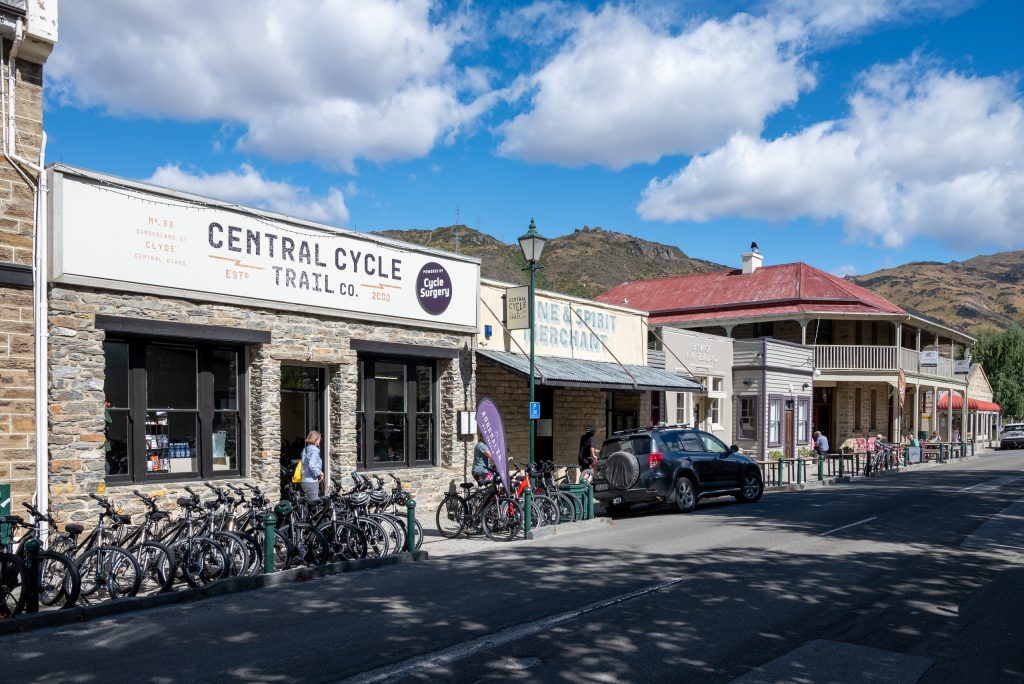
We retraced our steps to Cromwell, one of the towns that has displaced Clyde as a commercial centre. And superficially it is a modern town with a grid layout of undistinguished residential and commercial buildings. Then, on the hunt for ice cream, we found our way to the waterfront and stumbled upon the Heritage Precinct. This tiny area of nineteenth century storefronts, relocated and refurbished after the installation of the Clyde Dam raised water levels in the river, now houses ten or so retail businesses and a café – and, of course, a bike rental outlet. It is a worthwhile diversion if you are travelling up and down the Clutha River roads – https://www.cromwellheritageprecinct.co.nz/.
Mobility Access:
The pedestrian only road and paths in the Precinct are smooth gravel with a flat concreted arcade outside the one line of shops. The age and nature of the buildings means some have one or more steps up to gain access. The ground falls gently away to the riverbank. The paths have slopes between levels (and a set of ten or so steps). Parking is readily available in the streets beside the Precinct.
Drawn by its associations with wine production, we diverted ourselves further to Bannockburn, a ten minute drive south of Cromwell Heritage Precinct across the Kawarau River. Once another gold mining centre, it has a few buildings from that era. As we discover it is also self-styled ‘The Heart of the Desert’, a reflection of the dry, scrubby land around. There are several wineries, but I am afraid time limitations meant we gave the town little more than a drive through.
A brief word about towns in New Zealand. Bannockburn has a population of less than 500. There are many villages in England with larger populations. I assume the town designation came from its burgeoning in gold rush days long past. You should not always expect the level of services you might mentally associate with the word ‘town’ in Europe.