Part 1: Prelude, Trip Information and Practicalities
Part 4: Southern Scenic Route and Doubtful Sound
Part 6: The Ahuriri Valley and Lake Tekapo
Part 7: The Tranz Alpine Train and the West Coast
Part 8: Marlborough Sounds and Kaikoura (and Auckland Coda)
Picton (1 Night)
Picton is the port for ferries to the North Island and for the passenger routes that serve accommodation and walking trails on Queen Charlotte Sound but, as with so much in New Zealand, the port presence is relatively low-key. The town sports a marina area, a well-tended waterside park and walkway and a small town centre with a nice mix of eating places and independent shops for both locals and tourists. We had to stop here because our passenger boat departure for Bay of Many Coves Resort was early in the day. We did not stay long enough to do more than walk around the town centre, sit and watch the ducks in the waterside park as the sun lowered and buy a picnic to eat in our hotel room for dinner (thank you to the Fresh Choice supermarket) and then, the following morning, return the rental car and check in with Cougar Lines ferries. The town was quiet, very quiet. We arrived on a Monday and it may be a bit unkind to say but much of Picton seemed to be closed on Mondays.
Picton Hotel
Our accommodation, Escape to Picton (https://www.escapetopicton.com) is self-described as a boutique hotel (3 rooms), restaurant (closed on Mondays) and bar. It had a slightly eccentric feel and the furnishings had a slightly retro-eighties tone (shag pile rugs, suede-covered sofa and mirrored glass in our bedroom). It is not staffed 24/7, not surprising given the size, but we did not have any problems because of that. Our room was huge, in practice two rooms with an en-suite, but it was stuffily hot and we had to jerry-rig cooling using fans perched on chests of drawers to cool us through the night. We parked the car in the street outside.
Mobility Access:
A heritage building of this size understandably only had a flight of stairs to the upper floor where our bedroom was located. There is a slope up to the restaurant door but a few steps up to the door to reception. It is directly opposite the waterfront offices of the local passenger ferries and boat tour companies. The inter-island ferry terminal is a bit more of a walk (around 650 metres) and the car rental offices are next to that terminal.
Bay of Many Coves Resort (3 Nights)
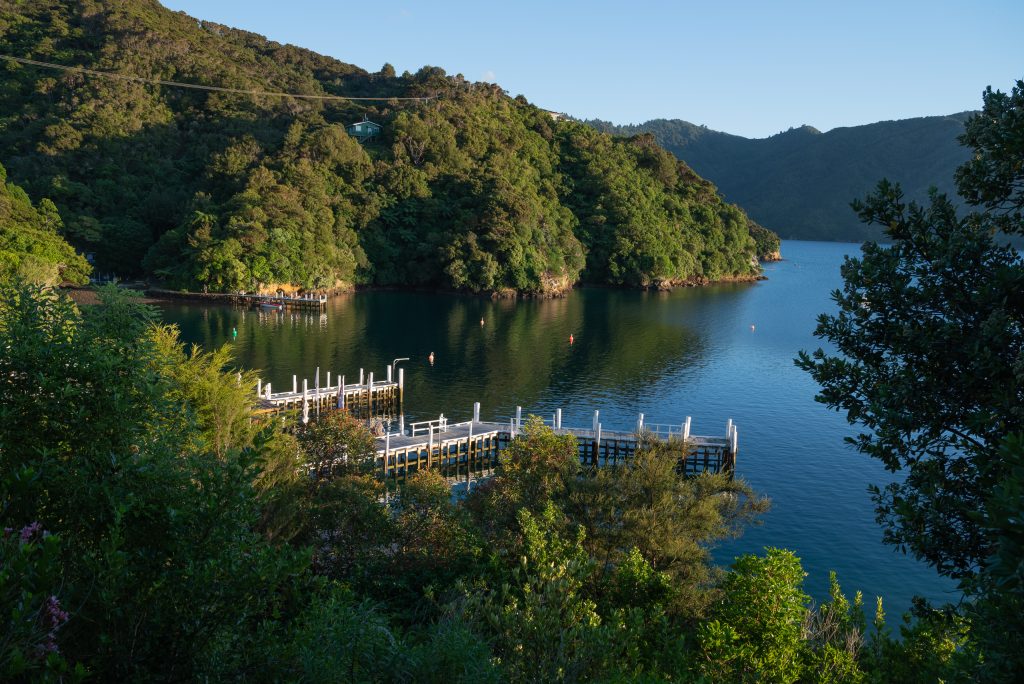
Reachable only by water (unless you are prepared to come in by helicopter or hike many kilometres along the Queen Charlotte Walking Track and scramble down through the woods to the bay shore), this is a true resort focused on waterborne and walking activities and providing quality food and service (https://www.bayofmanycoves.co.nz). Cougar Line provides a daily passenger ferry service to the resorts and other docks along Queen Charlotte Sound. Their motorised catamarans have cabins with seating and an outside well at the stern. They run five trips a day and scoot you across the 30 or so kilometres of water to the resort in about 45 minutes – see https://www.cougarline.co.nz/timetable/. If the weather turns squally (as it did on our return trip) it can be a bit bumpy.
The resort is in a gorgeous location on a secluded bay with wooded hills rising from the water both near and far. Unfortunately for us the weather chose this time to go all changeable on us so, for some of the time we had glorious sunshine then the rain would close in. In that case activities became less attractive and sitting, reading and writing in the lounge, with its small bar and wooden deck over the water, took over as a relaxation in itself. Staff are friendly, patient, helpful and efficient. The accommodation is spread over the wooded hillside that rises above the bay, linked by a series of tarmac paths and walkways. This means some rooms (most are called apartments as they have at least two rooms and a small kitchenette as well as en-suite bathrooms) are a bit of a hike uphill from the resort’s two main buildings, the two-storey restaurant block and the lounge building by the water. It also means the resort’s smallish outdoor swimming pool is set a short walk uphill, although with daytime temperatures on one day dropping to about 16°C (60°F) a swim was not immediately appealing. All the rooms have shaded balconies that look down across the bay. Wood is the predominating material for the buildings on the resort, used here to create a modern but straightforward look.
As well as the activities, the genial and engaging owners’ throw a regular drinks party for their guests. Food is good and varied with an emphasis on Pacific Rim ingredients and flavours including vegetarian options and a variety of salads for lighter lunches. You can eat in more, or less, informal surroundings or in your room. Another big tick was letting us use their laundry facilities whilst we were waiting for our room to be readied (our early departure from Picton saw us at the resort before 10.30).
Mobility Access:
The resort is manageable for those with constraints but the hillside layout can rather curtail your movements. I had researched the location of the rooms by the expedient of looking at the resort on Google Maps and we had made sure we requested the room closest to the waterside facilities. However, it still required a quite steep uphill walk of around 100 metres to reach from the lounge. Fortunately for us, the resort was brilliant and, in effect, provided us with an on-call taxi service using the resort’s service golf cart. We just had to call them when the cart was needed and rarely had to wait more than a few minutes for our ride. The Quarterdeck Restaurant, where dinner was served during our stay, had the main tables up an outdoor stair (about 20 steps) and no lift. All the paths are tarmac (or wooden boardwalks) and the areas around the main buildings are flat wooden decks.
The passenger ferry only involved a couple of steps to get into the well of the boat from the dock at both ends.
Bay of Many Coves Resort: Activities
I braved the sea to try a snorkel from the resort deck (ladder steps down to the water). The water was quite murky that day and visibility only about three metres (10 feet) so, apart from the odd sea cucumber, starfish, sea urchin and small fish (I am no identifier of species be they fish, bird or all but the most obvious animal), it wasn’t my most exciting snorkel. I could easily have swum close to the ray we saw dozing in the shallows a day later without realising. And the water was a chilly 15°C (59°F).
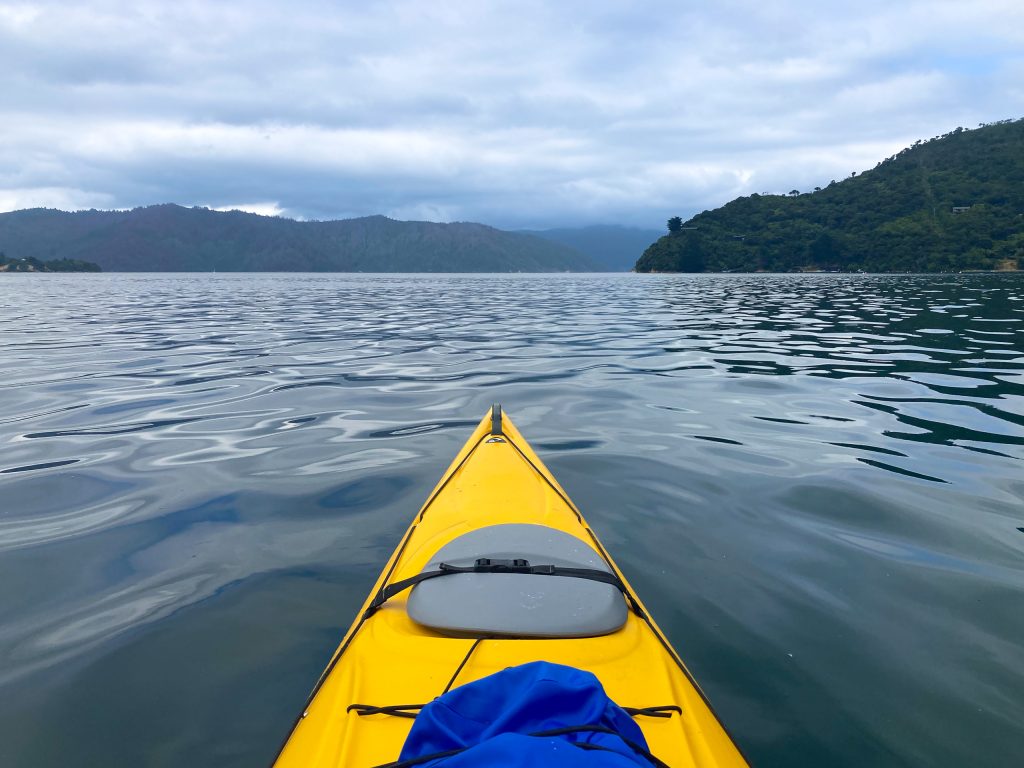
Another kayak trip, this one taken on my own in one of the resort’s sea kayaks out along the shoreline and back. A chance to take in some birdlife (stilts, herons, cormorants – or were they shags?), enjoy the seascape and wonder at the difficulty of reaching and servicing the odd holiday house that appeared on the shore. I also managed to take an impromptu dip as, trying to be a smart-arse and beach the kayak on the shore, I failed to account for the fact that a similar manoeuvre effected on the gravel shore of Lake Pearson many days earlier would not work on a wooden board landing ramp. I was upside down in the shallow water before I had a chance to react. Fortunately my camera was in a waterproof bag provided by the resort and I just suffered wetness and embarrassment.
Hiking trails are part of the outdoor furniture of South Island and the resort has information on one or two that can be undertaken from the resort in an hour or two, as well as longer links to the Queen Charlotte Walking Track. I tried a circular one up the hill and through the thick woods. The rain that peppered us during our stay had made many parts very muddy and slippery and what would normally be simple scrambles turned into near falls at a couple of points.
Mobility Access:
None of the activities I have described were practicable for those with mobility constraints with the possible exception of the kayaking, if you had some assistance to get into and out of the craft. As it was a sea kayak there is some back support.
Kaikōura (2 Nights)
First a fresh rental car collected at Picton and then another scenically diverse drive south. A scratch of the surface of the Marlborough wine growing region, set across flat, wide river valleys, carpeted with vines, which were separated by brown-grassed rolling hills, was followed by a long coastal drive down SH 1. Here the northern reaches of the Southern Alps edge towards the sea creating a coastline that has the feel of the unpopulated sections of the French Riviera coast.
Then Kaikōura, another town built around outdoor activities and tourism. Like a number of conurbations along the eastern coast, this town is another tucked into the north side of a peninsula with a long stretch of grey gravel-sand beach leading into the rising hump of hills of that peninsula. Approached from the north the main road is a strip of holiday accommodation, camping sites, retail park-style stores and local services from agricultural supplies to nail bars. Off the main road the small town centre is a mix of single storey buildings with retail stores and eating places. Then the seafront esplanade curls round the bay, tree-lined and with residences and businesses that are further evidence of the town’s tourist-focused pedigree. The up and down weather continued: sun and squally rain interspersed.
Kaikōura Accommodation
Glenburn Coastal Retreat (https://glenburn.co.nz/about/) is, essentially, three self-catering habitations. A word that doesn’t really work as a description but then neither do any of the other standard nomenclature for self-catering accommodation. Cabin undersells their scale and cottage does not reflect their modernist design. It is, quite possibly, the most luxuriously comfortable accommodation of any we have stayed in on our trip. There are three detached, L-shaped, single storey structures set on a terrace of land above the road. The exterior is faced with wood with large picture windows emphasising the open vistas across grassed areas front and back; in one direction across the sand and scrub to that long expanse of beach and the Pacific Ocean beyond and in the other across the farmland to the Seaward Kaikōura Range, high enough to have snow on the upper slopes. Privacy feels complete as you are out in open farmland with no other visible buildings.
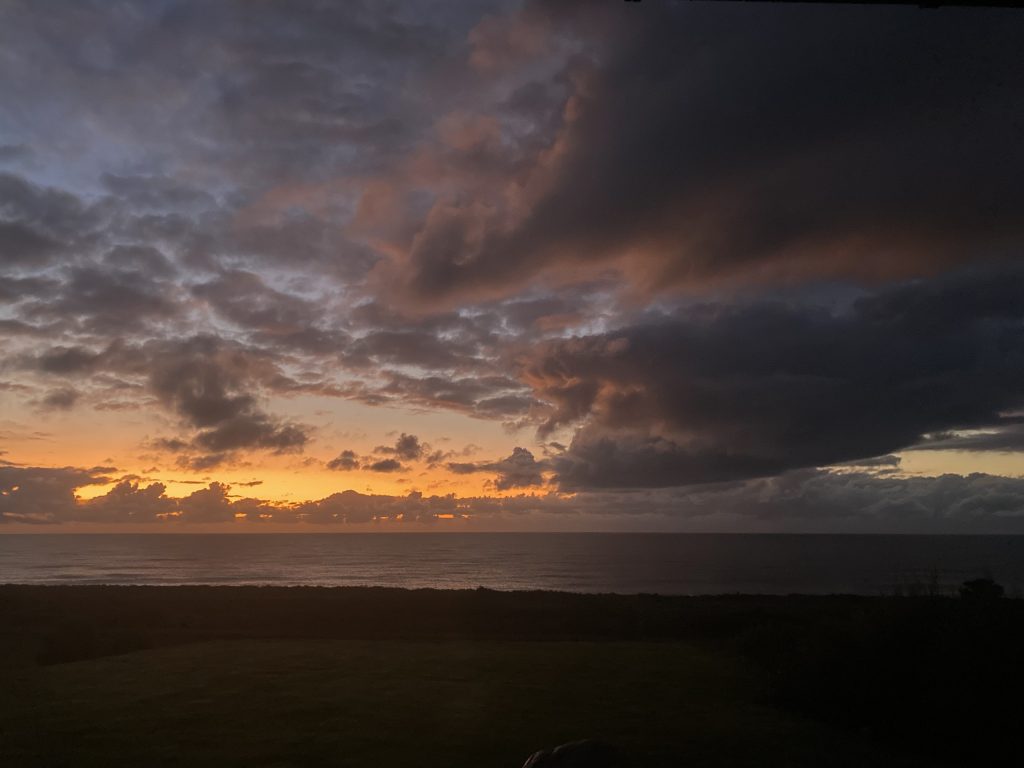
Inside, the clean-lined modernity means a huge space with bedroom and lounge areas properly separated and a separate (also huge) bathroom. The galley kitchen is ideal for short stayers and gave us more than enough scope for a straightforward meal one evening. Outside there is a deck with loungers. At the front there is a gravel drive up from the road to a stopping area plenty big enough for a couple of cars. The road itself is very quiet. It runs alongside a single-track railway line which only receives a rare visit from a train hauling freight. Neither impinge on the seclusion and quiet to any meaningful degree.
We ended up wishing we could have stayed longer.
Mobility Access:
There are two steps up to the front door and down from the deck at the back, otherwise the open space is all on that single level. I suspect you would feel very trapped without your own car. The Retreat lies about 7 kilometres (just over 4 miles) north of the town centre.
Kaikōura Activities
Walks on the Peninsula
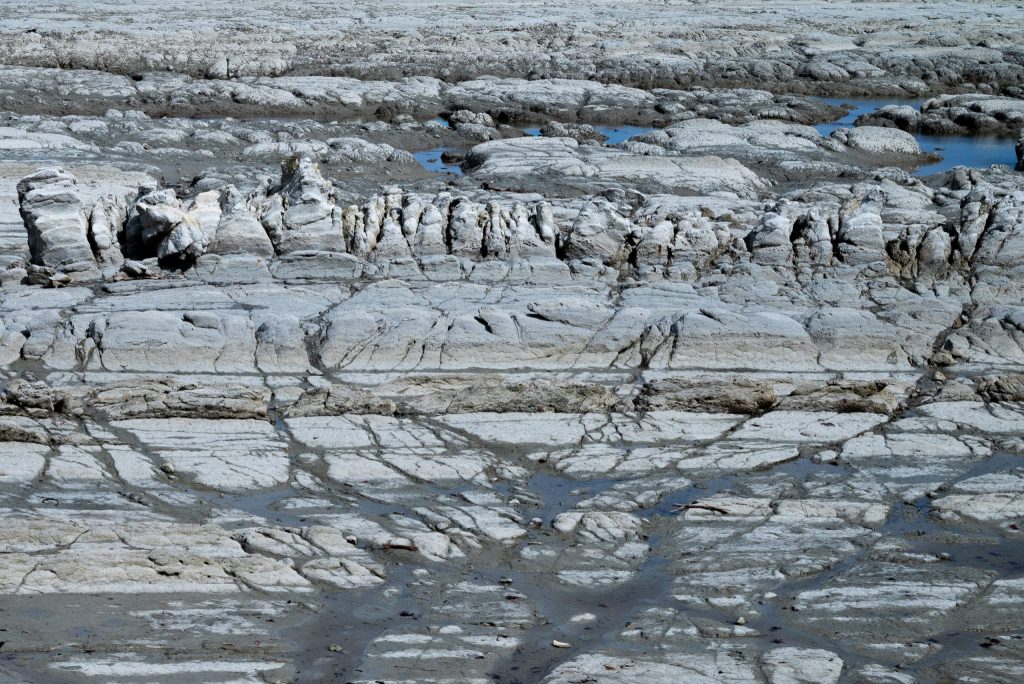
The Kaikōura Peninsula is much smaller than its relatives further south that shelter Christchurch and Dunedin, so the two Recreation Reserves there are readily accessible. A well-marked, 3.3 kilometre (2 mile) walk around the head of the peninsula (the Kaikoura Peninsula Walkway) links the two. The totality has its own pdf pamphlet from the Department of Conservation (https://www.doc.govt.nz/globalassets/documents/parks-and-recreation/tracks-and-walks/nelson-marlborough/kaikoura-peninsula-brochure.pdf). From both Reserves you can see the large rock shelves with their surfaces gouged by long straight furrows. They are a good place to spot basking seals. We visited Kaikōura Recreation Reserve at the north end of the peninsula where a car park marks the end of the road. There is room to walk on the flat, tarmac surfaces along the esplanade back towards town. There are a few steps down to the rock shelf but its flatness is deceptive with a knobbed, cracked surface pockmarked by low depressions that capture pools of water as the tide retreats. On the other side of the peninsula is South Bay Reserve where, at the far end of another end-of-road car park, a Māori-design sculptural arch marks the entrance to the walkway around the bay with its own rock shelf and attendant birdlife. The walkway here is a combination of boardwalk and tarmac path before it heads up the hill to the path around the headland.
A worthwhile adjunct is taking the road up from the town centre that leads to Kaikōura Lookout at the high point of the peninsula. A packed gravel parking and viewing area (with some benches and table) awaits at the top along with an excellent view north across the town and bay.
Mobility Access:
If you just want a short walk on the flat this is very doable at each end of the peninsula walk, although we found South Bay more interesting. You just walk as far as you want along the walkway and path and return to the car park. The Peninsula Walkway itself involves a track across the clifftops with rougher ground and ups and downs.
Dolphin Encounter
https://www.dolphinencounter.co.nz/our-tours/swim-with-dolphins/
Behind the check-in desk for the tour a screen reads: ‘Sea: Moderate. Seasick: Moderate’. Not perhaps the best thing to be confronted with early in the morning (tours can start as early as 05.30). The functional corridor and large double doors to the dressing and briefing area rather enhance a sense of foreboding – at least in me. However, the effect of shop and cheery, busy café next to the check-in desk and the efficiency and seriousness of the staff, who distribute wetsuits and snorkelling paraphernalia and a thorough safety briefing, ameliorate my concerns. Small buses drive you over the headland to South Bay where you board the boats (there were two for our tour) to head out across Gooch Bay in search of the dusky dolphin pods. The boats were essentially like large dive-boats, designed to enable swimmers to drop into the sea from the back platform and for handling wet people when they emerge from the sea. When the pod has been spotted (about 150 dolphin according to our crew) the boat nudges slowly close to the pod and you slip off the boat to join them in the water, allow them to interact with you as they will and, when they swim off, haul yourself back aboard. On our tour the process was repeated three times after which, once we had changed into warm clothes, the boats follow the pods so you can get all those photographs of the dolphins leaping from the water and cruising in the bow wave of the boat.
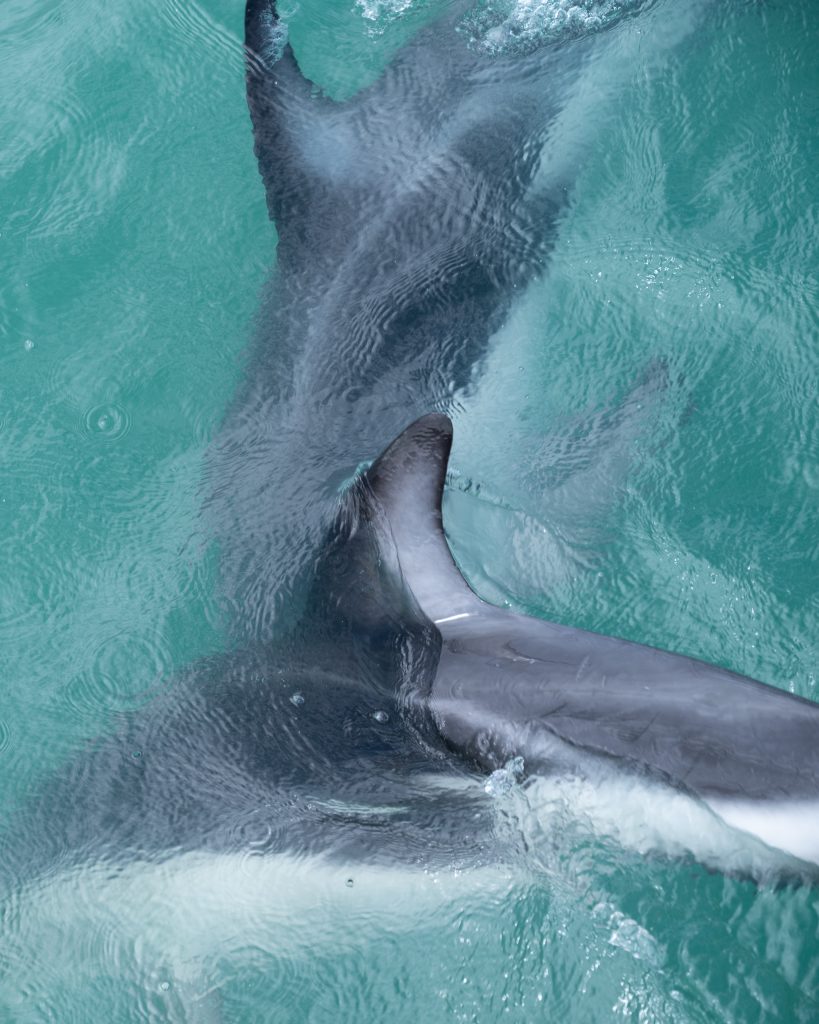
The Dolphin Encounter website has a wealth of information in the FAQ section but a couple of other thoughts came to me. First there is the question as to whether swimming with wild dolphins is ethical. I assume there will be differing views on this but, unlike swimming with captive dolphins which is a complete no-no, this sort of activity seems to depend a great deal on the attitude of the company running the tour and the dolphins being swum amongst. The dusky dolphins here in Gooch Bay are regarded as a sub-species that seem to be unaffected by the activity and you are given clear no touch instructions at the outset. As to Dolphin Encounter I was reassured to find positive references to the company in several articles on the subject, for example https://littlelosttravel.com/is-swimming-with-dolphins-ethical/. Secondly there is the possibility of difficulty with underwater visibility. The squally, wet weather seemed to have churned up the ocean to such an extent that, peering through my mask underwater, I felt I could not see anything more than an arm’s length in front of me. So, although I was swimming in the heart of the pod, I could only see the dolphins’ interactions when I was above the water. Judging from the many photographs online, on days of better weather the water is much clearer. It is difficult to know what you can do about this as the tours get booked up weeks in advance, so best just to go with the flow and, whatever the visibility, enjoy just being in the sea amongst these inquisitive creatures.
Mobility Access:
Clearly you have to be a confident swimmer but, if you are, the most difficult part of this activity is hauling yourself back onto the boat after each swim. The crew are there to help but I still found it was a scramble/flounder using the short four or five step ladder dropped into the water. Otherwise the only other warnings to offer are over the step into the bus and the steps onto the boat at the dock. Oh, and wrestling yourself in and out of that wetsuit.
A Whale Watching Coda
On our last morning, after packing to head south and checking out of the Retreat, we had been booked to go on a whale-watching tour. It was a grizzly grey day and the prospect of being out at sea in such weather looked unattractive to us. It clearly struck the tour company the same way as, when we got to their offices with our fellow travellers, they announced the day’s trips had been cancelled. Refunds or alternative days were immediately offered. As we were heading south to catch a flight, we took the former. Whale watching will wait for another day.
Kaikoura Food
Another solidly good New World supermarket in town provided the food for our first night, prepared and eaten in the cosiness of our lounge at the Retreat. That lounge was also the location for our second night food but this time our single venture into the comforting world of fish and chips – Cooper’s Catch in the Kaikōura town main street, Westend (https://www.cooperscatch.co.nz). Little more than a corrugated-roofed, almost shed-like building with tables out front (and inside) this unpretentious establishment gets written up in the guides as an excellent place for fish and chips. So we indulged and added mushy peas and kumara (sweet potato) chips for a very palatable takeaway.
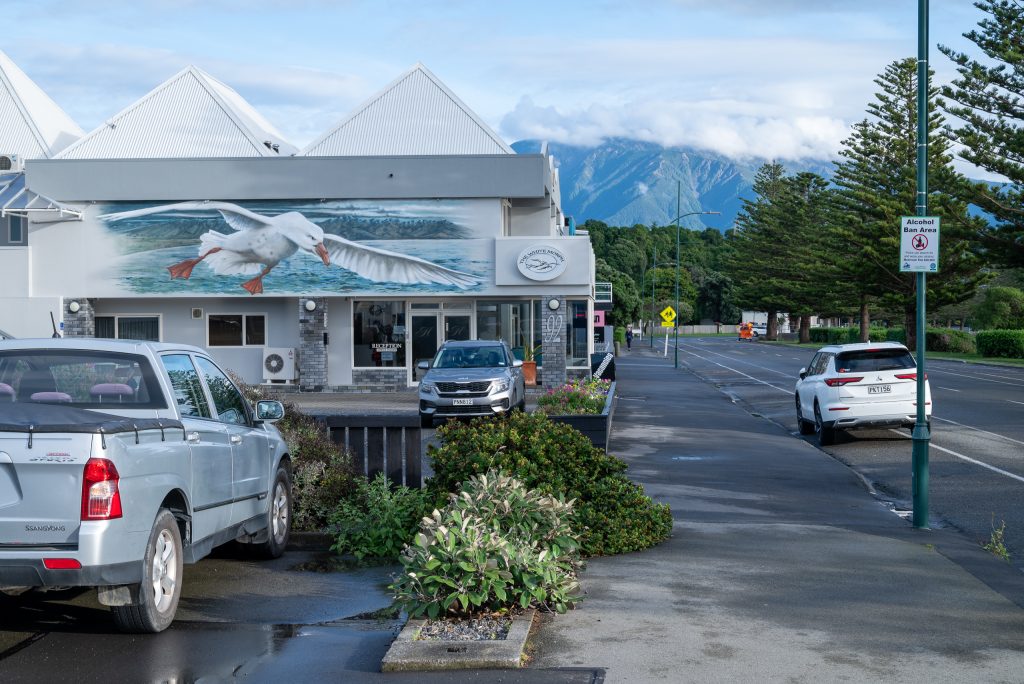
South on the Alpine Pacific Touring Route
A final fix of scenic driving seemed a good idea for a last lap south to Christchurch Airport for our flight to Auckland. This less heralded designated tourist route (https://www.alpinepacific.nz) is actually a loop, starting in Kaikōura, that offers two ways to drive to the point the two routes meet again at Waipara, 57 kilometres (35 miles) north of Christchurch. So you can choose the faster, slightly busier way down SH 1 or, as we did, the slightly longer western route, 146 kilometres (91 miles) long. This is a very quiet road running for the first half of its length along winding roads through the hills and valleys that are foothills of the Southern Alps then, around the village of Rotherham, it enters a wide valley of flat farmland before descending through the hills to the coastal plain. The first part seems very scenically attractive but, in the grey cloud and heavy rain on the day of our travel, I was too focused on the need to take care on roads, where standing water lay in many hollows and rivers seemed to be struggling to be contained within their banks, to take in very much of our surroundings.
A final shout out for another excellent New Zealand café, the Waikari Kitchen (https://deanchef.co.nz/thecafe) which is set on SH 7 as you drive through the hills before the road drops down to the coastal plain at Waipara. Waikari is a small village with roadside services for the passing trade. You could just drive through and not notice it. Externally the café also looks like an unprepossessing wooden structure, but it has a wonderful variety of foods on offer for coffee breaks and lunches.
Mobility Access:
A lay-by to park in on the opposite side of SH 7 and no steps. The single storey, wooden floored building is level with the ground outside.
Auckland Stopover (1 Night)
Our onward flight to San Francisco meant connecting through New Zealand’s main international hub, Auckland Airport. Flight timings meant a late afternoon flight from Christchurch to Auckland and an overnight stay before our onward flight. Because we had an onward night flight it gave us a full day in the city, time to garner no more than superficial (and probably misleading) impressions. After the open layout and the air of calm of the cities of the South Island, Auckland felt like a city imported from North America: busy roads, towering offices and hotels in the CBD, three-lane highways, flyovers and underpasses. On our one day we just managed some shopping and sitting in coffee shops in the CBD with no other time to take in anything else the city has to offer.
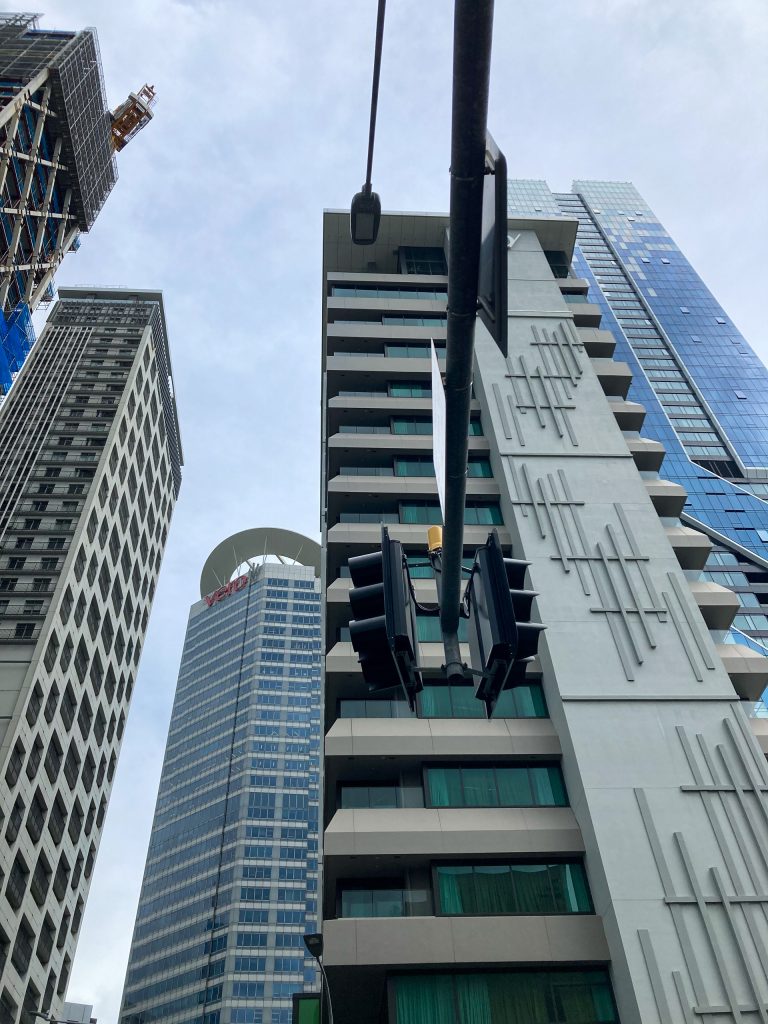
Auckland Hotel and Restaurant
SO/ Auckland (https://so-hotels.com/en/auckland/) is part of a network of hotels, created in 2022 by the Accor group as a luxury brand. It was of a very modernistic design in a standard city skyscraper in the heart of the CBD, thus very convenient for the shopping we had planned. The ground floor reception area set the tone for the rest of the hotel which, perhaps unkindly, I thought smacked of a designer being let loose without a full eye on practicalities. It was a very dark area with a number of outré sculptural artworks. One was a vast chandelier, set in such a way that it was almost touching the floor, that felt like it had the potential to do physical damage to an unwary passing guest. Two black sofas provide one seat each – because they are set on end rather than on their base. The overdone design motif, of dark marble and gold flourishes, extended to the rooms (we sampled two), which had all the amenities you would expect from a top-end city hotel but seemed so cluttered that a visit to the loo in the night became a minor obstacle course.
Unfortunately our reaction to the hotel was not helped by some minor glitches. The first room we were offered had a strong chemical smell. The second that we were moved to also suffered from the same smell but not to the same extent. They had no record of our room having been paid for and it was only on checking out that we resolved the issue. Unable to find the hair dryer in the clutter we rang the ‘Solution Centre’ – twice. No-one answered, although we did get a ring back. Some of the staff seemed inexperienced in dealing with issues out of the ordinary, although many were also very helpful and engaging.
For ease we ate in the Harbour Society restaurant in the hotel. In a room with a pleasing panoramic view across the harbour, the menu is modern Pacific Rim cuisine. The food was good, if a little prissy, with over-complication of some dishes. The staff were friendly and efficient.
Mobility Access:
As you would expect from a new hotel, everything is very good from this perspective (artwork hazards and cluttered rooms apart) with lifts, smooth level floors and a helpful concierge desk staff when needed.
Auckland Airport
We had pre-arranged transfers to and from the airport so I cannot offer any helpful guidance other than to point arrivees at the comprehensive Transport section of the airport website – https://www.aucklandairport.co.nz/transport.
Mobility Access:
The same website has a good Accessibility section. For us, the wheelchair service worked well, both arriving and leaving. Queues for passports and security checks were smoothly negotiated.