A near month-long trip which I have separated into four separate pieces.
Part 1: Prelude and Practicalities
Part 3: The Zagorje, Istria, Zadar and Krka National Park
Part 4: Split and the Island of Brač
THE ZAGORJE
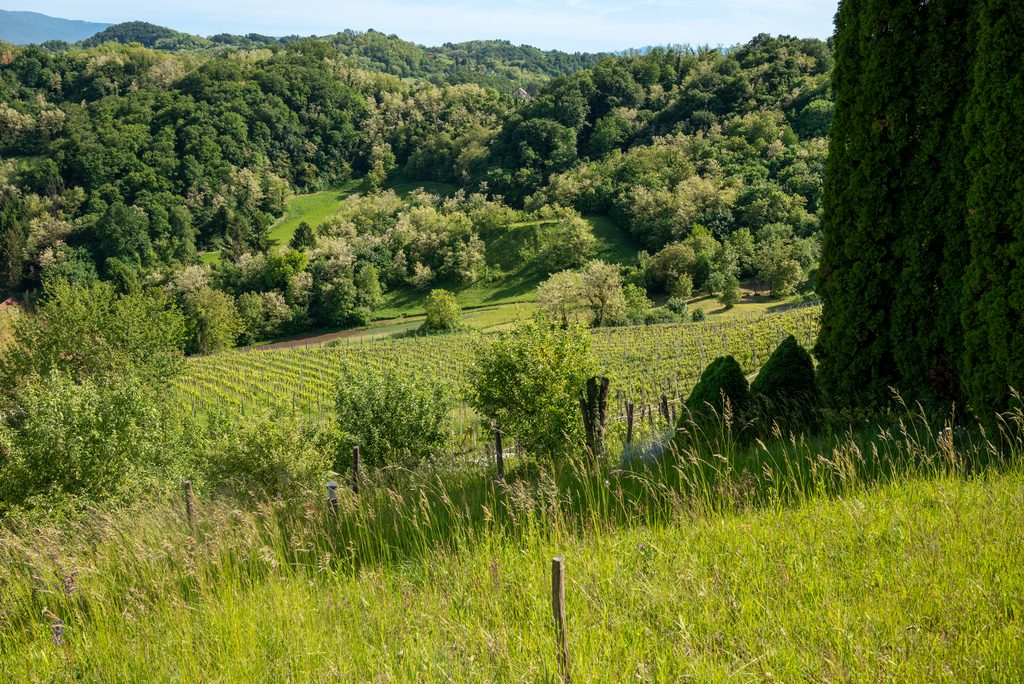
This rolling, hilly farming region tucked between Zagreb and the Slovenian border is a hidden delight. Sat on the small balcony of our hotel room the view southward presented a microcosm of the region itself. High up on a hillside we look down across a shallow valley with red-roofed farm buildings set along winding roads and across at tree-covered slopes where a small church or chapel sits, a near silhouette, on the ridge line. On the steep slope immediately below us is a neatly tended vineyard, one of several in the region that punctuate the fields of the farms. On the southern horizon Mount Medvednica, with its small patches of snow a legacy of the storm of the previous day, hovers over the capital city hidden beyond. The sounds? The wind rustling through the trees and songs of birds. The wooded landscape hides a surprising number of villages and small towns and, suddenly, a dramatic, white-painted castle dating back to earlier centuries. It has the same sense of neatness and cleanliness that, coupled with the simple style of homes, has resonances of the quiet villages and rural areas of southern Germany. Gardens are carefully tended. The streets are unfeasibly clean. The city graffiti has gone. It gives the region the charm of seeming remoteness. Yet it is barely an hour’s drive from Zagreb. The region draws local tourists, so there are plentiful facilities and it made us glad we had stepped away from international tourist Croatia to sample it.
A note on the weather. Another legacy of the storm that swept down from the north was much cooler air during our stay. Daytime temperatures only rose up to 16°C (61°F) so that there was an edge outdoors if you were not in the sun. At night that could drop to 5°C (41°F). This was several degrees lower than seasonal expectations but if you go, go prepared.
Hotel: Vuglec Breg (3 nights)
Audley do not include this region in their Croatia offer so, having decided we wanted to include it, we researched and booked the hotel ourselves. That it is not such a well-known tourist region means the options do not stretch to any up-market places but, on many levels this attractive location was a very pleasant place to be. However I hesitate over an out-and-out recommendation, simply because of the consequence of part of its business coming from small conferences and business meetings. On days when there are no such groups staying the place can be a delight. On days when the weather is warm and sunny, the impact of such groups is minimised for there are plentiful outdoor spaces for relaxation and each room has a patio or balcony with seats. The difficulties arise only if the weather closes in, as it did one day, or there is a large group dining in the evening. The hotel only has one public space, a large restaurant room with a wrap-around balcony so there is nowhere else to find a quiet space. Our room was not large enough to have chairs for relaxing. Even so we enjoyed so many aspects of our stay here: the cheerful and helpful local staff, the wines, the food offer, the location in the landscape and the unexpected allure of the region itself.
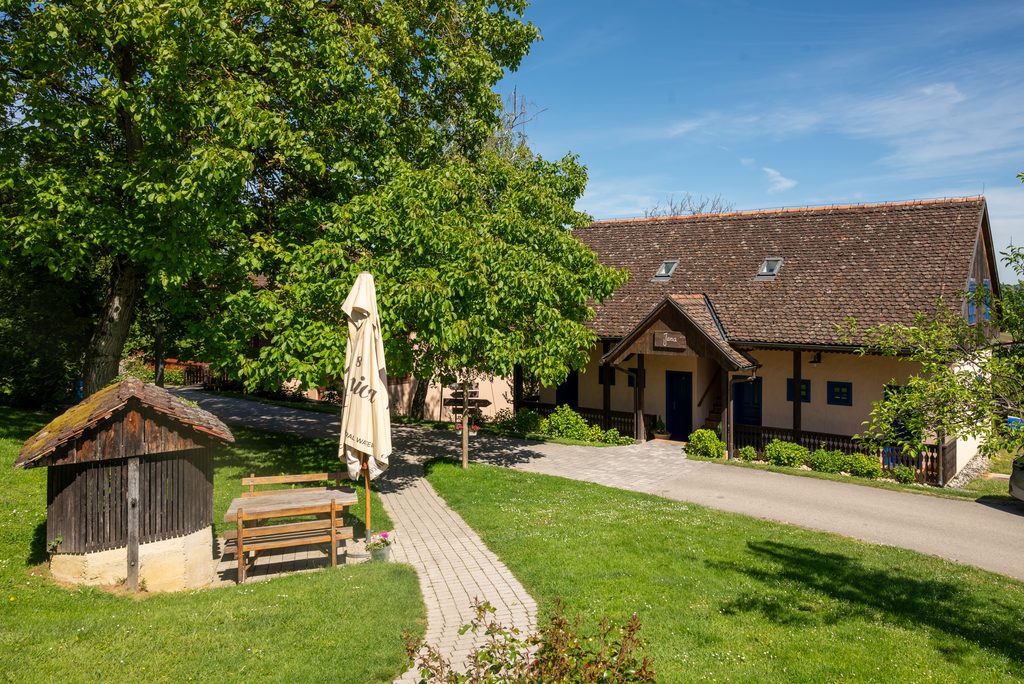
The hotel is set on a slope in the hill and is a collection of buildings with a central facilities space in modern style that sits alongside the winery facilities on which Vuglec Breg, rightly, prides itself. The half-a-dozen other buildings, built in a simple, rustic style, each house up to eight rooms of varying capacity. We chose one closest to the main building for ease of access, although none are more than about fifty meters walk away. There is a seasonal pool, lawn areas with deckchairs and an outdoor barbecue and wine tasting area. No cars clutter the roads and paths for the hotel car park is set off to one side of the site overlooking a wildflower meadow wherein chomps a lugubrious pony that seems to act as no more than a subject for guests’ photographs. Some rooms require steps to access so make sure you choose carefully.
The room has plain country-style furnishings and décor but is a perfectly serviceable space, if cosy, with the necessary facilities – en-suite, air-con unit, wi-fi, limited channel TV, that balcony with that view. They only have Queen-size beds which are a little tight for my total comfort.
The restaurant is regarded as a bit of a destination eatery and is as busy, if not busier, at lunchtimes than in the evenings. Breakfast is a straightforward buffet and the food can be good. Personally I would be slightly wary of the heartiest-sounding meat dishes where size and carbohydrates predominate over subtlety and vegetables. Nonetheless we found options that worked for us and the local produce comes to the fore in soups and sharing platters of meats and cheeses. And their strukli, with its lean toward a less savoury version, was delicious and lighter than that we sampled in Zagreb. There are no real alternatives, with the nearest restaurants being in a very small town about five kilometres distant. Just be aware that smoking is permitted on the balcony.
Mobility Access
Once you are here, and you do need a car to visit this region, it is all quite straightforward with some gentle slopes between the buildings and with the only steps being to go down to the toilets in the main building which are on the lower floor. You do need to take some care choosing a room if you want to avoid steps up or down. The car park is set on a steepish slope so drop off at the level of the hotel before parking. It is around 100 metres from there to the main building. The public space and restaurant area is on the upper floor of a two storey-building but, as the land slopes gently upward, it is reached by a smooth paved path from the little road that runs past the majority of the buildings that contain the rooms so access is reasonably straightforward. The only issue is that the restaurant toilets are on the lower level about 20 steps down some stairs.
Activities
Wine Tasting
The hotel offers a wine tasting and we thought it was both enjoyable and excellent value as you get to try six different wines (servings closer to a glass than a tasting splash). Served at a restaurant table they came with a selection of cold meats and cheese along with their excellent home-baked bread. This food allowed us to use it as our evening meal as well. The wines? Two sparkling wines, white and rosé, a sauvignon blanc, a chardonnay, a cabernet sauvignon and a Bordeaux-style blended red that included a local frankova grape – all very nice indeed with some to be repeated at subsequent dinners.
Driving the Zagorje
A day long wander by car on a circular route from the hotel encapsulates the Zagorje. The stops at small towns with some striking churches, those castles, peaceful cafés and the odd supermarket (smart new Co-ops and Spars, no less) for the water and sustaining snacks; all these are of a piece with the joy of the countryside.
The town of Marja Bistrica is home to the Black Madonna, this Catholic country’s most visited shrine. We did not visit the enormous church that houses the icon. It sits on a small hill lording it over the car parks and restaurants and lines of stalls that spread away from its base. On this weekday in May it is an odd place for there seems to be nobody there. The car parks and restaurants are empty, the stalls closed. The odd local potters along the otherwise deserted streets or leans out of a window to demand, in Croatian and hand signs, €5 for the pleasure of parking in the signed car park adjacent to his house, an amount deposited in a plastic pot on a lower storey windowsill.
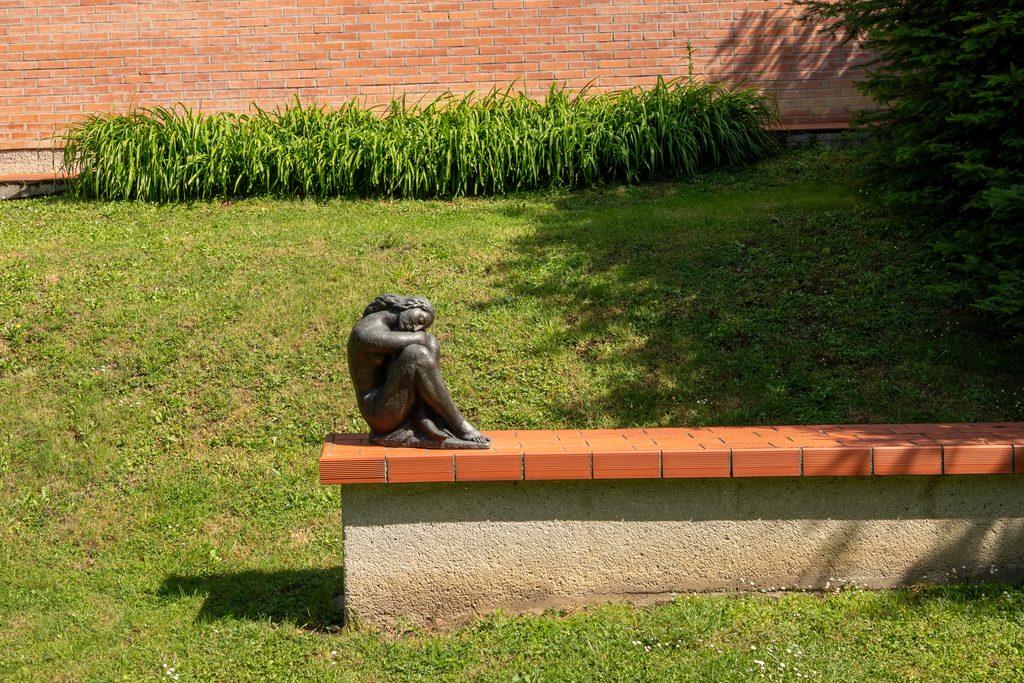
The small town of Klanjec, hard up against the Slovenian border, offers a coffee as you sit in the quiet main square beneath the black and white elegance of the seventeenth century church and adjacent monastery. This is only the digestif after the main course of the Antun Augustinčić Gallery (https://www.gaa.mhz.hr/en/galerija-antuna-augustincica-s65). This scion of the town was a renowned sculptor whose work includes the monument Peace outside the UN Building in New York. Set in a small well-kept park, the museum was closed (despite the website and sign on the door that suggested the contrary) but there are around ten of his sculptures set in the small park. It was, for us, a fascinating find.
Mobility Access
The small park (little more than 50m2) around the Gallery is lawned with gently sloping crushed gravel paths that make for easy strolling. There is a small parking area right beside the park. We were the only visitors.
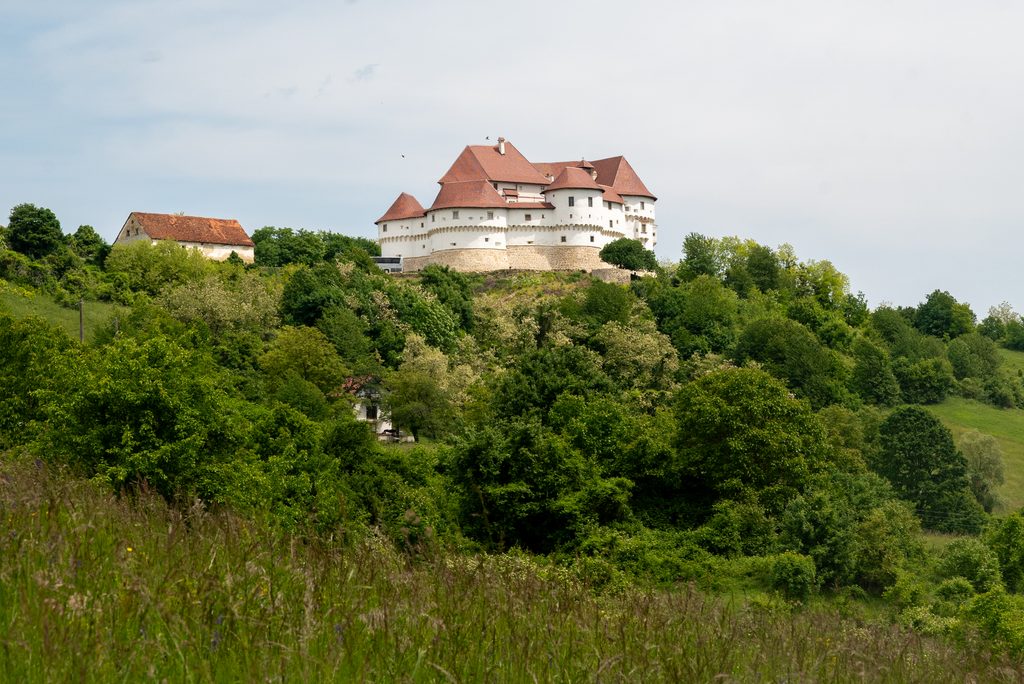
And then the 15th century castle of Veliki Tabor (https://www.veliki-tabor.hr/en) with its suitably forceful seeming white-walled, red-tiled round towers set high on a hillside provided a suitable final stop on our drive.
Mobility Access
There is a car parking area right outside the castle. We did not venture inside but just strolled around the outside taking in the hilltop views.
Varazdin
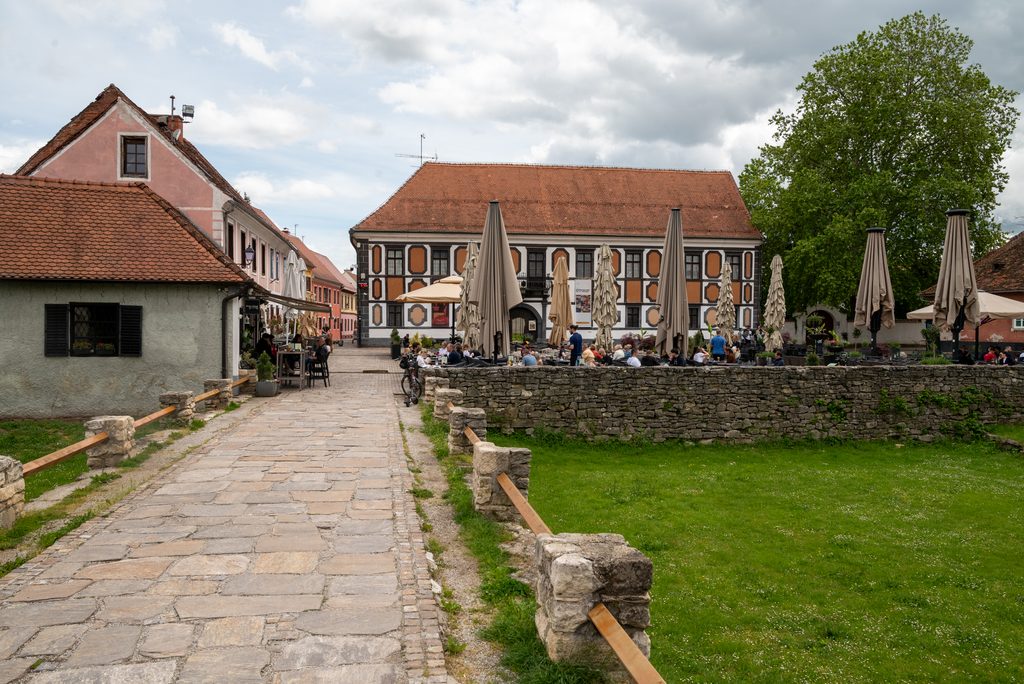
Not strictly in the Zagorje, the city of Varazdin (https://varazdin.hr/en/) is a 60 kilometre (37 mile) drive to the north-east not far from both Slovenian and Hungarian borders. It is a gem of Baroque architecture with another white-walled, red-tile roofed castle thrown in for good measure. The old town centre, about 500 metres by 500 metres, is a gloriously renovated and maintained UNESCO World Heritage site. Were it sat on Croatia’s coast it would be awash with visitors. As it is, it is clearly set up to cater for the tourist as well as the locals. On a Friday in May it seemed quite peaceful and just begged to be strolled around and its squares sat in so you can gaze at the Baroque palaces and town houses, the civic buildings, cathedral and churches and that castle. The last of these rests, slightly aloof, in its own park in the north-west corner of the city. The centre is pedestrianised, but we parked in an underground car park on the south edge of that centre and just let the beauty wash us along as we slowly strolled around.
Mobility Access
The city is flat, the streets and squares well paved and maintained. Stopping places in the form of the Croatians’ beloved outdoor shaded eating and drinking places are plentiful. Enjoy.
Walk to St Antun’s Chapel
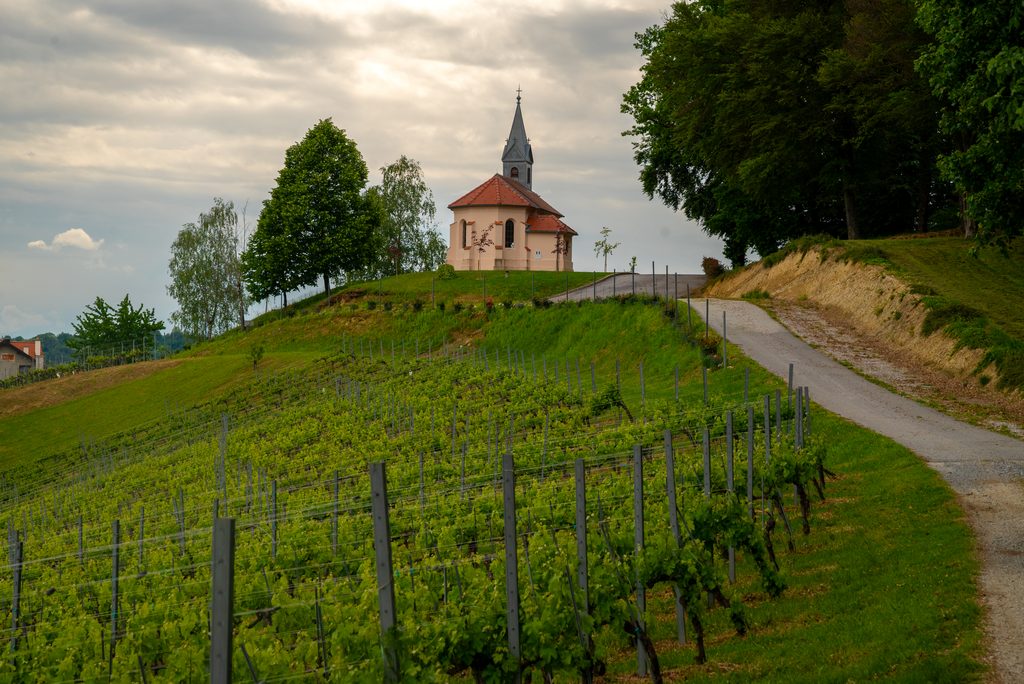
In the countryside around Vuglec Breg paths, roads and tracks wander off in all directions. This walk, along the ridge lines to this hilltop chapel, was not formal nor is it found in any guide. I just followed my nose with a bit of help from Google Maps. Past the hotel’s vineyards, past working farm buildings assiduously guarded by voluble dogs, past rundown wooden barns tucked out of sight along tracks and past more vineyards where there was visible neatening of the land around another winery, all leading up to the chapel. I saw no more than half-a-dozen other folk. Greetings were sparse. A simple and peaceful pleasure.
Mobility Access
It is designated red on the basis of length, the ups and downs in the land and the roughness of some of the tracks.
THE ISTRIAN PENINSULA
Every year over five million tourists descend on this peninsula, home to around 200,000 locals. The coastal cities of Rovinj, Pula and Poreč with their old town centres, sport striking Venetian empire architecture and some glorious Roman structures. These combine with the attractive coastline and a mountainous interior that holds hill-villages that bear more than a passing nod to their Tuscan equivalents. In countries with an economy which finds tourism as its mainstay that can lead to an overdose of tawdriness. Thankfully Istria is far from that, although I cannot speak for the summer months when the droves roll in. If you add in the seafood and Italian influence that becomes a feature of the cuisine for the rest of our trip and still more variations on Croatia’s small but perfectly formed wine industry, it did rather become a must visit for us. It was well worth it.
Departing to Istria
We had planned to be four nights in the Zagorje but a day of continuous rain was forecast for our last day, rather militating against further meaningful exploration. The lack of a peaceful space indoors at Vuglec Breg in which to relax caused a last-minute decision to use the rainy day to move on. Vuglec Breg were very understanding and made no charge, despite our having pre-booked the four nights. So we booked a hotel on the Kvaerner Bay coast near Opatija and drove through the rain. The pleasures of a 250 kilometre (155 mile) drive down through the varied countryside and into the mountains of the peninsula may have been lost in part to the dullness of the weather but the drive meant we woke to sunshine and a glorious view across the sea the next day.
Hotel Navis, Opatija (1night)
https://hotel-navis.hr/en/home/
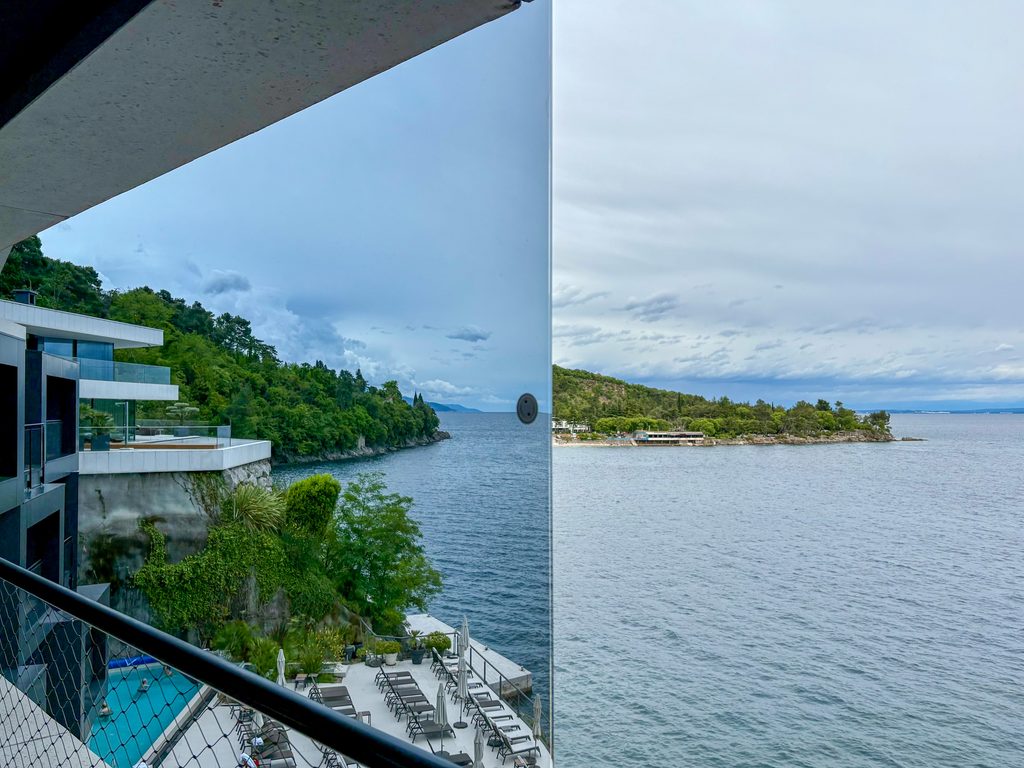
The coast at the north end of Kvaerner Bay has some physical characteristics shared with that of the French and Italian Riveras, where the steep sided mountains seem to rise out of the sea and buildings cram onto narrow ledges where the front door is several levels higher than the back. The Hotel Navis is one such, a 21st century structure squeezed onto the ledge between the main road and the sea below. We found it on the Small Luxury Hotels website and booked only 36 hours before our arrival. It turned out to be a very good choice. As a broad picture I would say it falls on the boundary between a 4 and 5 star in terms of quality. Determinedly modern in style it has all the usual trappings of a quality boutique hotel with all the rooms facing out to the south across the sea. Fully equipped rooms have a large balcony and a colourful, spacious feel. At dinner the food in the one restaurant was good and the service efficient. The following morning there was a full buffet breakfast with some cooked options offered off a menu.
Mobility Access
Within the hotel and within the room no problems as there were smooth floors and the modern building had a lift. We were not there long enough to see how accessible were the pool, gardens and other facilities, which are all at lower levels. It seemed that getting down to the sea and the seating areas around their concrete jetty meant using steps but I cannot be sure that was the case. A longer stay would require a little more questioning of the hotel about accessibility. The other thing to be aware of is that the short drive from the road to the level of the hotel entrance and beyond to the car park beneath the hotel building is seriously steep. You must drop off at the level of the hotel reception or those with balance difficulties may need assistance to walk down to that level. The hotel lift does descend to the car park so getting out to leave is straightforward.
Inland Istria
Having found our way to the eastern fringe of Istria the previous night, even avoiding the motorways, we only had a bare 100 kilometre (62 mile) drive to reach our Istrian base on the western coast of the peninsula. So we could take our time to take in the staggering inland scenery of Istria. Učka National Park sits immediately behind Opatija and here the land rises rapidly from sea level to the 1,400 metre (4,600 foot) Vojak peak, less than ten kilometres from the sea. Leaving habitations behind, the much longer road winds up and up through the wooded landscape giving spectacular seaward glimpses as you rise. From this height the land of the Istrian peninsula slopes across innumerable mountain folds to the sea to the west. It was a glorious drive punctuated by a stop at the base of the steep hill that has, atop, the classic medieval town of Motovun. This lies at the heart of what is called the New Tuscany (wines, olive groves, woods, even truffles along with the hilltop villages). Unfortunately so attractive is this small town to the day tripper from the coast that you cannot drive up to the top of the town, you must either walk or take the shuttle bus that runs every 20-30 minutes. The walk is about 1,400 metres up the winding road, with a vertical rise of 277 metres (900 feet). We simply did not have the time, even for the shuttle.
Hotel: Meneghetti Wine Hotel & Winery (6 nights)
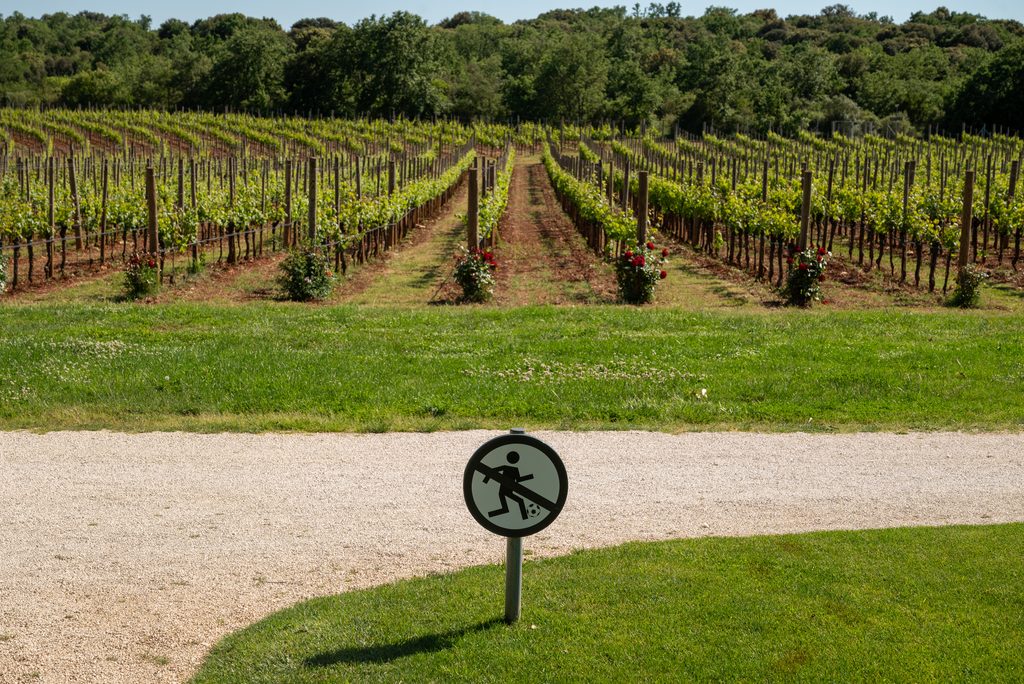
We decided to base ourselves in one place so we could take time to relax as well as visit the cities and hills of the region. Our original choice also happened to be Audley’s recommendation. The Meneghetti Wine Hotel & Winery (https://meneghetti.hr/en/) is a Relais et Chateaux property set in the midst of the sandy coastal plain surrounded by its own vineyards and olive groves. It is a totally private property that oozes class as soon as you pass through the gates and drive up the white gravel road through the avenue of shading trees. The hotel is elegantly designed around its core farmhouse buildings with a variety of suite-style rooms in single or two storey buildings, many of which have their own private garden spaces. Sculptural art is dotted around the manicured gardens. Swifts nest in the eaves of the main building and provide the only frenetic activity as they skim around at dusk. A morning is enlivened by watching a hedgehog bustling around the lawn next to our breakfast table, gathering dried vegetation for its burrow. Our room, by no means the largest, was a huge two-room suite with all the trappings of a 5-star resort type property. The décor is elegant light-wood in tone and materials. The resort had three pools (one outdoor) and plentiful indoor and outdoor space for relaxation counterpointed by the elegant spa and sensible gym. For the most part the plentiful staff were attentive, friendly and helpful with a can-do approach that went the extra mile (buying pens for me in the local town).
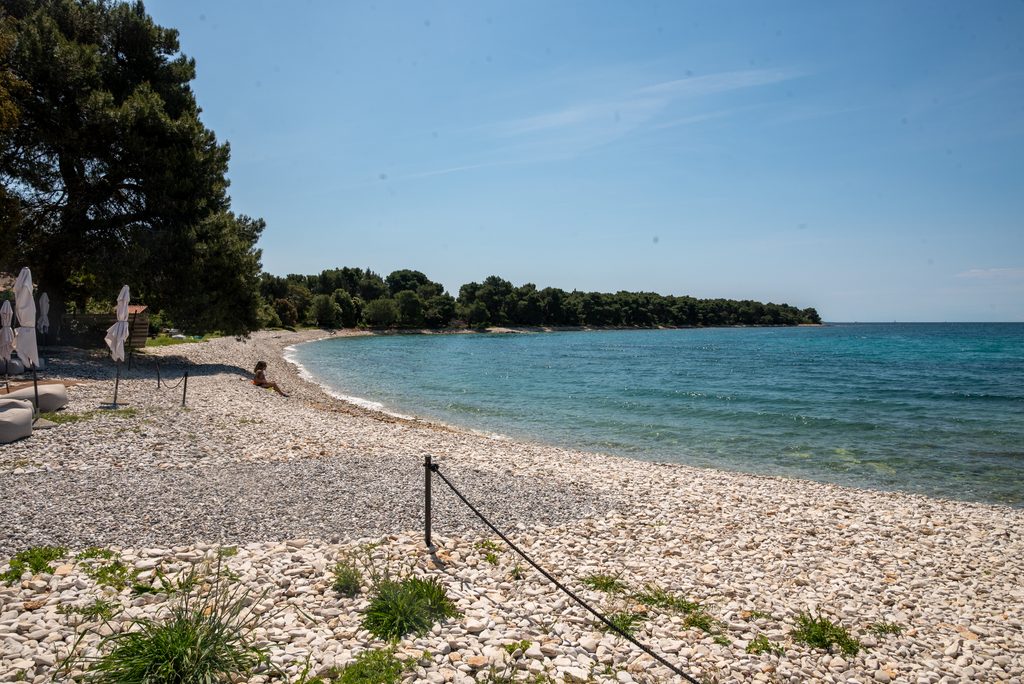
The hotel also has its own beach club, a fenced off area of land at a remote local bay. Only a 10-minute drive, there was a regular hourly shuttle from the hotel and the facility was laid out with bar/restaurant and a variety of loungers, seats, cushions and tables.
A slight irritation was the over-loud piped music which seemed inescapable. It emerged from outdoor speakers in the restaurant courtyard, around the pool and across the area of the beach club as well as in the lounge/bar and indoor sections of the restaurant. This is such a lovely location that invites relaxation (with birdsong providing a natural soundtrack) that we could not understand the need for this aurally-intrusive background in all these locations. Nor, it seemed, could some of the staff we asked about turning it down, quietly whispering about being limited by directives but also asking us if we wanted it turned off altogether. We did and they did. Of course you could also find some quieter places in the tree shaded lawns and in your own garden but breakfast with Frank Sinatra singing ‘New York, New York’ is not my ideal way to start the day.
That said Meneghetti is a great place to relax without the need to feel you are constantly seeing or doing something. You choose where to find your space to read, write or lounge and venture out for gentle walks around the vineyards, gardens and olive groves. You can pop down to the beach club for a change of scene. Also the staff are very ready to help you should you wish to venture out to nearby cities or to head into the peninsula’s scenic interior. There are 50 rooms but, at this time of year, the hotel was by no means full.
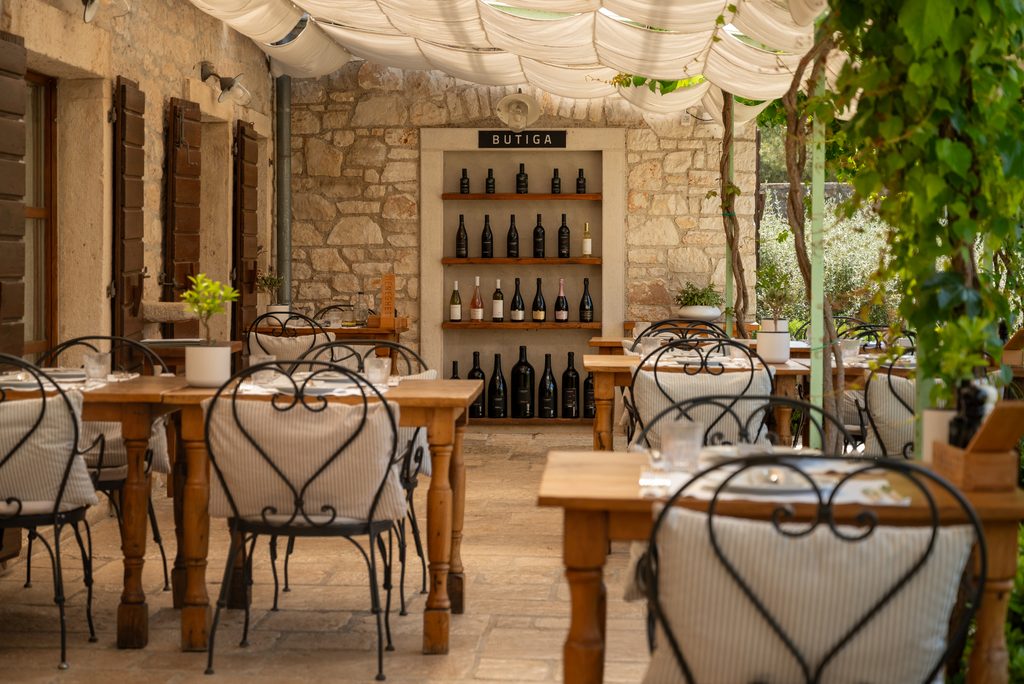
A lovely restaurant, where you could take an evening meal or breakfast indoors or out, with excellent food accompanied by the estate’s own quality wines and olive oil. There is an Istrian-centric crafted menu with sensible vegetarian alternatives and a subtler hand than the hearty fare of the Zagorje. Lunch is taken at a large outdoor terrace set just above the pool, shaded by the umbrellas and the oak trees, with a similarly extensive menu that also offered sensible lighter items. The lounge bar in the evening, with the sun going down, we found a very pleasant place to sit, relax and imbibe. The minor criticism was that a few of the waiters seemed lacking the trained edge you expect in this quality hotel. Some were excellent but, like everyone in the industry, they rely on seasonal teams during the high season – and a little too often we found ourselves trying to catch someone’s attention to get service or place our order.
Mobility Access
The room we had been allocated was set up for disabled use, so it is difficult to comment more generally about room use for those with less impactful mobility concerns. Many of the rooms are duplex so care may be needed in choosing one that suits you. We had had extended discussions with our travel adviser who liaised with the hotel to come up with a suitable solution. Although we do not need the disabled facilities, it certainly helped that access was over smooth sloped paths, all was flat inside and the room was one of the closest to all the hotels main public areas, spa and pools. Although there are occasional steps between sections of the hotel and some public areas they are few. The grounds are, essentially, flat with paths paved or laid out to that white gravel. Although some rooms, including ours, have their own car parking bays if yours does not there is a valet service to fetch cars from the hotel car park.
The beach club has boarded walkways and is accessible direct from the road without steps.
Wine Tour and Tasting
The hotel offers this as one of its add-on experiences. After a personal, forty-minute tour around the vineyards with our guide, whose chat encompassed a brief history of the creation and development of the hotel, we headed down the main drive to the swanky new winery facility. Set about 400 metres from the hotel is a near pristine winemakers shed, a wine storage space (almost a concrete bunker with a wildflower ‘green’ roof) full of lines of barrels and a ‘Wine Lounge’, effectively a shop and tasting facility. At the last of these we were left, mercifully free of too much wine tasting flim-flam, in the early evening sun tasting their sparkling rosé and blanc des blancs, three different wines using the malvazija grape and two Merlot-centric reds.
Mobility Access
Whilst the walking tour of the vineyards may be impractical for some, you can miss out on that part and just have the hotel staff ferry you the 400 metres from the main hotel to the winery to join your companions for the short tour around the new facility and the wine tasting,
Rovinj
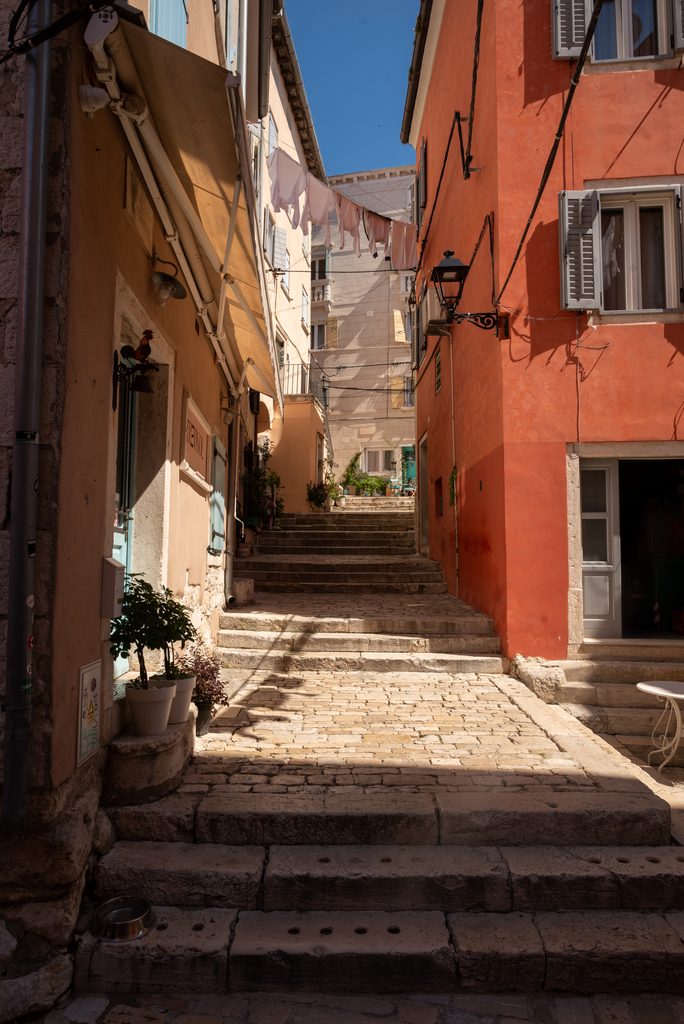
A half-day trip arranged through the hotel with a car and driver – and some useful local knowledge to ease our visit. In terms of attractive coastal towns, the old town of Rovinj is the jewel in Istria’s crown. A mere 20 kilometres (12 miles) from Meneghetti, it is a gem of smartly renovated Venetian architecture, narrow cobbled streets and quayside restaurants and bars, whose peninsula location is mirrored in other cities along the Croatian coast. Unfortunately it all sits on a 61 metre (200 foot) hill that presents a severe obstacle to those with mobility concerns. For us the concierge team at Menghetti worked their magic and, somehow, wangled a pass through the locals-only barriers that guard the old town’s streets from all but local traffic. Our hotel driver took us up through streets barely wide enough for a car (and teeming with visitors) to the car park that sits just below the highest point. Here sits the church of St. Euphemia and views through the trees all around the old town. As so often the most enjoyable thing is just to wander or sit and take it all in rather than trying to find sights to see.
Mobility Access
What the hotel organised may be difficult for others to achieve and therein lies a real difficulty. The narrow streets are all brick-cobbled and the steeper ones rise using steps at regular intervals. The frontage on the harbourside is smoother and, using those brick-cobbled streets, it is possible to circle the peninsula at more or less the same level a distance of around one kilometre. The plaza in front of the church of St. Euphemia is smooth and flat and there is a café lurking just below the plaza beside the old city walls. And there are plenty of other cafés and restaurants for stopping within the old town to inveigle those tourists in to drink and eat and gaze across the Adriatic.
Pula
Pula is a much bigger city with a busy commercial harbour frontage that also has a forbidding Venetian-built castle atop its old town hill and some remarkable Roman architecture. We drove into Pula, as these areas are more readily accessible with your own car than those in Rovinj and all, bar the Venetian fortress, are beside or easily reached from nearby streets.
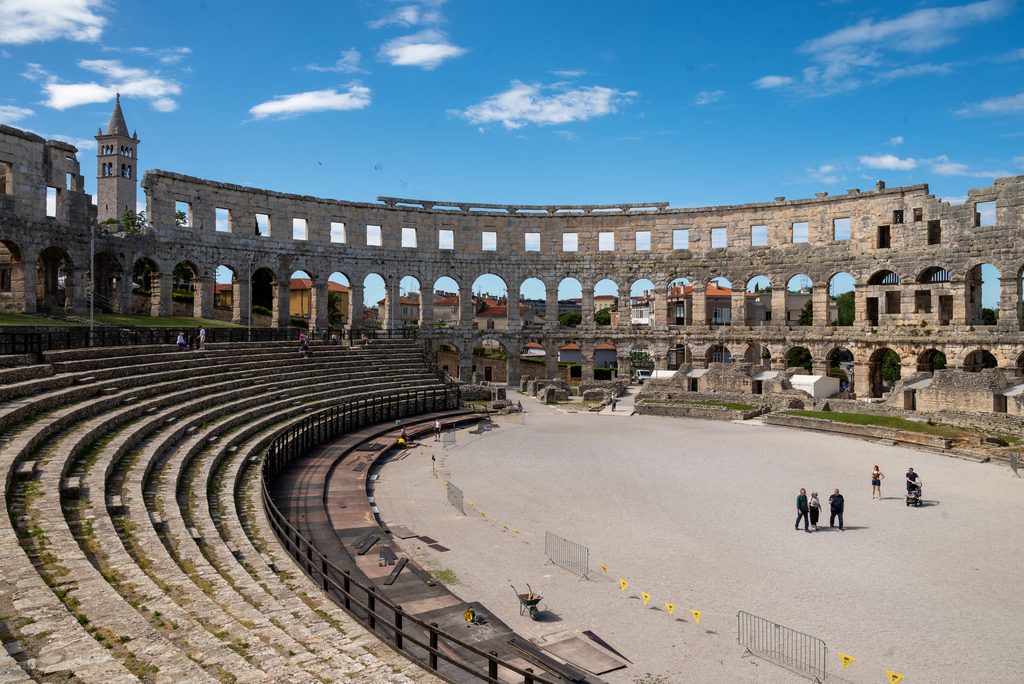
Their jewel is the amphitheatre (https://www.arenapula.hr/en/). Although it is not the size of the Coliseum in Rome it felt to us more complete and somehow more harmonious. You can wander around the whole edifice for the single entrance fee (€10 at the time of our visit) and, at this time of year, there were relatively few tourists. Concerts here must feel very atmospheric (and their summer season included visits from Moby, Sting and Kraftwerk). We wandered and sat on the stone seats just to soak up the ambience.
Mobility Access
The website has an impressive accessibility section that sets out all you need to know (https://www.arenapula.hr/en/visitor-info/accessibility/). The floor of the arena is packed gravel, smooth and flat. Reaching into the stone seats does require a climb up steps. There is a large car park (Parking Karolina) just across the street from the amphitheatre
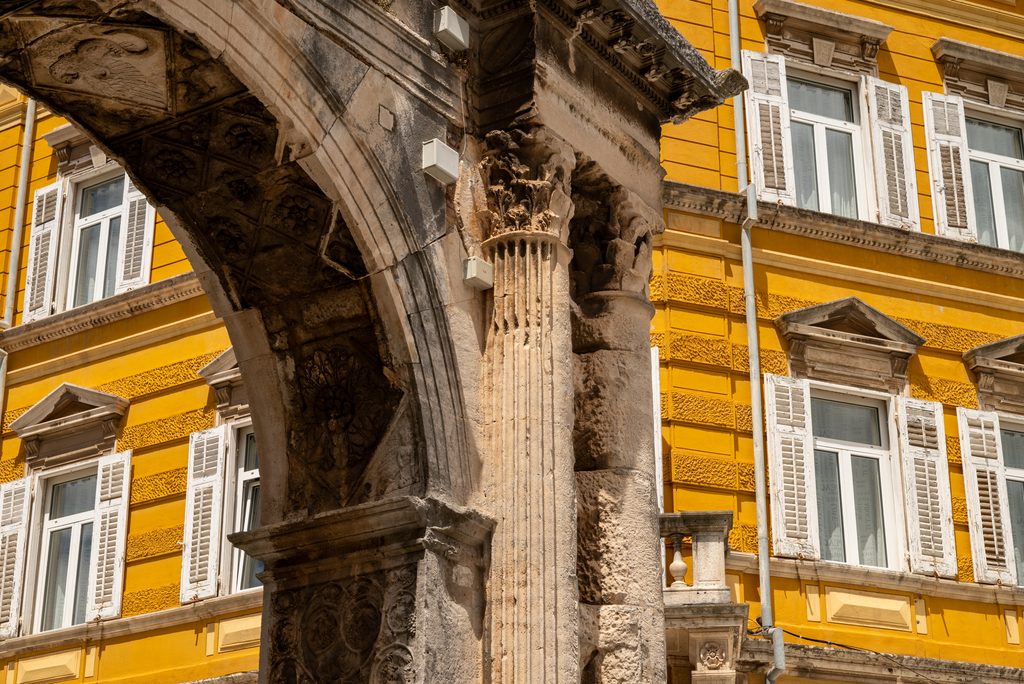
Just be aware that there is another Roman theatre in the old town (known as the Small Roman Theatre). Don’t head for the wrong one if you plan to visit the amphitheatre. The remains of the theatre are less complete than the amphitheatre and was not open to the public when I was there. It is also used as a venue (often as the theatre for which it was designed) and, during my visit to the Venetian fortress, which looks down on the theatre, I could see the ancient site was partially obscured by a swathe of scaffolding seats for the performances there. And there is more to Roman Pula. A 750 metre walk from the amphitheatre along Kandlerova Ulica is the forum. As you walk into the forum from the north it looks like an elegant Italian piazza edged by buildings that exhibit an eclectic mix of the Romanesque, Gothic and the Baroque. The reconstruction of the Roman Temple of Augustus (the original was destroyed by bombing in World War II) tucks almost discreetly into one corner, sharing a quiet elegance with the pedestrianised piazza. Take a seat at one of the cafés and just absorb the history, the architecture and the daily life of the locals. Walk on around the base of the hill on which the fortress sits and the next striking Roman structure is the Triumphal Arch of the Sergi acting as a gateway to Giardini, the large, tree-lined plaza beyond. From here you can complete a circular walk around the hill and be back at your starting point near the amphitheatre. You can, as I did, pound up the steep step streets to the fortress, passing modernised parts of the old town in amongst those that are centuries older. It lacks the harmonious look of Rovinj but feels more real, more a lived city. At the top the Venetian-built fortress is a forbidding fortification neutered by the actions of nature and humans. I did not go in (it requires a ticket) but outside you can circle the outer walls on foot and admire the views across the city and the busy harbour.
Mobility Access
From the car park the circular walk around the base of the hill, taking in the Forum and the Arch of Sergi, is around 1.5 kilometres (just under a mile) on streets that are paved or tarmac and which are, for the most part, free from all but the occasional municipal vehicle. Shops and stopping places for eating and drinking are plentiful and there are benches in Giardini. You can get closer to the Forum in a car using the harbourside road and Giardini has a street running up one side. Parking spaces around here are at a premium. Getting up to the fortress on foot is potentially more than a step too far but there is Zerostrasse (https://www.pulafortcenter.com/en/zerostrasse), a series of tunnels carved into the base of the hill during the First World War. These lead to a lift that rises to the lower level of the fortress. We did not make use of this, but it seems use of the lift comes as part of the entrance ticket to the fortress. The entrance to Zerostrasse is just off the north end of Giardini. You can take a car up the hill but, again, parking is very thin on the ground.
Driving to Zadar (330 kilometres/205 miles)
As you drive west out of central Croatia the lush vegetation takes on a drier, more Mediterranean feel. That drier, scrubbier feel to the landscape strengthens as you drive south from Istria along the relatively quiet coast road (the motorway inland takes the bulk of the traffic heading southward) to our next stop at Zadar. The views are spectacular but the drive was probably longer than we would have liked at a full eight hours if you add in regular stops for sustenance.
ZADAR
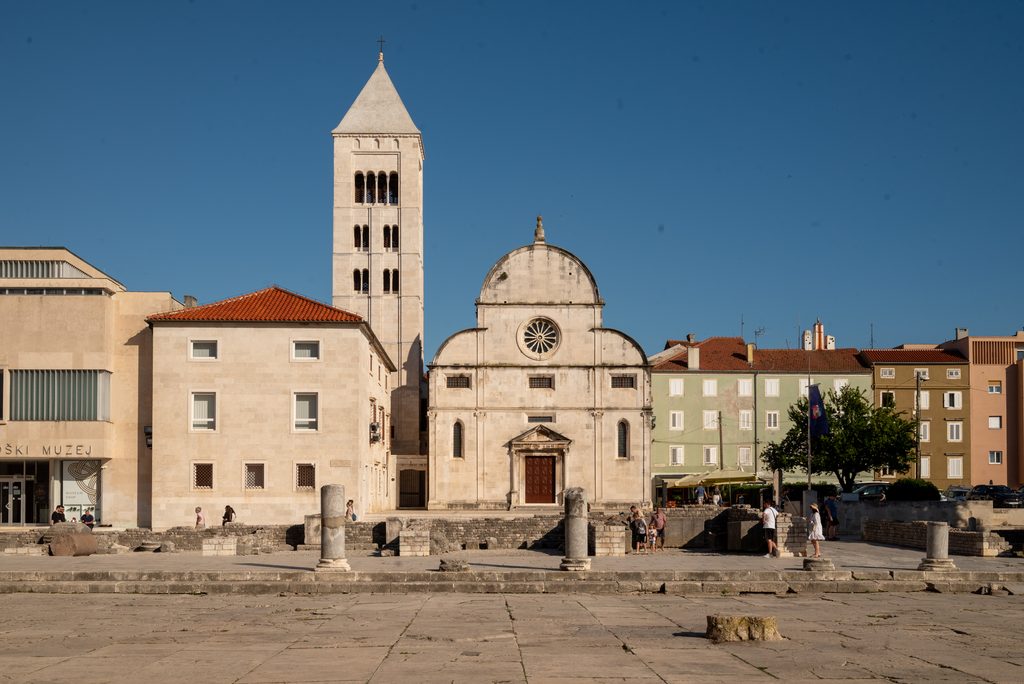
Although it is a city of nearly 100,000 people, of the time we spent in Zadar we did not venture beyond the delightful old town. Set on a peninsula of land about 1000 metres east to west and around 450 metres north to south, the old town’s origins date back nearly nine centuries. On our first full day in Zadar we had taken our pre-arranged trip to Krka National Park. Thereafter we had just one day wandering and enjoying through the architecture and ambience of those centuries. So you can move from its Roman forum through the Venetian era that has bequeathed the fortifications now on the UNESCO World Heritage Register and on to the sites at the epicentre of a network of narrow, largely pedestrian streets whose architecture sprawls across the subsequent centuries. Touristically Zadar is a little in the shadow of Istria to the north and Split and Trogir to the south, but we felt it was a delightful place to be and, on reflection, would have spent one less day in Istria and one more here.
The Hotel Bastion (3 nights)
This boutique hotel (https://www.hotel-bastion.hr) dates from 2008 and is constructed onto the remains of parts of the Venetian era city walls. Its unassuming architecture is in keeping with its solid 4-star quality. Here the staff in the reception and bar could not be more helpful and welcoming with an unaffected manner that we felt was more genuine than some that we had had in previous places. On our first night the staff went to the trouble of going to their recommended restaurant to make the booking for us in person, aware that we looked (and felt) tired after our long drive down the coast. Set just within the old city walls at the west end of the old town, it is not very clearly signed when you drive through the city walls into the small, tree-shrouded square, Trg tri bunara (Three Wells Square). Access to the front of the hotel is gained by waiting for the hotel to lower the metal hoop that prevents access up a short road onto the city walls.
Our room is a good size, looks out over the harbour, close to the hotel lift and comes with a sitting area, all the usual extras and an en-suite with a walk-in shower. It also has two features that I wish all other hotel rooms would copy – a sensible number of hangers and hooks by the door for coats and hats. There is no water but the excellent reception person points us at a mini-market just across the road where we can buy our own bottled water. The decor is pale grey, toned with a brown tint that ties in with the dark wood in the bedside and desk furniture. It is not quite sleek modern but carries hints of the decor of a couple of decades back. The air conditioning in works very well which allows us to close the window barring not only the potential insect life but also the music emanating from the open bar area that sits opposite. That music is actually closed down at a sensible hour and we were never disturbed by it.
Mobility Access
As befits a recently constructed building, no issues within the hotel with a lift to all floors.
Eating Out
Restoran Primavera
https://restaurant-primavera.com/en/
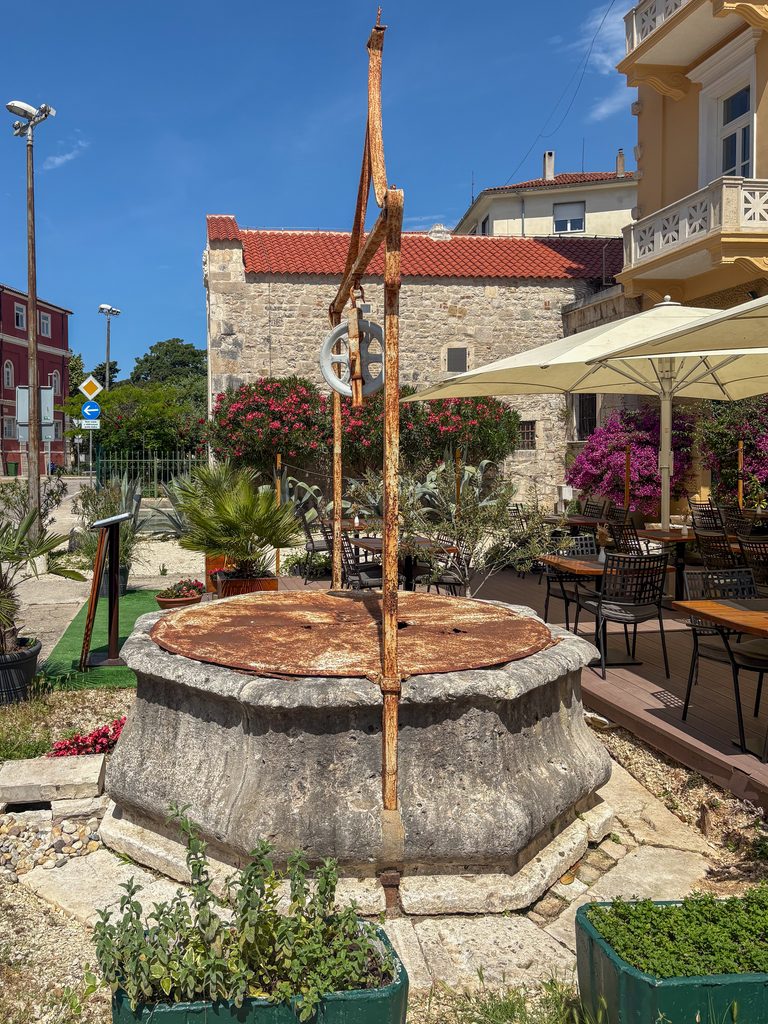
The restaurant recommended by the hotel is literally next door. The food is fresh, simple and very welcome. The menu has an Italianate edge and leans on local seafood. Vegetarian options are there in the salads and risotto/pasta dishes. They have outside tables in the square and it is a very pleasant, straightforward place on a warm evening.
Mobility Access
No steps from the city walls to the interior and no steps from the square, Trg tri bunara, to the outdoor patio at the back and only a set of three or four steps to move between the patio and the interior.
Restoran Kaštel
The hotel’s website for its in-house restaurant, seems to suggest that it had a Michelin star in 2025. It is not so listed in the 2026 Michelin guide, although the hotel itself has an entry. Whilst the restaurant offers a lovely conservatory-style room, with the outward trappings of restaurants with ambitions (linen, hushed atmosphere, more serious staff), and has views across the harbour, we felt neither food nor service matched our expectations. Our shared market fish, a sea bass, was rather dry with no saucing to revive it and the service lacked top-quality attentiveness. Perfectly pleasant but…
Mobility Access
No issues as the room is a single level with a carpeted floor, although there is a forbidding set of metal stairs from the street to the restaurant. However there is a lift within the hotel reached via the main entrance lobby.
Walking the Old Town
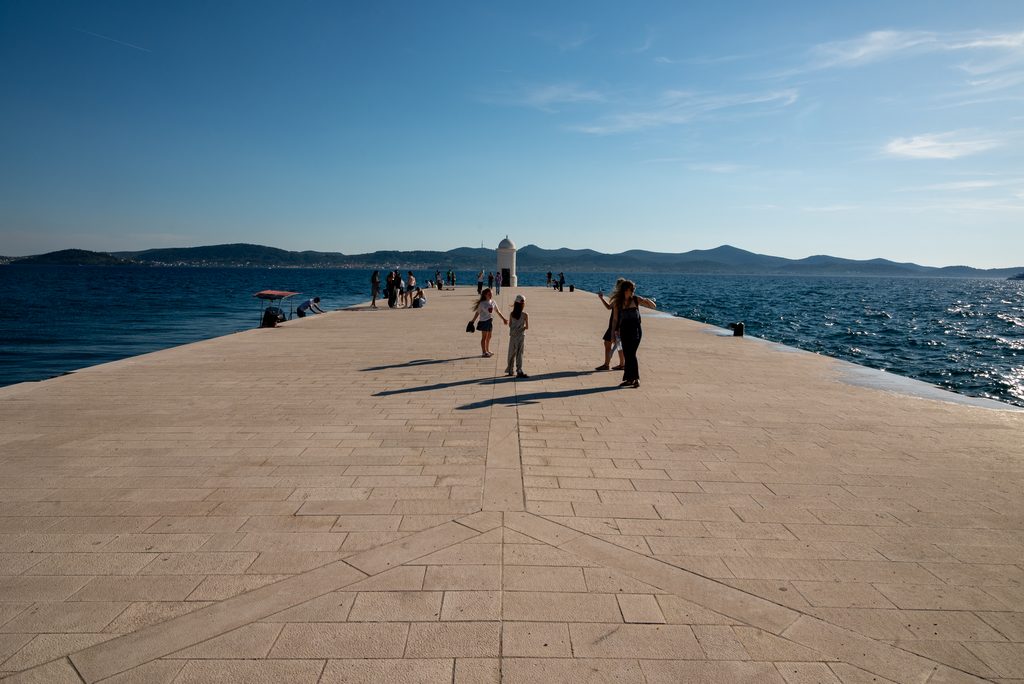
Here we have another old town where walking is really the only way to absorb both its individual elements and what makes it different from Croatia’s other old towns. Walking around you arrive in Italianate piazzas, move past churches whose ages cross several centuries, stroll along the broad seafront promenade and narrow streets, listen to the sea organ, visit the local market and, naturally, stop at the outdoor tables of the many cafés and restaurants just to watch the world amble past. The fortified walls are more complete along the northern side and the top of the walls are laid out with modern paving, benches and dotted with shading trees. Here an eastward stroll gives views into the old town and across the harbour. On the way you can drop down to the market stalls set out in one piazza and take in the entertainment in the fish market built into those massive grey stone walls. At the east end a small park covers the mound of the huge bastion that defended the landward entrance where steps lead you down into Trg pet bunara (Five Wells Square). Here you join the paved streets of a much more eclectic mix of ancient and modern than in Istria or Trogir (the ‘must-see’ old town down the coast which mirrors Zadar’s physical layout with its an old town built on a harbourside peninsula). The visible signs of the Roman forum are no more now than a few massive stones laid out in neat rows within an enormous open plaza, one side of which sports two churches and a cathedral with the other open to the sea front promenade (Riva). Here (and elsewhere in the town) stalls are set up to allow you to indulge your wish for tourist paraphernalia. The paved Riva is wide with a tree-lined park alongside. At the western corner of the old town is the Sea Organ – https://zadar.travel/attractions/attractions/sea-organ. You can sit in a small outdoor café, shaded by trees and umbrellas, looking out at the many folk sitting on the water’s edge with the sounds from the organ emanating from somewhere beneath them. I can’t say it was particularly tuneful or interesting but it did provide a gentle repetitive background sound. Only when the sea swell increases (as when the wash from a ferry passes through) does the sound acquire a greater variety of tone. And there are plenty more sights to take in beyond those I have mentioned. It is another place that rewards a certain aimless wandering.
Mobility Access
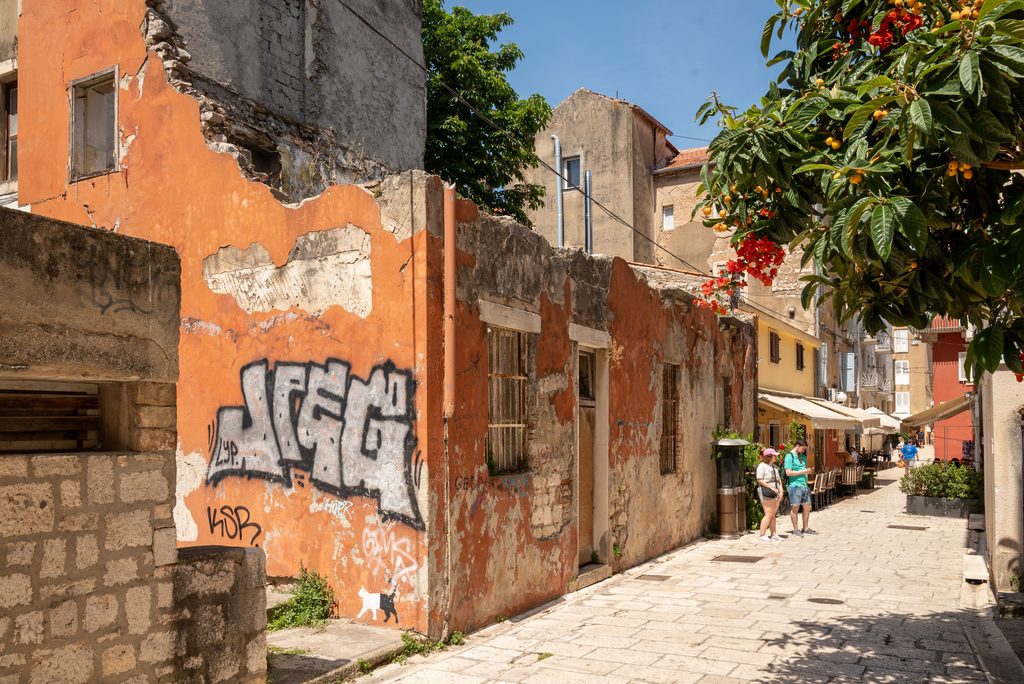
The Old Town is largely flat at street level with smooth paving. The land rises ever so gently from the eastern bastion to the square next to our hotel at the western end where it is level with the top of the walls. From the walls toward the eastern end you would have to climb down around two flights of steps to reach street level. As I say, resting and refreshment places are plentiful.
KRKA NATIONAL PARK
Both before we went and when we were in Croatia, we must have heard so many variants on ‘you must go to Plitvice Lakes National Park’ because it is, to quote an online guide, ‘Croatia’s best-known and most-visited natural attraction and a UNESCO World Heritage Site’. We didn’t, but it must be pretty spectacular to outdo the similar landscapes of Krka National Park (https://npkrka.hr/en_us/). Both are set in the limestone rocks that are part of the mountain range that runs north-west to south-east down the southern limb of Croatia’s ‘boomerang’. Both have a natural landscape where water has carved into that limestone and now funnels down from the heights in a series of rapids, waterfalls and fast-flowing streams that transition into long lakes between high rocky hills that occasionally become gorge like. Both are well set up for the casual day visitor. We selected Krka principally because, from the information I could glean on line and from Audley, there seemed to be more walking needed to enjoy the best of the landscape at Plitvice Lakes.
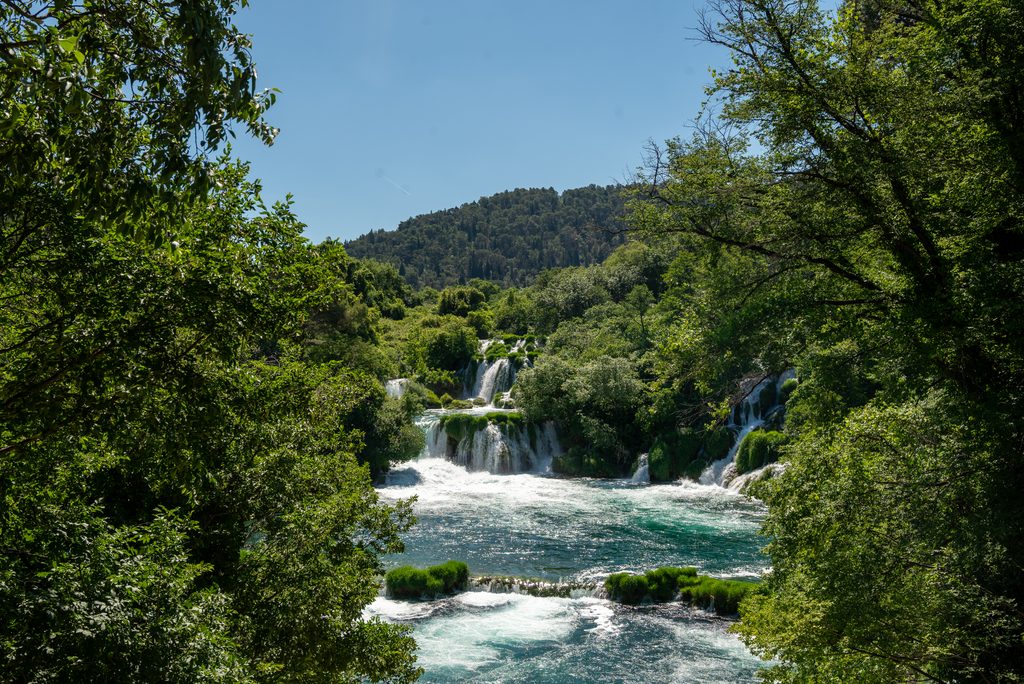
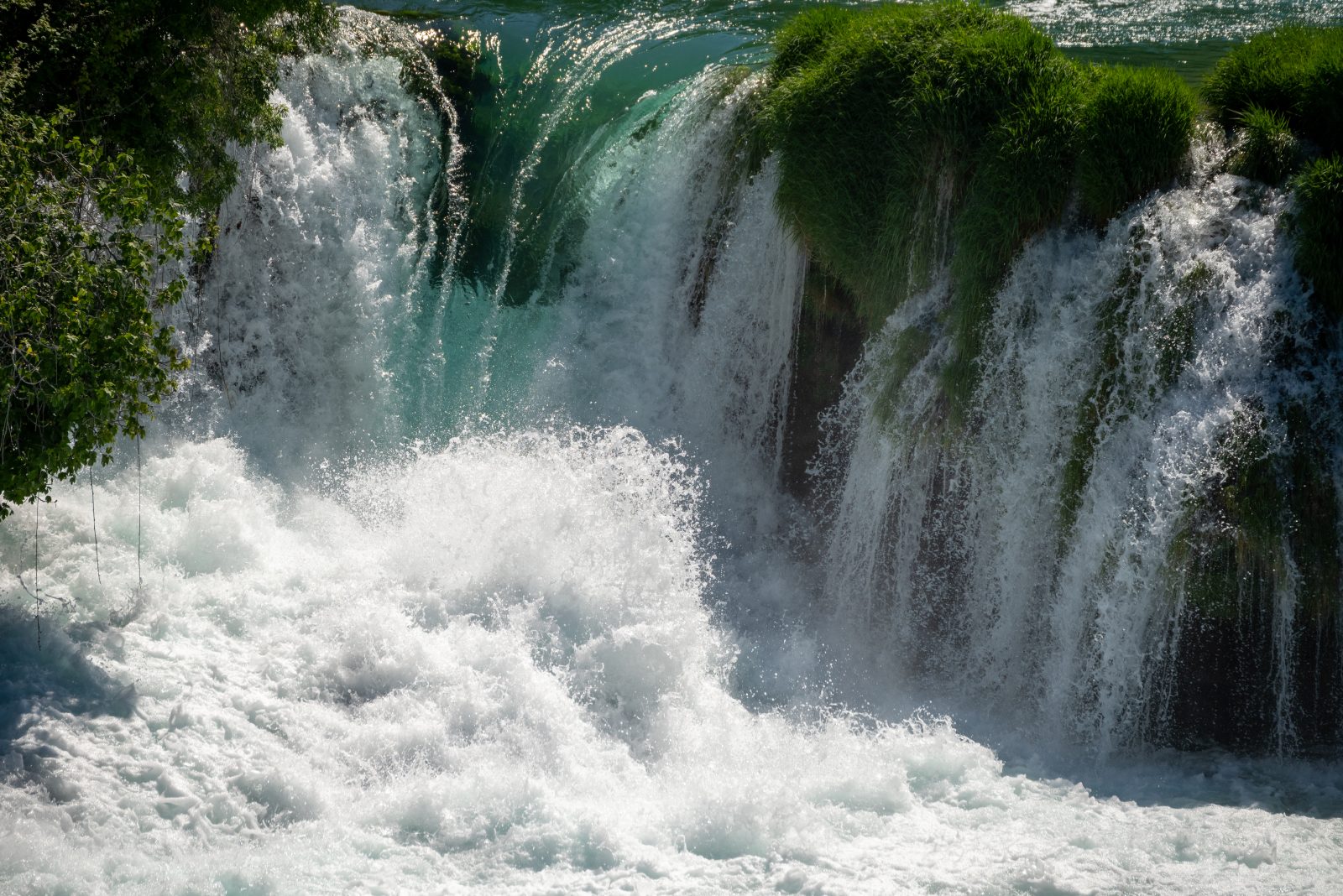
The park is about 75 minutes by car from Zardar and Audley arranged our full day tour, complete with guide and driver. The vehicle was a luxurious Mercedes minivan. Our guide was Anna, whose experience of guiding for 26 years and also being a person with real human empathy, added so much to a special day. Anna explains that the locals, who long ago worked the land here, created small villages centred on the mills (powered by the fast-flowing water) for grinding of cereal. Those villages are now completely renewed and repurposed as part of the tourist infrastructure. Our trip through the park centred on a two hour boat trip upriver. There is one of these ‘villages’ at each end of the boat trip. The starting ‘village’ has a series of paths and platforms laid out amongst the trees giving a view of some of the most beautiful falls and rapids. At this time of year, the view across the vegetation has an almost jungle lushness and is so thick on the falls that the water seems to be rushing through the greenery. The recent rains also mean the river flow is particularly heavy and the sheer volume of water adds to the spectacle, another advantage of a springtime visit.
From this village our private pontoon boat takes us up a river that broadens out into a lake where we have a short stop (20 minutes) on a small island. Here a Franciscan church and monastery, peaceful gardens and a small café sit amongst the trees. Beyond that, at the head of the lake, the cascading rivers and streams bring the water down to the lake level where flurries of dark blue dragonflies fill the air as they rise from the vegetation. On the land is the second ‘village’ beside streams that have been tamed into channels for the mills. It sits on a series of low terraces where cafes, shops and plentiful tables and sitting areas allow us tourists to enjoy the location. Our driver has taken the long road around to pick us up to take us to the other element of our day; a meal at a small family-run restaurant and winery (Ante Sladić – https://antesladicvino.hr/?lang=en) in the village of Plastovo. Atop the limestone plateau the rolling, dry landscape is scattered with hamlets where the main products are now wine and oil. Plastovo is one such hamlet and the restaurant-cum-tasting is a no choice menu designed to showcase their good quality wines and olive oils.
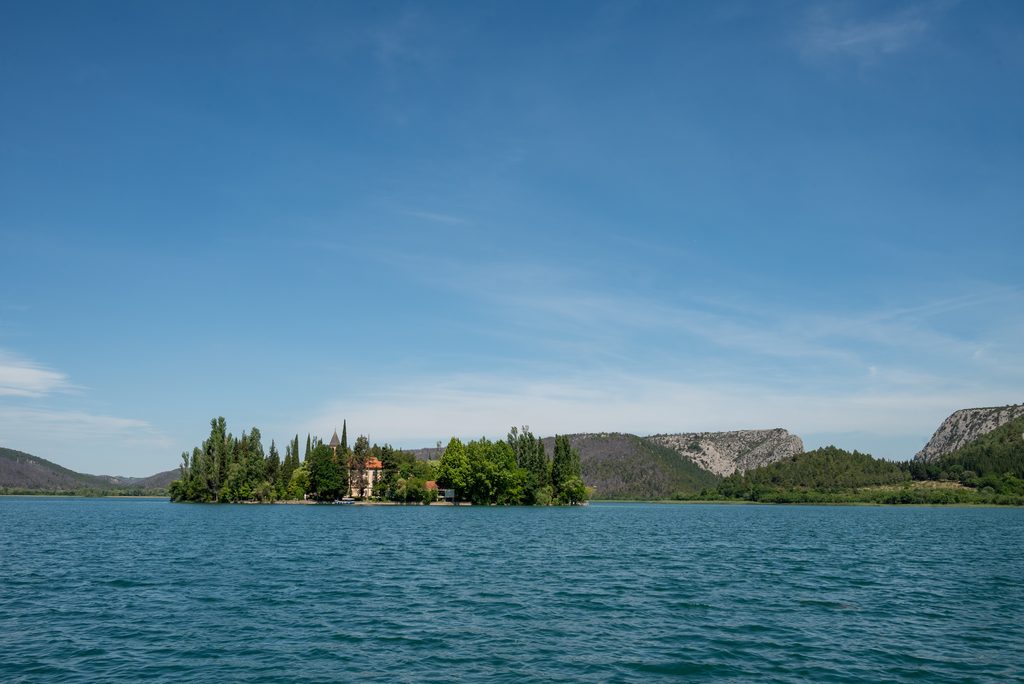
Krka National Park is a massively popular day trip from both Zadar and Split (it is equidistant from both) and to us it seems busy. Anna says it is not, which means it will be close to unbearable in the summer. Taking to the water and having a driver and guide who knows how to get us to each part of the park makes a huge difference to the experience. The entrance fee varies with the season and can be bought online; ours was included in the price of our tour.
Mobility Access
I assume you have a car or are on an organised tour. Having a driver with knowledge of the roads and tracks of the park means we could get very close to the locations where a short time on our feet brought us from a shaded spot by a river to a spectacular scenic vista without having to negotiate longer walks from car parks up and down the steep sided hills. If you are in your own rental car a little bit of planning may be needed to make the most of the day. Within the tourist ‘villages’ many paths are paved and slopes are available as well as steps to move between levels, some steeper than others. Many are manageable and there are plentiful walls and seats for resting as well as the cafes and eating places that occupy some of the restored buildings.