A near month-long trip which I have separated into four separate pieces.
Part 1: Prelude and Practicalities
Part 2: Zagreb – The Capital
Part 3: The Zagorje, Istria, Zadar and Krka National Park
Part 4: Split and the Island of Brač
Some five or so times larger than the next largest city in Croatia (Split), Croatia’s capital is another brilliant capital city to visit. It is not a place with many obvious super-wow sights but its variety of historical architecture, set in distinct sections of the city, makes for a fascinating place to experience. Its thriving street café culture adds a particular dimension; most cafes and restaurants have tables both inside and outside on the streets, meaning the options for those slow, relaxing times taking in the city’s atmosphere are manifold.
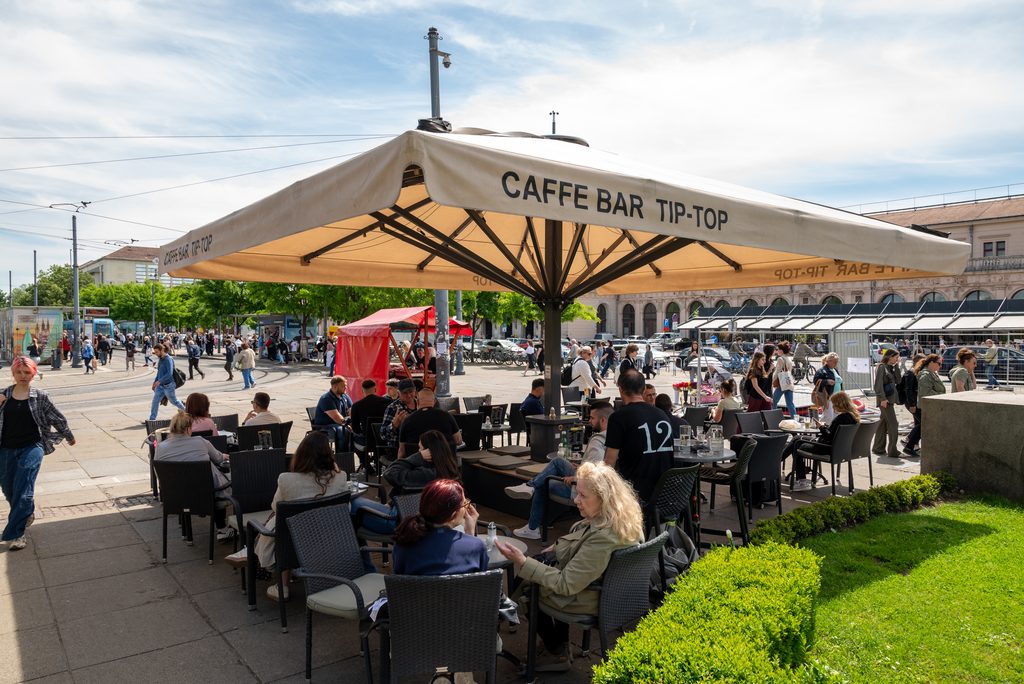
The heart of the city has the three distinctive areas divided by a history of neighbourly hostility (now long gone). Zagreb’s Times Square or Trafalgar Square is Trg Bana Jelačića (Jelačić Square) where the trams flow to-and-fro and the plaza houses part of the city’s daily market and is surrounded by buildings whose architecture spans the last four centuries. Just to the north of that the earliest settled parts of the city stared balefully at each other from the two low hills that straddled the small river that has now become Tkalčićeva, a pedestrianised street of delightful historical houses whose sensibility is only partly obliterated at street level by the continuous run of cafes and restaurants along its length. The higher, western hill is Gradec or Gornji Grad (upper town) and was home to the mercantile and political city. Beside it, the low, eastern hill is Kaptol, the religious centre where the city’s cathedral dominates the skyline from behind its scaffolding. Political necessity and the city’s rapid expansion brought the two together over time and in the nineteenth century the Hapsburg Emperor decreed it to be a single city that then underwent rapid expansion southward creating what is now Donji Grad (lower town), a grid-pattern of grand nineteenth century buildings, boulevards and parks.
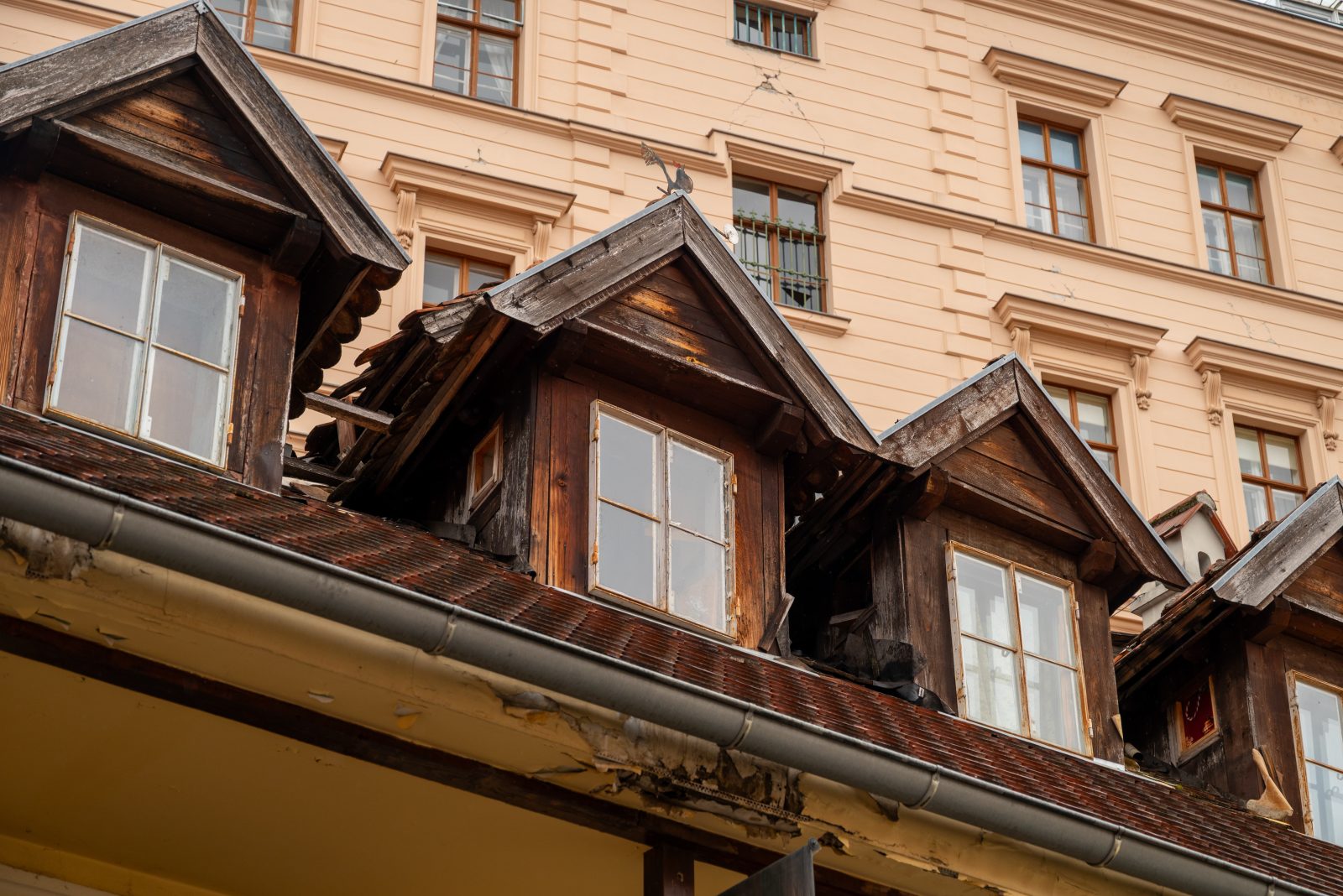
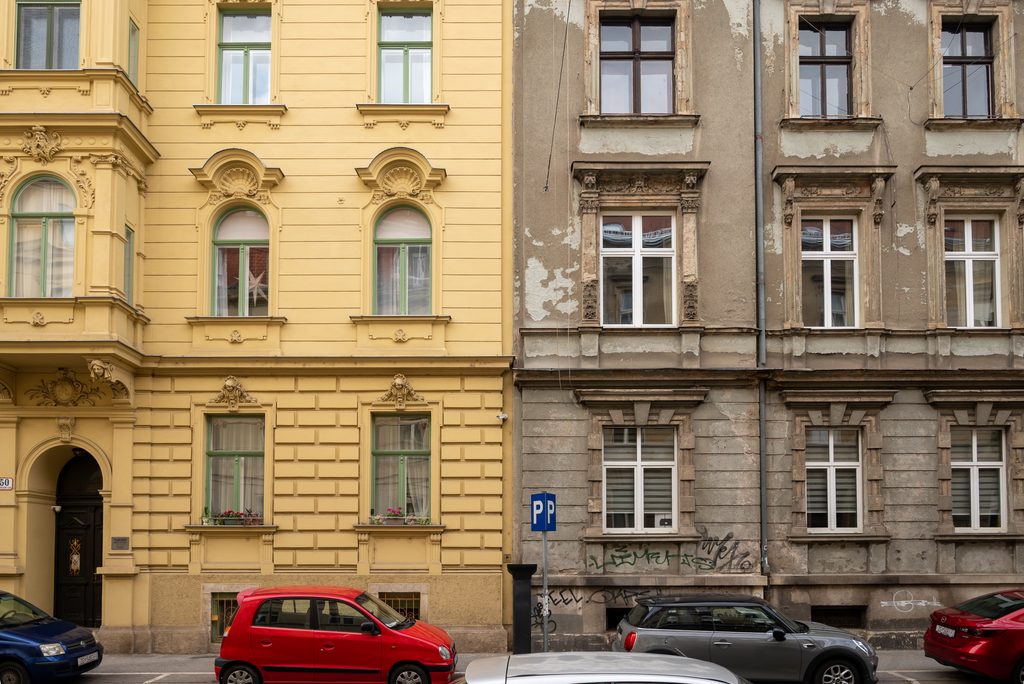
I had had no idea that Zagreb is in such a geologically unstable region. Not only did Donji Grad have to be extensively rebuilt after an earthquake in 1880 but, having come through the Croatian war of the 1990s relatively unscathed, the city’s buildings were badly knocked about by another earthquake in 2020. The consequence of this was not only the aforementioned scaffolding on the cathedral (whose twin spires collapsed) but a Donji Grad that is partly smartly renovated buildings, partly buildings hidden by more scaffolding as that renovation progresses and partly buildings that still bear the scars of that event. This means areas of Donji Grad can look unfairly scruffy to the eye, the more so because that European propensity for dull graffiti being splashed at street level on those scarred buildings becomes an exception to the cleanliness of the urban realm that you notice elsewhere around you.
Hotel Esplanade (7 nights)
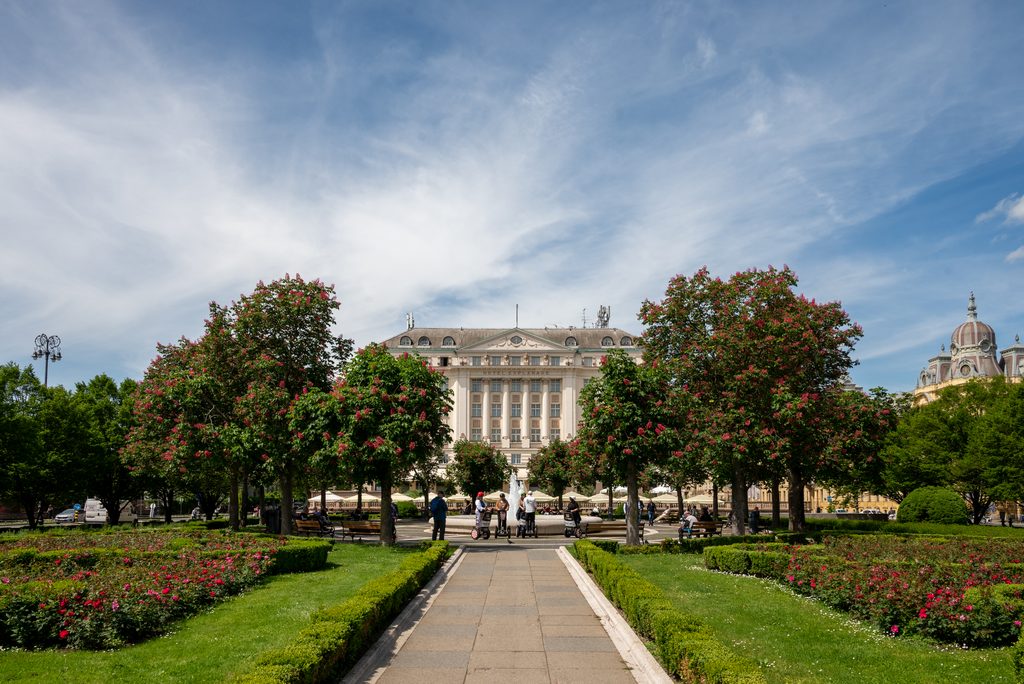
Being built in the 1920s as a hotel for travellers on the Orient Express tells you all you need to know about the style and ‘grand hotel’ aspirations of the Hotel Esplanade; a sensibility that proved irresistible to us. Its proximity to the main station meant proximity to the public transport interchange, a factor which is critical to us in giving easy access to other parts of the city. Because it is set in part of the Lenuci Horseshoe, a U-shaped swathe of city squares and parks peppered with civic and cultural buildings (https://www.visitzagreb.hr/theme/lenuci-horseshoe/), it feels as if you are based in the heart of the Hapsburg grandeur of Donji Grad. The hotel certainly has all the trappings of its five-star counterparts elsewhere in terms of facilities and places to eat, drink or just take your ease both inside and out (on the terrace looking over the adjacent park-square). The room was large, well-appointed and with all the appropriate extras.
If you detect a note of hesitation it comes only from the problem occasionally found in large urban hotels. A small minority of staff were a tad off-hand or indifferent which meant an irritatingly slow service on a few occasions. The breakfast service suffered most from this and it was instructive that the on-floor manager on shift during our first few days gave way to another person later in our stay and the change in attentiveness and friendliness of staff was noticeable. A lesson in human resource management, perhaps. But this minor shortfall did not interfere with the overall quality of the hotel as a base in the city.
There were no obvious nearby places for breakfast so we used the hotel service. It was a buffet with a wide selection, including additional cooked options that can be ordered from a menu. That it suffered from shortages of some items at some times during breakfast service seemed to be down to the poor service management mentioned above.
Mobility Access
Within the hotel access is not problematic. There are lifts and we had taken care to request a room close to a lift to obviate the trudge along lengthy corridors to reach the room. There were two or three steps from the lobby level to the lounge bar area and then the same down into the restaurant area where breakfast was served. Outside, the hotel sits on a terrace above street level but has a sloping driveway up to the main door that could be used as an alternative to steps.
Getting Around
For us Zagreb is a tram heaven, as thirteen different lines criss-cross the city taking you through the city centre and out into the more suburban reaches. Like all trams in so many eastern European cities the system has been updated in recent times and is easy to use. Touch screen machines that handle ticketing sit at each major tram stop (Trg Bana Jelačića and the main station for example). They have English language options. Given our length of stay, I headed to the office of the Zagreb transport company, ZET, in a slightly worn-at-the-edges cubby hole of an office on Ulica Frane Petrića, a pedestrian street just off the south-west corner of Trg Bana Jelačića. This (and the ZET desk at the airport) seemed to be the only place you could buy seven-day cards that are good for all buses and trams. Both financially and practically this was much the most sensible option given our length of stay. ZET have an app that operates in English as well as Croatian, but I did not find it terribly easy to use and we tended to fall back on Google Maps’ increasingly effective journey planner to plot our bus and tram routes. The main stops have an electronic board with the arrival times of the trams.
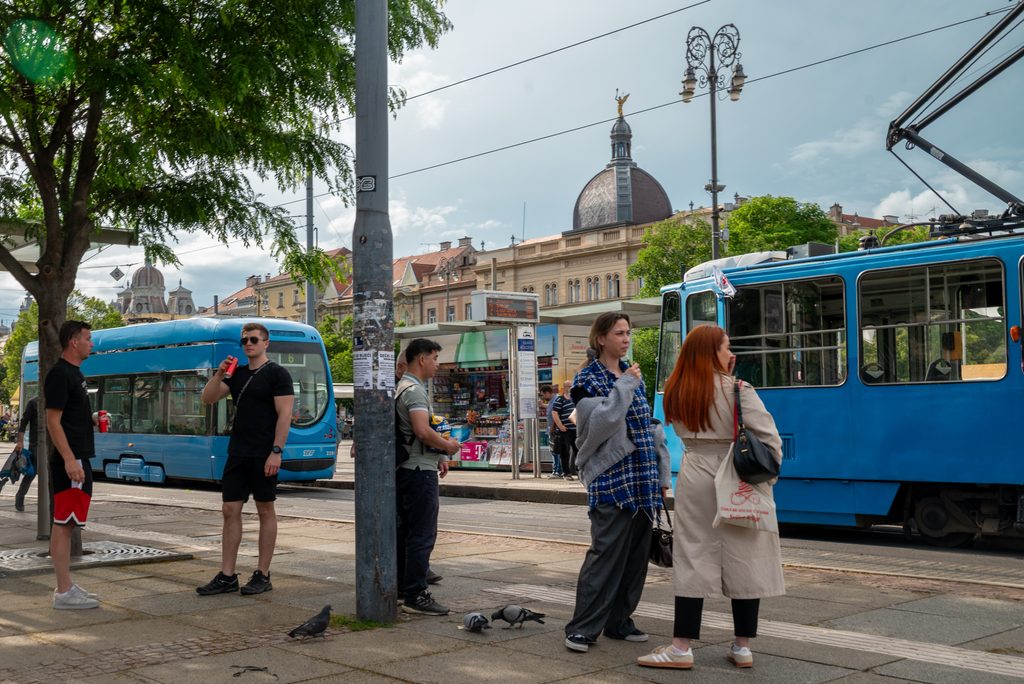
For times when the bodies protested at the prospect of a journey or getting close to our destination was impractical by public transport, we used Uber, which was a cheap and readily available service. Various remarks made about Zagreb taxis by locals and online guides meant we did not venture to use them.
Signage out and about sometimes has an Anglicised version displayed but not always, so it is useful to make sure you are familiar with the Croatian nomenclature to avoid taking wrong turns.
Mobility Access
As a generality the trams and buses are very usable. The tram stops are for the most part low platforms or on the pavement. In both cases they are level with the entry doors of the modern trams. There are some older style trams that need a couple of steps up to get aboard. For the buses there is just a low step to be negotiated. Not all tram and bus stops have shelters or seats.
Eating Out
Coffee Shops
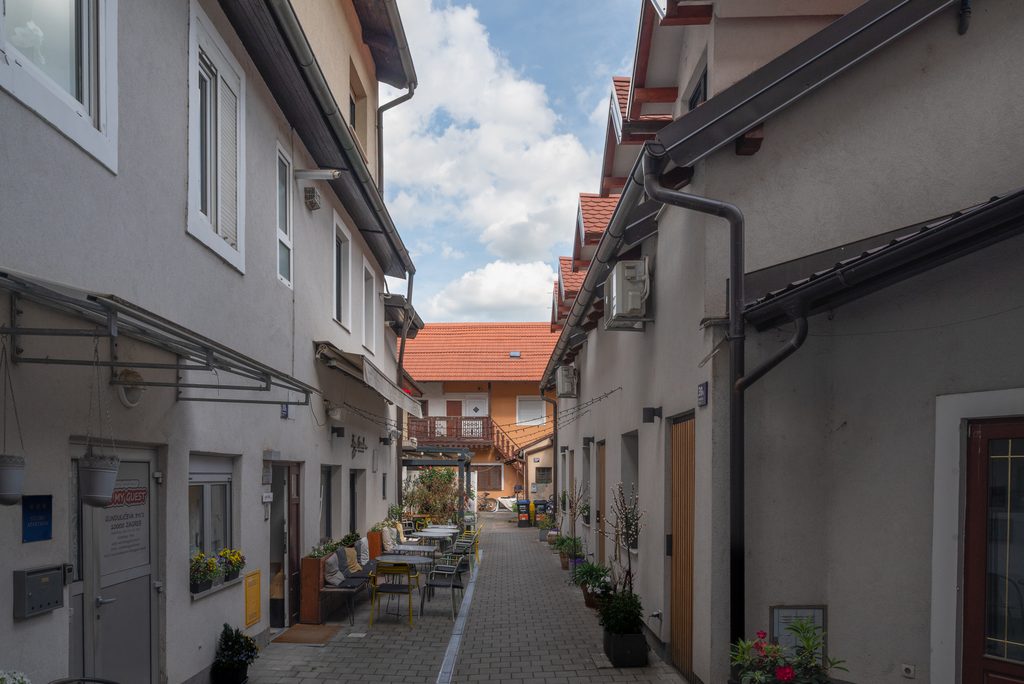
Coffee culture is alive and well in Zagreb with a range of independents, small local chains and few signs of the international ones with familiar names. They come as old style patisseries and modern style, ‘distressed’ places where small groups of students gather alongside those of the solitary laptop and smartphone species. Favouring places I can sit and write, I mention the two I spent most time in. At the heart of the city on the pedestrianised, restaurant-filled street of Ulica Nikole Tesla is Quahwa, both a coffee roasters and café serving all the well-travelled coffee (or tea) drinker could wish for. It is set in one of the courtyards that are a feature of much of the Hapsburg architecture of Donji Grad whose entrance way, large enough for horse-drawn carriages, gives into an open courtyard. Part of Quawha’s courtyard has been covered with an extension in glass with tables suitable for even for this writer amongst the typers. The other is altogether quieter and more out of the way. Also in the courtyard of one of those Hapsburg buildings off Gundulićeva Ulica and a block east of the west limb of the Lenuci Horseshoe, sits Figa Garden on the ground floor of a small modern group of flats built into the courtyard. It has a relaxed, modern style, it was rarely very busy and it became a favoured downtime space.
Restaurants
Vodnjanka
A touch of Istria in Zagreb which seems a bit odd given we were heading down to Istria itself in a few days. However we were looking for somewhere sensible to eat before our ballet at the National Theatre which was only a walk of around 250 metres from the restaurant. Unearthed online it lived up to its billing with a quiet, elegant ambience and excellent Istrian fare. Don’t be put off by the external appearance of the building which is one of those waiting for a bit of TLC. Inside it is a whole different matter. The website is being re-built as I write, so I offer up Gault-Millau’s assessment by way of substitution – https://hr.gaultmillau.com/en/restaurants/vodnjanka. My only other comment is that sensible vegetarian options were available.
Mobility Access
It is in one of those 19th century Neo-classical buildings that line the streets of Donji Grad. The entrance is through the archway to the courtyard, so the only issue was the few outside steps up to the restaurant entrance, a rather unprepossessing door to the former apartment. Inside all was level floors.
Vinodol
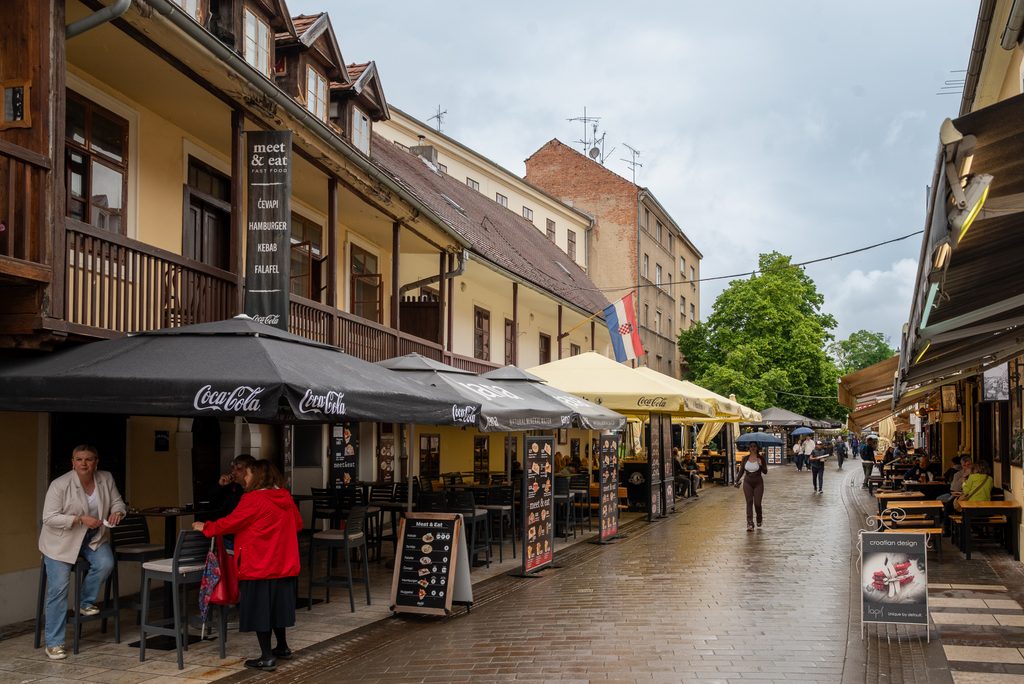
Back on Ulica Nikole Tesla (that restaurant street), we were drawn to this place as an option to try more traditional Zagreb fare. The entrance is, again, through the once-archway into a courtyard beyond. Here the narrow, glassed-in entrance leads to a space that, Tardis-like, seems to expand and expand first to the whole of the roofed in courtyard and then to the brick-arched ground floor of what was once a storage or working space. It buzzes with activity, in a good way, with couples, business groups and other locals. The staff are cheery and efficient and the traditional Croatian fare and wines are toothsome. Its straightforward food and engaging service drew us back when we were looking for somewhere comfortable and reliable for our last night.
Mobility Access
No issues as the restaurant surfaces are smooth (stone and concrete) with no steps between spaces. It is only 250 metres from the Trg Bana Jelačića tram stop. As the street is pedestrianised, if you want to get closer Uber can drop you 50 metres away.
Pod Zidom Bistro
Another online discovery, this offered a slightly more refined place to have locally-based food. It is a street front place, with little to distinguish it on first glance from the many tourist-orientated restaurants that pepper the streets of the city. Thus it has a shop-style glass window and the obligatory black, awning-covered platform on the street outside. Inside it has the hallmarks of a modern ‘serious-but-relaxed’ room with about 50 covers. So, wood tables and furnishings with exposed servicing attached to the stone ceiling, paintwork a subdued off white with odd patches of exposed brickwork and tasteful wood tables and cushioned chairs. There is a menu of carefully thought through Croatian style dishes with a modern slant, some vegetarian. An engaging but discreet waiter. Even the piped music is at a suitably low key. Another enjoyable experience.
Mobility Access
We ate inside and there are just a couple of steps up from pavement level and no issues inside. It is a bare 200 metres from the Trg Bana Jelačića tram stop or a car can drop you in the street outside.
In the Hotel Esplanade
A mix of convenience and specific choice led us to have three meals in the hotel in their bistro, Le Bistro, the lounge bar (Esplanade 1925) and the gourmet restaurant, Zinfandel’s. Le Bistro on the first night was for ease after our journey from London. The menu is similar to that in Zinfandel’s, less some of the more nuanced dishes, so see the comments below. The room is in a glass-roofed conservatory at street level thus lower than the ground floor of the hotel. The service suffered a little for being a touch absent at times. Esplanade 1925 was also chosen for convenience as we wanted an easy but relaxed place after a tiring day. This was our strukli night (I have seen some writers say the hotel does their favourite version) and for more on this Croatian staple see Food and Drink in Part 1. I cannot compare with others in the city as I did not try it again. Other dishes are straightforward and well-presented. The difficulty was the service. Being busy and the sole waiter does not excuse a brusqueness that verged on rudeness. Things eased when the evening shift came on. Finally there was Zinfandel’s which is written up as one of Zagreb’s best. The ambitions of menu, room and excellent staff made for a very good splurge meal. It is not their fault that the restaurant is in the same space as our less than enjoyable breakfast experiences. It is a definitely worth that splurge if you are looking for one.
Mobility Access
I have mentioned access to the main restaurant area and lounge in the section on the hotel above. From inside the hotel lobby Le Bistro involves finding your way back and forth along some corridors (signs are there) and managing a flight of steps down into the restaurant. If that seems too much, the restaurant can be reached by going out the front door and down the slope to the street entrance. Fine in good weather but not the violent thunderstorm that blasted briefly through the city one day, downing tree branches and ripping umbrellas inside out.
Walking the City
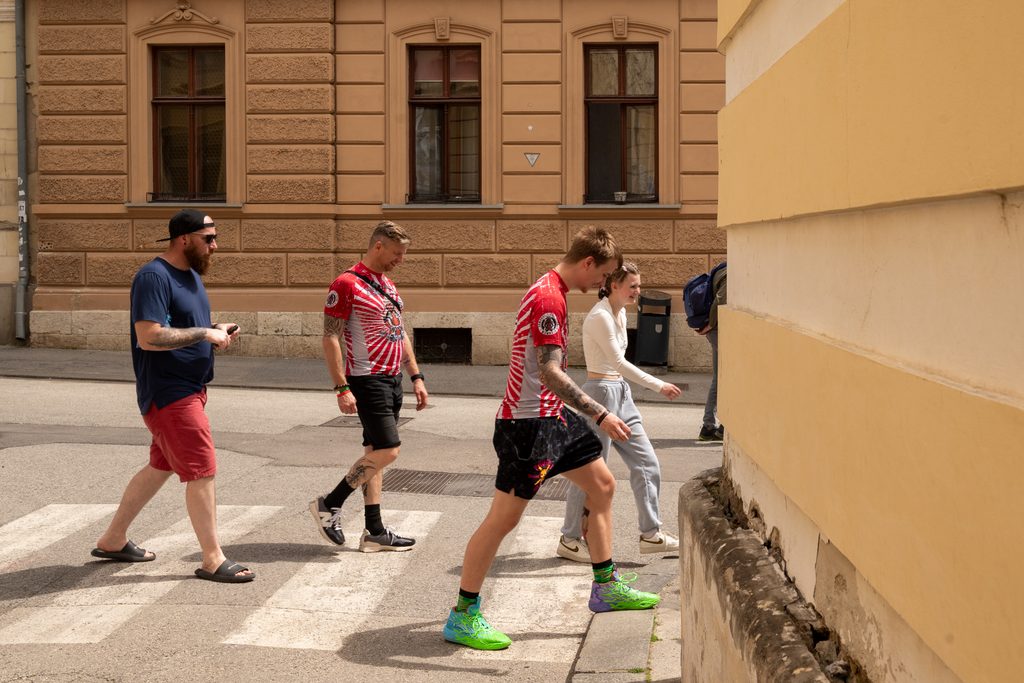
Oh dear! Another city where the slow traveller finds so much enjoyment in walking the streets and taking in the history, the markets, the architecture and the street life. Not for everyone but there is so much that can be enjoyed, even if your heart quails at the mere mention of seeing a city on foot. The Tourist Information office on Trg Bana Jelačića has two publications that we found aided our stay in the city. One is a sort of mini guidebook that can lead you to those elements within the city that you might enjoy and the other a pocket map for walking the upper and lower towns. Both are free and mercifully ad-free. That trusty city walking app, GPSmycity, is also a helpful companion to help plan your way around (https://www.gpsmycity.com/gps-tour-guides/zagreb-482.html).
The Lenuci Horseshoe
Strolling around this series of open spaces punctuated by Revival-style buildings gives you a sense of the both the urban planning and of the grandeur of nineteenth-century Hapsburg Zagreb. You can take it at your own pace, entering some of the public buildings and stopping off at suitable cafés or restaurants along the way. The total distance is around two kilometres (just a couple of hundred metres over a mile) but there was enough to engage me to warrant taking it over two half days. I started at at the western end with the Neo-Baroque National Theatre, standing in the centre of the large open square, Trg Republike Hrvatska, that is also home to several museums and the modernist home of the University’s Academy of Music. You move southwards past other stately buildings surrounded by tree-lined park squares. Here the Academy of Dramatic Arts, across there the University faculty buildings, in the centre the Secessionist Art Nouveau bulk of the Croatian State Archives (with its rose bed laid out in the unmistakeable ‘boomerang’ shape of Croatia) and, at the southern end, the city’s Botanical Gardens.
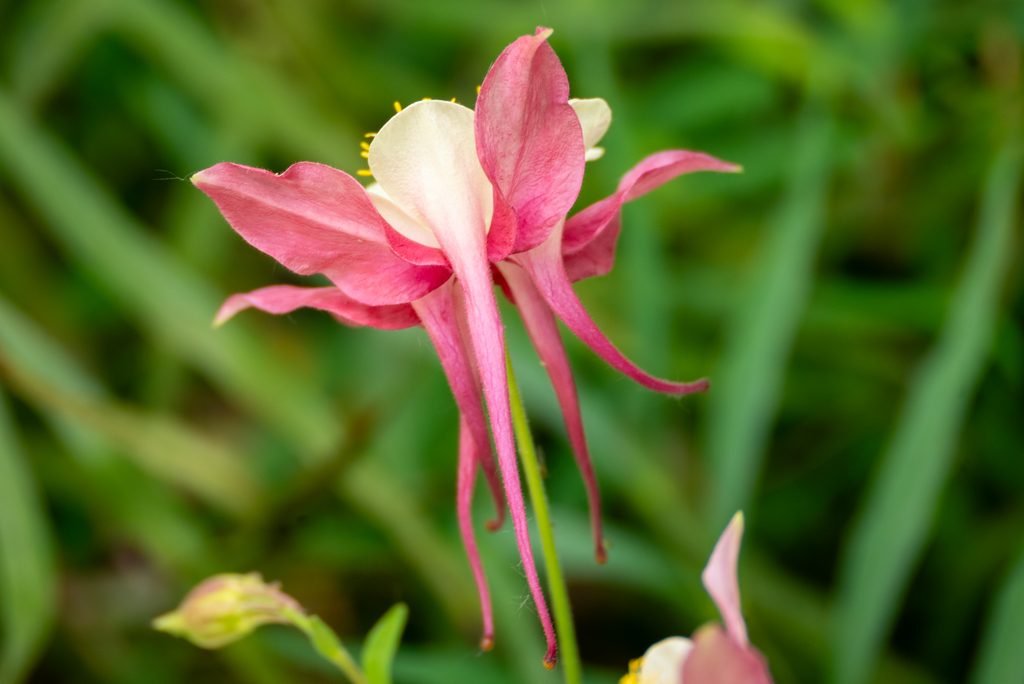
The Botanical Gardens are not large but pack quite a lot of visual engagement into a small space. Formal lawns form part of a parterre, beds form serried rows of peonies and irises of glorious colouration and paths wander through groves of small trees, ponds spawn lilies and frogs in equal profusion. All are to be had for the princely entrance fee of €2 (as at 2026). An English language website leads you into its peaceful joys (https://botanickivrt.biol.pmf.hr/en/location-and-visiting-hours/).
Having sated your phytophilia, you amble east past the grandiose Belle Epoque of our Hotel Esplanade whose neighbours are occupied by various bits of the Croatian administrative state and fetch up outside the main railway station, whose Neo-classical façade faces north up the eastern limb of the ‘horseshoe’. Northward the stroll continues through the neat park squares with their statues and fountains. The Art Pavilion passes, leaving you to work out which ‘Neo’ architecture it represents, and you move on past more and varied ‘Neos’ housing various Croatian Academies before fetching up at the northern end of the ‘horseshoe’ where the Archaeological Museum and, a short walk away, Trg Bana Jelačića, await. A few of the buildings can be accessed by the public, but several are still undergoing post-earthquake repair.
Mobility Access
With care and taking it in chunks, this is a rewarding way to embrace Donji Grad. It is essentially flat with walking on pavements or packed sand paths or the grass. Benches pepper both the parks and the Botanical Gardens and street side cafés can be found with judicious use of your maps app. The Hotel Esplanade offers food and drink at the 1925 Bar & Lounge with its broad outside terrace.
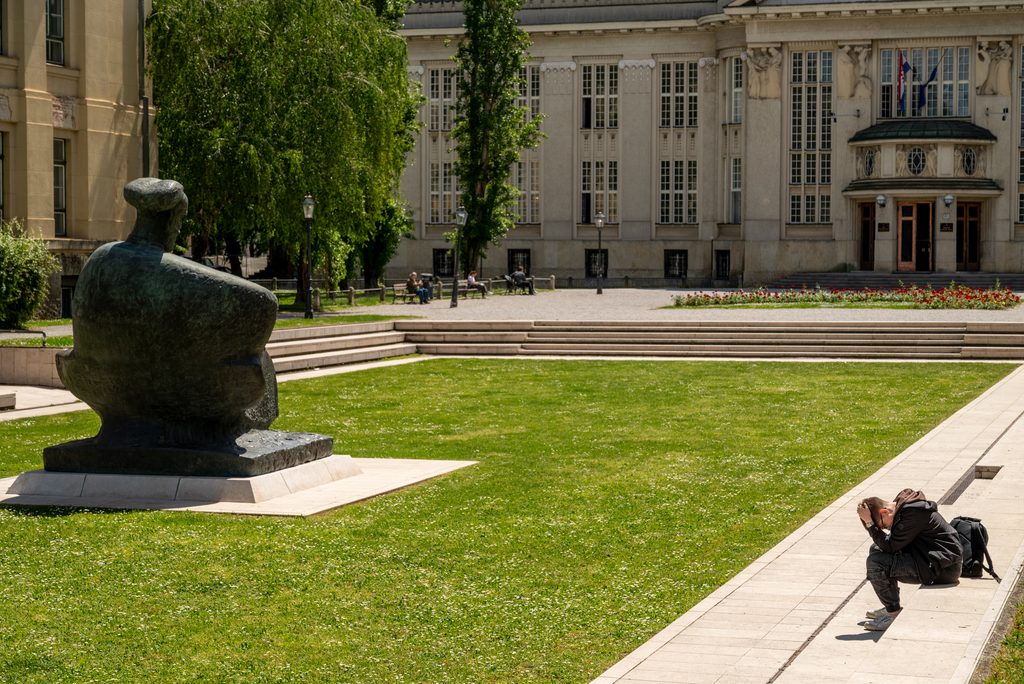
For those who wish to limit the time on their feet, the tram network tracks the streets of the ‘horseshoe’ although you will need to change trams at the main station (Glavni Kolodvor) and, in the south-west corner, at Vodnikova.
Enjoying Kaptol and Gradec
The contrasting sections of the city whose history stretches far back beyond that of Donji Grad lie in a relatively small area north of Trg Bana Jelačića. The lower hill of Kaptol, little more than a low ridge, has a skyline dominated by the cathedral, whose spartan feeling interior is a reflection of the post-earthquake renovation that means the Gothic splendour of the exterior and its newer Neo-Gothic spires are hidden by that scaffolding. The area of Kaptol is, compared to Gradec, quieter and less touristed especially if you stroll up Kaptol, the street, just to enjoy the restored buildings that, at two or three storeys, provide a low-key elegant counterpoint to the extravagant weightiness of the Donji Grad structures. Turn off and stick your nose in the quiet delight that is the 12th century church of St Francis.
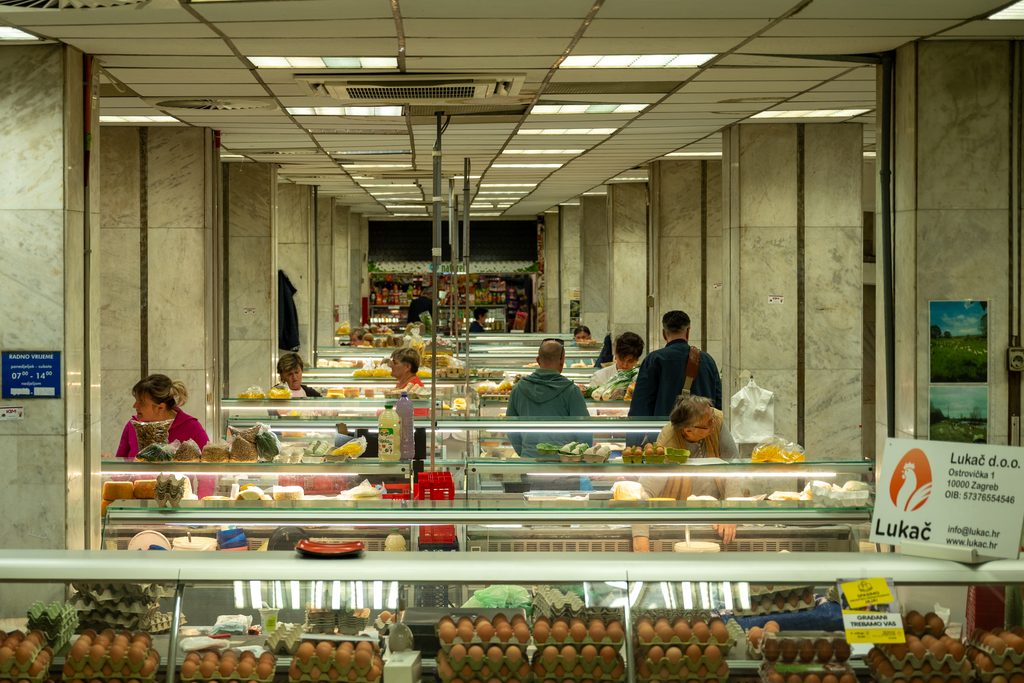
Just around the corner from the church you are back in the contrasting street of Opatovina, which offers another uninterrupted line of street-filling restaurants and brings you out above a large square where, depending on time of day and weather you find a few souvenir stalls tucked into a corner or a forest of red/white striped umbrellas where the city’s main market, Dolac, beckons locals and tourists alike. Dolac is a market and, ergo, it is a fun place to visit when it is in full swing. Don’t miss the low, single-storey, white-fronted building in the north-west corner of the square. Step closer and the familiar smell of fish markets wafts out to greet you. Then head down the hill to the level of Trg Bana Jelačića for underneath the square above are the cave-like halls that house the meat, dairy and grocery stalls. Outside that hall the red/white umbrellas shade the market vegetable stalls that sprawl out across neighbouring streets and round to the edge of Trg Bana Jelačića where the flower stalls take over. Closure is said to be 15.00 but go well before that if you want to see it truly alive.
To your north-west now sits the higher hill of Gradec or Gornji Grad, the upper town. Find your way up the slope of Ulica Pavla Radića, with its many tourist-friendly shops in aged buildings, to where a steep road off to your right leads you to the Stone Gate, the entrance to the upper town and into the oddest chapel I have ever visited. The cobbled street that runs through the gate passes through the chapel itself. To your left, the shrine with a small cluster of supplicants before the wavering candles. To your right a couple of rows of pews where kneeling locals are praying. It is surprising, somehow, to walk out from beneath the dark arch into the commercial and political heart of old Zagreb. Here the buildings are less massive, lighter in architecture and colour than the darker stone of Donji Grad. Baroque palaces rub shoulders with Romanesque remains and the home of the Croatian parliament (Sabor), currently hidden by sheeting, shares street frontage with the landmark 13th century St Mark’s Church (the entertainingly coloured, tiled roof dates from the 19th). At the southern end of the hill you can wander along the city walls with terraces that give excellent views across the city to the south.
Mobility Access
Whereas flat Donji Grad is easy walking, getting up to the two hills of the older parts of the city requires a little more forethought, although there are still plentiful cafés in and around the upper town to take a rest. In Kaptol the slope up to the cathedral is relatively gentle and once at that level the land levels out. Moving between the levels of Dolac market does require using quite a long flight of forty or so steps. There is a lift at the north end of the upper level down into the cave-like section of the market but its functionality cannot be taken for granted. Buses terminate at the plaza in front of the cathedral but access is only from the north so reaching it by bus from Donji Grad can require a slightly convoluted journey.
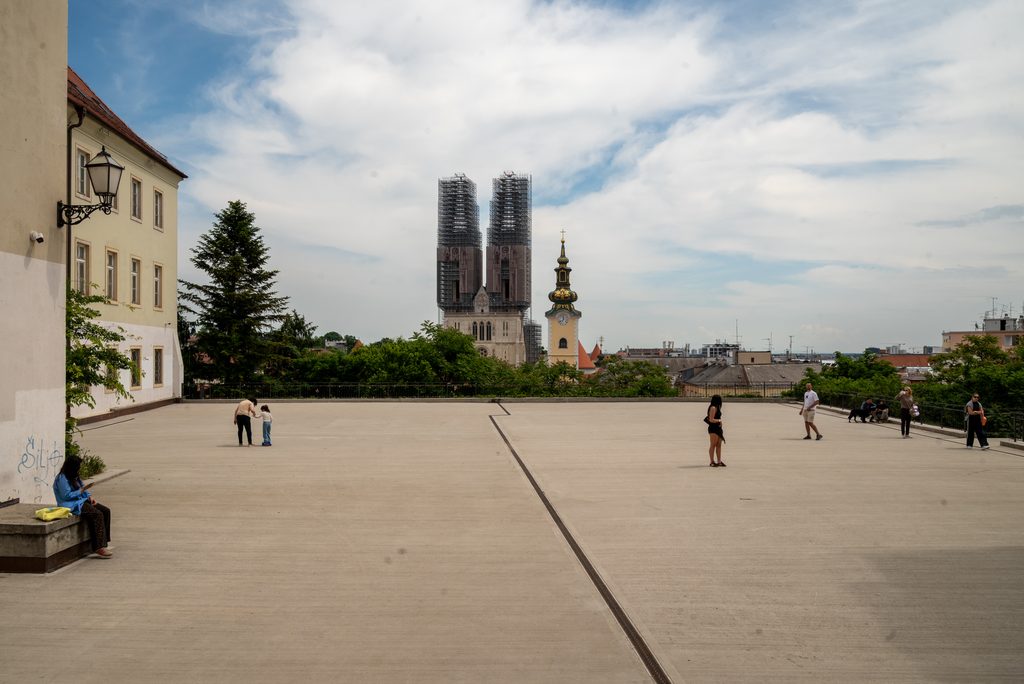
Gradec requires a little more thought because the slopes and steps up can be steep. Once at the upper level the ground levels out but is never fully flat. There are cafés and restaurants but they sometimes have to be unearthed as they lurk through archways or in hidden courtyards. For those for whom the slopes and steps are too much there is the 150 bus route, that runs up and around the narrow streets of the old town. Similar to its Parisian counterpart that chugs up and down Montmartre, it is little more than a large minibus and can get busy but acts as a helpful way up to reach the top of the hill. It leaves from the north-east corner of Trg Bana Jelačića. There is no seat at the bus stop. Of the much-touted funicular up from Donji Grad I can pass on no information as it was out of commission during our stay.
Museums
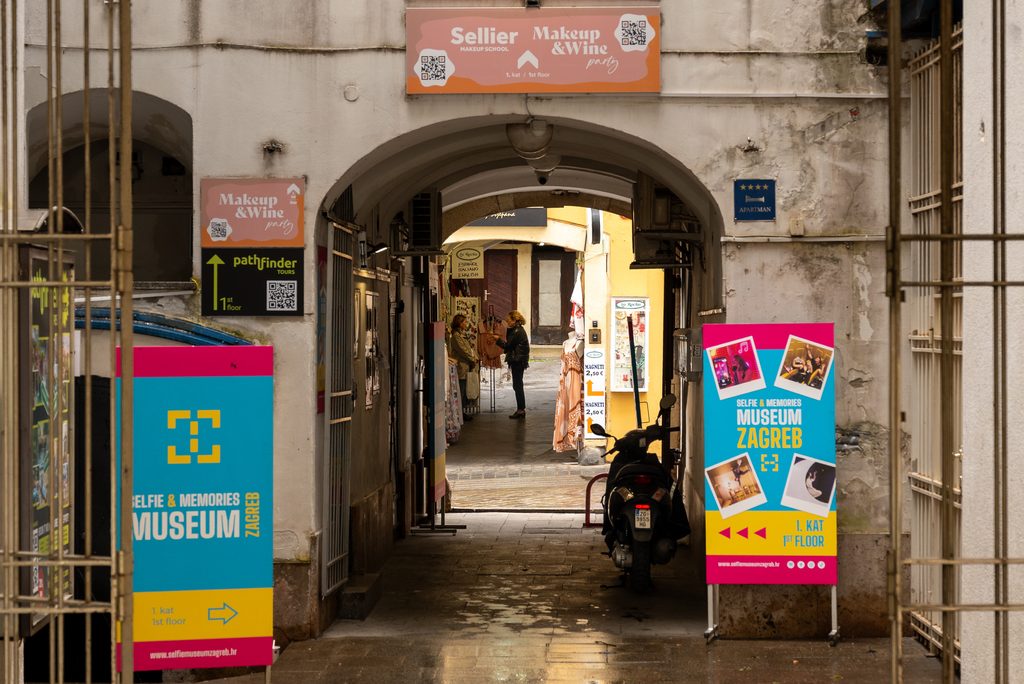
Zagreb does museums like no other city I have visited. There are the expected ones, Archaeology, Ethnography, Contemporary Art, National, Science (this is the country of Nikole Tesla), Natural History and more. But this is also the city of the wackiest museums I have ever known. Not only the Museum of Broken Relationships (which is in every top ten ‘must sees’ about Zagreb) but also the Museum of Selfies and Memories, of Video Games, of the Cravat, of Illusions, of Mushrooms, of Hangovers, of Lost Tales and the Chocolate Museum. The only one missing was for frogs, a gap we discovered was filled by Froggyland in Split. Of most of these establishments I must leave you to imagine for yourselves, for, staidly, we ventured no further than two with rather more mundane names.
City Museum
We are now taken with city museums as a way to introduce ourselves to the culture, history and politics of the city. So on our first day we headed up to Zagreb’s which is set in the north end of Gradec (https://mgz.hr/en/). It is very good, with a potentially bewildering set of exhibits given a structure and interest by light boxes in each room that succinctly took you through a brief background (in Croatian and English) and left you to explore deeper into individual display items. Set in a former convent it utilises the rooms well, although the front-of-house section (shop, ticket desk etc.) had a somewhat amateurish air. You should not let that put you off.
Mobility Access
Spread across two floors with no lift and some awkward changes of level, the museum is not ideal for those who cannot manage steps well. They do not have any aids (a wheelchair would be unusable but a portable stool would have been useful). Getting there is straightforward if you use the 150 bus from Trg Bana Jelačića to the stop named for the museum, Muzej grada Zagreba.
Museum of Contemporary Art (MSU)
http://www.msu.hr/stranice/Visitor%20Information/10/en.html
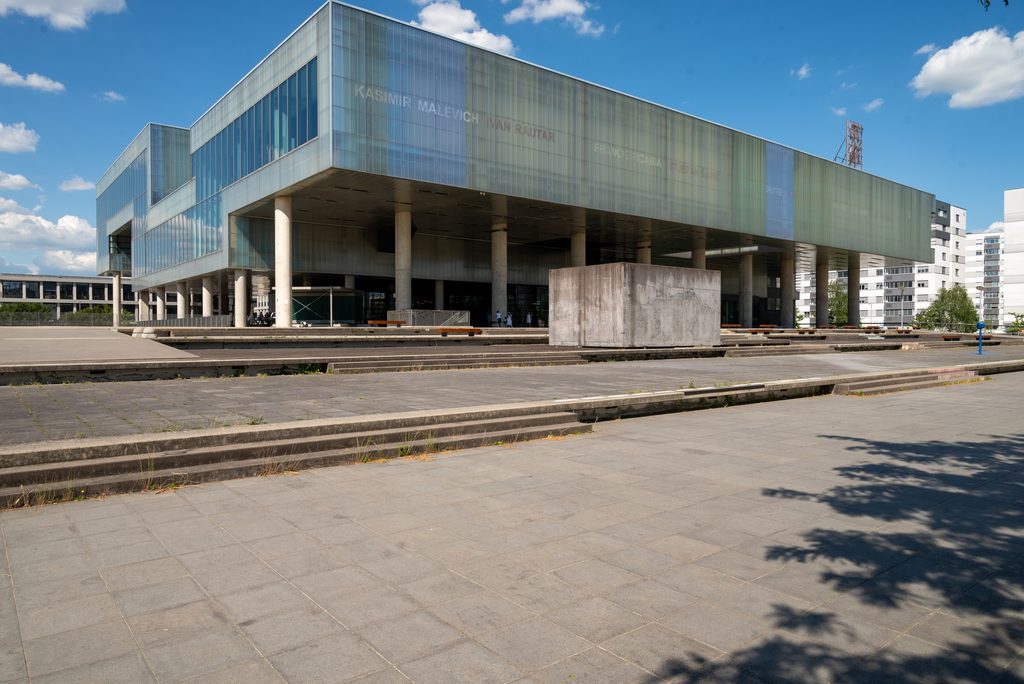
‘Modern art museum housing offbeat artwork & multimedia works, plus rooftop exhibits.’ This Google summary encapsulates this museum housed in a 2009 modernist structure set in the wide boulevards, business parks and residential flats of Novi Zagreb some four kilometres south of the city centre. The key word, for me at least, is ‘offbeat’. The changing displays of artworks date from this century for the most part, focusing on developing contemporary art. Installations, using all kinds of materials, are in the majority and, I am afraid, much of it leaves me with a sense of ‘And?’. Works do not make sense to the observer not versed in the nuances of that art (me) so awareness can often only come with an examination of the wall texts whose language seems to be written for those in the know. The building was entertaining as a piece of architecture and the staff were helpful and humorous. It is peaceful as there were few visitors. Sadly no café (a pity when there seem to be no nearby options) nor a shop on site. One for the aficionados or just to look at if you are taking a tram tour (see below).
Mobility Access
A modern building so access issues have been dealt with in the layout of the building (lifts, slopes). Irritatingly, here is no accessibility information on the website. No sign of wheelchairs or portable stools. Reaching here from the city centre is easily managed using trams or buses to two stops, both named for the museum, Muzej Suvremene Umjetnosti, that are right beside the museum.
Ballet at the National Theatre
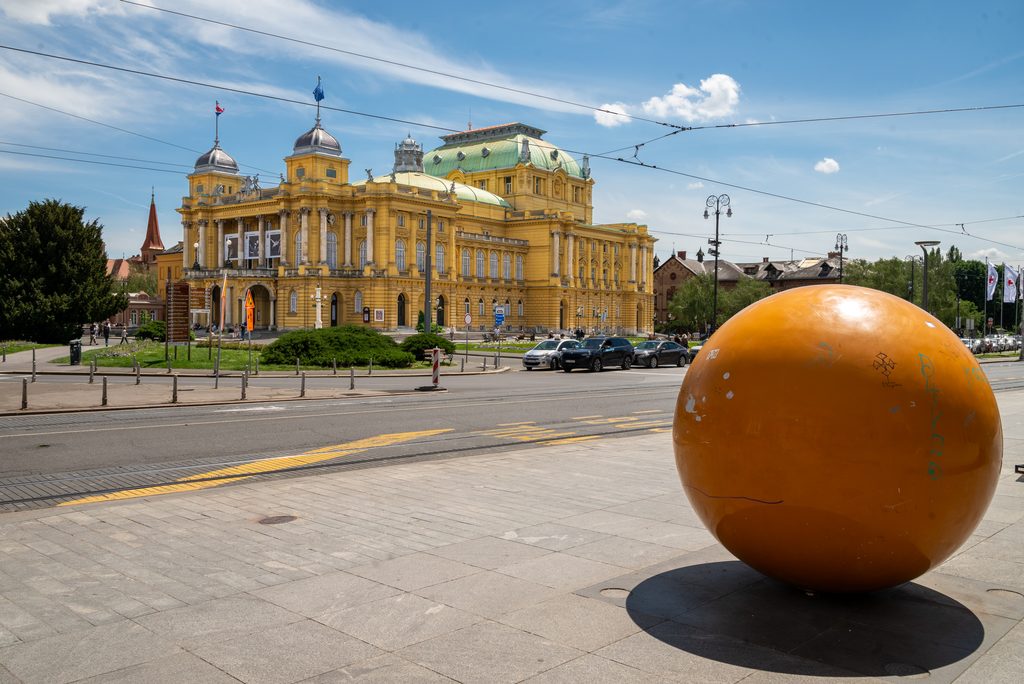
This was excellent. The Ballet of the Croatian National Theatre performing Hamlet, a ballet of athletic choreography and costumes that dazzled us. This in an auditorium that was a slightly smaller version of that at the Royal Opera House or the Palais Garnier, set within the grandeur of the National Theatre building. The audience, as so often in the more easterly cities of Europe, engaged and of a much greater age range than we see in London. The seats are, by London standards, ludicrously cheap and readily booked online before you travel – https://www.hnk.hr/en/balet/. Intervals can be spent gawping at the gilt-framed boxes, wandering the vestibules or going down to the large (and not too busy) basement bar for drinks. Outside the Neo-Baroque, yellow-painted building is striking, sitting in splendour at the centre of Trg Republike Hrvatska. On a warm late spring evening before the performance sitting on one of the many park benches allows you to take in the setting and the building.
Mobility Access
Choose your seat carefully and minimise negotiation of steps by heading for the stalls. Even then some steps to change levels are unavoidable. The stops for buses and trams are about 200 metres away. At the end of the evening we found it easier to Uber back to the hotel.
Mirogoj Cemetery
https://www.gradskagroblja.hr/history/697
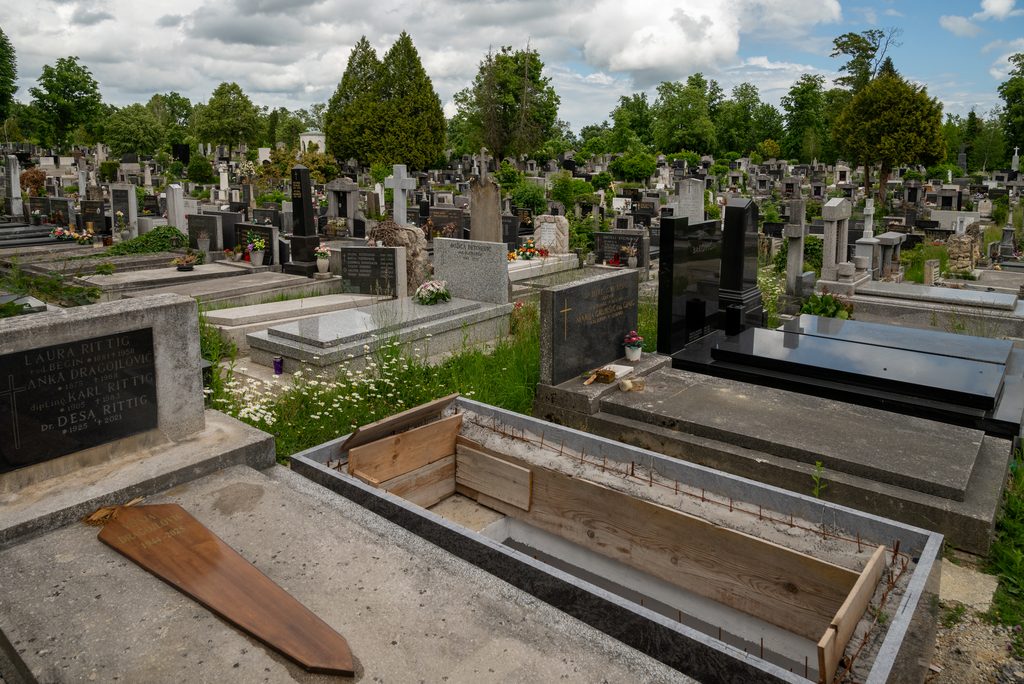
If it is not too morbid to say so, this non-denominational cemetery is a cracker. The cemetery is vast (over twice the size of Père Lachaise in Paris) and was established in the second half of the 19th century. There are monuments amidst the ocean of family graves/vaults, not just to the war dead but also to those who died in tragic accidents such as a train crash at Zagreb’s main station in 1974. The cemetery has a 500-metre long, Neo-classical arcade frontage and is on a gentle hillside site strewn with trees. The unusual thing is that many of the grave slabs, covering the deep graves, are all quite new. I was surprised to find many of the headstones referred to burials from the last few decades. The damage wrought by the earthquake seems to be a major reason but also the plots are popular and change when concessions expire, creating new family graves. This is a place where you can wander for a couple of hours or more and only see a part of the site.
Mobility Access
Clearly walking around would be the largest part of any visit. Most of the main paths are smooth tarmacadam so moving around the site does not involve more than gentle slopes, but the resting places are few and far between. Reaching the cemetery by public transport is straightforward. It involves a 15-minute bus journey from the Kaptol (beside the cathedral).
Tram Tours
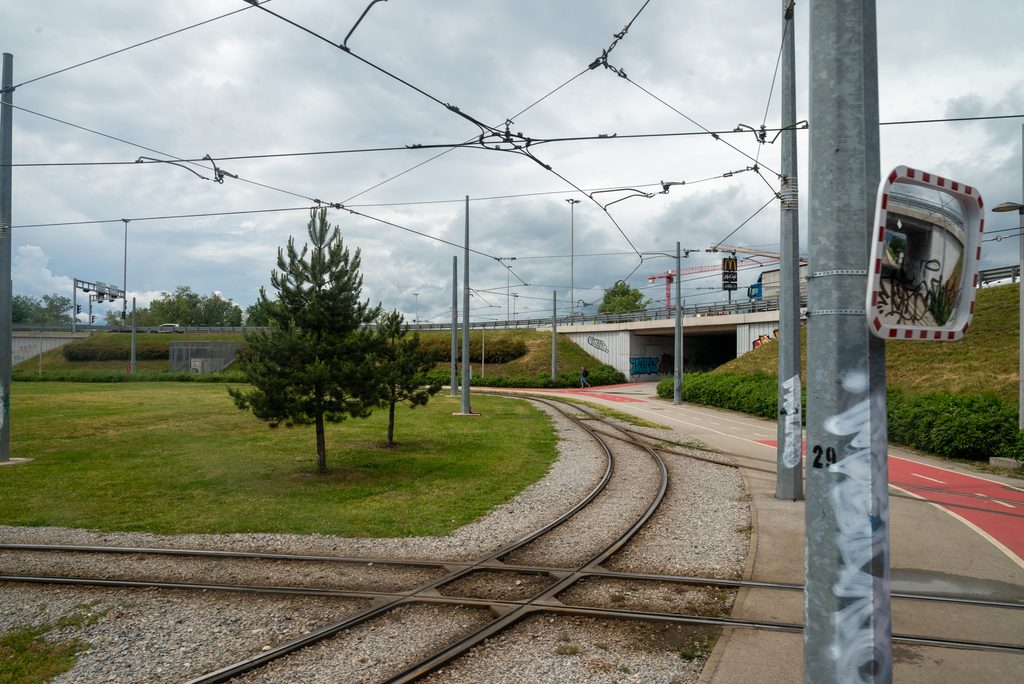
At risk of repeating what I have said elsewhere, tram rides are often a wonderful way to get a feel for the wider city as well as a straightforward way to cover distance within the city. And the extent of Zagreb’s network and our 7-day travel card allowed us to roam to-and-fro across the city at will enabling us to get a real feel for that wider city – the business parks and modern malls of Novi Zagreb, the broad swathes of green space along the tamed banks of the Sava River, the grander houses and flats on the rising slopes north of Gradec and some of the grittier, local streets on the route out to Maksimir Stadium, home of Dinamo Zagreb, the fanatically supported local football team. We rarely take such rides with a destination in mind. We just go and see where the lines take us, just getting off and coming back the same way when we are done.
Mobility Access
Generally not a problem. Just revisit what is covered under the section on Getting Around.
Laundrette
Those who have read earlier posts will have to forgive my repetition of why, on these longer trips, we favour visits to laundrettes over using the in-house laundry facilities of the sort of hotel we are staying in. Cost plays a part. We just baulk at paying a few euros for washing a pair of socks. For us the enjoyable part is the way it takes us to parts of a city we, and few other tourists, would ever visit. There is nothing particular to be seen but just noticing the way local folk go about their everyday life can be special. We end up at SpinWash, a few tram stops east of Trg Bana Jelačića. Instructions in English, coin operated with change machine available, detergent included in the cost, helpful attendants to aid and assist and, hey presto, for a relatively few euros, washing cleaned. The waiting time is whiled away with coffee and tea at the outside tables of a nearby café, watching the locals, listening to podcasts and searching out more information about the unusual, almost Mudejar-like architecture of the adjacent Church of St Peter.