A near month-long trip which I have separated into four separate pieces.
Part 1: Prelude and Practicalities
Part 3: The Zagorje, Istria, Zadar and Krka National Park
Part 4: Split and the Island of Brač
Prelude
Our appetite whetted with a trip to Dubrovnik in 2023 we had a wish to see more of the country. Unless you are here for Croatia’s sunshine, its beaches and its water-based activities (from diving to sailing), I think Croatia’s fascination for travellers like us starts with its history.
Although it is a young country, having only been established as an independent nation-state in 1991 (despite the brief existence of the Fascist state of Croatia during World War II), the Croats, along with many other ethnically Slavic groups, moved south-west into the Balkans in the period following the collapse of the Roman Empire back in the late 4th century CE. This movement of people was to usher in the long, unsettled history of a region whose ethnic, religious and geographic complexity has blighted life for many citizens well into the modern era. Invaded by the Mongol hordes and subsequently dominated by the often-competing empires of the Ottomans, the Venetians, the Hapsburgs and then the Fascist powers of Italy and Germany, laudable attempts to create a pan-Slavic state during the 20th century ultimately stumbled on those ethnic, religious and nationalistic rivalries. This has left a region whose instability still affects many areas to this day. That Croatia has, alongside neighbouring Slovenia, emerged in the decades since independence as one of the more stable and peaceful states is much to do with its draw as a tourist destination, offering a rich history and a varied natural landscape alongside its Mediterranean-style beach holiday offer. To this has to be added the astonishing cleanliness of the civic realm (at least to us as denizens and frequenters of Europe’s urban areas); a legacy, we were told, of a community pride in local place developed in the years of communist Yugoslavia. Having placed itself firmly under the EU umbrella, with all that has meant in terms of funding for infrastructure, restoration of historical sites and business investment, it is an easy, varied and fascinating place to visit for the slow traveller. Like so many countries that rely heavily on tourism (over 25% of GDP I believe) the 2008 financial crisis, the COVID-19 pandemic, the conflict in Ukraine and the recent upheavals created by attacks on Iran have done no favours to its economy. That does not stop tourists flooding into favoured areas of the country (Istria, the Adriatic islands and the coasts of Kvaerner Bay and Dalmatia) during the warmer months.
Structure of the Trip
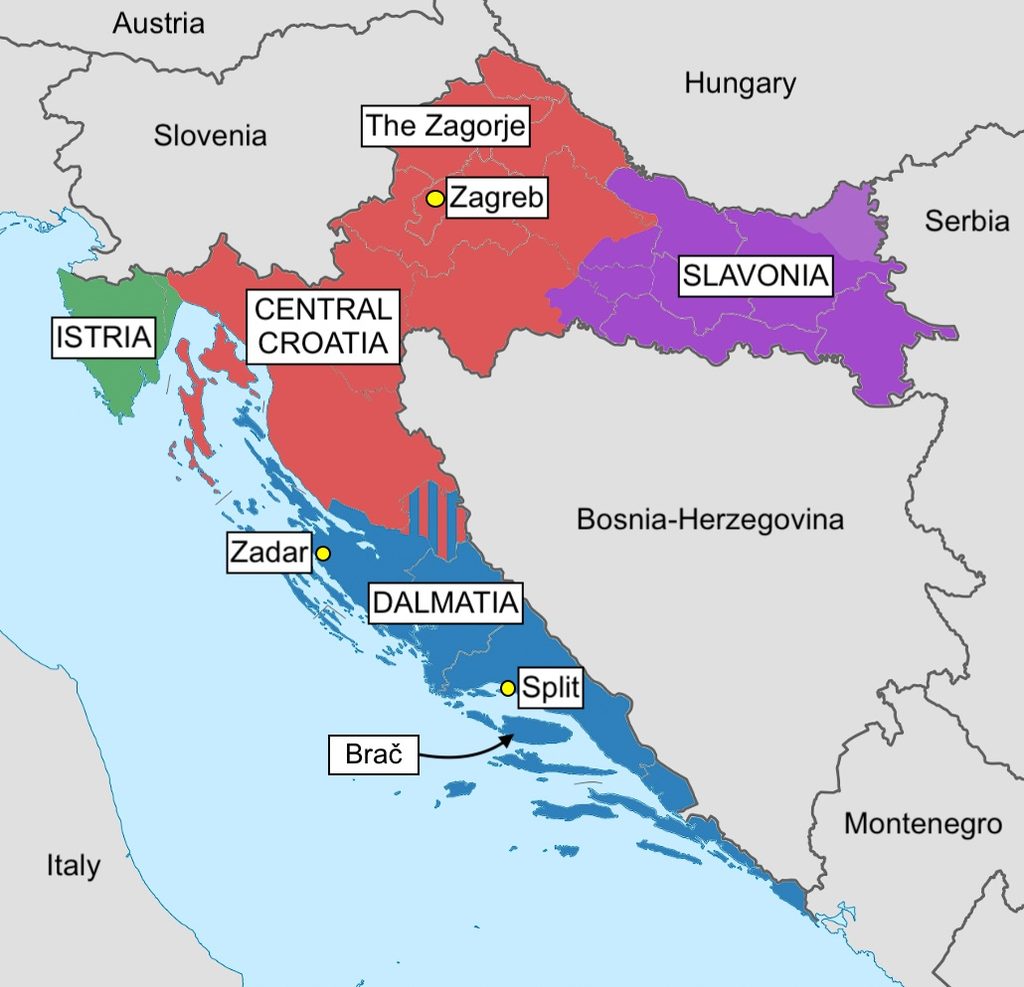
The convoluted history that, broadly, tracks the locations of the majority Catholic and ethnic Croat population has given the country an odd physical shape. Like a boomerang, as one commentator suggests, curving round the north and south sides of Bosnia-Herzegovina. The northern curve is the less mountainous land and, in the eastern region of Slavonia, has a Serb Orthodox minority that meant it was one of the most bitterly contested in the war with Serbia in the 1990s. We understand it is an area where damage from that conflict is still apparent and it remains a relatively unvisited, relatively less prosperous part of the country. We decided not to include it. So, looking to experience the country (as well as one can in a month of slow travelling) we started with our capital city fix in Zagreb. Then, to sample a less renowned area of the country, we decided to visit the northern region of the Zagorje, where the visitors are mostly locals, before heading west to the polar opposite in tourist terms: the country’s busiest tourist area, the Istrian peninsula. Thereafter we moved southward along the spectacular coastline to encompass the differing cities of Zadar and Split, using our stays there to visit other ‘sights’ like Krka National Park and the walled town of Trogir. For our end of trip slice of R & R we wanted to get a taste of the Croatian islands, finding our way to Brač. We were away for twenty-nine nights.
This is a European destination so we would normally book the holiday’s constituent parts ourselves. In this case we had mapped out this broad itinerary and explored a number of hotel options, as well as looking at car rental and flights. However, this being a location new to us, I think I was somewhat uneasy about making hotel choices and of the exercise of stitching together the booking of hotels and flights on a longer trip. So I chickened out and called our ever-supportive travel advisers, Audley, to do the stitching for us and to advise us on suitable hotels. As an aside I freely admit that, even if organising our own trips, I now frequently check out Audley’s suggested hotel options in selecting appropriate hotels. The responsibility shifted to Audley, we changed our original itinerary slightly and added a couple of pre-booked day trips to take up their suggestions. The advantage, as I have said before, is their greater personal knowledge of the hotels, thus being better able to choose accommodation that fits our needs. Also there is some sense of a minor worry lifted when relevant transfers have been pre-arranged. The dictates of touristic preferences mean their reach does not extend to the northern half of Central Croatia, other than Zagreb, nor into Slavonia so we researched and booked our own hotel in the Zagorje.
Audley’s use local agents, here the oddly-named Calvados Club. They were very good. Their cars were comfortable large SUVs, their drivers helpful and engaging and, as our experience, on leaving the island of Brać to catch our flight showed, speedily flexible in resolving potential pitfalls.
When and Weather
If you are a slow traveller who is not hamstrung by academic holidays, don’t go in the high season. The notable locations could be pretty busy during our trip. What they must be like in the summer, when the cliff-sided cruise ships swarm around and the car-borne tourists from nearby countries swoop in, I hate to think. Certainly some locals in the industry seem to regard the season with a mix of trepidation and relief. So, for us the late spring or early autumn beckoned. If you seek warmth without high summer heat (when it reaches averages in the low 30s Centigrade or the high 80s Fahrenheit) then May or September are the months to go. With temperatures broadly similar your choice may fall to other factors. In May the countryside is lush and green and the meadows are full of spring wildflowers. In September the sun has browned the landscape but the summer has heated the sea and air-heated pools, making it more user-friendly for bathing. We chose spring.
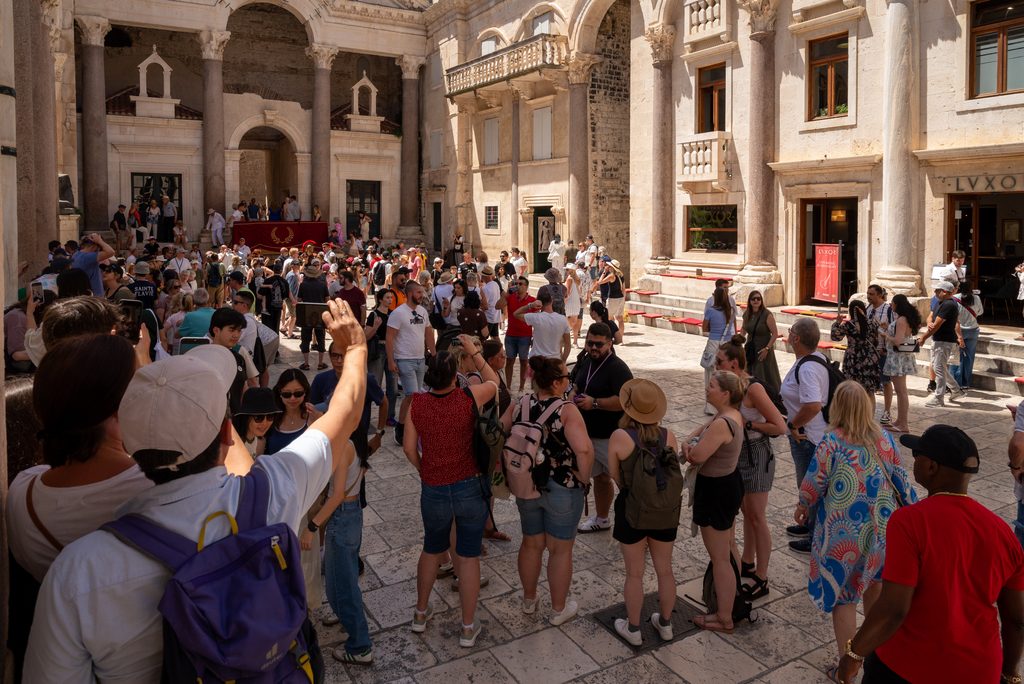
Whatever time of year you go there is a chance of rain and we had a few drizzle interrupted days and a couple of rain-filled ones. We were also there in an unseasonal pan-European heatwave when temperatures in London and other parts of Europe rose to the low to mid 30s centigrade. Croatia was, thankfully, a few degrees cooler, hot and sunny, yes, but never getting much over 27°C (80°F) and then only for a few days. These fluctuations in temperature and rainfall mean you need to think of packing for a chilly edge to the evenings as well as that sun. Inland it is generally a few degrees cooler than at the coast.
Croatian Practicalities
Language
To English ears not an easy one to get to grips with as there are odd juxtapositions of consonants and unfamiliar accents on some letters. But you are in a country whose economy relies on tourism and that means a local familiarity with lingua franca of tourism, English, is critical. So much so that we were told English is a compulsory language in schools from age 6. Whilst conversational perfection cannot be guaranteed, you should never have to be concerned about understanding or being understood. I make an exception for the more out-of-the-way places although only once did I have to resort to Google Translate, in a café and that was in a small town of no touristic significance in the Zagorje.
Practically this means all menus we encountered were in English and Croatian. The only minor difference we found was in Istria where the depth of the Venetian and Italian influence is such as to make Italian an official language alongside Croatian. But even here English is de rigeur for the tourist user.
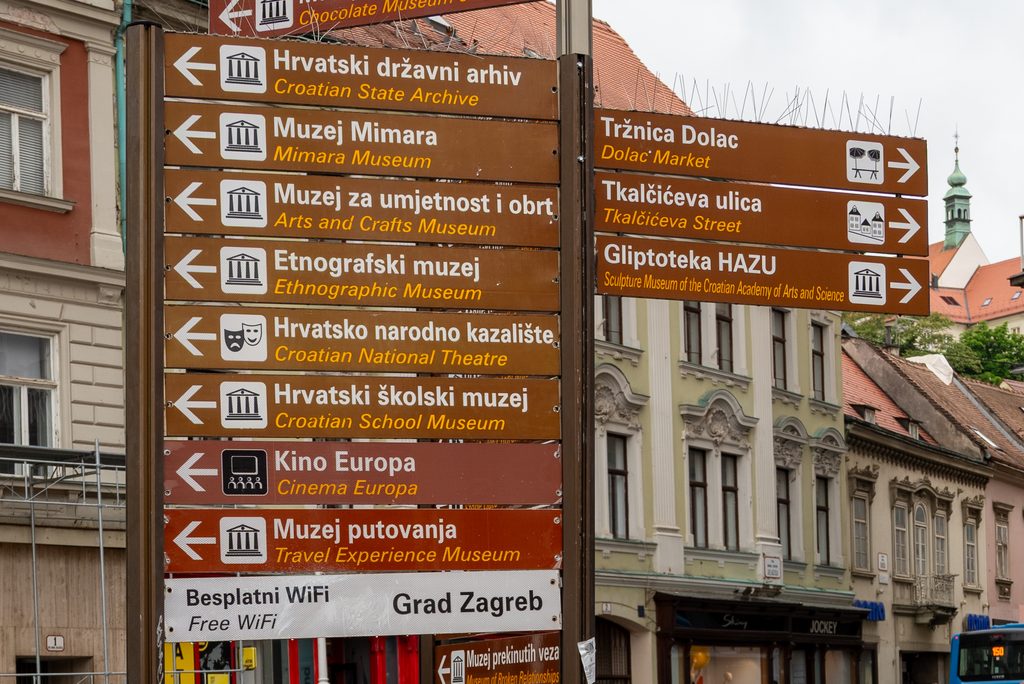
Following direction and street signs means it may be helpful to know just a little bit. We found that knowing ć and č converted into a ‘ch’ sound and ś and š to a sh could be helpful. And the letter ‘j’ sounds similar to the German usage; more a ‘y’ sound. So the Slav name ‘Ðoković’ becomes transliterated as ‘Djokovic’ but is pronounced more like ‘Dyolkovitch’. Thus our island stay was on Brač (sounded ‘Bratch’ with a short ‘a’). And don’t forget that the country name, Croatia, is actually Hrvatska in the Croatian language.
Smoking
In our early days in Zagreb we had a feeling that smoking seemed to be more prevalent than at home. We learnt that 30% of the adult population are smokers (this compares with approximately 10% in the UK and the USA). For most of the time this does not really impact the traveller as places where food is served ban smoking and the Croatian love of outdoor tables (nearly every bar or café has umbrella-shaded tables that expand across squares and streetside pathways) means you can be relatively free from distracting wafts in the open air; just avoid sitting near the pungent cigar-smokers if you can. However a word of warning. Indoor smoking is still permitted in some bars and cafés. Urgently seeking a toilet break in the semi-industrial outskirts of Zagreb during a long drive we found a roadside café for a coffee and walked into a fug the like of which I had not encountered for several decades. Our clothes and hair reeked for the rest of the day.
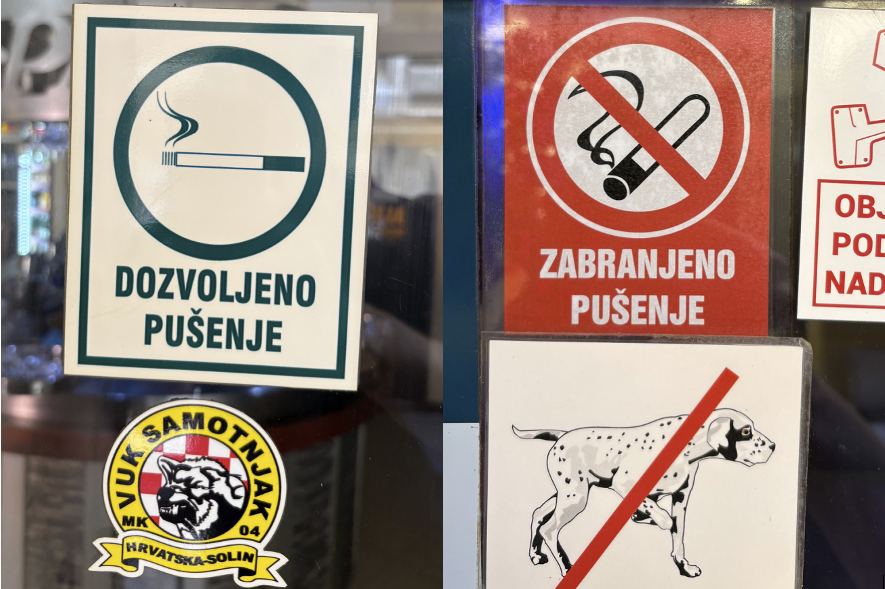
So how to avoid such a fate? Well there should be the signage displayed at the entrance that identifies whether or not the place permits smoking inside (see photograph). The difficulty is that sometimes it is not easy to see that sign as it is not often well displayed. However the reality is that many cafes and bars in tourist areas do not allow interior smoking whilst those that do allow it often have large areas of outdoor seating. In hotels it is generally barred too, except in certain designated smoking rooms well-separated from other public areas. For us it did not become a real issue, but it is something to be alert to.
Food and Drink
Despite the downbeat assessment of one couple before we left the UK, the food is generally pretty good and sometimes excellent and you will not lack options in all places other than the smaller towns. Vegetarian options are part of most menus and usually more than just an afterthought dish. The cuisine varies with the regions. A glib separation would lean more toward heartier fare based on meat and game in the interior and more toward seafood and a strong Italian influence on the coasts and islands. All choices from gourmet to fast food are there, although light salad-style lunches can occasionally be difficult to track down. We ate hotel breakfasts and, given the places we stayed, they offered either extensive buffet or menu-based selections.
The only specific dish to mention is štrukli (https://croatia.hr/en-gb/food-and-drink/zagorje-strukli), a popular traditional dish in Zagreb and the Zagorje. It falls in the hearty category and, in essence, is a doughy, creamy dish usually savoury. It seems to appear on every menu in that area, even those of the best restaurants in Zagreb. My personal experience of it was that it could be good and it could be unexciting, even bland. Just beware that it is not a light dish. Having one in a starter size in some places means people like us were too full to have (or enjoy) a second course as well.
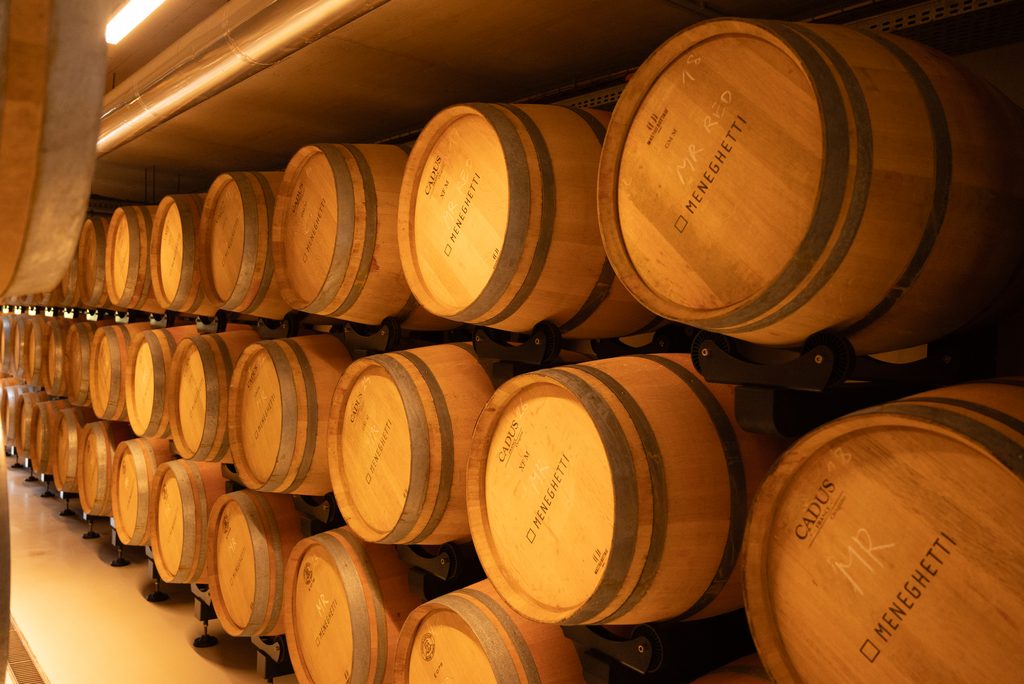
On drink all I can say is that we never drank any wine other than Croatian. The Croatian wine industry can be of high quality and, alongside the familiar grape varieties, it is well worth sampling the indigenous grape varieties; whites like Grašvina, Malvazija and Pošip and reds like Plavac Mali, Teran and Lasina. You rarely see their product outside the country but that bespeaks a relatively small production most of which is consumed by the locals and tourists. Pricing is reasonable by European standards.
A Word on Piped Music
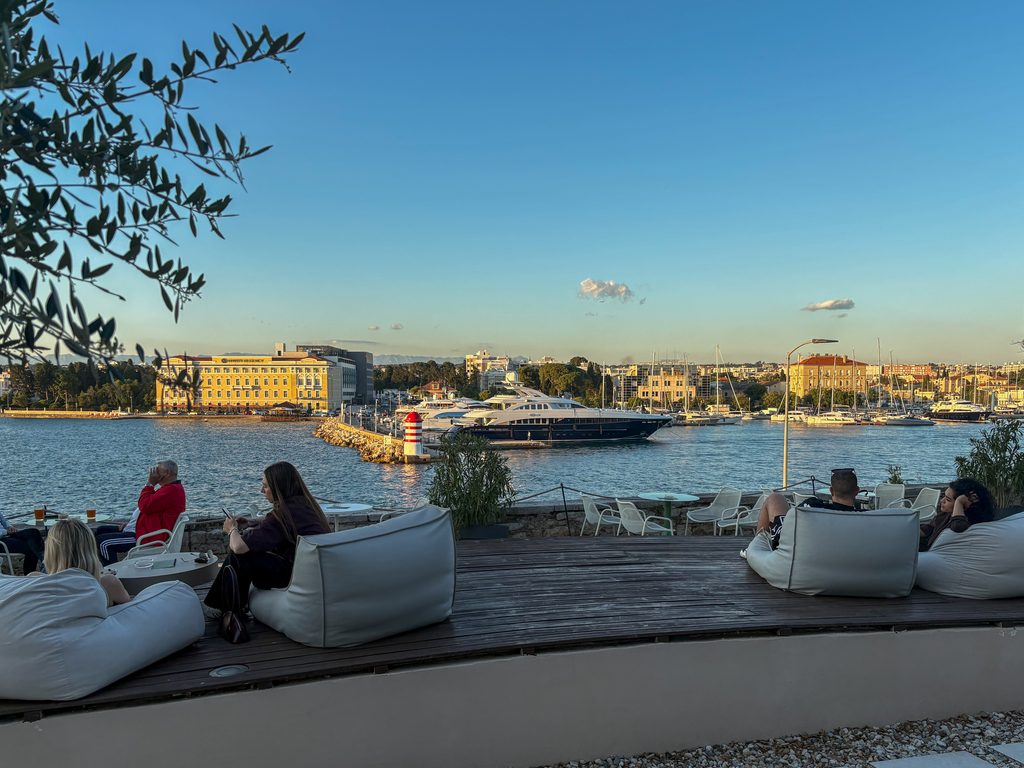
Croatians seem to enjoy their music, so much so that piped music seems to be a feature of many restaurants, cafés and bars. In many places it is just a little too intrusive when what you seek is a quieter place for conversation, reading, writing or just relaxing alongside your food or drink. Cover versions of English language 80s and 90s pop music seem to be favoured, although this may be tempered by the location – some more upmarket places edging towards a more relaxed style of easy listening or jazz. This insertion of music even extends to more upmarket hotels in areas where there seems to be no discernible reason for having it. On a few occasions we felt we had to ask for it to be turned down.
Cash/Tipping
The card machine rules the roost in nearly all places, but cash can be needed for off-the-beaten track cafes and restaurants and the occasional taxi. Croatia is now firmly embedded in the eurozone so currency exchange is easy for those who travel to Europe regularly.
As to tipping I am never very good at this and rely, as we did here, on guidance from Audley for tipping in hotels and of guides. A few general pointers may help. You seem to tip individual service in hotels rather than leaving an overall staff tip at check out. In restaurants adding tips to the bill is a rarity, so we left cash. Ditto in bars and cafés.
Time Zone
The standard 1 hour ahead London time, thus a good bit more than the various US time zones.
Flights
The itinerary Audley put together meant we could fly into Zagreb and out of Split on BA, the European carrier we favour both for convenience and because they offer us the better options on timing. We left from Heathrow Terminal 3 and returned to the same airport but to Terminal 5. As to travel from that airport, including our latest views on Mobility Access, go to Travel from London. Both Zagreb and Split have spiffy modern terminals but neither felt busy at this time of year. The consequence was a straightforward disembarkation and embarkation. We had a pick-up service by Audley’s local agents for both flights so, once again, I can offer no useful advice on transport to and from the airports.
Mobility Access
I failed to make any notes about the arrival arrangements at Zagreb. My recall, a few months later, is that the wheelchair waiting at the plane door was with us all the way to the road where our car was able to pick us up, thus, like so many airports these days, it seems to work well. On departure from Split we were offered a self-push wheelchair at check-in. Once through security, the information service desk in the departure hall were very helpful and shepherded us through from passport control all the way onto the plane. Because apron-based departures (without use of jetways) seem to be the current norm at Split, we were taken up to the plane door in one of those purpose-built, scissors-lift trucks that means the steps up to the plane are not an issue.
Driving/Car Rental
Our car rental was organised through Audley using Sixt. We only picked up the car at the end of our stay in Zagreb and dropped it off before beginning our stay in Split. It seemed unnecessary in the biggest cities. On the island of Brač, it wasn’t necessary as we hired a car through the hotel for the one day we decided to explore some of the island. As is our usual practice now (for comfort reasons and ease of access) we rented an SUV automatic with a satnav. It was an Audi and it did all the things these sorts of cars do these days (including emitting distractive beeps and alerts when you do something the system thinks you should not), so worked well for us.
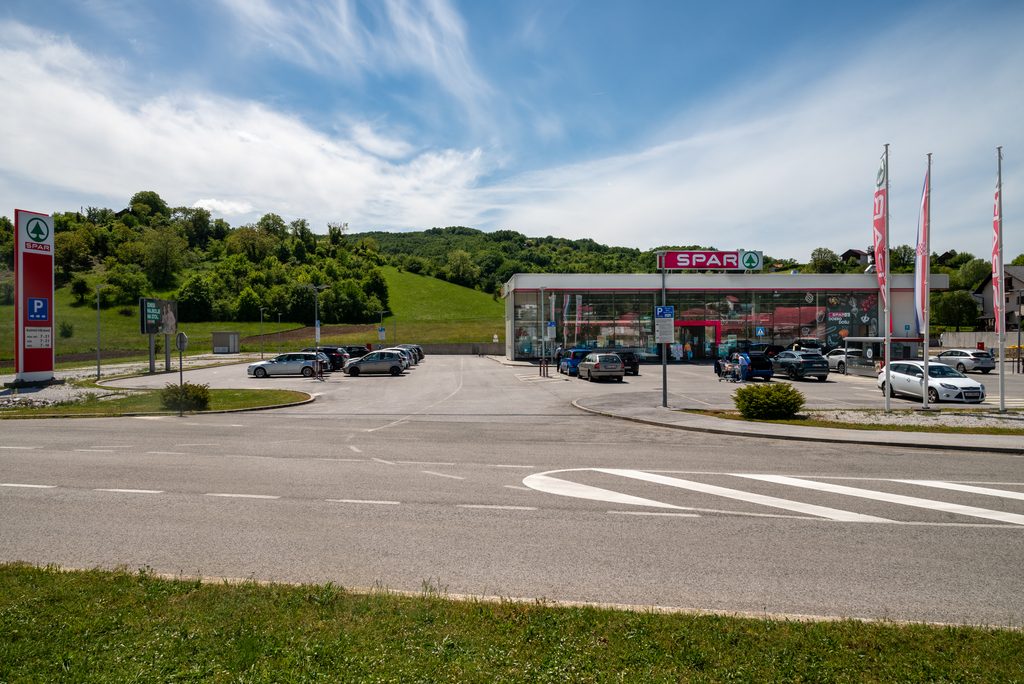
Driving in Croatia is very straightforward. All but the smallest local roads are extremely well kept with clear road markings and excellent safety barriers on the hillier and windier roads. Even those local roads only have the occasional surface defect. Certainly the state of the roads puts those in the UK to shame. Speed limits are not dissimilar to those in the UK and Croatian drivers are sensible, by and large. In towns the speed limits in the central parts of towns and cities can be as low as 30kph (18.5mph). As is usual we eschewed the motorways/freeways, making our driving times longer but, as so often before, we saw so much more of the country that way. As usual I took a road atlas, but I realise I am heading towards dinosaur status in that regard.
Reading
This was one of those rare holidays when we did not read any fiction about the country or written by a native author. This was no reflection on Croatian literature simply a fact of some particular circumstances around our own reading priorities at the time. However we did take in two books that wrestled with the complex history of the country.
Croatia (A History from the Middle Ages to the Present Day) by Marcus Tanner (https://dauntbooks.co.uk/shop/books/croatia/) does a pretty good job of unravelling the endless complexities of Balkan history and geopolitics. Tanner is a writer/journalist which means his learning is matched by a writing style that does not become leaden. Creating a coherent Croatian narrative across the interweaving stories of the various Slav groups that dominate the Balkans is nigh on impossible but this was a story that kept me engaged. This was so even though keeping track of the characters that rove across that history meant regular recourse to the index to remind myself who was whom. It certainly gave me a deeper understanding of the places we were visiting and the significance of locations and landscape.
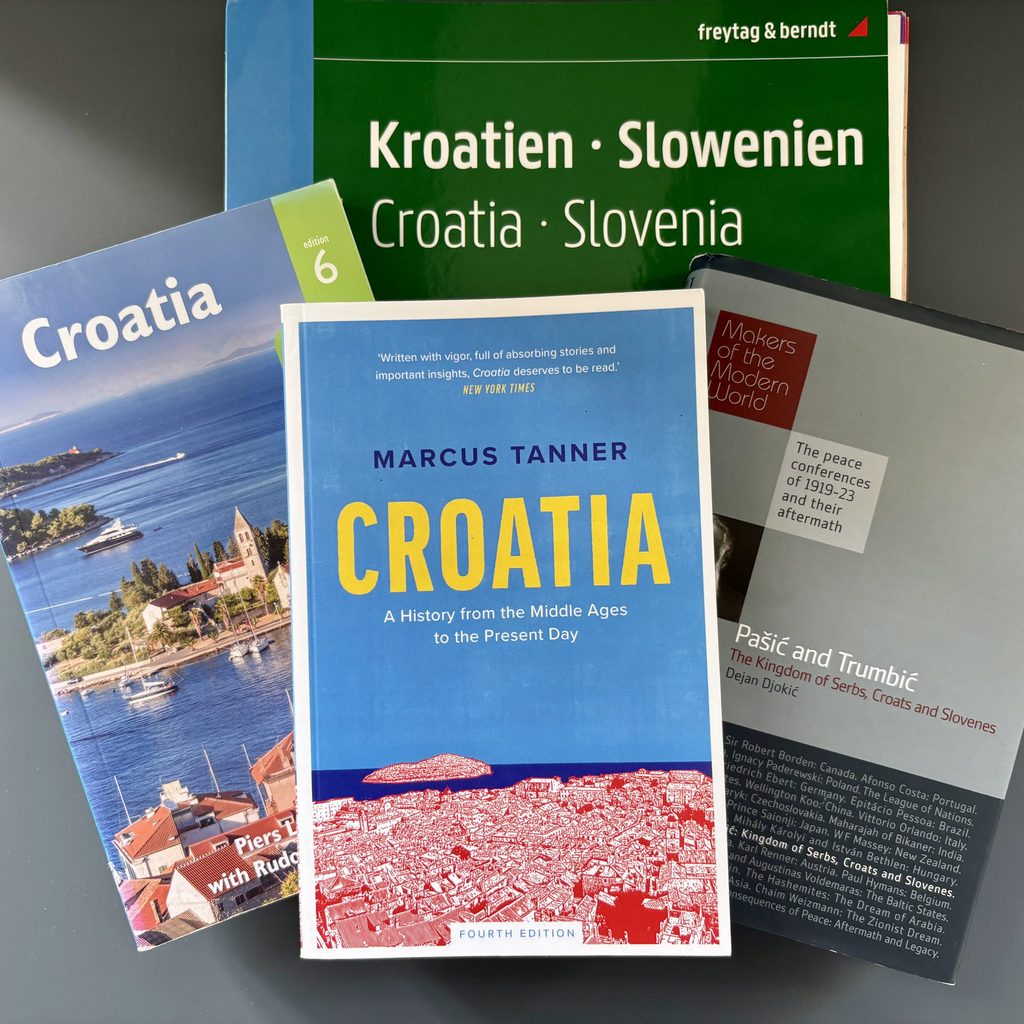
For those needing a more straightforward historical perspective we found that in the appropriate sections of the Bradt guide to Croatia (https://www.waterstones.com/book/croatia-bradt-guide/piers-letcher/9781784770082both) on general history and the sections on the history of key regions and towns.
A more specialised historical take came from Pašić and Trumbić (The Kingdom of the Serbs, Croats and Slovenes) by Dejan Djokić (https://www.hauspublishing.com/product/pasic-trumbic/) from the series published by Haus Publishing on ‘The peace conferences of 1919-23 and their aftermath’. This looks at the Peace Conference that took place in Versailles after the end of the First World War through the stories of the two representatives of the self-proclaimed Kingdom. The book, written by a London-based academic, is not long but is an interesting perspective on the de facto creation of a new pan-Slavic nation state, which faced considerable political difficulties in the ensuing decades before being consolidated as communist Yugoslavia after the Second World War. The relationship between Pašić, the Serb, and Trumbić, the Croat, and their conflicting lesser goals at the conference becomes a microcosm for the inter-nation conflicts that bedevilled the new state and eventually pulled it apart in the late 20th century and have left a mutual mistrust that has carried into the current century.