As with other lengthier trips, I have broken this piece down into what I hope are manageable chunks. There are five separate parts.
Part 1: Prelude, Practicalities and Other Preliminaries
Part 2: Zion and Bryce Canyon National Parks
Part 3: Lake Powell, Slot Canyons and the Navajo Nation
Part 4: Winslow, Route 66 and Death Valley
On the Road: Across Nevada and Utah
It is nearly 600 miles (960 km) from Death Valley to Salt Lake City. We split the journey with a stop about half-way in the city of Ely, Nevada. This is a trip across that Basin and Range landscape, crossing successive mountain ranges and wide valleys as we head east. And this is an empty land with long, long stretches with nothing but the road spooling out in front of you. The second day saw a stretch of 150 miles (240 km) without a single community or facility save, on the Nevada-Utah border, one of those multi-function places with motel, restaurant, gas station and, being Nevada, casino. An aside here to lower expectations presented by that last word; casino meant an empty dim room, windows blocked, with a tatty bar in one corner and several rows of slot machines – no more. This drive was never boring as the wide landscapes and the functional towns always held a fascination, particularly as so much of it is redolent of memories of the late 1960s and 1970s when the music and culture loomed large in my teen and post-teen life.
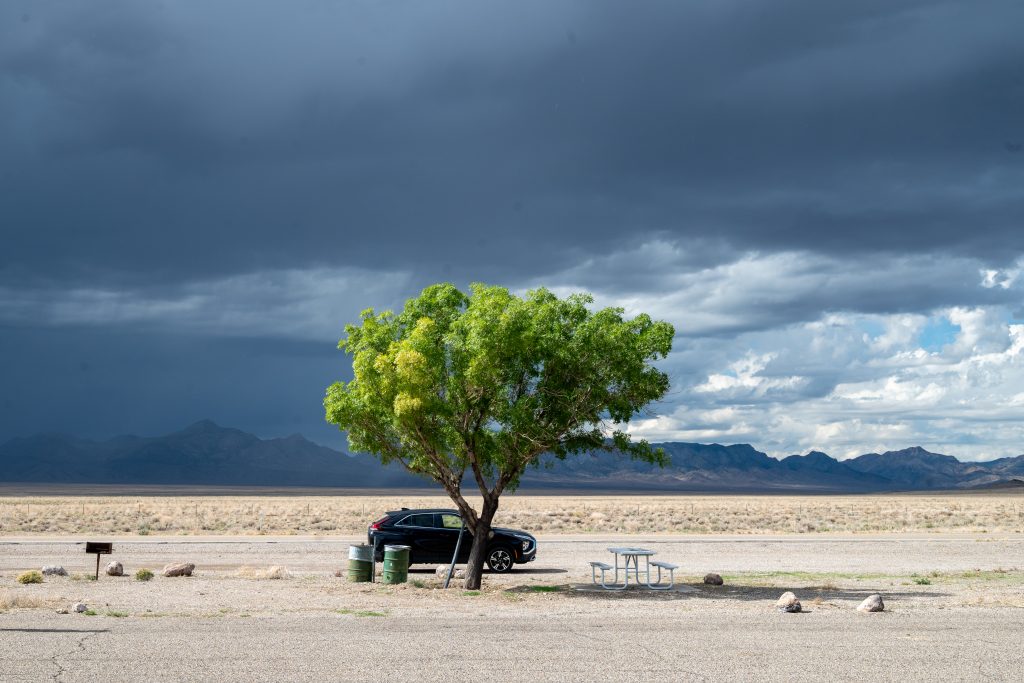
A point to note about driving in this part of the United States: the rainstorms. The summer ‘monsoon’ storms appear as looming thunderclouds over the mountains and, as the lightning seeks out the ground, you can see them bearing down on you as you roll along. Then the bright sunshine suddenly gives way to a near impenetrable silvery darkness. Rain sheets down. With windshield wipers struggling to cope, visibility is reduced to a couple of hundred metres. Traffic slows as surface water builds up, tugging at your tyres. Ten minutes later, the storm has passed and your previous world returns.
Ely
6,300 ft (1,900 m) up in the Egan Range, Ely is suddenly and surprisingly cold. That night the temperature edges down to 48°F/9°C. A grey dampness (we wake to find the clouds lingering around us) adds to a chill feeling we are unused to. Ely is, to us, another of those road towns; all services for passing travellers and locals. Like all towns there is more to it than that (https://elynevada.net) but we cannot stay to ride the steam train of the Nevada Northern or visit nearby Great Basin National Park.
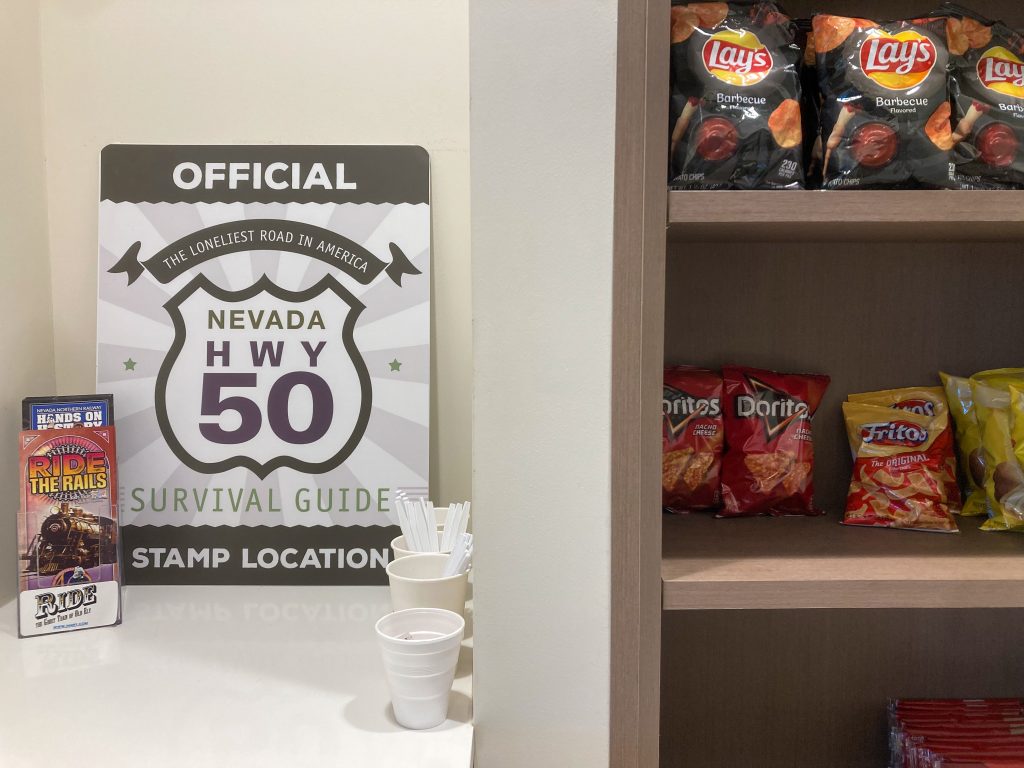
Hotel: Holiday Inn Express
https://www.ihg.com/holidayinnexpress/hotels/gb/en/ely/elyea/hoteldetail
On the face of it this place is no different from the other hotels in the stable at which we had had overnight stops on this trip. Yet here the service and décor had an extra spring in its step. A fresher colour palate and an always cheerful approach by the pair on reception helped explain why there were several pat-on-the-back plaques from the IHG group for being best in class within the group. No casino here either but, if you felt the lack, there were others only next door. No restaurant so we delved into Ely’s unexciting offer and decided to go with Hometown Pizza (https://www.ely-hometownpizza.com), a basic road-front takeaway/eat in place but it had a salad bar, which tipped the balance for us. The salads were fresh and welcome, the pizzas both huge and oven-cooked there and then, and the kitchen and dining area kept carefully clean by the remarkably cheerful staff.
Mobility Access
The same considerations apply as to other overnight stop hotels. That is there are no material concerns.
Utah Lake
On our last day on the road we completed a circle we had started 27 days earlier as we stopped at the Rancher Hotel and Café in Delta (see On the Road: Tooele to Zion N.P. in Part 2) for a mid-morning coffee break. That afternoon we finally found a pleasant picnic spot overlooking this lake which sits on the outermost fringes of the suburbia of Salt Lake City as it sprawls down the eastern fringe of the Great Basin. Saratoga Springs is a brand-new lakeside community of large homes clearly designed for reasonably well-to-do families. Many of the homes still seemed to be waiting for occupants. By the lake is a well-tended small park, restrooms, shaded picnic tables and car park set above a small marina and beach. All very pleasant in the afternoon sun with the blue-green water of Utah Lake foregrounding the satellite towns on the eastern shore, themselves dwarfed by the Wasatch Mountains rising just behind them. There were few others around; the odd walker or jogger and a small group of children with learning difficulties who came and went. The oddest thing seemed to us to be the total want of any service facilities in this stretch of community. No sign of shops or eating places, as if the only way to get the necessities is to get in a car and drive to the strip malls lining the routes closer to the city.
Salt Lake City
Altitude: 4,300 ft/1,300 m. Length of Stay: 5 nights.
After the glorious scenic excesses of our travels, we were looking forward to our end-of-trip urban fix and had been intrigued by the history of SLC (as it is known) as the centre of the Church of Jesus Christ of Latter-day Saints. Thankfully, although the church has rather eschewed the Mormon name that is familiar around the world, the official name is shortened to LDS for everyday purposes. It has to be said the city was a bit of a disappointment. Yes, there were some engaging places to visit but, for us, the city seemed to lack an urban heart. Walking around downtown the city felt almost empty, with relatively few pedestrians on the streets. The downtown stores felt quiet. It was only when the streets and public transport suddenly seemed overrun with highly-costumed people attending the FanX convention (https://fanxsaltlake.com/about/) that you felt more of a life come to the city centre. To be fair there is an evening life indoors, as most of the restaurants we went to were busy and buzzing with locals. It was also unfortunate that our timing seemed to fall outside the seasons for the performing arts. We could find no theatre, no ballet, no music on during our stay and even our intention of going to a free lunch-time organ concert at the LDS Tabernacle (an almost daily occurrence) was thwarted by cancellation.
What we had not anticipated was how spread out the city is. It seems there is so much land out in this part of the country that, to one used to space-limited cities like London, New York or San Francisco, the use of space here felt profligate. I had never been in at the heart of a large city where whole city blocks (500 x 500 metres) are given over to surface level car parks.
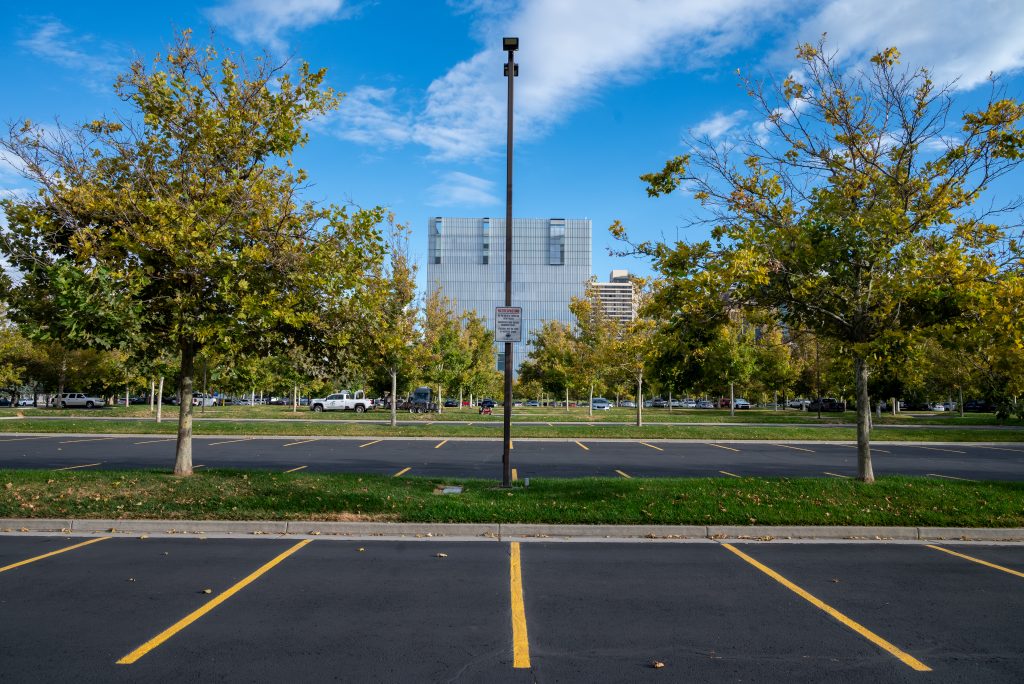
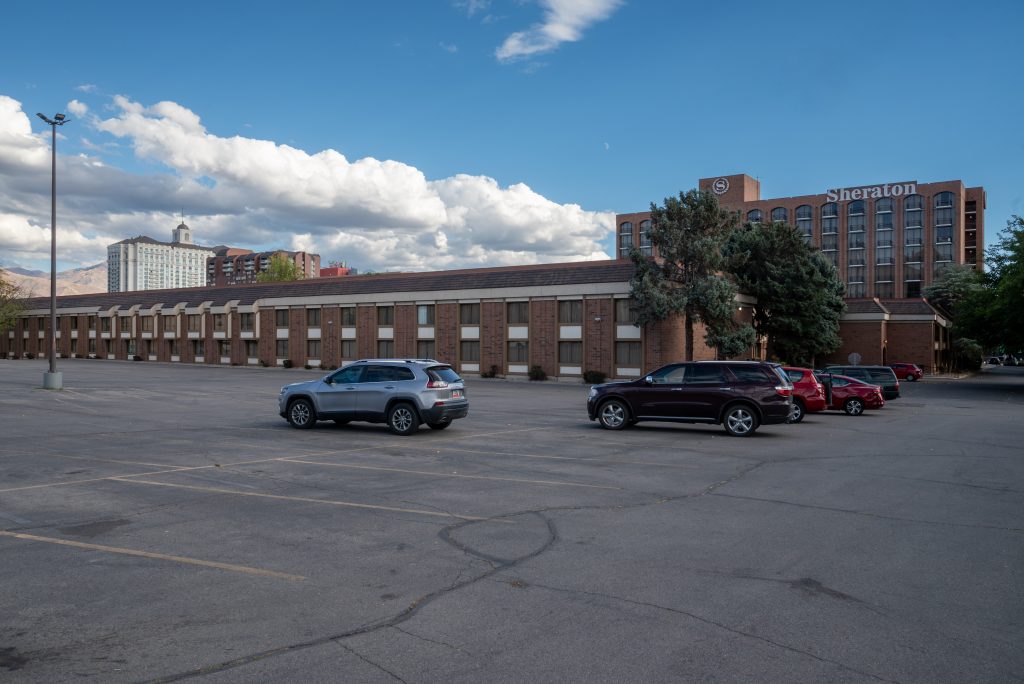
Our hotel sat as the only building on one block, bar a couple of historical buildings tucked in one corner. Having the blocks separated by wide four-lane boulevards added to a sensation of physical distancing It is not a city conducive to my favourite activity of aimless wandering. We had handed in our rental car on arrival in the city, not expecting to need to use it. Perhaps the city would have worked better for us had we kept and used it.
Hotel: Sheraton Salt Lake City Hotel
https://www.marriott.com/en-us/hotels/slcsi-sheraton-salt-lake-city-hotel/overview
We had originally booked to stay at The Grand America Hotel but it was not available during our re-scheduled stay (SLC is a major convention hub and convention audiences can fill hotels at certain times). At Trailfinders suggestion we went with the Sheraton and, in many ways, it was all that we needed. This is a city hotel with a good quality room (with views out across the city centre to the promontory of mountains rising to Ensign Peak immediately to the north of the city centre) and, seemingly, many of the facilities that we wanted and a location close enough to public transport links. But in some of the detail it was disappointing. The seasonal pool had closed, even though the outside shade temperature was a summery 82°F/28°C. There was only one restaurant/bar serving up those ghastly TV screens in a windowless space that seemed hidden away beneath the grand staircase. However, the most disappointing aspect was the service in that restaurant at breakfast, where we ate for want of any other options within walking distance. In a complete contrast to the helpful reception staff, those few in the restaurant seemed disinterested in their customers, sometimes disappearing for minutes at a time. This not really acceptable at any time and meant resorting to self-help when trying to get a coffee refill. The buffet was not kept properly stocked and vacuuming the floor during the breakfast sitting shows a certain disdain for your paying guests. When faced with poor service in hospitality places my tendency is to assume poor management rather than just the attitude of the individuals. We did explain our concerns on departure.
So, having enjoyed our last morning after check out sitting in the pergola-covered area of the nearby Little America Hotel, I suggest you consider that or its enormous sister hotel, the Grand America, across the street amongst other alternatives for a stay in SLC.
Mobility Access
A large 1970s building which, after renovation in 2009, has no steps and nor uneven surfaces to negotiate between room, elevators, facilities and car parks. Like many large hotels care is needed if you have limitations on the distances you can walk in any one day. The hotel is spread out so some facilities can be distant from the elevators and some of the rooms are quite a way from the lobby and restaurant.
It was not the hotel’s fault that we should have checked accessibility to public transport with more care. It was a 600 metre walk to the nearest light rail (tram) stop and over 300 to the nearest bus stop. Not too far but problematic for those whose walking is constrained as described above. Here again the Little America Hotel’s proximity to the Courthouse tram stop would have been a bonus.
Activities
Utah Museum of Fine Arts
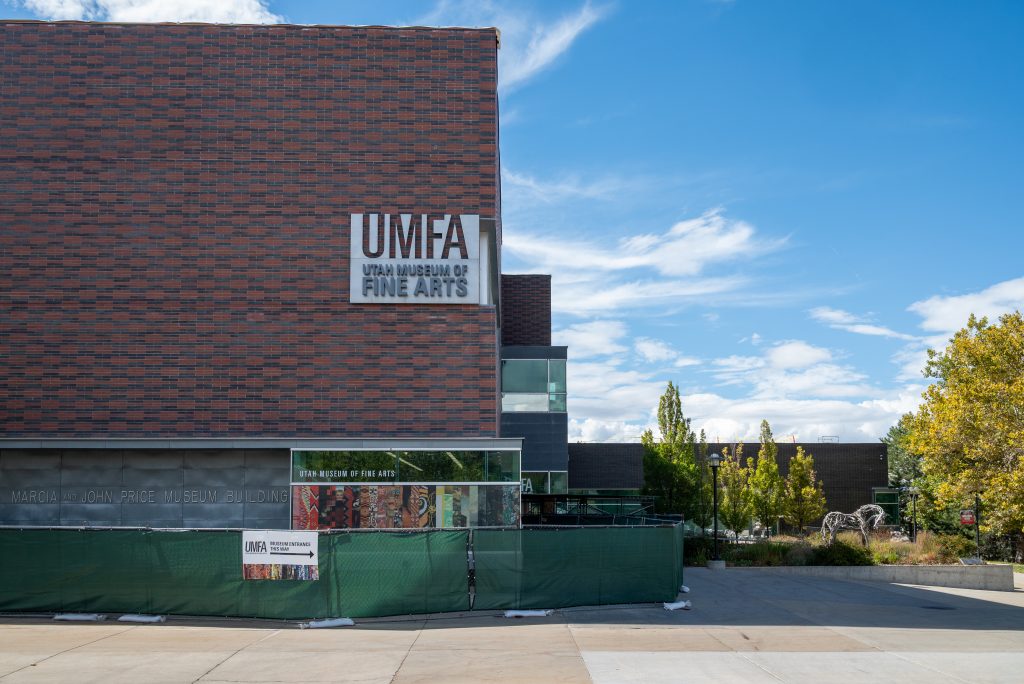
Out to the east of the city centre, the museum sits amidst the buildings of University of Utah which spread out across lower slopes of the Wasatch Mountains. The collection is very varied with arts from places as diverse as Japan and Polynesia and indigenous art from Native American pottery to contemporary American painting (and many more). It does mean there can be a slightly scatter-gun feel to the curation with the diversity slightly getting in the way of focus. The galleries are spread over the two storey, rectangular glass and steel building. It was Sunday morning when we went out and the museum was quiet (the café not yet open) and the area around seemingly devoid of people. The TRAX light rail ride out from the city centre is on the Red Line and there are also several bus lines you can use.
Mobility Access
The building dates from 2001 so full accessibility is catered for and, as we found so often in the United States, they have excellent information on the website’s Accessibility page. We went round with the wheelchair that is available for use. The building is 300-400 metres from the TRAX and bus stops down a slight slope and then along flat, paved sidewalks.
City Library and Washington Square
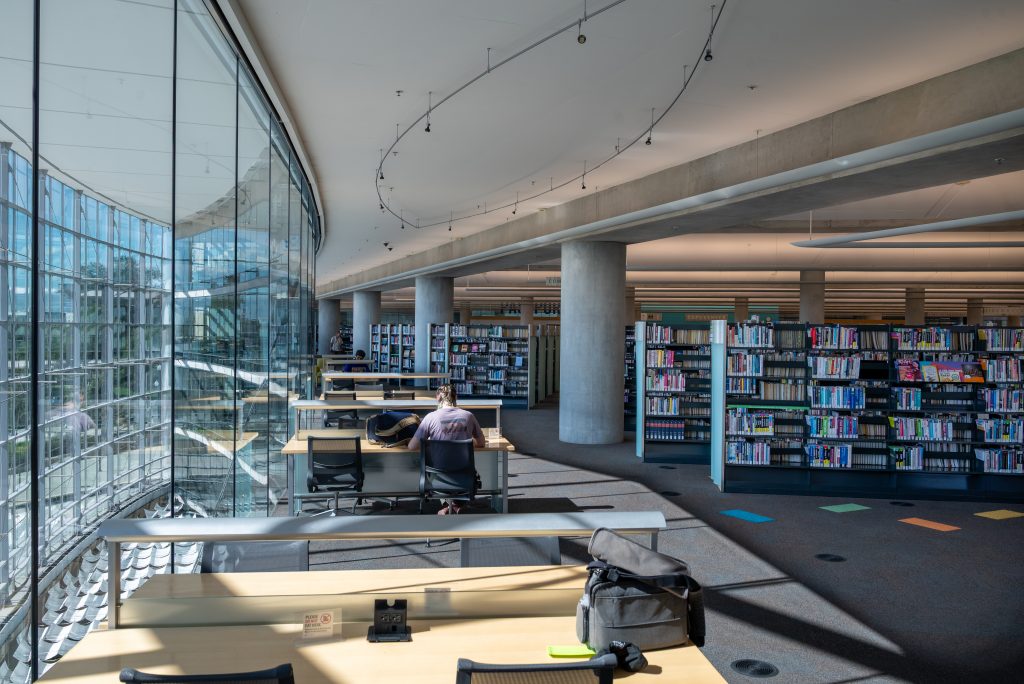
The City Library (https://about.slcpl.org/main-library) is housed in one of the most striking modern buildings in SLC and worth a visit for that reason alone. As well as the library floors there is a rooftop garden and shops in the curved atrium. They are happy to let you wander around the open library floors which have plenty of seats for browsers as well as more serious, laptop-wielding students. You can even take food and drink into some of the seating and work spaces in the galleries that curve around the atrium wall. Washington Square Park, which sits in the adjacent block to the west, is a peaceful grass-lawned space criss-crossed by paths and with substantial trees shading much of the Square in the warmer months. These trees only allow glimpses of the Square’s centrepiece, The SLC City and County Building, housing the mayoral office and city government. Built in the 1890s (in a Romanesque revival style mimicking the LDS Temple Church as a way for city authority to thumb its nose at the LDS) the building is a striking structure whose bulk and detailing can only be appreciated once you are on the surrounding paved area.
Mobility Access
As a thoroughly modern building (completed in 2003) the City Library is fully accessible with a bank of glass lifts and flat, smooth surfaces throughout. The TRAX Red Line stop, Library Station and the nearest bus stops are all on University Boulevard no more than 50 metres distant. Washington Square Park is flat with wide, smooth, paved paths.
Capitol Hill
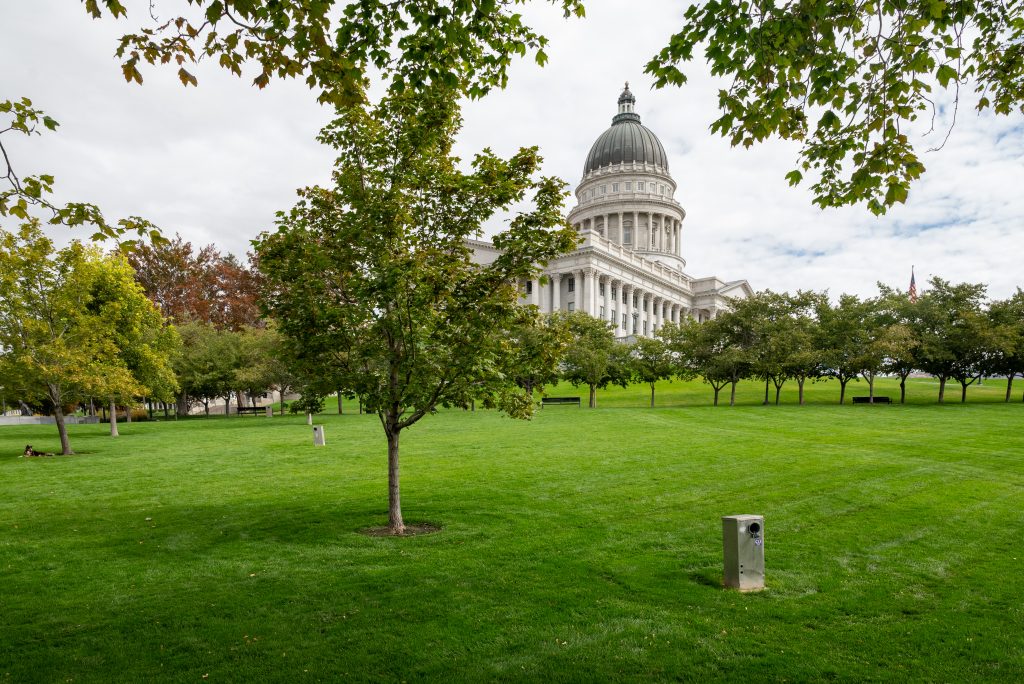
The land on which the city stands rises slowly from south to north. From the edge of the central area at N Temple St the land rises more sharply another 1,000 ft (330 m) to Ensign Peak. On a knoll protruding from the slope is the Utah State Capitol. Mimicking the design of the Capitol building in Washington D.C. it was built in the second decade of the 20th century and its prominence looms over the city. At least it does if you look from State Street northwards. Elsewhere your view is often obstructed by the cluster of sky-scraping buildings downtown. The building itself is readily visited and the grand interior is well worth a wander (https://utahstatecapitol.utah.gov). Look at the marble floors, columns and stairs stretching up to the dome and at the murals of Utah’s history (somewhat idealised and rather sidelining of the period prior to the arrival of Brigham Young and his LDS followers). But also go up to the galleries and look into the rooms of the state’s Supreme Court and Senate and House Chambers and see the many marked doors of the senior offices of the elected representatives. It can seem slightly overpowering and, at a time when I assume the Senate and House were not in session, it has a faintly sepulchral, silent air. Perhaps this is enhanced by the location and the approach up across the pristine, neat surrounding grounds – all wide stone stairs, impossibly green lawns and sparklingly clean memorials of military conflicts. The website proffers self-guided and guided tour options which seem to indicate pre-booking is necessary. I hadn’t. I just walked in at the main eastern entrance and was waved in by the security guards with no-one checking if I had booked. It may be different if the legislature is in session.
Mobility Access
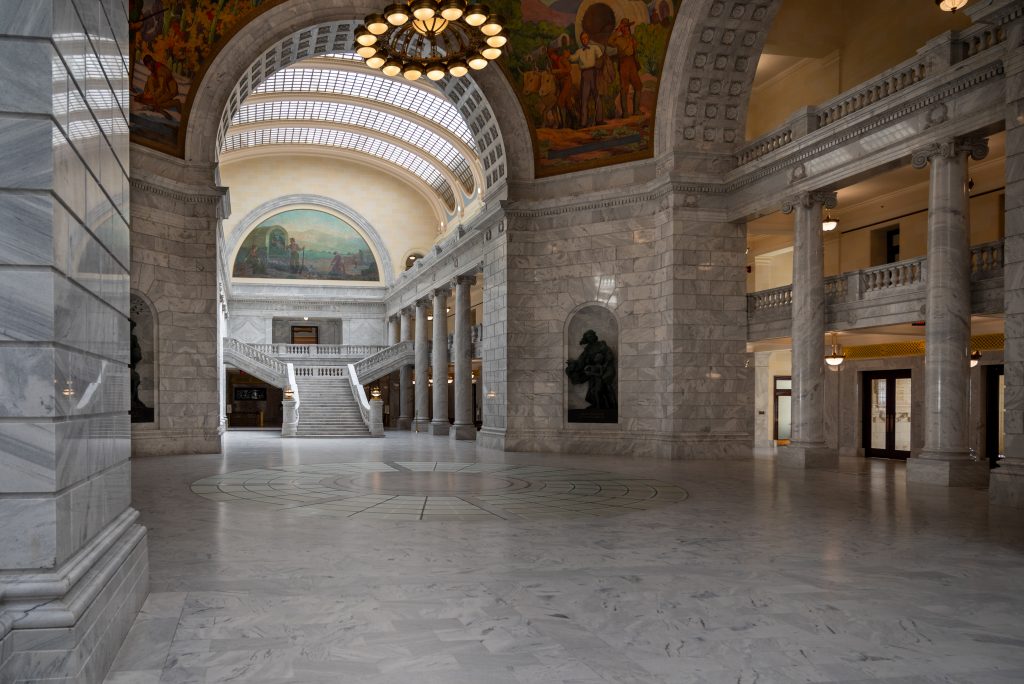
Inside all the floors are flat and very smooth-surfaced. Elevators can be used to reach the gallery floors. There is plenty of information about getting to the right place to get into the building. Just be aware that if you are approaching the building from the south and climb the wide dramatic steps up to the south terrace, the doors there are locked and you have to drop back down more flights of steps to reach the public entrance in the east façade. The 200 bus stop is only 120 metres away across the paved paths. The 200 bus is quite useful for visiting Capitol Hill as it circles the Capitol building in an anti-clockwise direction with another stop on the west side 250 metres from the Pioneer Memorial Museum.
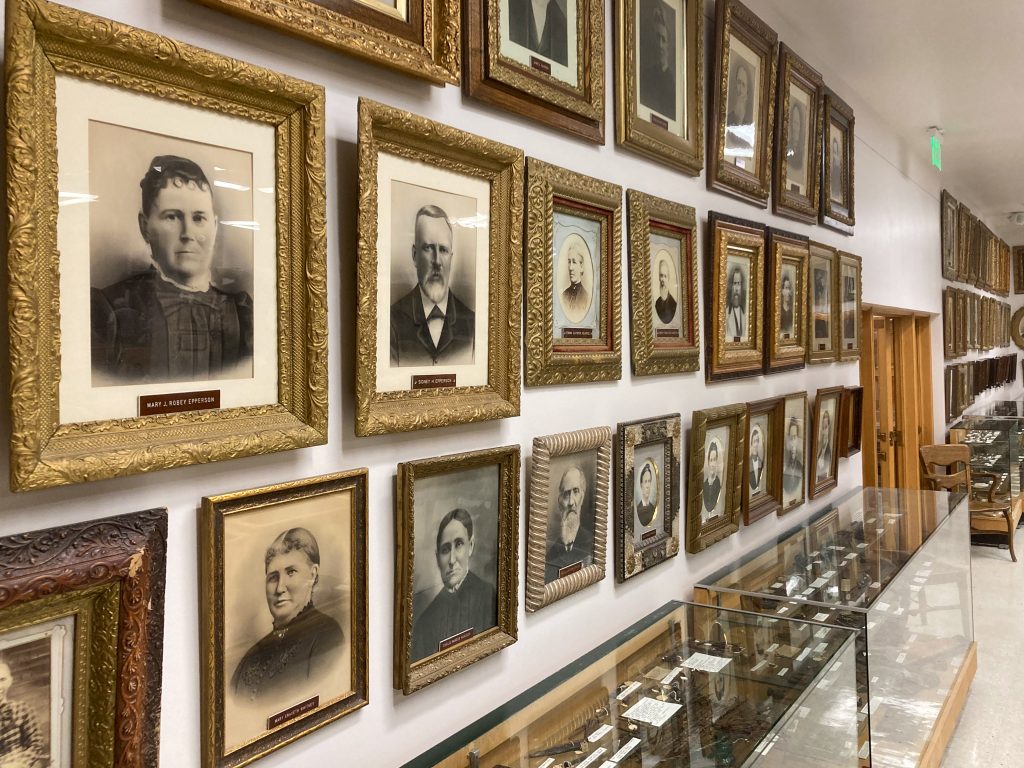
The Pioneer Memorial Museum offers a different, and somewhat quirky, place to visit. Sitting off to the south-west corner of Capitol Hill, this free museum ‘houses a substantial collection of artifacts relating to Utah pioneers and early Utah life’ (https://isdup.org/museum/). And when they say substantial this place is four floors and two buildings packed to the rafters with the day-to-day bits and pieces of everyday life for the white pioneers who came to Utah in the period up to the arrival of the railroads in 1869. Here be carriages and carts. Here be shelves of dolls and other toys. Here be everyday tools by the box-load. Here be displays of clothes and household cloth. Here be guns, rifles and other military paraphernalia. Here be display cases of medical implements of disturbing crudity. Here be rooms full of chairs sitting cheek by jowl with each other. Here be lengthy vitrines of jewellery, of cutlery, of tableware, of…well almost anything you would need for everyday life in the earlier part of the 19th century. And photographs – thousands of photographs of severe couples in their middle and later years staring down at you from every wall. After a while the sheer volume starts to feel disturbing. It was not at all busy when I went and, after an hour sharing the spaces with these staring faces, it felt faintly eerie. This should take nothing away from the charming, helpful volunteer staff who were very ready with guidance and information.
Mobility Access
Inside flat smooth floors for the most part. My recollection is that the main building, with its four floors, has no elevator but the two-floor Carriage Building does have one but I am not sure of my facts here and the museum website is poor in terms of accessibility information, so it may be worth checking first if climbing those stairs will be a concern. The entrance to the museum is on a small mound above street level so slopes or some steps need to be negotiated to get from the sidewalk. The 200 bus stops involve walks up (from Main Street) or down from the aforementioned stop on the west side of the hill, both of around 250 metres.
Liberty Park
https://www.slc.gov/parks/parks-division/liberty-park
This is one of the city’s largest parks, a rectangle covering the equivalent of about eight city blocks. It is largely flat, with grassed areas and many splendid trees and a wealth of recreational and leisure facilities from pool and tennis courts to a large aviary and small children’s amusement park. It sits in a peaceful, well-to-do residential area and was a pleasant place for a gentle stroll and sit on a sunny Sunday afternoon. The children’s amusement park and the adjacent boating lake were both being set up as we sat and took in the bread-seeking wildfowl around the lake. That seemed rather late in the day, but the fact it was a Sunday may have much to do with that. There only seemed to be one publicly-accessible fast food kiosk open when I wandered around. It is in the building adjacent to the children’s play park.
Mobility Access
Paved or packed gravel paths running through the grassy areas are the norm in the park. There are relatively few benches. Public transport access is from city bus stops which are on the roads that run along the north and west sides of the park.
Around Temple Square
https://www.churchofjesuschrist.org/feature/templesquare
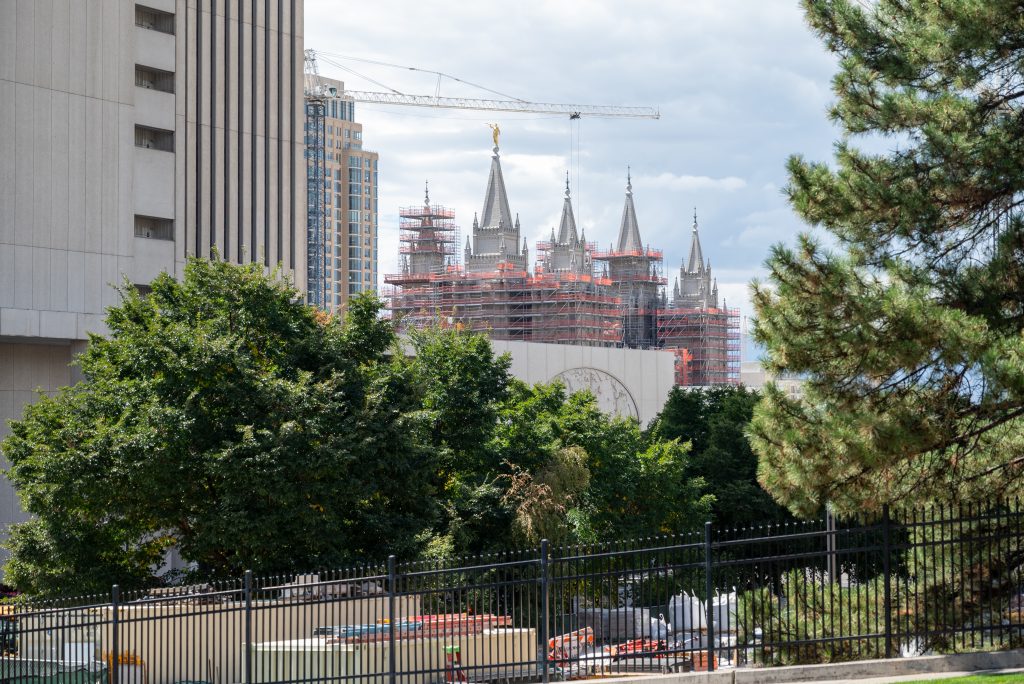
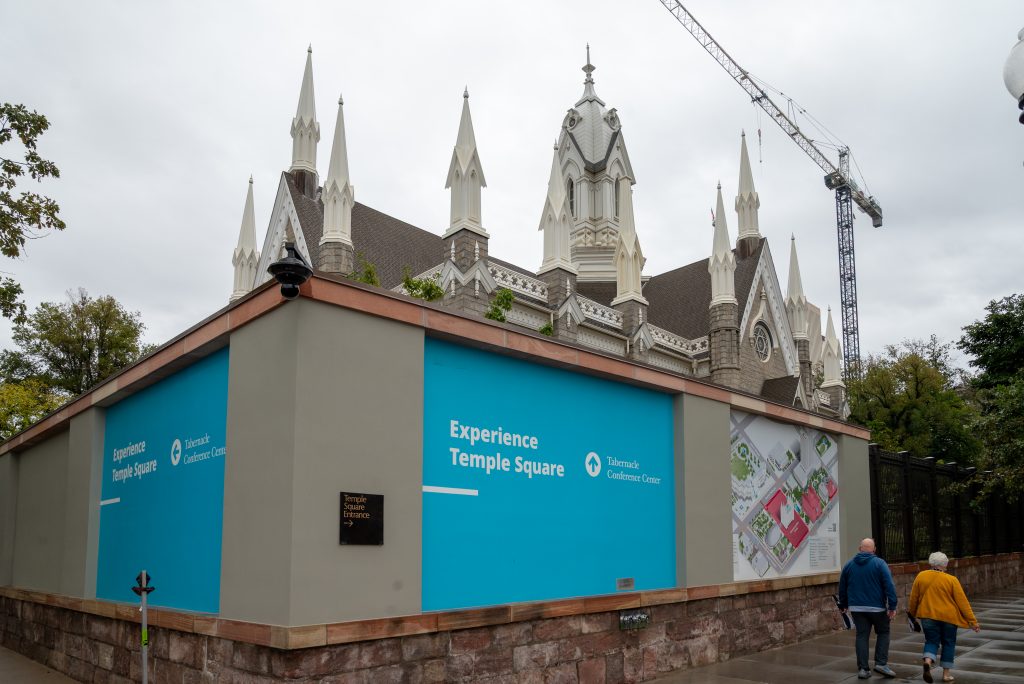
The LDS Church dominates this central area of the city. In Temple Square itself are the Temple itself, The Tabernacle and the huge skyscraper of the Church Office Building. The surrounding blocks house more Church offices, a History Library, a monstrous modern conference centre (occupying a whole block), the Church History Museum, The Family Search Center and, dwarfed by all nearby, the pocket-sized Brigham Young Historic Park. Unfortunately substantial parts of Temple Square were a fenced-off building site as a major refurbishment of the Temple itself is being undertaken over many years. The Temple is hidden from view behind scaffolds and tower cranes so, on a damp, grey showery day, we took in the History Museum, The Tabernacle and tried out the Family Search Center.
The Church History Museum (https://history.churchofjesuschrist.org/landing/museum) is an unashamed LDS-orientated history of itself and, if you are not a member of the faith, it might seem somewhat propagandist. However, we found it quite interesting to understand the whole back story of the origins of the faith, including the ways it had to flee persecution and physical violence and to negotiate its schisms after John Smith’s murder at the hands of a mob, before settling and growing here in Utah. The hagiographic display of the portraits and biographies of the older white men who were its prophet Presidents we found a little harder to take. The staff are unfailingly helpful and there is an absence of any direct proselytising. It is free, as are all the LDS places we visited.
Mobility Access
A 1984 building, it has all that is necessary to assist those with mobility limitations including a wheelchair which we took the opportunity to use. Outside a flat, paved plaza leads straight into the foyer with the street only 25 metres away. The Temple Square TRAX stop (Green and Blue Lines) is only 200 metres away and the 200 bus stops almost outside the entrance.
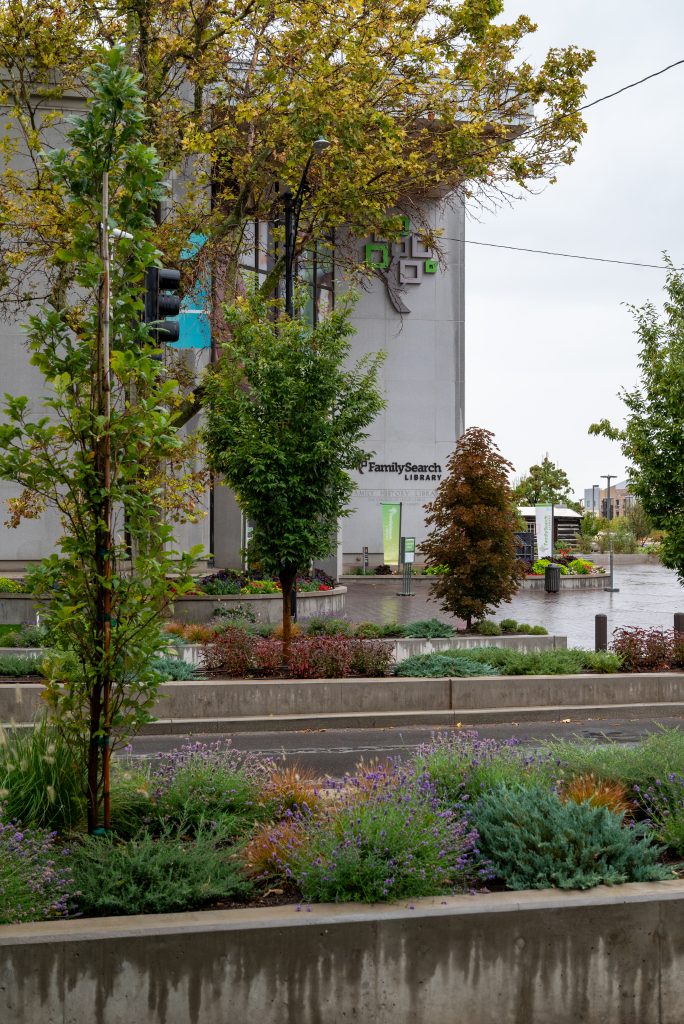
50 metres across the plaza is the Family Search Library (https://www.familysearch.org/en/library/). I confess I had not heard of this institution until I came to Salt Lake City, but my understanding is that it is one of the most comprehensive databases of genealogical information in the world. Intrigued to see what was on offer, I decided to see if I could use it to access information about my Scottish ancestry. I was greeted warmly, directed to the European floor, was sat before a computer screen, had explained to me how to create a login and then a volunteer came and spent 25 minutes explaining what Scottish information sources I could get access to (many is the answer), how to use the online tools to create a family tree within the website and the privacy protections that are in place. It was all free and there is no sign in the building or from the staff that it is run by the LDS Church. I came away thinking I must find the time to make use of its tools when I was back at home – I haven’t found it yet.
Mobility Access
The information for the adjacent Church History Library applies here, save that there is no wheelchair for use as it is not really needed.
Opened in 1875, The Tabernacle is an unusual cloche-shaped building (even down to the silvery roof) that has served as LDS meeting house and conference centre (https://www.churchofjesuschrist.org/learn/salt-lake-tabernacle-temple-square). Nowadays it is best known as a 3,500-seat venue for the (free) performances of the famed Tabernacle Choir and daily concerts on the vast organ (ticket information on the website). In 1892 Scientific American said it was one of the most acoustically perfect buildings in the world, which makes it unwise to make any off-key remark inside. As I can testify, you can hear clearly what tour guides are saying on the other side of the building. You do not need to follow a guide. We just walked in off the street.
Mobility Access
Set in neat gardens with flat, smooth paved paths, there are no steps from the sidewalk outside. Inside the building the same flat, smooth mantra applies to the slightly sloped floors. The seats are all usable for rests to gawk at the interior. The entrance to the gardens is directly across the street from Museum and Library, with a safe pedestrian crossing between them. Public transport availability is as for the Museum.
Tram Touring
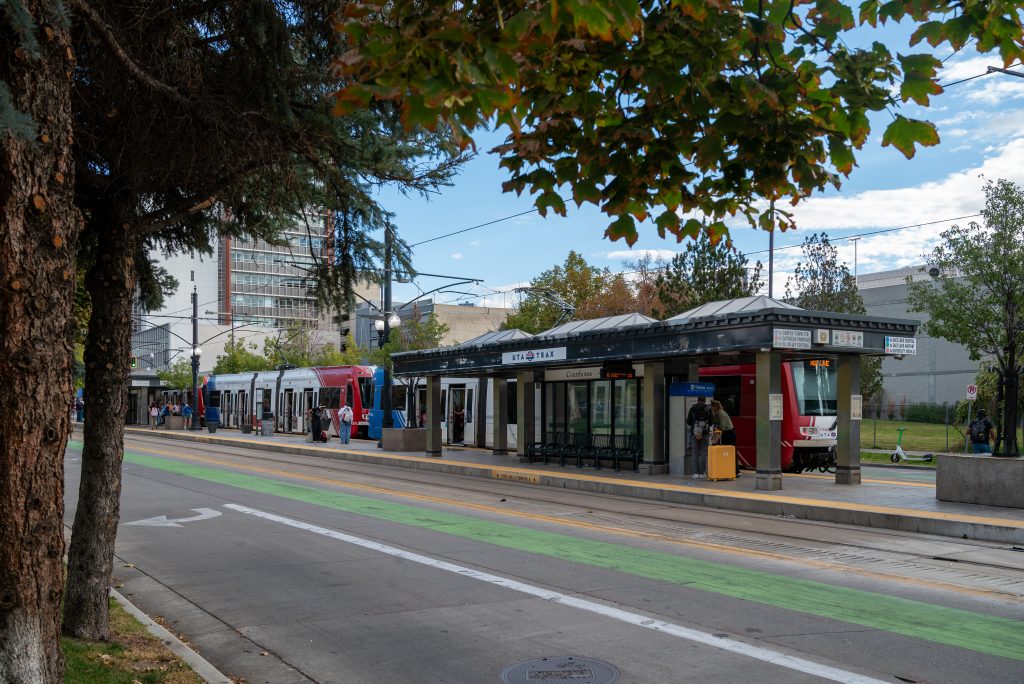
The TRAX light rail system has three lines (Red, Green and Blue) that all converge downtown at Courthouse stop. To me, light rail is just a pretentious way to say tram so we did as we have done in many other places and just hopped on the trams as a cheap and easy way to enjoy a tour of the city. It has to be said that beyond certain downtown blocks, the view out of the window was fairly unprepossessing. Designed to be accessed by car, bland businesses and buildings run for miles along straight boulevards, their soporific effect only slightly alleviated by the almost uncanny lack of people other than behind the windscreens of the vehicles. The Red Line east up the lower slopes of the Wasatch Mountain range into the University Area is probably the most interesting. See Getting Around for ticket information.
Mobility Access
It is a newish system which means new tram cars whose entry doors are level with the low platforms that sit in the middle of the wide boulevards. These can be reached from the sidewalks with just a gentle slope up to the level of the platform. There are not masses of seats inside but, keep away from the busier times and the FanX crowds, and you should be fine.
Eating Out
After the limitations of fare for much of our travels, the offer of Salt Lake City was a positive culinary oasis. We ate out each night. And we booked every night in advance – very necessary, as we discovered.
Urban Hill
Set at street level in a square, brick-faced, six-storey building, this is modern dining for the in-crowd. All clean lines, wood fittings with a slight industrial chic feel, limited sound attenuation and the de rigeur open kitchen, this place was buzzing the evening we went. Indeed we were a bit concerned about noise levels being such that would preclude easy conversation, however we were fortunate to be led to a table in the smaller rear space that was noticeably more peaceful. And we were thankful we stayed as the food really was very good, as was the service.
Mobility Access
One level and street level entrance so no issues. 450 metres from bus stops. There is a vehicle drop off right outside the entrance.
Caffé Molise
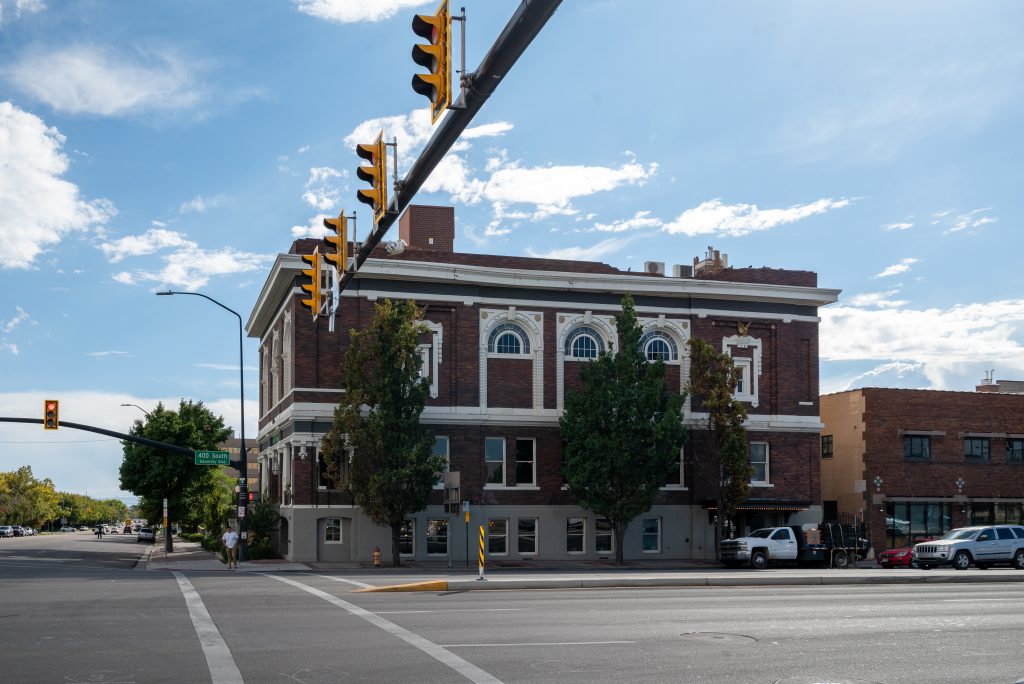
That it takes its name from a region of southern Italy tells you all you need to know about the food offer in this busy downtown restaurant but the food is of real quality (we went twice) and the service attentive and friendly. It is set in the only other building on the city block occupied by the Sheraton and that building, dating from the First World War years, adds a character to the place that has been thoughtfully carried through to the interior décor. Although it is busy it is not too hectic or noisy, helped by the sensible partitioning off of space.
Mobility Access
Inside it is all on the one level with stone tile floors. The restaurant is on the upper ground level so there are fifteen steps up a wide stair (with handrails) from the sidewalk but if you cannot manage those there is an alternative route by elevator. It is 400 metres from Courthouse TRAX stop with bus stops only 250 metres away on University Boulevard. We walked the 400 metres from the hotel across the car parks.
Red Iguana
https://www.rediguana.com/locations/red-iguana/
We had to try Mexican food at least once on our trip and where better than at this Salt Lake City institution. After a previous incarnation, the owning family set up shop in this near shack across the tracks (that is west of downtown, the railway tracks and I-15). It now has two other city outlets and the place always has people waiting outside even when you have booked (although not for long). Arrival can be disconcerting as the shopfront window and entry door are so smothered with small stickers that you cannot see in. It feels like you are waiting for the door of a dubious dive to be opened to get in. But once inside the bright décor and informal vibe and service put you at ease. I am a Mexican food novice who doesn’t know his mole from his chimichanga but my approach was when in doubt go for a combination plate. You get a mountain of food. All good and all fun with suitable beer to go with it, of course.
Mobility Access
Small building with direct access from the sidewalk. No trip hazards inside, unless self-inflicted. 150 metres to Jackson/Euclid TRAX stop on the Green Line. Bus stops are closer but we used Uber.
Pago
Although Pago is now a group, the eponymous restaurant is in the residential/student orientated ‘village’ within the city known as 9th and 9th. A gentle parade of cafes, local retail and restaurants it sits two blocks east from the north end of Liberty Park and this small restaurant, that majors on artisan-produced food, is a little gem. Its size and location make it a somewhat more peaceful alternative to the downtown places and we thoroughly enjoyed the quality food and discreet service.
Mobility Access
Again a street front place with no hazards for the mobility constrained. It sits on the crossroads of Harvey Milk Boulevard and 900 E and there are both north-south and east-west buses from stops at the crossroads. We chose Uber again for speed and simplicity.
Cafés
We consider cafes, with the chance to reflect and to people-watch that they bring, an important element in our engagement with cities. So, for what it is worth, a selection of those we used.
The People’s Coffee
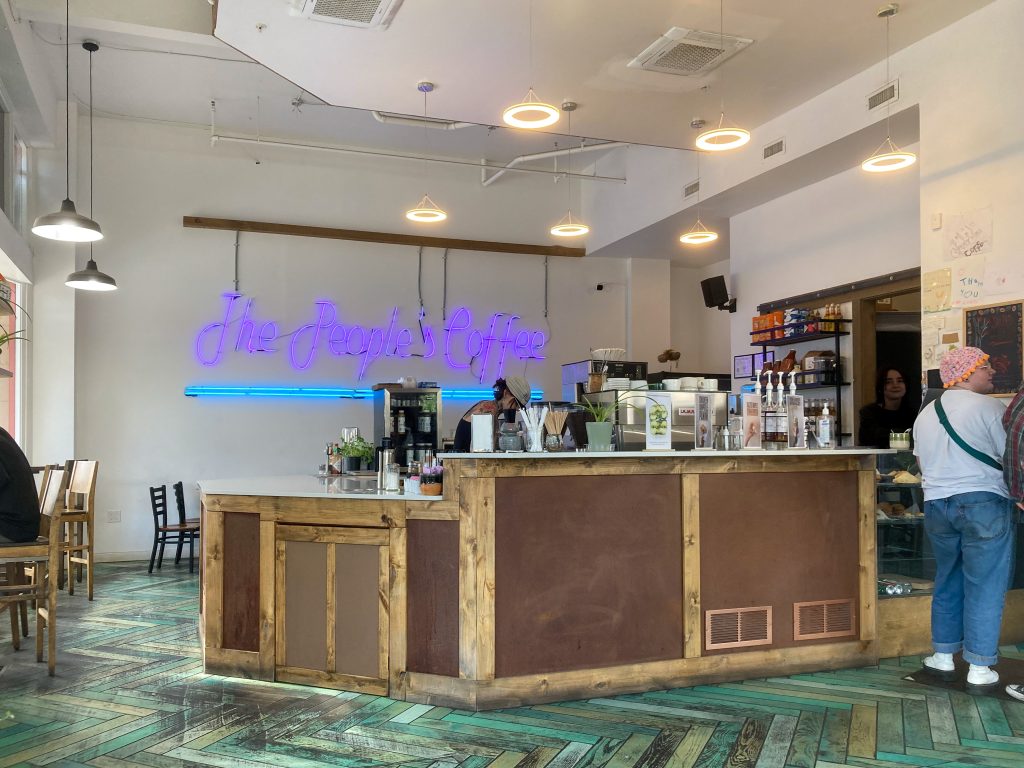
Our favourite. Set in a corner shop at 2nd and 2nd (actually the corner of 200 E and 200 S) a bright single room with large picture windows facing the two streets and serving a well-thought-out mix of healthier food as well as the full range of teas and coffees. A cheerful, young, friendly staff catering to a student and local clientele. It was never that busy and we treasured being able to sit, read, write there. Its only online presence is on Instagram.
Mobility Access
Direct from the street.
Coffee Garden
A busy café, home to locals, bohemians and students on Harvey Milk Boulevard at 9th and 9th (see Pago). A full range of food and drinks and the most uninformative website I have ever encountered (https://www.coffeegardenslc.com). Outside are tables facing a street that is home to an engaging collection of passers-by. Here we sat one afternoon, drinking tea/coffee and scrutinising those passers-by.
Mobility Access
Also direct from the street.
Hallowed Grounds, Church & State
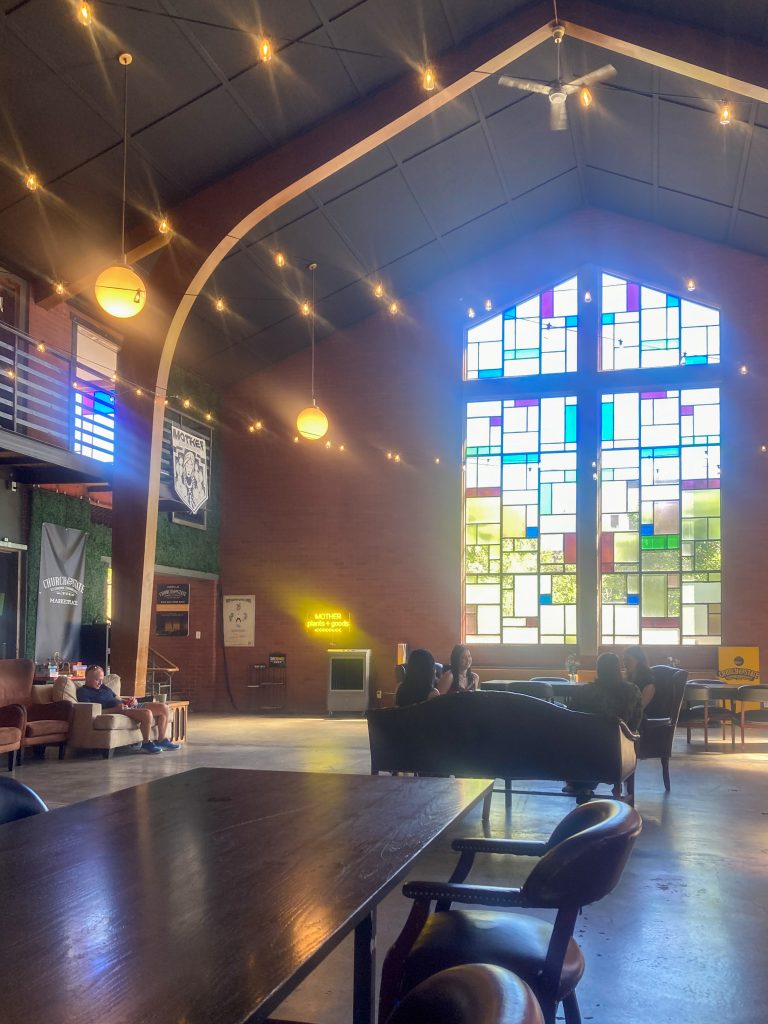
Handily placed opposite the City Library this entertaining and good café is just a large booth within the nave of a former church, sharing space with a tattoo parlour and a few other slightly alternative businesses (https://www.hallowedgrounds.rip). The nave is now occupied by long tables with chairs for the denizens of the building who, in addition to me, included several of the laptop and one latte brigade. A peaceful space, if you just want some down time and caffeine.
Mobility Access
A set of about seven or eight stone steps up to the entrance doors but inside all smooth surfaces.
Getting Around
SLC actually has a reasonably good bus and light rail public transport system (https://www.rideuta.com) with a central zone (that includes the City Library, Temple Square and the main railway station) that is free. For trips outside this area, we bought combined bus and TRAX tickets for daily use from the touch screen machines at the TRAX stops. The price of a day pass was only twice that of a single fare.
There are plenty of app-based rides available if you need them (Uber and the like). City taxis seemed few and far between, except at the airport, and we did not use them.
Mobility Access
I have mentioned TRAX trams above. Buses require a step up from the sidewalk to board. The Accessibility page on the transit authority’s website has more information for wheelchair users.